
 Newsletter
🗓️ Morning, folks! ☀️
You might have been gaslit about what’s in your drinks🍾
The FSSAI has told the Bombay High Court that Old Monk cannot technically be sold simply as “rum” in its current form.
The reason? The drink contains added and artificial flavouring substances, while the regulator says rum should get its characteristic flavour naturally through its ingredients, fermentation and ageing process.
The FSSAI also objected to claims such as “7 years old blended” and “very old vatted” on the bottle. Its argument: when different spirits are blended together, the age mentioned should reflect the youngest spirit in the mix, not the oldest one.
Old Monk’s maker has now agreed to change its label, potentially adding terms like “Added Flavour” or “Flavoured Rum”, and removing the seven-year claim. The company can continue selling the drink once the modified label gets approval.
So no, Old Monk isn’t being banned. India’s favourite dark spirit is simply going through a very public label makeover.
We also made a video for the same. Check here.
Back to business. Bad start to the week for the markets. The Sensex and Nifty ended 0.5% lower.
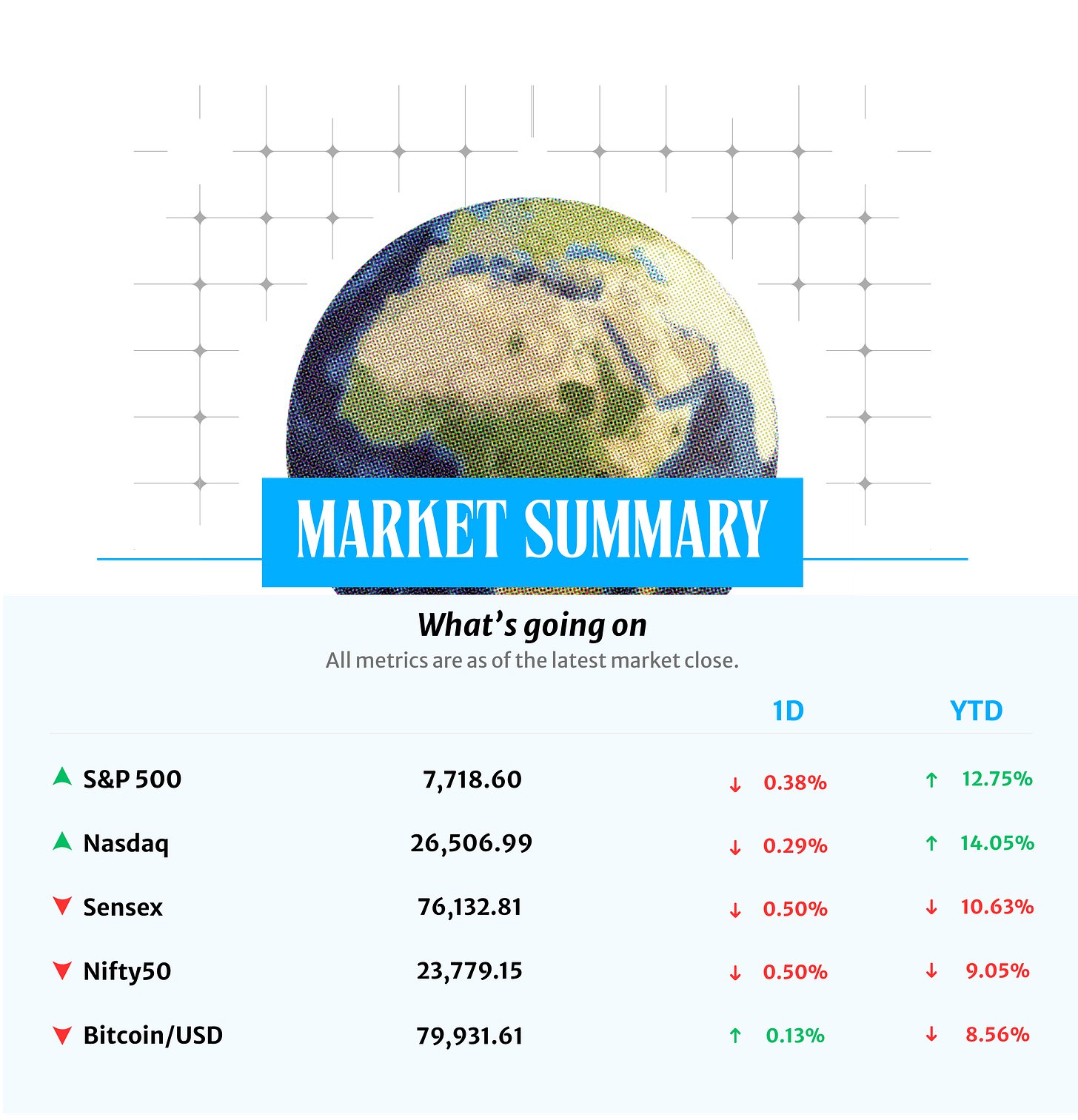
What continues to drag the market? US-Iran tensions and concerns over a possible US interest rate hike. IT stocks faced sharp selling pressure, with Infosys and Tata Consultancy Services among the major laggards.
The Nifty IT index fell 2% after stronger-than-expected US jobs data increased expectations of a September interest rate hike by the Federal Reserve.
💡 Spotlight: What got ISRO fuming? 🚀
India is opening its space sector to private companies, but ISRO says it is not going anywhere.
The agency has clarified that it will remain India’s main institution for advanced space research, major national and strategic missions, and space exploration and will not be privatised.
The clarification came after employee associations raised concerns about more manufacturing and operational work being moved to private companies and public-sector entities.
ISRO says that is not the plan: private companies are being brought in to help India expand its space capabilities, while ISRO continues to lead the country’s most important and complex missions.
Let’s hit it! 💪🏻
1 Big Thing: India’s defence play going strong 💪🏻
The Defence Ministry has approved the purchase of ₹1.10 lakh crore worth of military equipment for the Army, Navy and Air Force, including helicopters, radars, military vehicles and other systems.
Here’s the most important bit: around 98% of the approved purchases will come from Indian companies, giving the domestic defence industry a major boost.
Breaking it down: the Army will get new equipment including advanced light helicopters, high-mobility vehicles, mine-laying systems, bridge systems and specialised vehicles that can detect chemical, biological, radiological and nuclear threats.
What’s the Navy getting: the Navy will procure Arudhra radars and develop Marine Gas Turbines, which are used to power warships.
The new radars will replace older surveillance systems at naval air stations, while locally developed gas turbines could reduce India’s dependence on foreign suppliers.
The Air Force will get new systems to improve the capabilities of its fighter jets, transport aircraft and helicopters.
This includes ground-based jammers, which can disrupt enemy radars, along with a secure access card system for the armed forces.
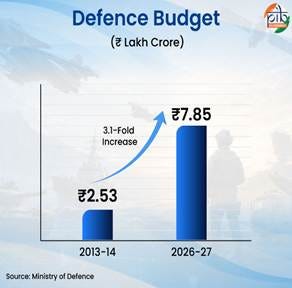
The big picture: India has been steadily increasing its defence spending as it modernises its armed forces and tries to manufacture more military equipment at home. The defence budget has grown from ₹2.53 lakh crore in FY14 to ₹7.85 lakh crore in FY27.
2. Novartis India goes on a pharma shopping spree 💊
Novartis India will pay ₹1,250 crore to buy the Minipress and Minipres brands from Pfizer, along with their trademarks and related rights.
Minipress is a blood-pressure drug used to treat hypertension. By lowering high blood pressure, it can help reduce the risk of serious cardiovascular problems, including strokes and heart attacks.
The deets: in a parallel development, Pfizer will stop marketing, distributing and selling Minipress XL in India from September 7, 2026.
As part of the exit, Pfizer will receive a one-time payment of $13.9 million, or around ₹131 crore, from its US parent.
The larger playbook: Novartis India is taking more control of its business. Last month, Dr Reddy’s ended its agreement to distribute and promote select Novartis brands, after September 30, 2026.
From FY27, Novartis will directly manage several established brands across pain relief, women’s health and supplements, including Voveran, Methergin, Macalvit and Calcium Sandoz.
This gives Novartis greater control over how these brands are priced, marketed and grown. The strategy is clear: buy selectively, take direct control of key brands and expand deeper into smaller cities.
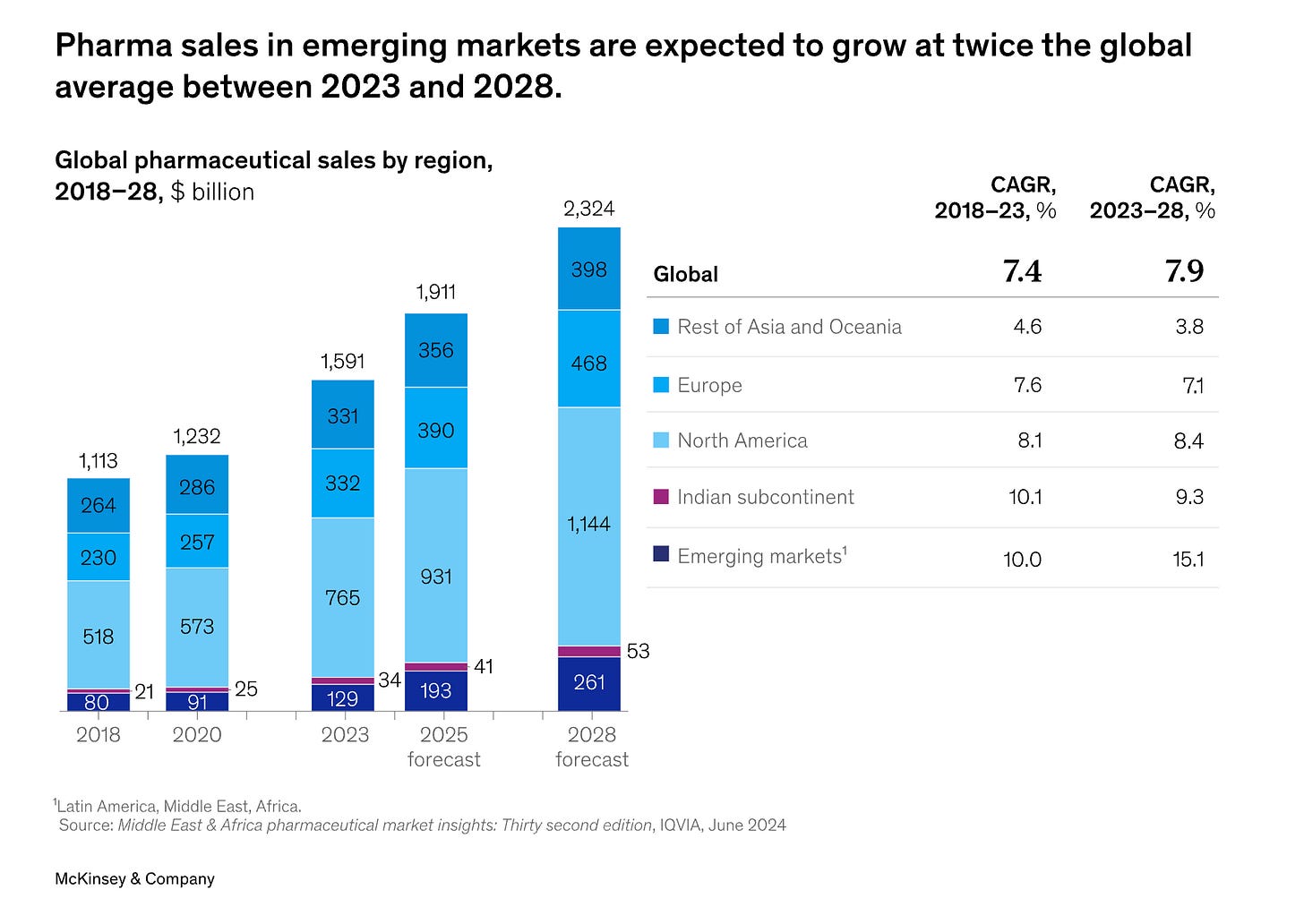
The timing matters: India’s healthcare opportunity is growing well beyond its metros.
Tier-2 and Tier-3 cities are emerging as the next big growth engine, with their affluent population rising 76% in just six years. Today, nearly one in three urban Indians lives in these cities.
3. $100M in Pixxel’s piggy bank 🌌
Google invested $36 million in hyperspectral imaging startup Pixxel in its Series B round back in 2023.
Three years later, the startup has raised a whopping $100 million in Series C funding, co-led by Temasek and Seraphim Space, making it India’s largest spacetech fundraise.

Pixxel started out building hyperspectral imaging satellites but has since expanded into Earth intelligence software, satellite systems and manufacturing.
The deets: the latest round takes Pixxel’s total funding to $195 million and will help the company scale its satellite network, software business and manufacturing capabilities.
What has Pixxel built so far: last year, Pixxel deployed its first six Firefly satellites into low Earth orbit. These satellites capture images across 135 spectral bands, allowing them to detect details that regular satellite cameras may miss.
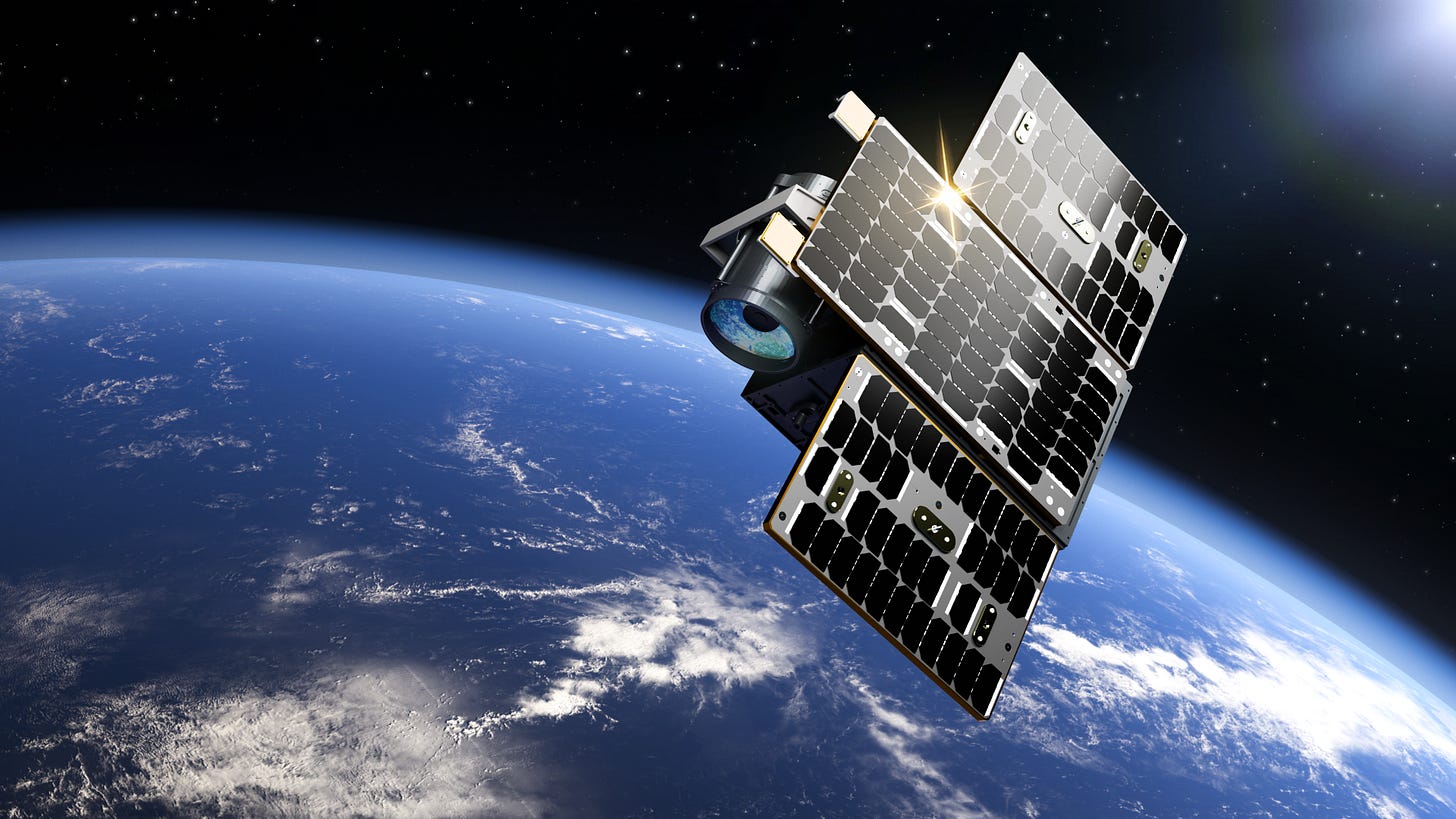
Now, Pixxel is working on its next-generation Honeybee satellites, which will be larger and capable of capturing even more detailed data across around 250 spectral bands.
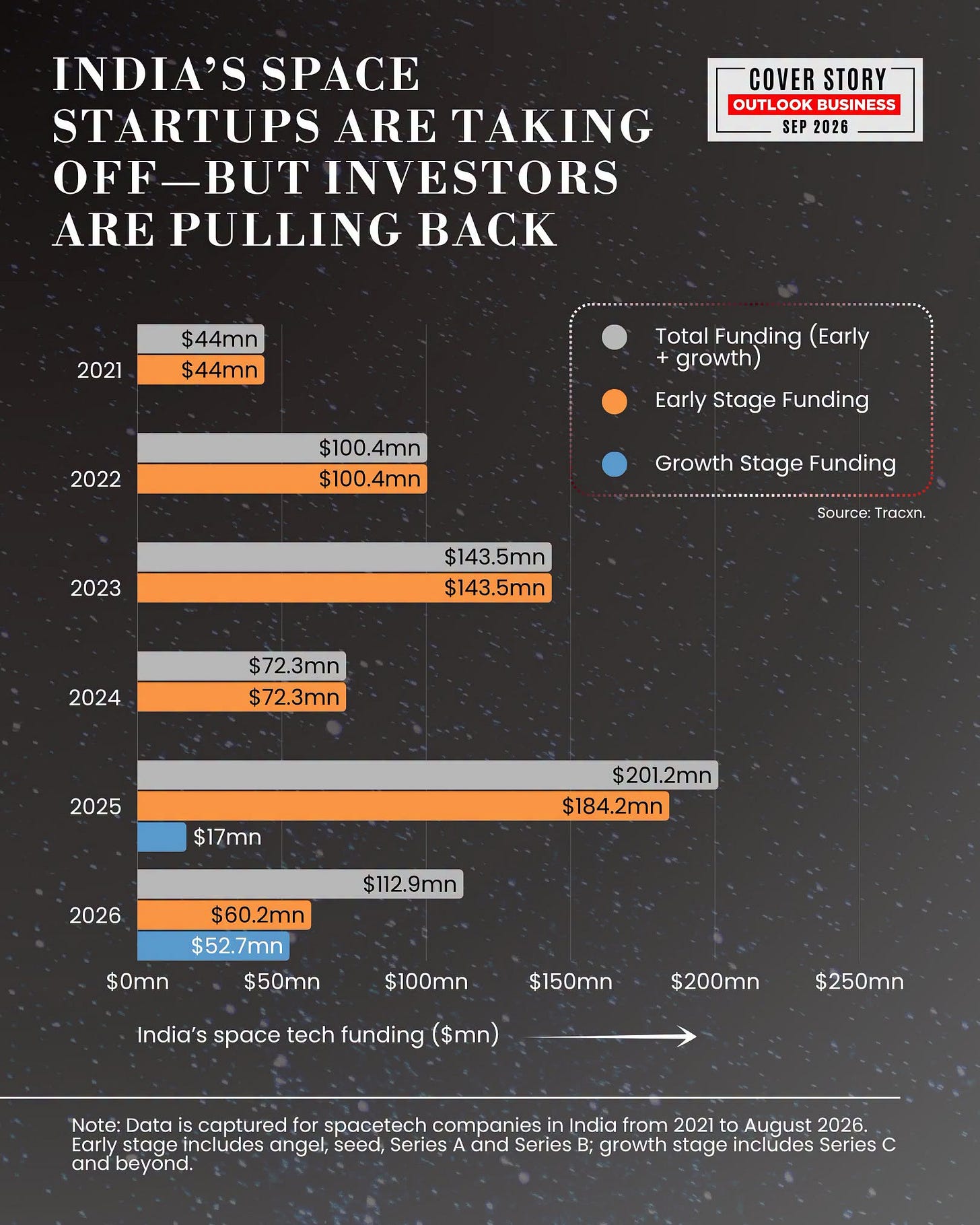
The big picture: Pixxel’s expansion comes as India’s private space industry picks up pace.
India wants to grow its space economy from $8.4 billion in 2022 to $44 billion by 2033, capturing around 8% of the global space market.
But while more money is flowing into Indian space startups, one challenge remains: scaling up. Early-stage funding has grown, but securing enough capital to move from promising technology to large-scale commercial operations still remains difficult.
4. Inside India’s BSE Satvik 100 Index 👀
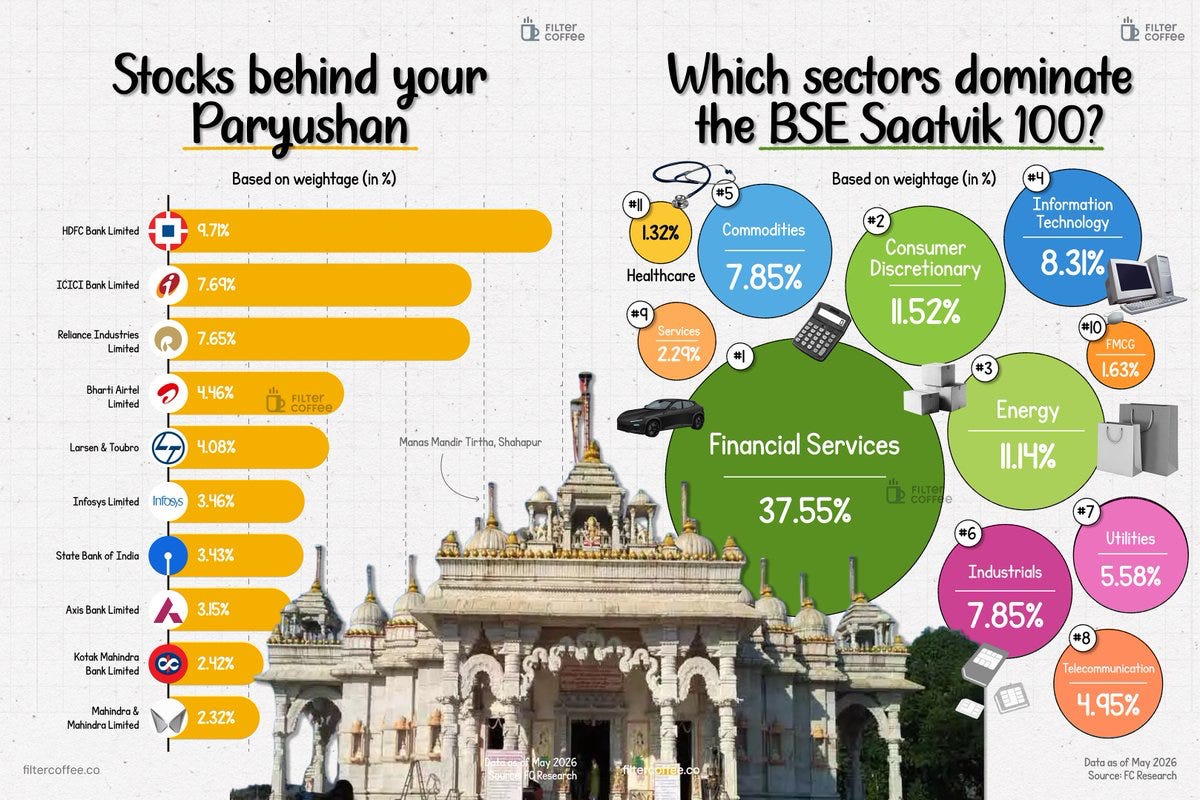
As Paryushan begins today, we look at its impact on the markets. Turns out, the festival has its own stock market lens.
The BSE Saatvik 100 tracks companies aligned with Jain ethical principles, excluding businesses linked to alcohol, tobacco, gambling and other restricted activities.
But the interesting bit is its composition: financial services make up nearly 38% of the index, meaning a values-based screen can still produce a portfolio heavily tilted toward one sector.
5. Stocks that kept us interested 🚀
What went up ⬆️
🔥 Zydus Wellness went up 4% after IIFL Capital initiated coverage with a ‘buy’ rating and ₹650 target, implying 23% upside.
🥳 Vodafone Idea gained nearly 4% after the Supreme Court rejected a ₹363 crore GST demand linked to its tower asset sale.
😎 Avalon Technologies jumped over 7% after Nomura raised its target price, citing stronger growth prospects from its Germany-based Zollner joint venture.
☝️ Syrma SGS surged 12% to a record high as its electronics manufacturing JV with Italy’s Elemaster could generate up to $100 million.
What went down ⬇️
🤒 PVR Inox fell nearly 6% following reports of an internal investigation into alleged kickbacks involving a senior executive and cinema developers.
🫤 Mazagon Dock slipped nearly 1% despite the company securing a ₹118 crore order from Maharashtra State Electricity Transmission Company for infrastructure work.
📉 Anupam Rasayan tumbled despite securing a six-year chemical supply contract from a major US-based specialty metal manufacturer over the weekend.
What else are we snackin’ 🍿
📦 Udaan acquisition: Udaan acquired Swiggy-owned LYNK Logistics for ₹500 crore, with Swiggy getting a 2.8% stake in Udaan and investing another ₹75 crore.
🛒 Going shopping: Nykaa acquired an additional 24.2% stake in beauty and personal care brand Earth Rhythm, increasing its ownership in the company.
🚗 Record sales: India’s auto retail sales hit a record 24.2 lakh units in August, up 18%, with passenger vehicle sales crossing 4 lakh for the first time.
🚗 Price hike: Maruti Suzuki will raise prices of select models by up to ₹20,000 in September, marking its third price hike since May.
💰 Nua funding: Nua raised $50 million in Series C funding led by Peak XV and Filter Capital to expand distribution, strengthen its brand and develop new products.
✂️ Job cuts: Jaguar Land Rover plans to cut around 4,000 jobs globally over two years as it targets £1.7 billion in savings.
That’s a wrap! Don’t let the weekday blues get to you.
And if you’d like to place your brand on this newsletter, let us know.
Hit that 💚 if you liked this issue.
Disclaimer: This newsletter is for informational and research purposes only. Nothing here should be considered financial, investment, legal, or professional advice.