
 Newsletter

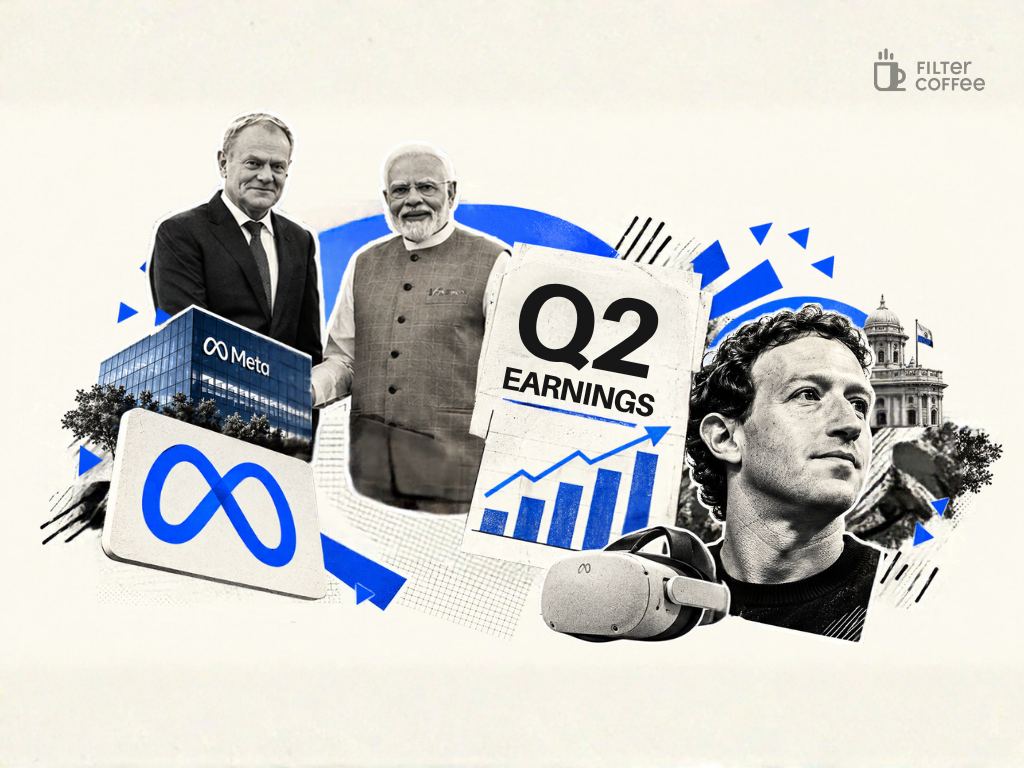
Polish deal, Swiggy missing the mark, and privacy becoming mainstream.
🗓️ Morning, folks and Happy Fridayyyyy! ☀️
Data centres are finding a new way to win hearts: your kids’ school trips.
Industry groups are handing out data-centre-themed storybooks, colouring pages and science projects, while companies like Amazon and Sabey are taking students on facility tours.
One group even sponsored flag-making kits for 3,100 first-graders, complete with facts about the industry’s economic benefits.
Part of a broader push: as data centres face growing backlash over their huge energy needs and local impact, the industry is trying to get communities on its side by winning over the next generation.
It’s a tried-and-tested PR playbook used by industries like oil, gas and fast food: get into classrooms, tell your side of the story and shape how people see you.
Turns out, the next big data-centre recruit might still be learning their ABCs.

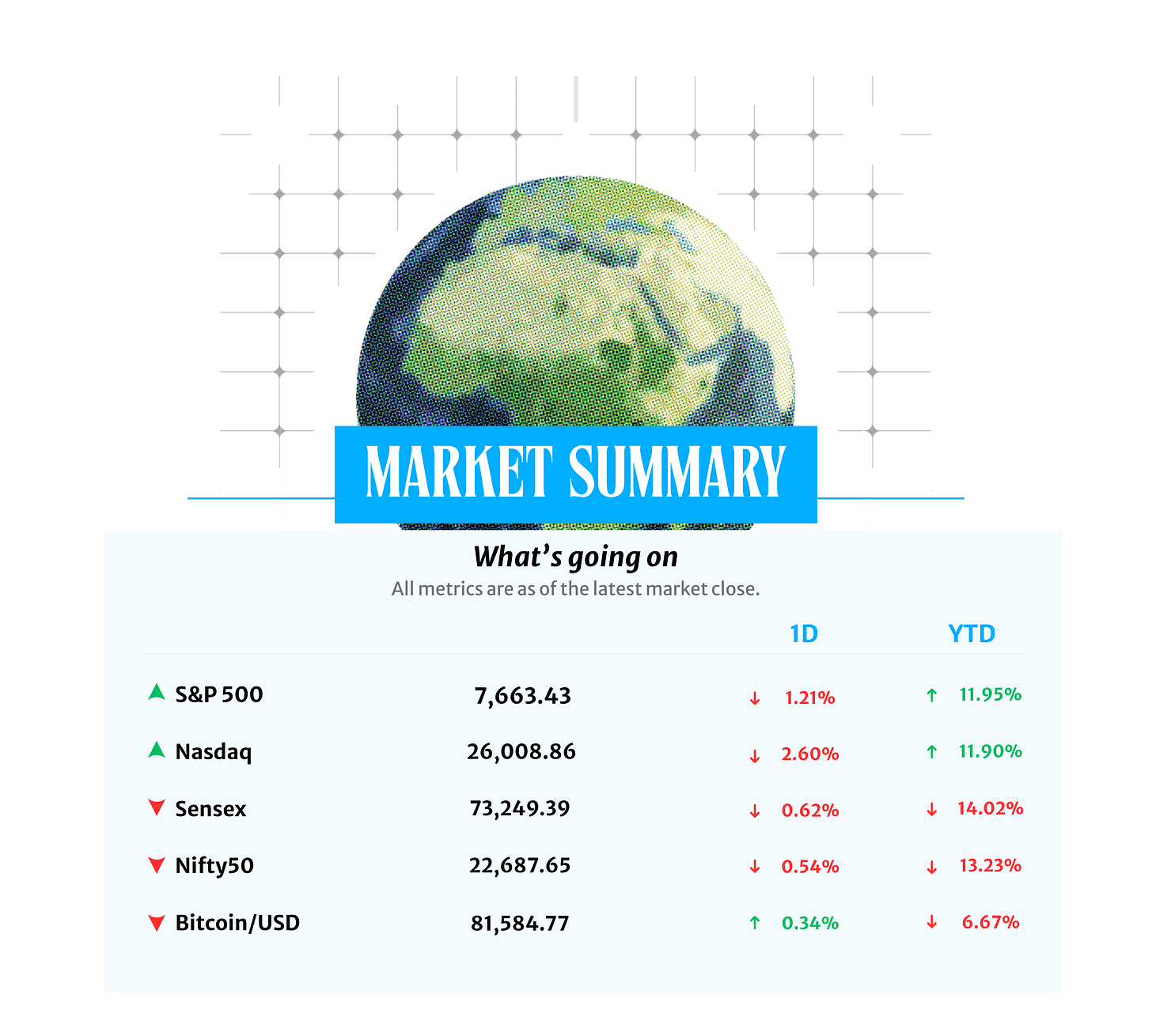
Indian markets fell for the third straight session on Thursday, with the Sensex and Nifty both closing lower.
FMCG, IT and energy stocks dragged markets down, while midcap and smallcap indices fell around 1%.
Meanwhile, Brent crude hovering around $112-113 a barrel and rising Middle East tensions are stoking inflation worries and keeping investors on edge.
💡Spotlight: A deal worth ₹770 crore for drone-detecting radars 🛡️
The Defence Ministry has signed a ₹770 crore deal with Bharat Electronics Limited (BEL) to supply advanced radars to the Indian Army. However, despite the announcement, BEL shares fell more than 1%.
These radars can detect and track fighter jets and small, low-flying drones. They can also help prioritise threats so the Army can respond faster.
The need for such technology became clearer during Operation Sindoor, when Pakistan launched several waves of drones towards Indian military and civilian areas. Indian air defence systems intercepted many of them.
The radars are an upgraded version of an existing Indian system called Aslesha, developed by DRDO and manufactured by BEL.
The government says the deal will also support India’s domestic defence industry, including smaller companies involved in manufacturing radar equipment.
Let’s hit it! 💪🏻
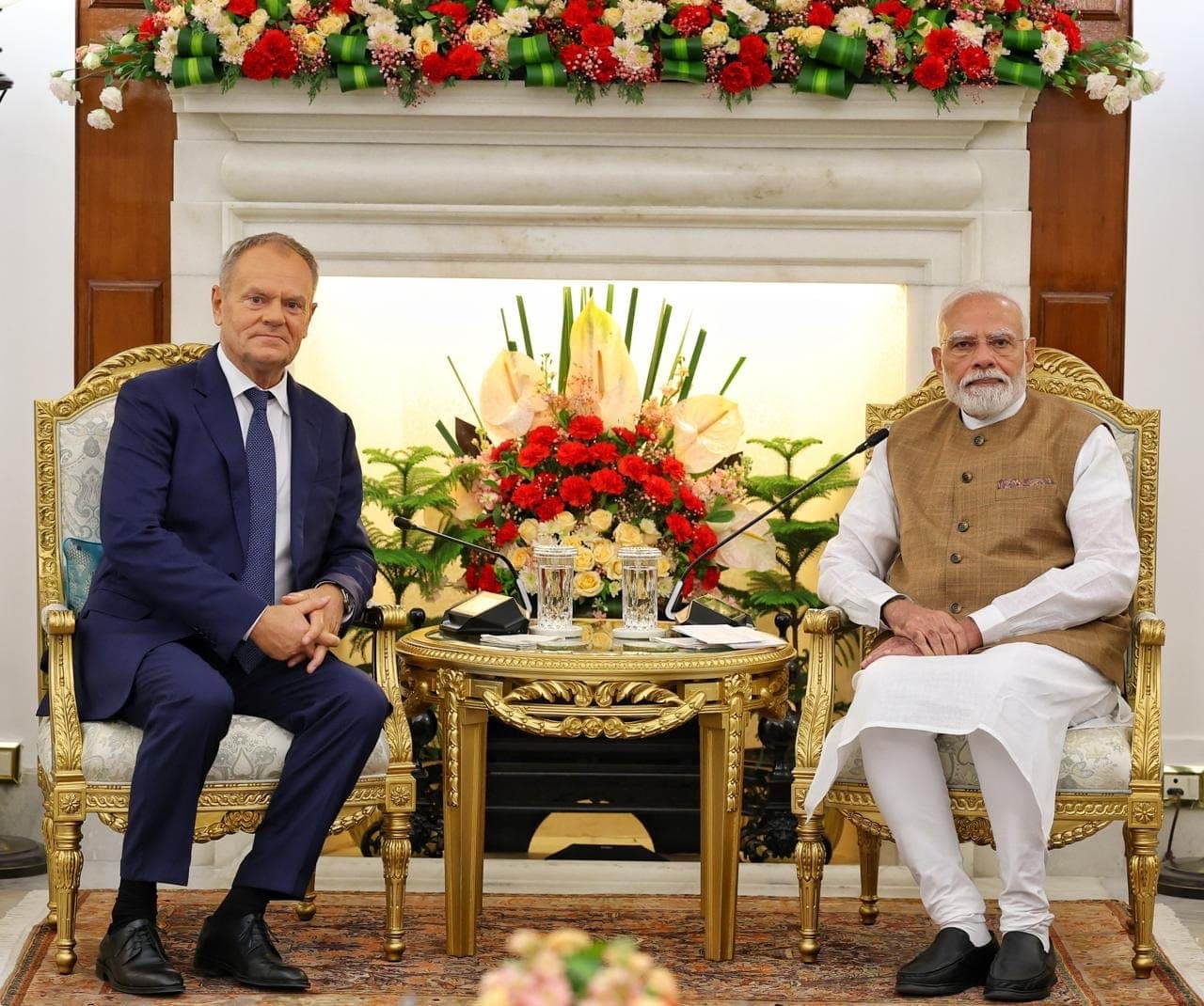
1 Big Thing: India-Poland to double trade by 2030 🤝
India and Poland have agreed to deepen cooperation in defence, space and nuclear energy as the two countries look to turn their strategic partnership into actual projects.
The defence push: India has invited Polish companies to manufacture defence equipment in India through joint development and production.
The two sides have also proposed a dedicated defence industry dialogue to connect companies and identify commercially viable projects.
Space and nuclear energy: India and Poland also want their research institutions and companies to work more closely in space and nuclear energy.
They will also explore cooperation in semiconductors, artificial intelligence, quantum technology, critical minerals and battery recycling.
The business angle: the two countries have set a target of doubling bilateral trade by 2030.
Poland can act as a gateway for Indian companies looking to expand into Central and Eastern Europe. India, meanwhile, offers Polish companies a large consumer market, manufacturing base and skilled workforce.
The Ukraine context: Tusk’s visit comes as global efforts to end the Russia-Ukraine war gather momentum.
Modi said India would continue supporting every meaningful effort to restore peace in Ukraine and West Asia.
Why Poland matters: Poland is one of Europe’s fastest-growing major economies and recently crossed the $1 trillion GDP mark. Its location also makes it an important manufacturing and logistics hub for companies looking to enter the wider European market.
2. Swiggy’s growth comes with sides ☹️
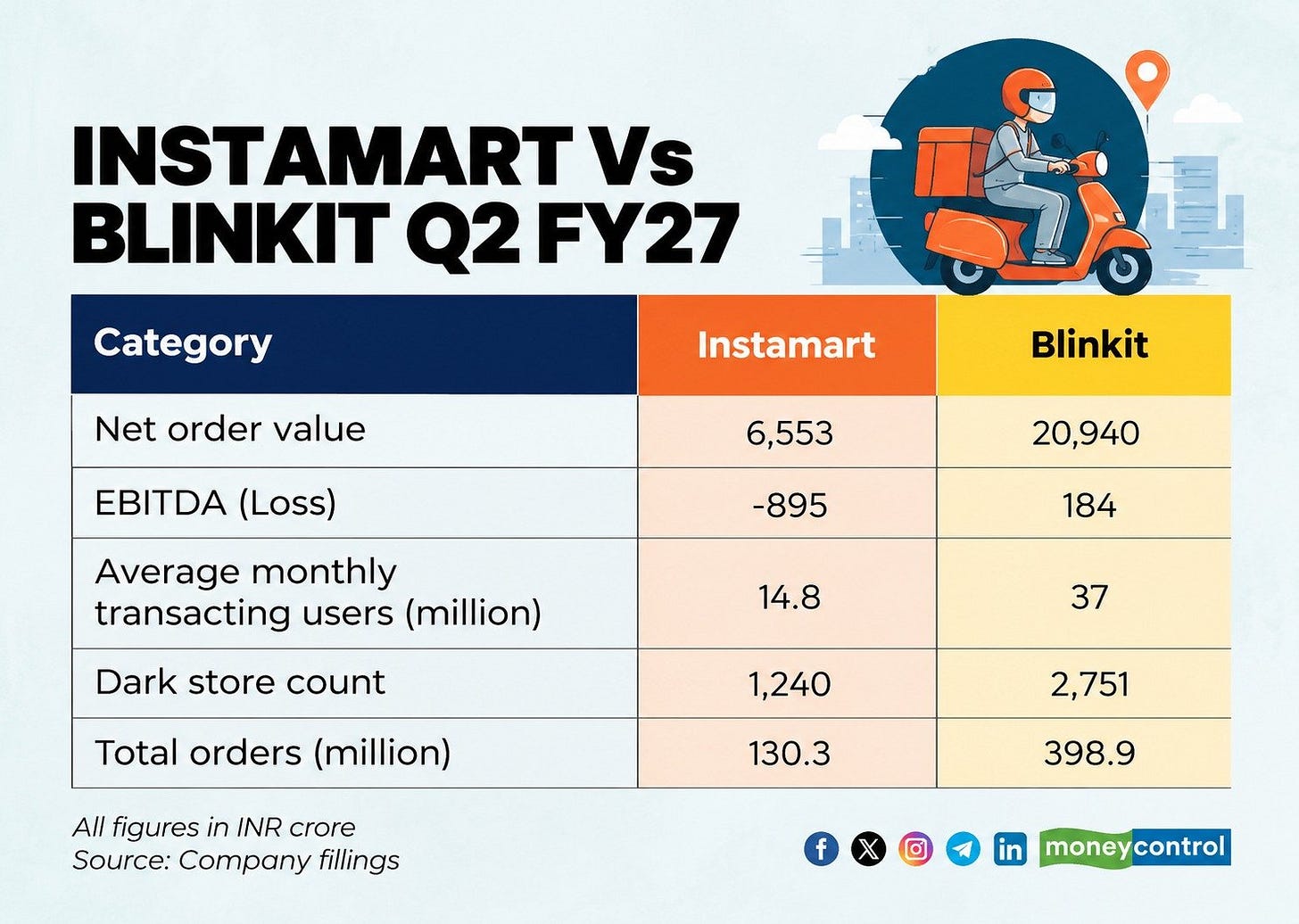
A day after rival Eternal reported its results, Swiggy released its Q2 earnings. Revenue grew sharply and its overall loss narrowed, but losses in quick commerce continued to rise.
By the numbers (YoY):
- Net loss: ₹922 crore, down from ₹1,092 crore
- Revenue: ₹5,561 crore, up 54.4%
- Operating loss, measured by EBITDA: ₹770 crore, down from ₹798 crore
- Quick-commerce revenue: ₹1,306 crore, up 33.3%
- Food-delivery revenue: ₹2,338 crore, up 21.6%
The expensive bit: Instamart brought in more revenue, but its losses reached ₹764 crore, compared with ₹739 crore a year earlier and ₹651 crore in the previous quarter.
Swiggy also added 69 dark stores, the local warehouses that fulfil quick-commerce orders. Its network now spans 1,240 stores across 133 cities.
Food delivery offered relief: the total value of food orders rose 18% to ₹10,054 crore. Adjusted EBITDA, a measure of operating earnings, increased by ₹101 crore to ₹341 crore.
Market reaction: Swiggy shares fell 5% to an all-time low.
FYI: Eternal is now worth roughly five times as much on the stock market: ₹2.96 lakh crore versus Swiggy’s ₹58,000 crore. That gap was only a little over two times when Swiggy went public in November 2024.
3. Meta’s past is proving expensive 🫣
Meta has been ordered to pay $25 billion to New Mexico in a case stemming from the Cambridge Analytica scandal. The penalty follows a jury’s finding that the company misled Facebook users about how it protected their personal data and handled harmful content.
What happened: in 2018, Facebook disclosed that political consulting firm Cambridge Analytica had improperly obtained data belonging to as many as 87 million users.
The firm used it to build voter profiles and target political ads during the 2016 US election, when it worked for Donald Trump’s campaign.
In 2021, the state sued Facebook, alleging that it had misled users about who could access their data. The lawsuit also challenged its claims about tackling hate speech and misinformation, alleging that it tolerated harmful content when doing so benefited its business.
In September, a jury found Meta responsible for more than 43 million violations of the state’s consumer protection law. Wednesday’s ruling put a price on those violations: $25 billion.
Meta’s response: the company called the lawsuit ‘a tax on speech’, arguing that the ruling makes doing business in New Mexico almost impossible.
It accused the state of mixing privacy concerns with questions about what people can say online and said it expects to win on appeal.
The bigger picture: this adds to Meta’s growing legal bills over privacy and child safety. Earlier this year, New Mexico secured another $942 million in penalties in a separate case involving young users’ safety on Facebook and Instagram.
4. Why is Eternal building Dark.ai? 👀
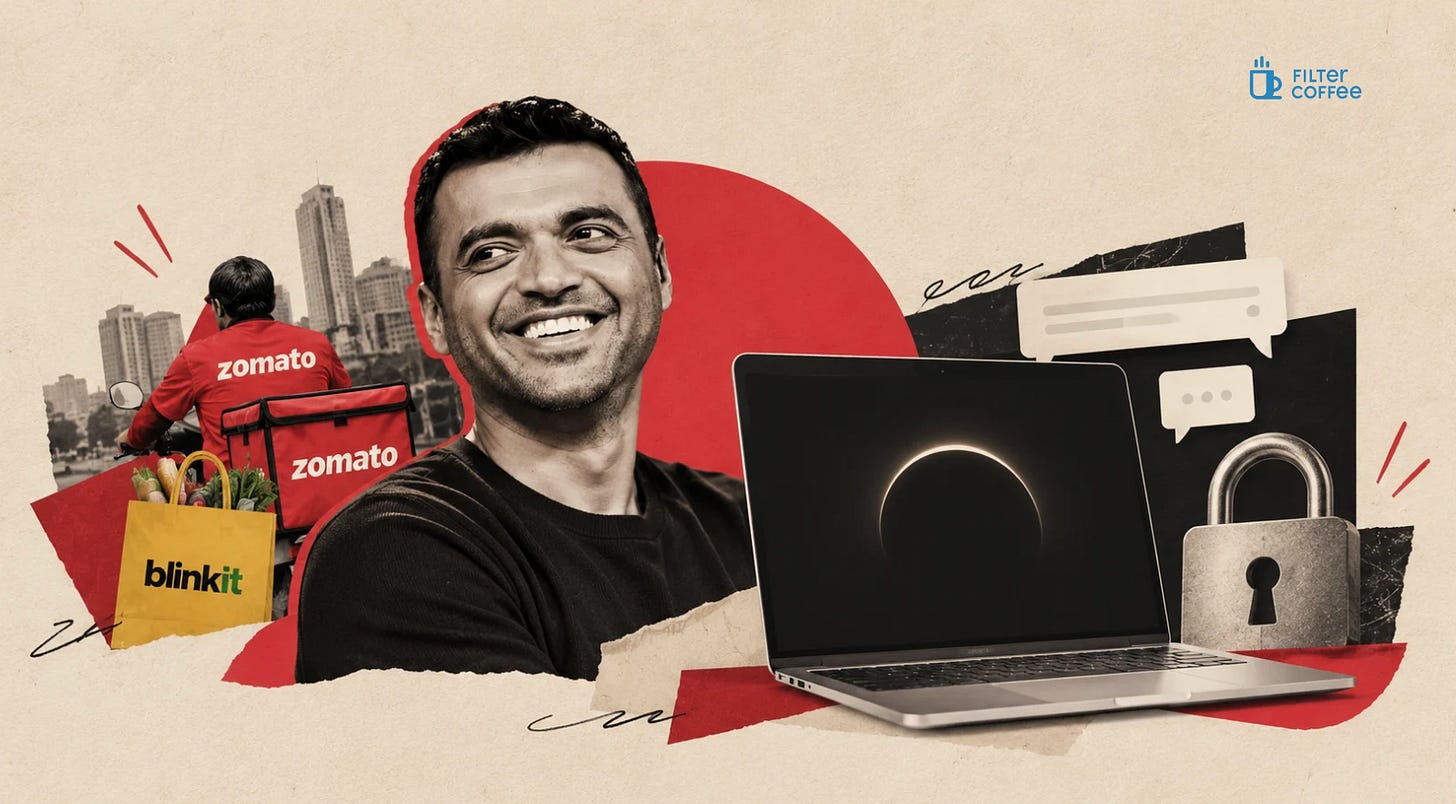
Eternal is building an AI chatbot called Dark.ai, with plans to launch it globally by the end of 2026.
Deepinder Goyal claims encryption and user-controlled memory will prevent even Eternal from reading users’ conversations.
The company plans to use existing AI models and could charge for the service. But pricing is undecided, and its privacy claims remain unverified.
What does a food-delivery company see in private AI conversations? We unpack the technology, the business case and the questions Eternal still needs to answer.
5. Stocks that kept us interested 🚀
What went up ⬆️
⚡️Kalpataru Projects International gained after it secured new domestic EPC orders worth ₹2,349 crore, taking total FY27 year-to-date order inflows past ₹22,000 crore.
💪🏻 SRF ended 1% higher after rebounding 7% from its intraday low as positive management commentary helped improve overall investor sentiment.
📈 Indian Hotels Company went up nearly 4% after it reported Q2 earnings that came in ahead of street expectations.
What went down ⬇️
👎🏻 PC Jeweller slipped nearly 2% despite a 58% rise in Q2 net profit year-on-year to ₹330.66 crore on higher sales.
🤒 KEI Industries fell 8% after the company’s cautious margin outlook raised concerns among investors about its future profit growth.
🫤 Oracle Financial Services Software slipped 4%, while Hindustan Petroleum Corporation also faced selling pressure ahead of its earnings announcement.
What else are we snackin’ 🍿
🚢 Vessel contract: SEAMEC secured a $55 million contract with HAL Offshore to provide a vessel for ONGC’s offshore inspection, maintenance and repair work for around 1,225 days.
📊 Market expansion: NCDEX launched two new indices, NDEX and FINNDEX, marking its entry into equity and equity derivatives markets.
🏥 Healthcare funding: Rural healthcare startup CureBay raised around ₹100 crore in Pre-Series C funding led by IvyCap Ventures to expand across India and strengthen its AI capabilities.
🍔 Food delivery: Shiprocket entered the food delivery market with a direct-ordering model, helping restaurants reduce costs and manage orders through their own channels.
🤖 AI funding: DeepSeek raised $15 billion to expand its AI data centres and develop more open-source models, stepping up competition with leading US AI companies.
And that’s a wrap. Pour yourself an extra one this weekend. 🥳
We’ll be back like clockwork on Monday!
Hit that 💚 if you liked this issue.
Disclaimer: this newsletter is for informational and research purposes only. Nothing here should be considered financial, investment, legal, or professional advice.