
 Newsletter
Honda trusts India, Healthcare is still hot property, and Skims lands in India.
🗓️ Morning, folks and Happy Fridayyyy! ☀️
Just when you thought Gen Z was entering its party era... they’ve chosen “soft hermitting” instead.

Burnt out by packed social calendars, perfectly curated Instagram summers, and the pressure to “make the most of it,” they’re embracing guilt-free alone time.
Searches for “signs of social burnout” are climbing, and more young people are happily declining plans.
A little solitude can recharge your social battery. Too much of it? Experts say you risk swapping FOMO for loneliness.
But are the markets sharing the same sentiment? Let’s find out.
Markets ended in the green on Thursday. Sensex & Nifty gained up to 0.5%, led by Reliance Industries and banking stocks.

Defence stocks stayed in demand, with Mazagon Dock, HAL, Bharat Dynamics and Cochin Shipyard climbing as much as 6%.
Meanwhile, the Closing Auction Session (CAS) had only a small impact on benchmark closing levels, unlike the larger swings seen over the past three trading sessions.
💡 Spotlight: Tata Sons can’t catch a break ❎
The Reserve Bank of India (RBI) has kept Tata Sons on its Upper Layer Non-Banking Financial Companies (NBFC-UL) list.
This means the Tata Group's holding company will continue to be regulated as one of India's largest NBFCs while the RBI reviews its request to surrender its Core Investment Company (CIC) licence.
What does it mean: because it is classified as an Upper Layer NBFC, the company has to follow stricter RBI rules. One of those rules is that private Upper Layer NBFCs are generally required to list on the stock exchanges within three years, which was due in 2025.
Why does it matter: if Tata Sons has to list on the stock exchanges, it will have to share more financial information with the public and follow stricter corporate governance rules.
Let’s hit it! 💪🏻
1 Big Thing: Honda deal lifts Tata Tech 🚘
Here’s something interesting. Tata Technologies jumped 6% on Thursday... because of month-old news. Let’s understand why.

The scoop: Japanese auto giant Honda Motor Co. has reportedly chosen Tata Technologies to help build a new vehicle platform. It marks the first time Honda has entrusted an Indian engineering services firm to develop an end-to-end vehicle platform.
The move is part of Honda's efforts to cut development costs. The platform will be used to build multiple car models, including petrol, hybrid and electric vehicles.
Why it matters: this marks a major shift for Honda. Traditionally, the company has developed its core vehicle platforms in-house or through its long-standing supplier network.
The decision comes as Honda revamps its business after posting its first annual loss in FY26 since 1948. It also scrapped several EV projects and is tightening its spending.

The India angle: the deal also highlights India’s growing role as a global engineering hub.
Global automakers including Mercedes-Benz, BMW, and now Honda are increasingly outsourcing engineering and vehicle development work to India to reduce costs and speed up product development.

To join the community click here.
2. PE firm KKR goes shopping 🏥
Private equity giant KKR has acquired Medicover India, the Indian hospital arm of Sweden's Medicover AB, in a $1.3 billion deal, making it one of the firm's largest active healthcare investments.

Established in 2017, Medicover India is a multi-specialty hospital network with 24 hospitals and around 4,800 beds across South and West India.
Why it matters: this isn’t KKR’s first healthcare bet. Since 2004, the firm has invested billions of dollars in healthcare globally. In India, its healthcare journey began in 2018 with a $293 million investment in Max Healthcare.
KKR fully exited in 2022, selling its stake for around $1.16 billion, generating a 5x return. At the time, it was KKR’s largest-ever exit in India.
The bigger picture: according to McKinsey & Company, private equity and venture capital investments in India totalled $207 billion between 2021 and 2025.
Pharma and healthcare accounted for roughly 10% of that, making the sector one of the largest recipients of private capital.
The diagnosis? Investors are still very bullish on India's healthcare story.
3. Will UPI payments become chargeable? 💸
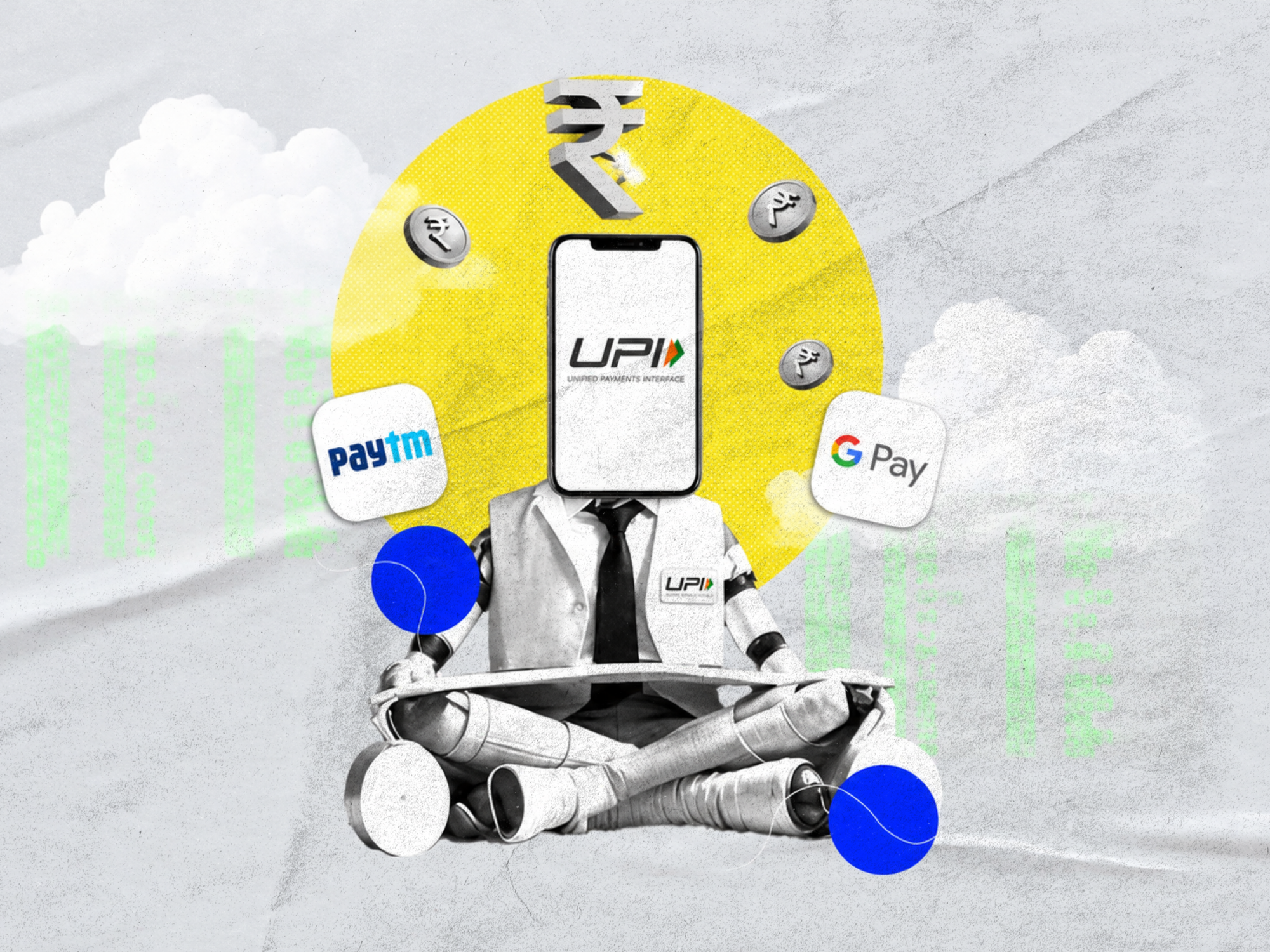
The Finance Ministry’s proposal to amend the Payment and Settlement Systems Act has reignited the debate around Merchant Discount Rate (MDR) on UPI payments. Naturally, many users are wondering whether they’ll soon have to pay for every UPI transaction.
The answer, at least for now, is likely no. First, let's understand MDR.

The explanation: it’s a small processing fee that merchants pay to banks and payment companies for facilitating digital payments. Since 2020, the government has kept MDR at zero for UPI to encourage digital adoption.
Now, with UPI processing nearly 24 billion transactions worth almost ₹30 lakh crore every month, the government believes the ecosystem needs a sustainable revenue model to fund its future growth.
That said, if merchants eventually have to bear MDR, some may try to recover the cost by encouraging cash payments or setting minimum order values for UPI. In the long run, part of the cost could indirectly find its way to customers.
Who will benefit: if MDR returns, payment companies like PhonePe, Paytm and Google Pay, along with major banks, stand to benefit the most.
Industry estimates suggest the payments ecosystem could generate ₹13,500-16,000 crore annually, helping fund infrastructure, cybersecurity and continued expansion.

4. Who’s winning India’s rubber race? 🏁

Kerala wears India’s rubber crown. But it's no longer a one-state story.
Northeast is steadily taking some of the weight. Tripura ranks second and Assam third, with rubber cultivation across the Northeast now covering about 1.8 lakh hectares.
India’s total rubber plantation area also crossed 9.4 lakh hectares in FY25, while natural rubber production reached 8.75 lakh tonnes.
5. Have we misunderstood Warren Buffett? 🧐

Most investors remember Warren Buffett for one lesson: buy and hold forever. Yet his career tells a more nuanced story.
From changing his views on value investing to making some of the largest business acquisitions in history, Buffett’s success was built on far more than patience alone.
6. Stocks that kept us interested 🚀
What went up
⬆️ Allcargo Logistics jumped 20% while Navin Fluorine, Bajaj Electricals and Neuland Laboratories gained up to 14% after reporting strong Q1 earnings data.
🥇 Deccan Gold Mines rallied more than 13% after producing its first gold doré at Altyn Tor Project in Kyrgyzstan.
✈️ Hindustan Aeronautics surged 6% after Goldman Sachs upgraded the stock to Buy, citing LCA Mk1A execution and engine supplies.
️⚡️ Biocon jumped 2% after Q1 net profit soared over four-fold, driven by strong biosimilars growth and lower finance costs.
What went down
📈 Firstsource, Anup Engineering and Blue Star fell up to 13% due to weak Q1 results.
What else are we snackin’
🍪 Earnings snapshot: Britannia Industries’ Q1 net profit rose 14% YoY to ₹591 crore, driven by strong demand across key categories and price hikes.
👗 Shapewear upgrade: Reliance Brands has partnered with SKIMS to bring the shapewear giant to India, starting with Delhi and Mumbai.
🎬 Content crossover: Disney partners with TikTok, letting creators make and share short-form videos using Star Wars, Marvel and Pixar content across platforms.
📡 Global order: Sterlite Technologies secured a $210 million long-term international contract to supply high-density optical fibre cables over CY27–CY29.
And that’s a wrap. Pour yourself an extra one this weekend. 🥂
We’ll be back like clockwork on Monday!

Hit that 💚 if you liked this issue.
Disclaimer: this newsletter is for informational and research purposes only. Nothing here should be considered financial, investment, legal, or professional advice.