
 Newsletter
Imagine a company surviving two world wars, the birth of a country, nationalisation, economic liberalisation and a banking crisis and still ending up on your phone as an app.
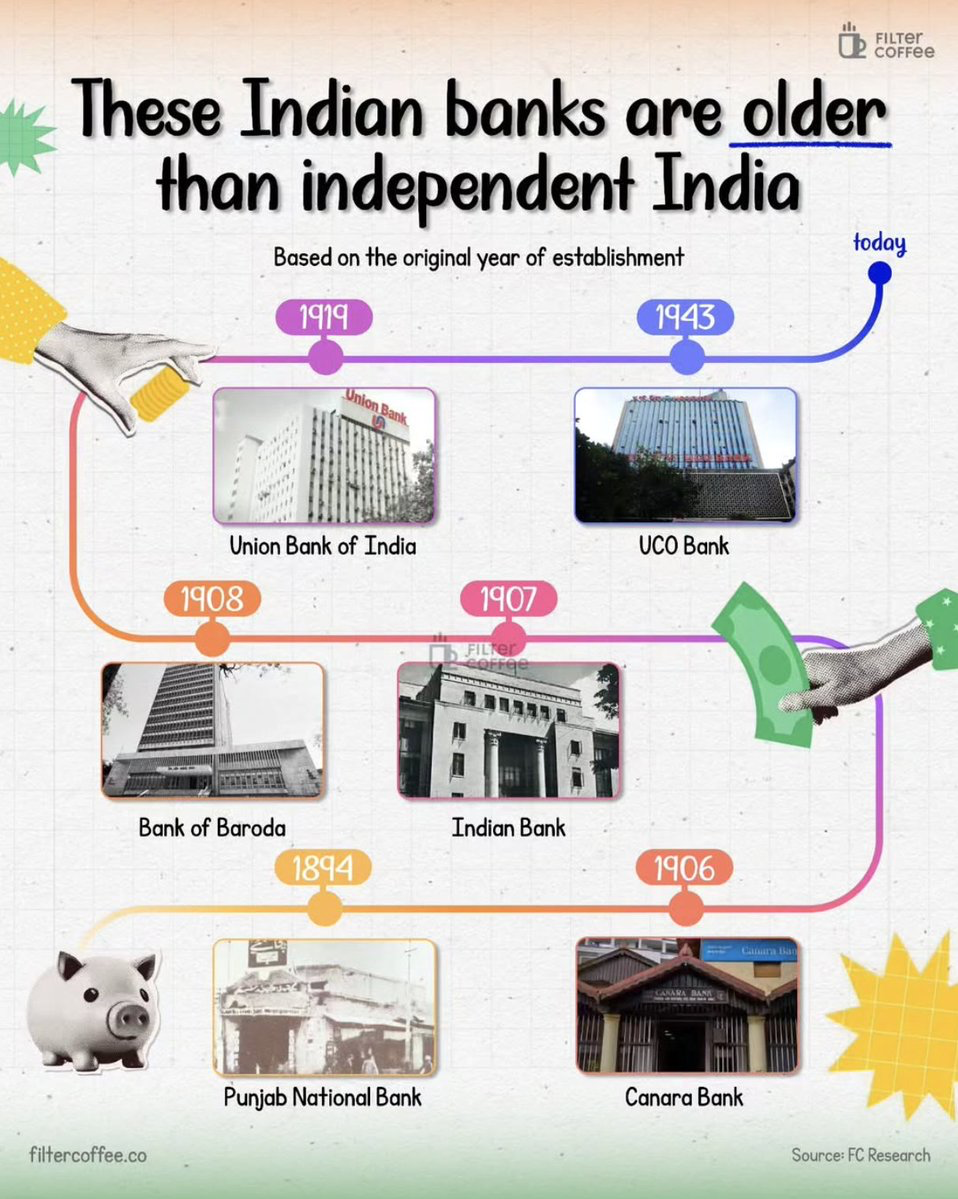
That is essentially the story of some of India’s oldest banks. Punjab National Bank dates back to 1894, Canara Bank to 1906 and Indian Bank to 1907. Bank of Baroda followed in 1908, while UCO Bank was founded in 1943. These institutions were already operating before India became independent in 1947.
And they have lived through quite a bit. India’s independence, Partition, wars, economic crises and the nationalisation of 14 major banks in 1969 all reshaped the banking industry. Nationalisation, in particular, turned these banks into important vehicles for expanding credit to rural areas and priority sectors.
But their toughest chapter came much later. For years, public sector banks struggled with bad loans, weak profitability and bloated balance sheets. The sector became almost synonymous with NPAs.
That story has changed dramatically.
In FY26, India’s public sector banks posted a combined net profit of ₹1.98 lakh crore, their highest ever and their fourth consecutive profitable year. Gross NPAs fell to 1.93%, also a historic low, while total business crossed ₹283 lakh crore. Advances grew 15.7% to ₹127 lakh crore, with retail, agriculture and MSME lending all expanding strongly.
The turnaround did not happen overnight. Years of bad-loan recognition, recoveries, stronger provisioning, capital support, consolidation and tighter risk management helped clean up the balance sheets. Recoveries alone stood at nearly ₹87,000 crore in FY26.
And now these century-old banks are entering another unfamiliar era. The passbooks and long queues are giving way to mobile apps, instant payments and digital lending, while their role is shifting from simply taking deposits and giving loans to financing India’s consumption, businesses and infrastructure.
The irony is hard to miss. Some of the banks that existed before independent India are now helping finance the India of tomorrow.
They may be old. Their banking business certainly isn't.