
 Newsletter
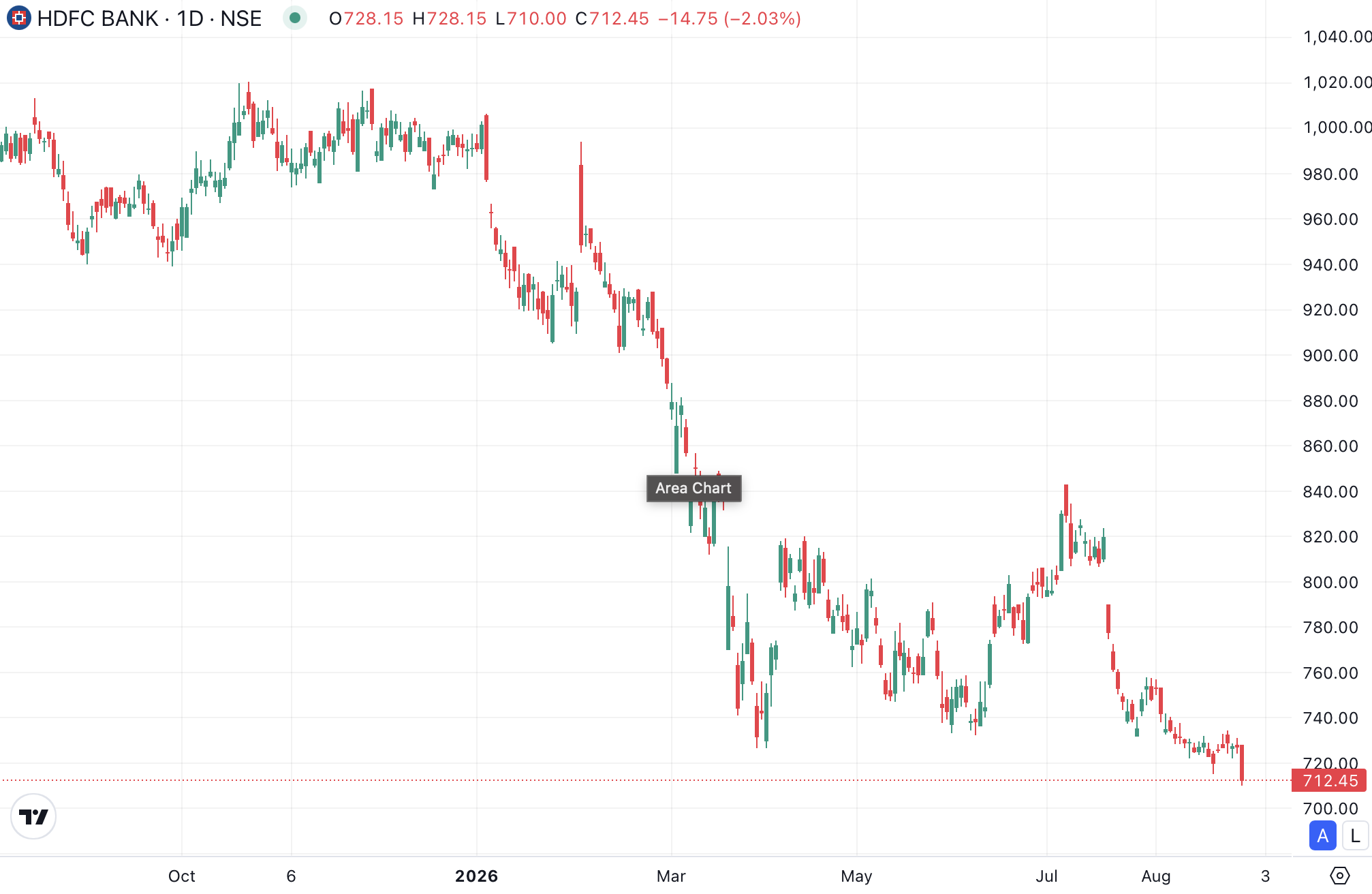
HDFC Bank is India’s largest private-sector lender, carries roughly 10% of the Nifty 50 and 23% of the Bank Nifty, and is worth more than ₹11 lakh crore. Yet the stock has had a rough run. At around ₹727 on August 26, it was nearly 29% below its 52-week high of ₹1,020.50.
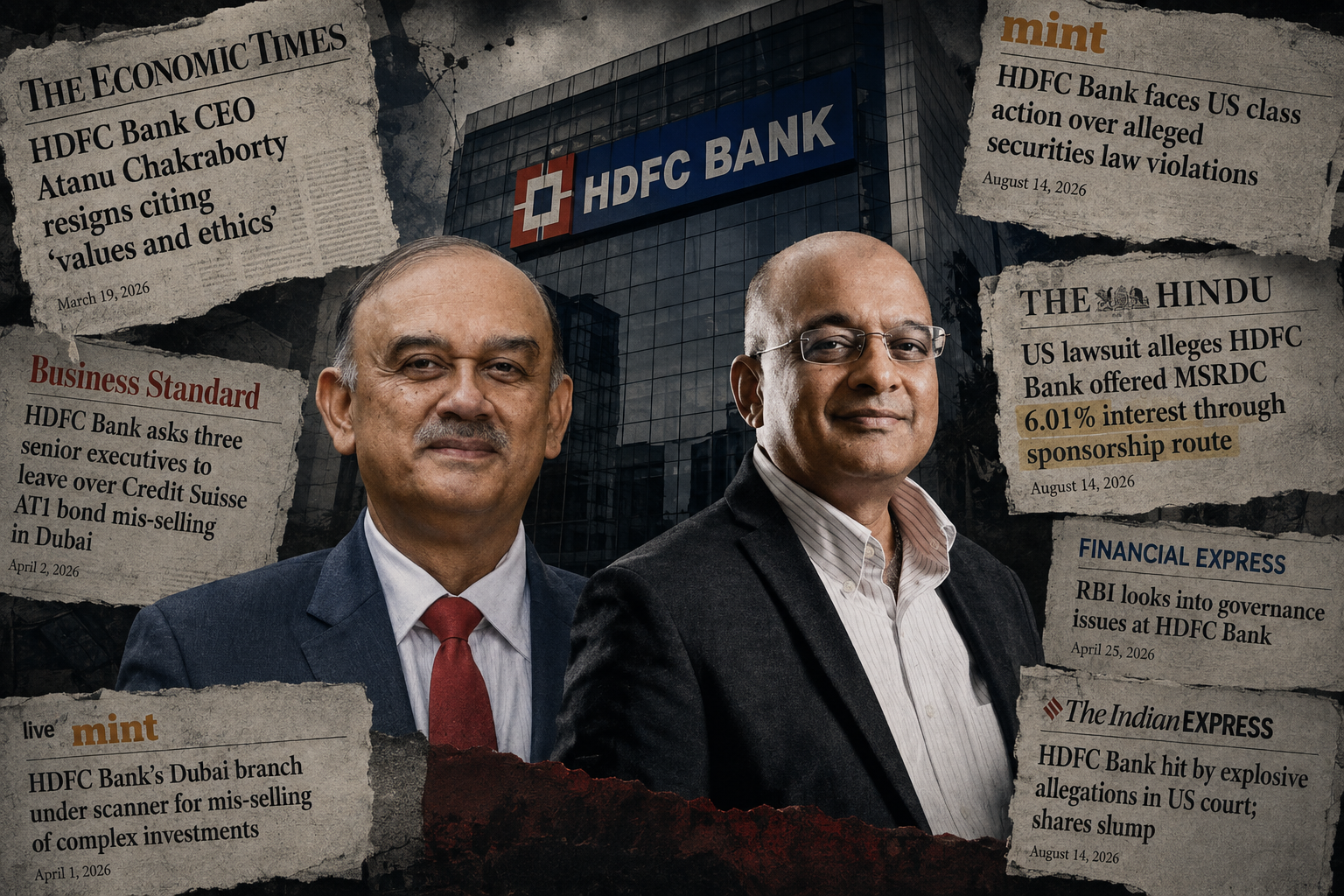
The first major shock came in March, when HDFC Bank’s chairman Atanu Chakraborty resigned. In his resignation letter, he said that some of the practices he had observed at the bank were not in line with his personal “values and ethics.” He later said his decision was based on several concerns, including the bank’s performance, slower credit growth, deposits and issues at its Dubai operations.
One of those Dubai issues involved Credit Suisse AT1 bonds, which HDFC Bank’s Dubai branch had sold to some customers. These were complex and risky bank investments that could lose their entire value if the issuing bank got into serious trouble.
When Credit Suisse collapsed in 2023, its AT1 bonds were wiped out. Questions were later raised about whether HDFC Bank’s Dubai branch had properly explained the risks to customers. Three senior executives were eventually asked to leave the bank in connection with the matter.
HDFC Bank then commissioned an independent legal review into the concerns raised by Chakraborty. In June, the bank said the review found no documentary or witness evidence supporting the allegations made in his resignation.
Another controversy emerged in May, involving the Maharashtra State Road Development Corporation (MSRDC) and around ₹45 crore.
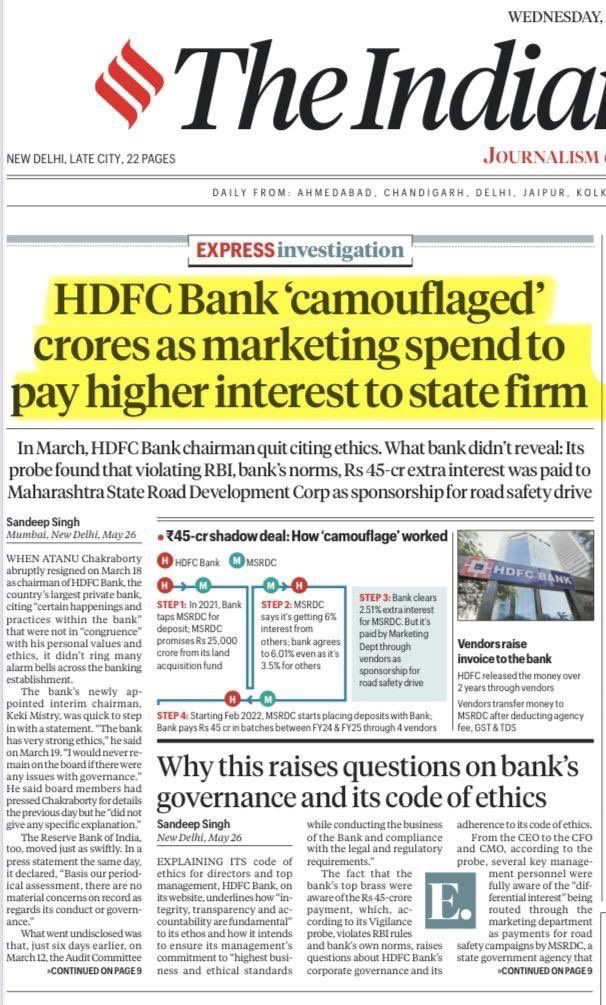
Reports alleged that HDFC Bank had given MSRDC a higher return on its deposits than it normally offered.
The allegation was that instead of simply paying the extra interest, around ₹45 crore was routed through marketing expenses and sponsorships. The US lawsuit later filed against HDFC Bank alleges that this arrangement effectively gave MSRDC an interest rate of 6.01%, compared with the 3.5% rate cited for ordinary savings deposits.
HDFC Bank investigated the matter and, in July, its board said the conduct amounted to “business overreach” rather than misconduct or personal enrichment. However, the bank still issued warning letters and imposed a ₹1 lakh penalty on CEO Sashidhar Jagdishan, CFO Srinivasan Vaidyanathan and retail-assets head Arvind Vohra.
On August 13, investor Jwalant Natvarlal Soneji filed a securities class-action lawsuit in a US federal court against HDFC Bank, Jagdishan and Vaidyanathan. The lawsuit alleges that the bank failed to properly disclose information about the MSRDC arrangement and related issues to investors.
The argument from investors is straightforward. They say HDFC Bank should have disclosed what was happening, and that investors bought the stock without knowing the full picture. Once the information became public and the stock fell, they argue that they suffered losses. That is the basis of the securities-fraud claim, although it remains an allegation and has not been established by a court.
HDFC Bank has rejected the lawsuit as without merit and said it will defend itself. For a bank of HDFC’s size, the ₹45 crore itself is relatively small.
The bigger concern is what these episodes reveal about the bank’s governance and internal controls, especially given the questions already raised following Chakraborty’s resignation.