
 Newsletter
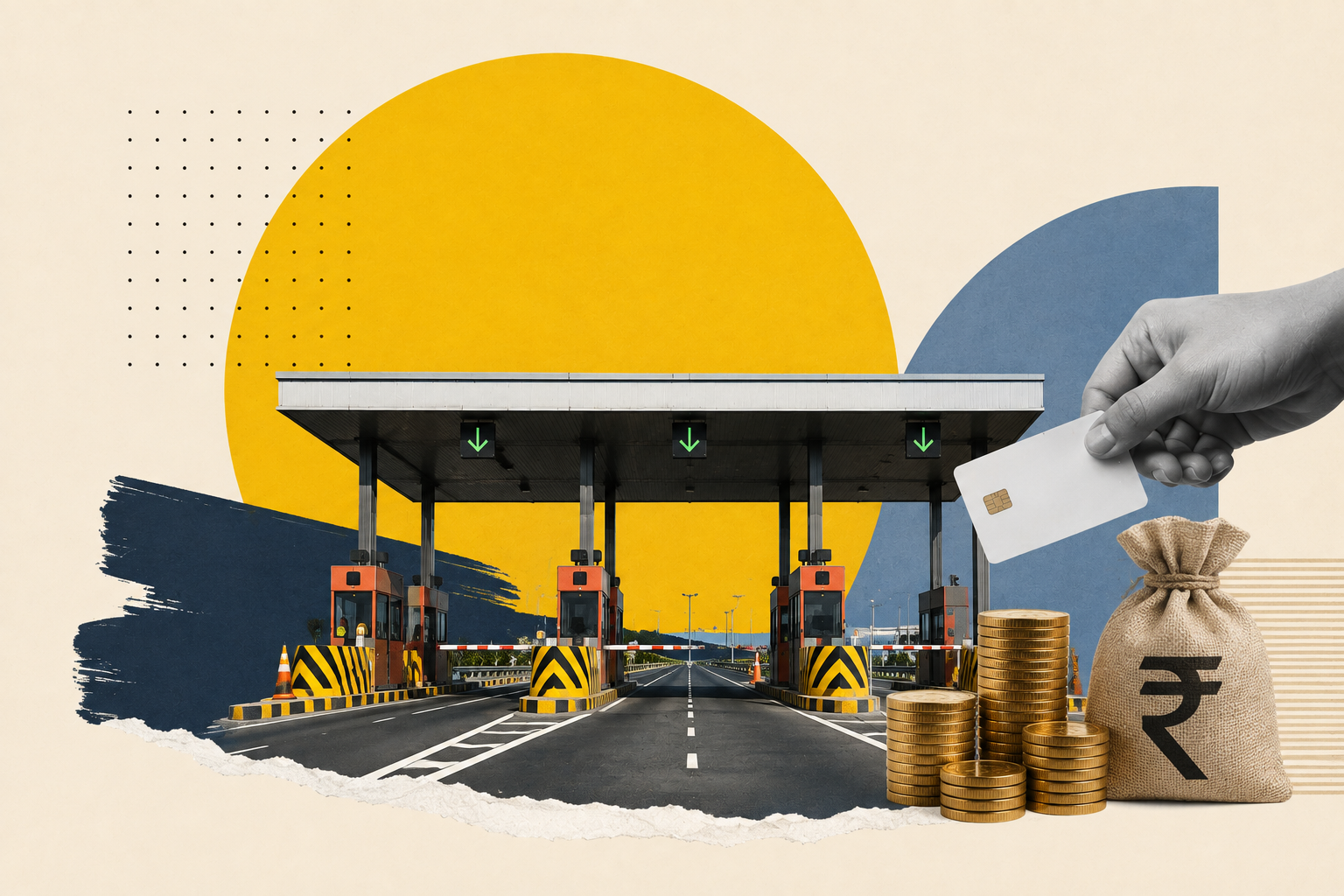
Ever looked at the FASTag beep at a toll plaza and wondered where that money actually goes? It isn’t always the government.
India collected around ₹67,400 crore in toll revenue in FY26, up 12% from the previous year. Toll transactions also rose 14% to 3.81 billion. A growing share of this money is collected by private companies that operate parts of the country’s highway network.
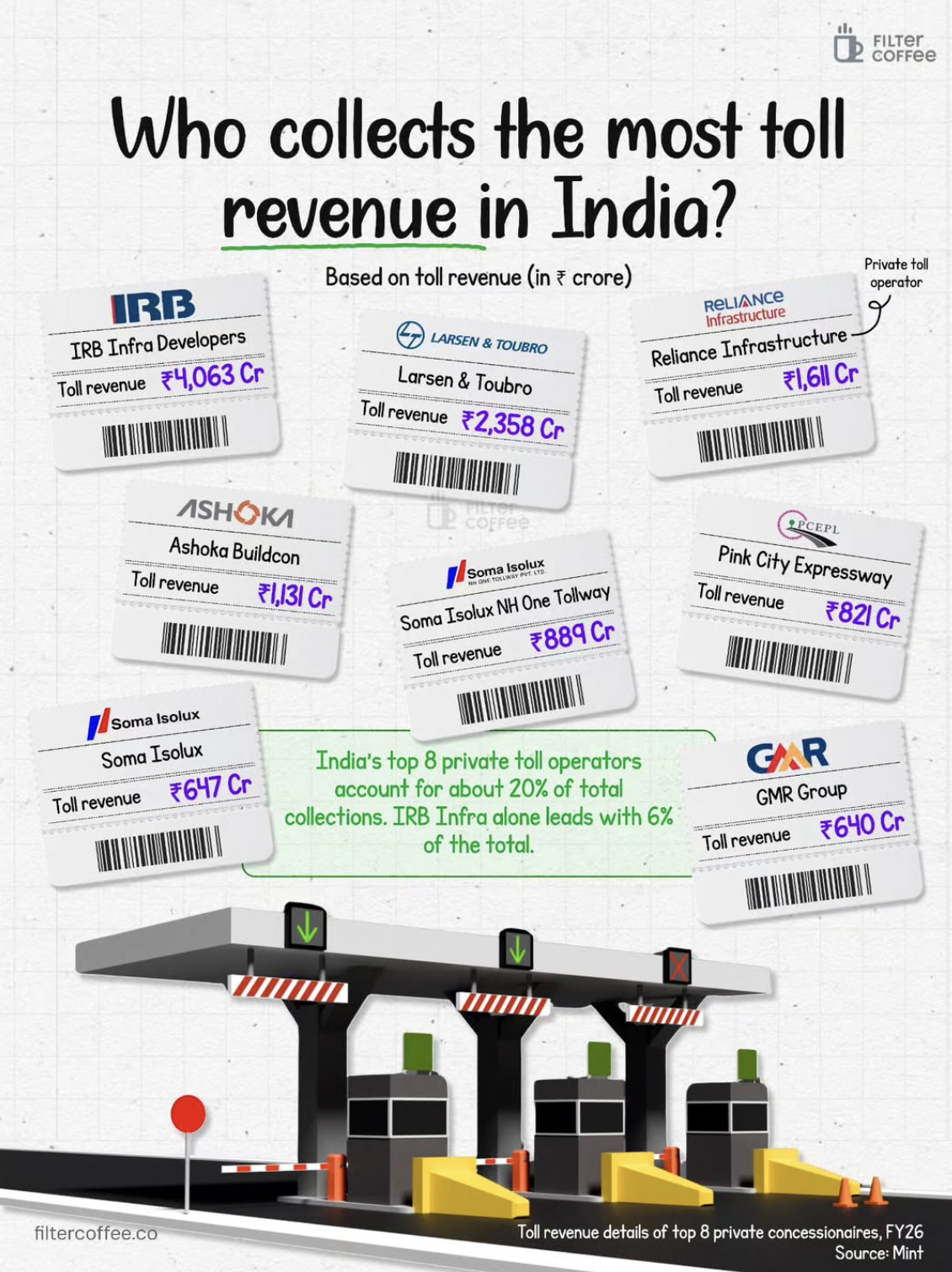
IRB Infrastructure Developers was the biggest private collector, with toll revenue of over ₹4,000 crore in FY26. L&T collected ₹2,358 crore, Reliance Infrastructure ₹1,611 crore and Ashoka Buildcon ₹1,131 crore. There were around 300 private entities holding highway toll concessions, with the top eight accounting for about 20% of total toll collections.
So, does that mean private companies own the roads and keep the toll money? Not quite.
Under different concession agreements, a private company can build, finance or operate a highway and maintain it for a fixed period. In return, it gets the right to collect tolls.
The government has also been selling the rights to collect tolls on completed highways through the Toll-Operate-Transfer model. The operator pays NHAI an upfront amount and then collects the toll revenue over the agreed period. By November 2025, NHAI had raised ₹58,265 crore through such monetisation.
There’s another interesting bit.
Private operators ran only about 27% of toll plazas in FY26, but accounted for roughly half of the toll revenue. That’s because many of these concessions are on busy highways where traffic, and therefore collections, are much higher.
And collecting all this money has become far easier. FASTag accounted for more than 98% of National Highway user fee collections by December 2025. By June 2026, more than 77 lakh people had also bought the government’s ₹3,075 annual FASTag pass.
But there’s a catch.
The Public Accounts Committee raised concerns in 2025 about tolling forever, essentially, tolls continuing on roads even after the original project costs have been recovered. It recommended an independent authority to oversee toll rates and bring more transparency to the system.
So the next time your FASTag beeps and the barrier goes up, remember that the ₹100 or ₹200 leaving your account may be funding a government road, paying a private concessionaire, or forming part of a much bigger highway monetisation deal.