

 Newsletter
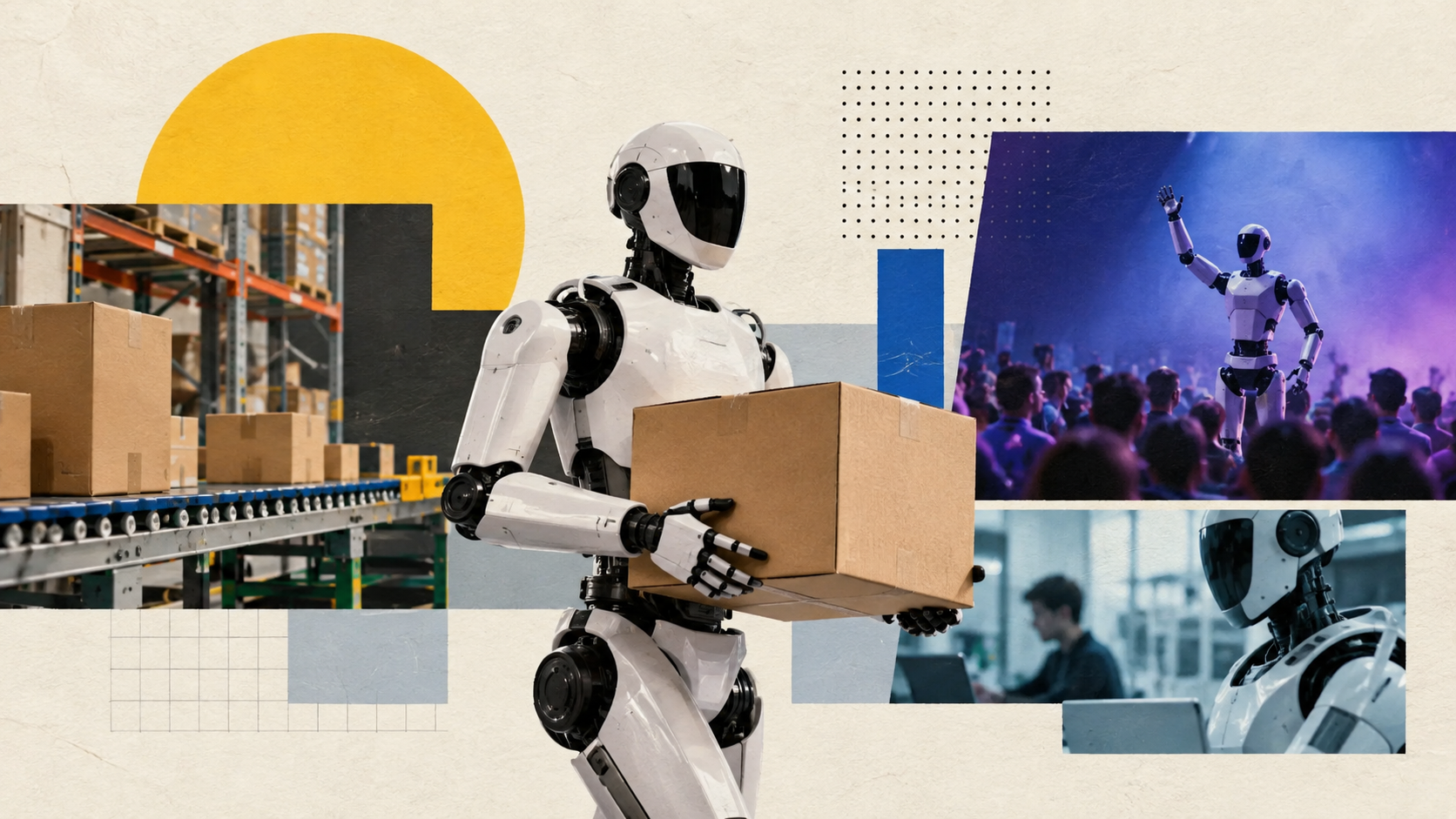
For years, humanoid robots were mostly something we watched in videos. They could walk, dance, pick things up and do a few tricks, but it was difficult to see where they actually fit into the real world.
That is beginning to change.
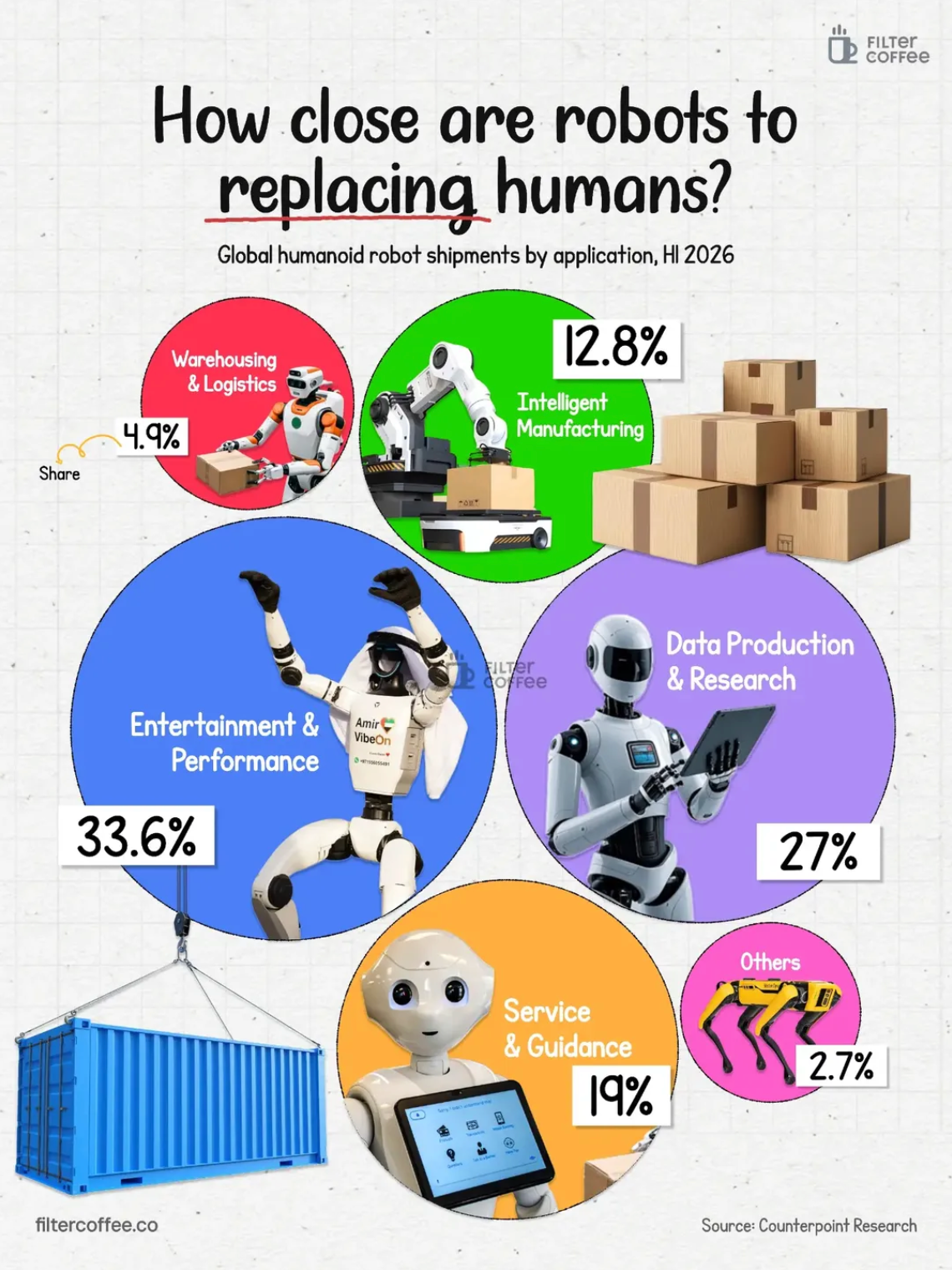
Global humanoid robot shipments jumped nearly 300% year-on-year in the first half of 2026, according to Counterpoint Research. Around 7,000 humanoid robots were sold for industrial and professional use in 2025, and Bank of America expects shipments to reach around 90,000 this year.
But there is an interesting detail in the numbers.
The biggest use for humanoid robots today is actually entertainment and performance, which accounts for 33.6% of shipments in the infographic. Data production and research make up another 27%. Manufacturing accounts for 12.8%, while warehousing and logistics together make up less than 10%.
So despite all the talk about robots taking factory jobs, that is not really happening at scale yet.
Companies are still figuring out where humanoids make the most sense. Automakers are testing them on assembly lines, logistics companies are trying them in warehouses and researchers are using them to collect data and improve how robots interact with the physical world.
There is a simple reason companies are interested. A humanoid can potentially work in places already built for people. It can use stairs, reach shelves and handle objects without companies having to redesign an entire workplace around a machine.
But that does not mean every worker is about to be replaced.
The bigger problem is cost. A robot might be able to do a task, but companies still have to decide whether buying, maintaining and operating one is cheaper than paying someone to do the same job.
That is probably the number that will matter most over the next few years. Not how fast a robot can walk. How much does it cost to get the job done?
If that number eventually starts making sense, humanoid robots could move from interesting technology to something businesses actually budget for.