

 Newsletter

For years, India's career map looked simple.
If you wanted better opportunities, you packed your bags for Bengaluru, Mumbai, Hyderabad or Delhi. But that map is quietly being redrawn.
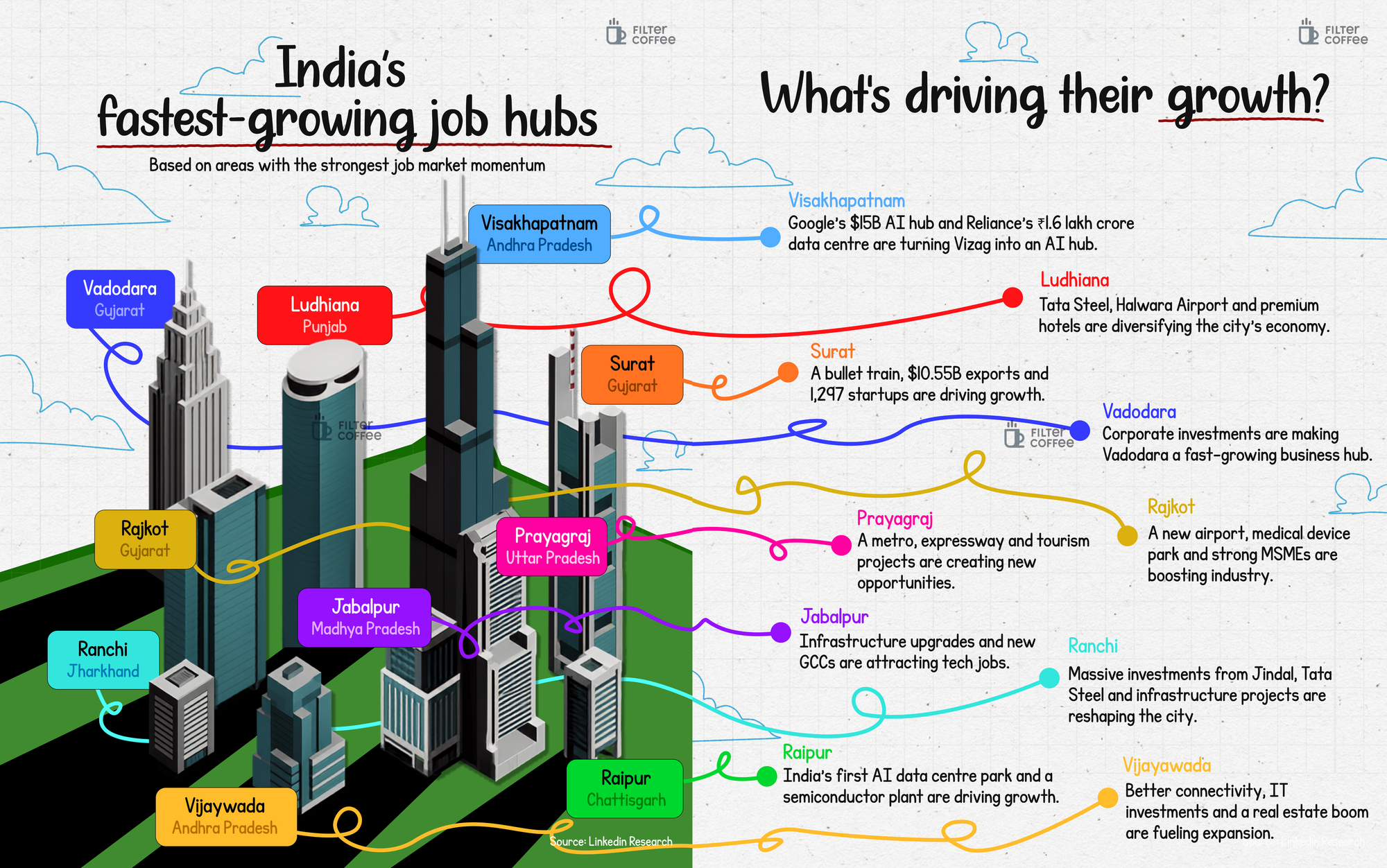
LinkedIn's latest 'Cities on the Rise 2026' report puts Visakhapatnam, Ludhiana, Surat, Vadodara and Prayagraj at the top of India's fastest-growing non-metro job markets, proving that the next big career move may not require moving to a metro at all.
The timing isn't accidental. Nearly 72% of Indian professionals are looking for a new job, yet 76% believe finding one has become harder as competition rises and AI reshapes hiring.
Since 2022, the average number of applications per job has more than doubled. Instead of competing in overcrowded metros, companies are increasingly expanding into cities where land is cheaper, infrastructure is improving and skilled talent is readily available.
Take Visakhapatnam. Once known mainly as a port city, it's rapidly turning into an AI and data infrastructure hub with Google's proposed AI investment and large-scale data centre projects alongside its strong pharma and manufacturing base. Surat is no longer just about diamonds and textiles.
Bullet train connectivity, exports and a thriving startup ecosystem are creating entirely new career opportunities. Ludhiana is expanding beyond manufacturing with aviation, hospitality and steel investments, while cities like Rajkot, Raipur and Jabalpur are benefiting from airports, semiconductor projects, GCCs and major infrastructure upgrades.
This isn't just a jobs story. It's an economic shift. A recent TeamLease report also found that salary growth is increasingly coming from Tier-2 cities, driven by manufacturing, industrial expansion and enterprise investments rather than just IT.
At the same time, LinkedIn says IT services and technology consulting now rank among the top hiring industries across all ten emerging cities, alongside banking and financial services.
For young professionals, this could mean shorter commutes, lower living costs and better quality of life without giving up career growth. For companies, it opens access to a much wider talent pool while reducing operating costs.
The next Silicon Valley of India may not be one city. It could be ten cities growing together. And if this trend continues, the smartest career decision over the next decade might not be choosing the right company, it might be choosing the right city.