

 Newsletter
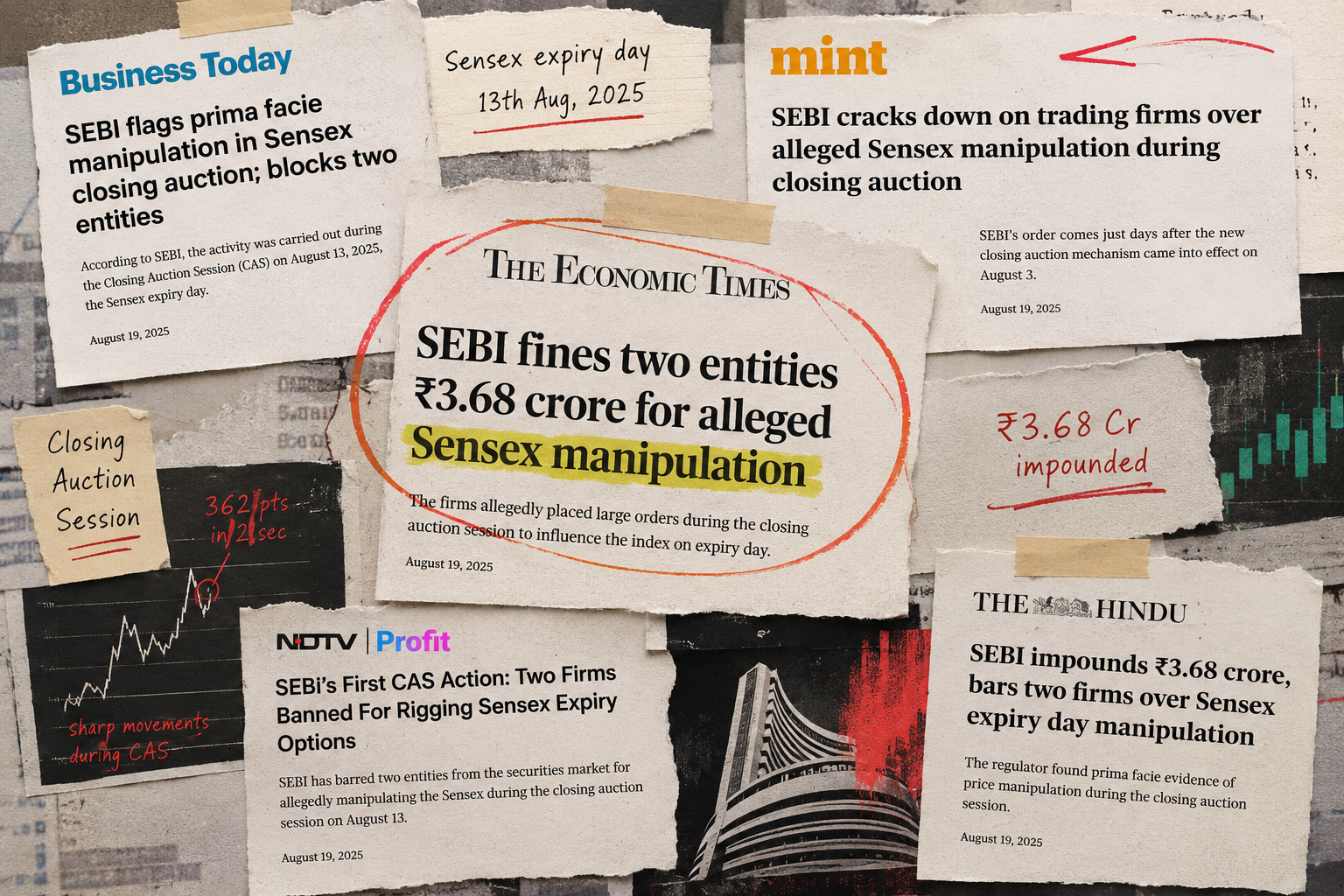
SEBI has barred two firms, Copthall Mauritius Investment and Mansi Share & Stock Broking, after alleging that they tried to influence the Sensex’s closing price during the new Closing Auction Session, or CAS, on August 13. It has also impounded ₹3.68 crore in alleged gains. What makes this interesting is that CAS had only been introduced earlier this month.
So what exactly happened? The easiest way to understand this is to start with the Sensex itself. You probably already know how the Sensex works, but here's a quick refresher because it matters for what happened next. The Sensex is simply a number calculated from 30 stocks. If enough of those stocks move up, the Sensex moves up too. And on a derivatives expiry day, where the Sensex finishes can directly affect how much traders make or lose on their options positions.
That is where the new closing auction comes in. Instead of simply using the usual method to arrive at a closing price, eligible stocks now go through a 20-minute auction after regular trading ends. Buyers and sellers put in orders and the exchange works out a price at which the most orders can be matched. That price becomes the official close.

According to SEBI, Copthall and Mansi already had Sensex options positions that would benefit if the index moved in a particular direction. During the auction, Copthall allegedly placed aggressive buy orders across Sensex stocks, while Mansi allegedly placed large sell orders. The orders were capable of moving the indicative Sensex price, and many were later cancelled.
The reason this matters is pretty simple. If you already have an options bet that makes money when the Sensex rises, pushing some of the stocks inside the index higher while its closing price is being decided could help that bet. You are not necessarily trying to make money from the shares themselves. You are trying to influence the number that your derivative is linked to.
SEBI says Copthall made around ₹2.96 crore and Mansi around ₹71.65 lakh from the alleged activity. It has barred both from the securities market and from participating in CAS. There is no allegation that the two firms were working together.
The case is also an early test for CAS itself. The whole idea behind the new system was to make closing prices more reliable and improve price discovery. SEBI's first enforcement action involving CAS shows just how closely those final few minutes can be watched when large derivatives positions are riding on the closing number.
The case isn't over yet. But for a system that was supposed to make the market's final price harder to influence, SEBI's first big test of CAS has already raised some interesting questions.