

 Newsletter

How much money is enough? It’s one of those questions that sounds philosophical until you put a number on it.
A 2026 estimate puts India's “income satiation point” at around $21,600 a year, or roughly ₹20 lakh. In simple terms, this is the point after which earning more is estimated to add less to overall well-being. It isn't a magic salary and it certainly doesn't mean someone earning ₹20 lakh has “made it”. It’s a benchmark for where the relationship between income and life satisfaction starts becoming weaker.
And from a money perspective, that is actually quite interesting.
Think about what happens when someone's income goes from ₹5 lakh to ₹10 lakh. A large part of that additional money can go towards things that genuinely change their financial situation: better housing, better food, fewer worries about unexpected expenses, more savings or simply being able to spend without checking the bank balance every time.
Now compare that with someone going from ₹50 lakh to ₹60 lakh. That's still ₹10 lakh more, but the additional money is less likely to change the basics of their life. It may go towards a better car, another holiday, investments or a nicer house. The benefit is still there, but the jump isn't the same.
Economists have been studying this diminishing effect for years. And recent research in India points in the same direction. A 2025 study found that additional income has a stronger relationship with life satisfaction among people who are already less satisfied, while the effect becomes weaker among those who report higher satisfaction. Another study using data from older Indian adults found that where someone sits in the income ladder matters too. Your income isn't viewed in isolation; your position relative to other people matters.
That has an interesting implication for India's economy.
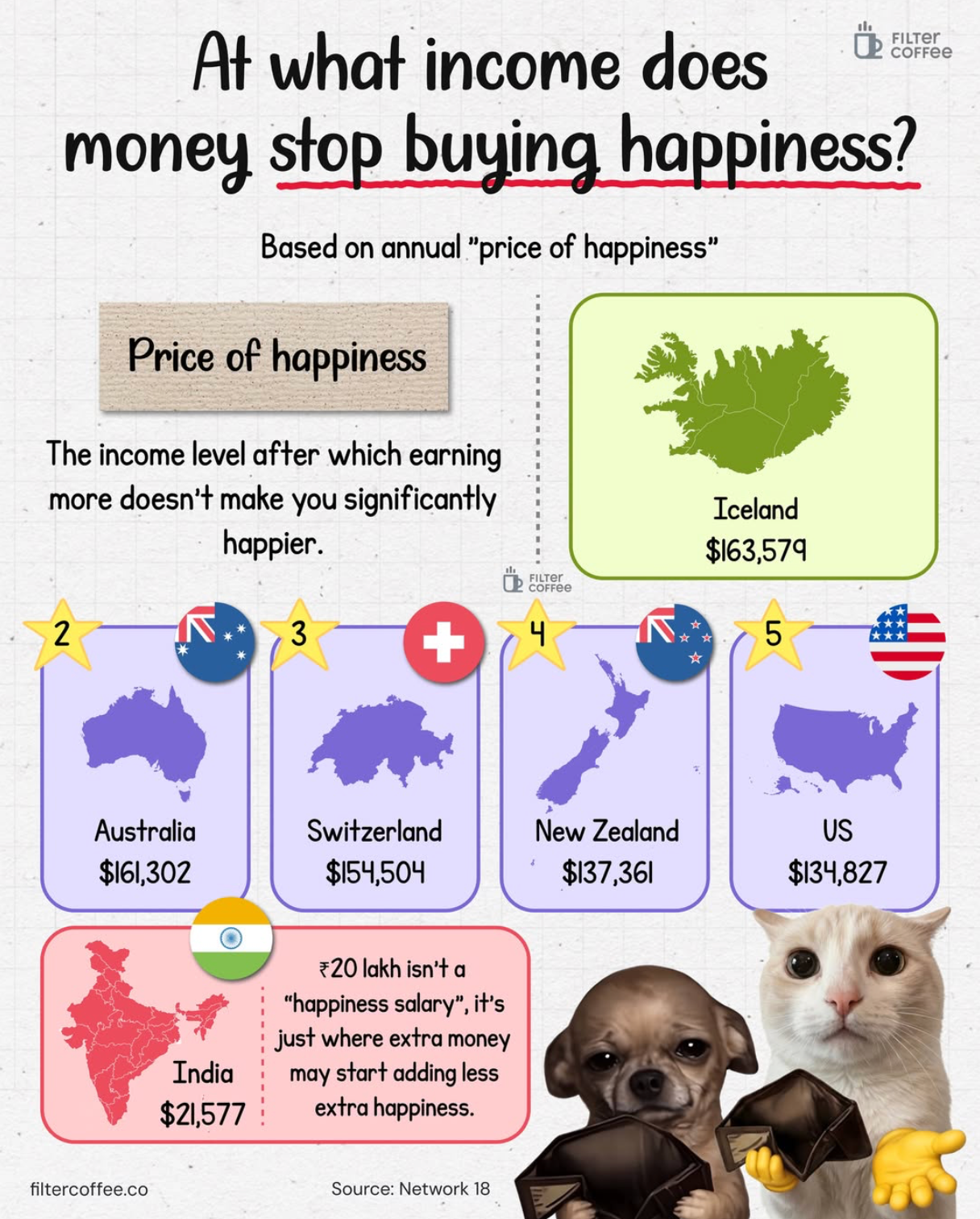
As incomes rise, consumer spending doesn't simply stop. It changes. Someone moving from ₹5 lakh to ₹10 lakh might spend more on basic consumption and financial security. At higher income levels, the additional rupee is more likely to find its way into premium products, travel, investments, real estate and financial assets.
And that's where the ₹20 lakh number gets interesting for investors. It isn't really about finding the salary at which people stop wanting more money. It's about understanding how spending behaviour changes as people move up the income ladder.
India's per-capita income is still far below that level, which means the country's consumption story has a long runway. But as more households move into higher income brackets, the companies benefiting from that growth may change too.
The next ₹10 lakh someone earns doesn't necessarily make them happier in the same way. But it can certainly change what they buy, where they invest and what kind of businesses they spend that money on.