

 Newsletter

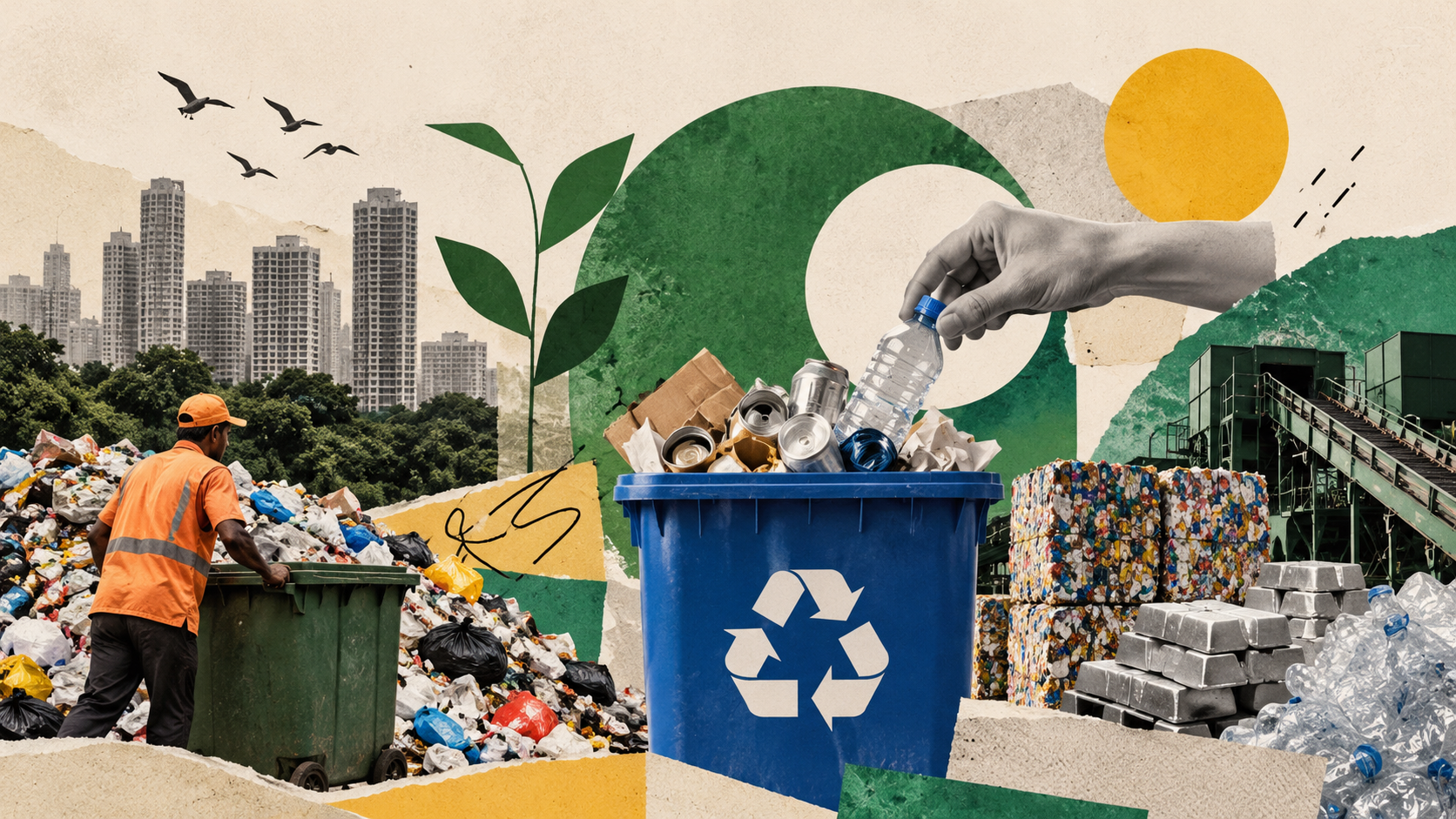
India throws away thousands of tonnes of rubbish every day. Plastic bottles, food packaging, old batteries and discarded electronics pile up across cities. Most people see garbage. For some companies, it’s the raw material they work with.
The government’s new Solid Waste Management Rules came into effect on April 1, 2026. They require waste to be separated into four categories: wet, dry, sanitary and special-care waste. The rules also put greater responsibility on bulk waste generators to manage what they throw away.
The need is clear. Government data published in 2025 showed that Indian cities generated around 1.59 lakh tonnes of solid waste daily, while roughly 1.29 lakh tonnes were processed. That’s a lot of waste being handled, but there’s still plenty left to manage better.
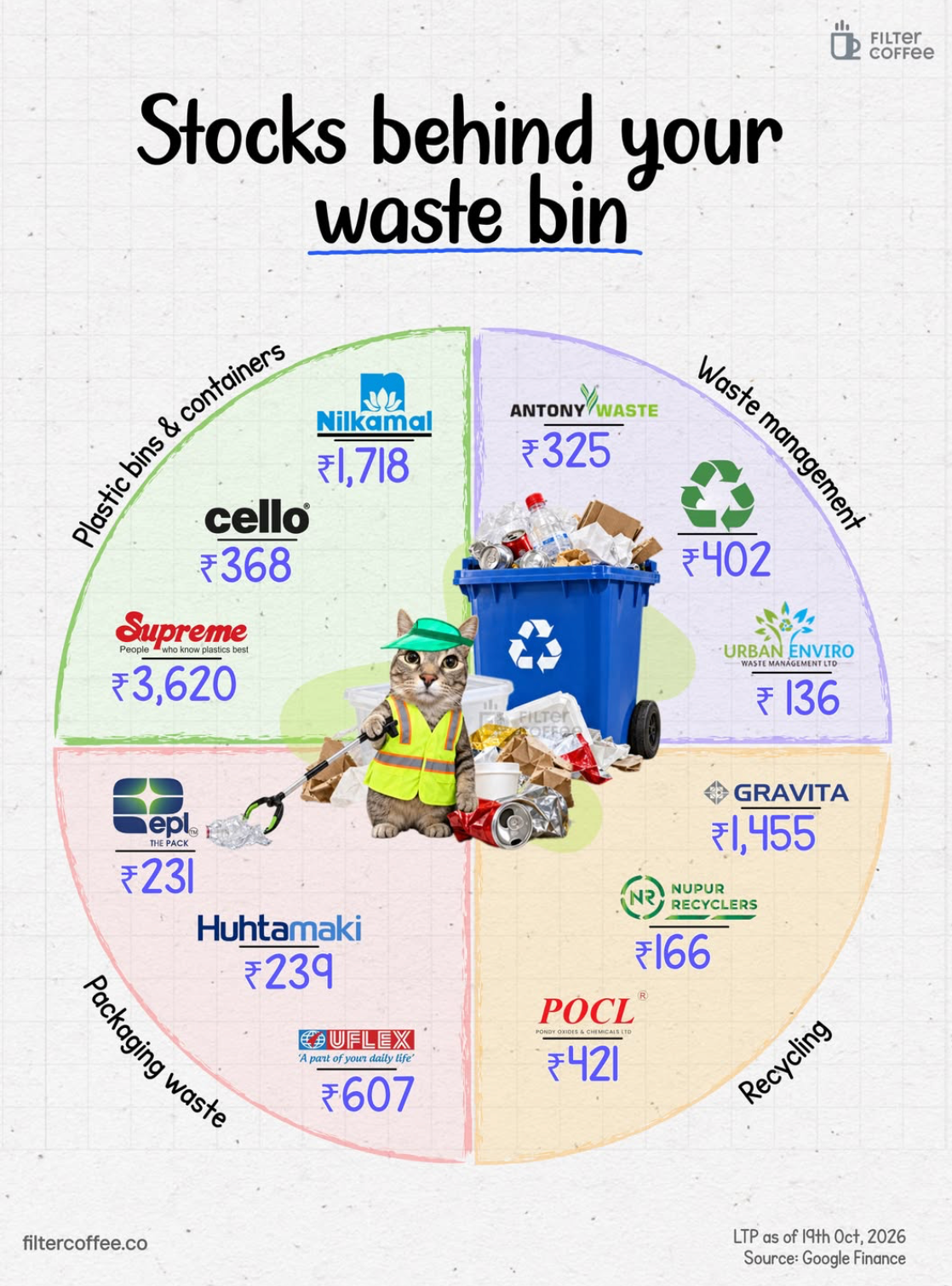
Several listed companies work in different parts of this business. Antony Waste Handling collects and processes municipal waste, while Urban Enviro provides waste management services. Their performance depends on contracts, operating costs and how efficiently they run their operations.
Then there are companies that recover materials worth selling. Gravita India recycles lead and other materials, while Pondy Oxides specialises in metal recycling. Packaging companies such as UFlex, Huhtamaki and EPL operate in a related space, although their businesses are not limited to waste management.
Government rules are also pushing businesses to take responsibility for what happens after their products are used. Under Extended Producer Responsibility, companies must meet specified obligations for managing waste from products such as plastic packaging, batteries and electronic goods. This creates demand for collection and recycling services.
But recycling isn’t as simple as picking up rubbish and selling it for a profit. Waste needs to be collected, sorted and processed, often at considerable cost. Recovered materials must have buyers, and their prices can change. Companies that depend on municipal contracts also need to keep a close eye on payments and expenses.
For investors, the important question isn’t just how much waste India produces. It’s which companies can turn that waste into a sustainable business. As regulations tighten and recycling becomes more organised, the industry could grow. But growth in waste volumes alone won’t guarantee better profits for every company in the sector.