
 Newsletter

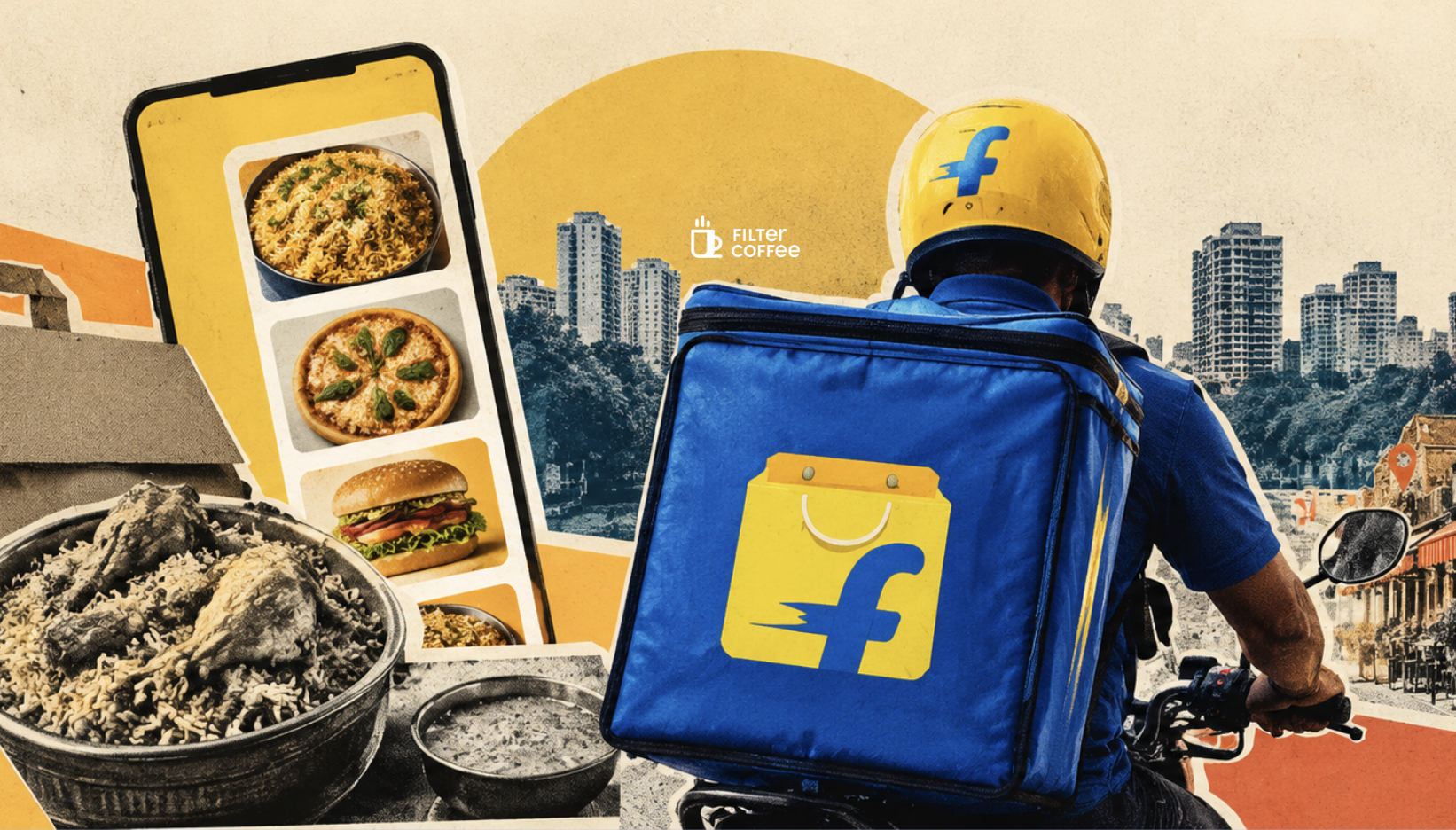
Flipkart wants to deliver your next biryani. And it is reportedly willing to charge restaurants less than half the usual commission to make that happen.
According to a recent TechCrunch report, the Walmart-owned e-commerce giant is testing a food-delivery service called Eat-in by Minutes with over 8,000 employees in Bengaluru. It has reportedly deployed dedicated Ekart riders, started approaching restaurant operators and could launch the service publicly by the end of October.
But Flipkart's biggest selling point has little to do with how quickly it can deliver your lunch.
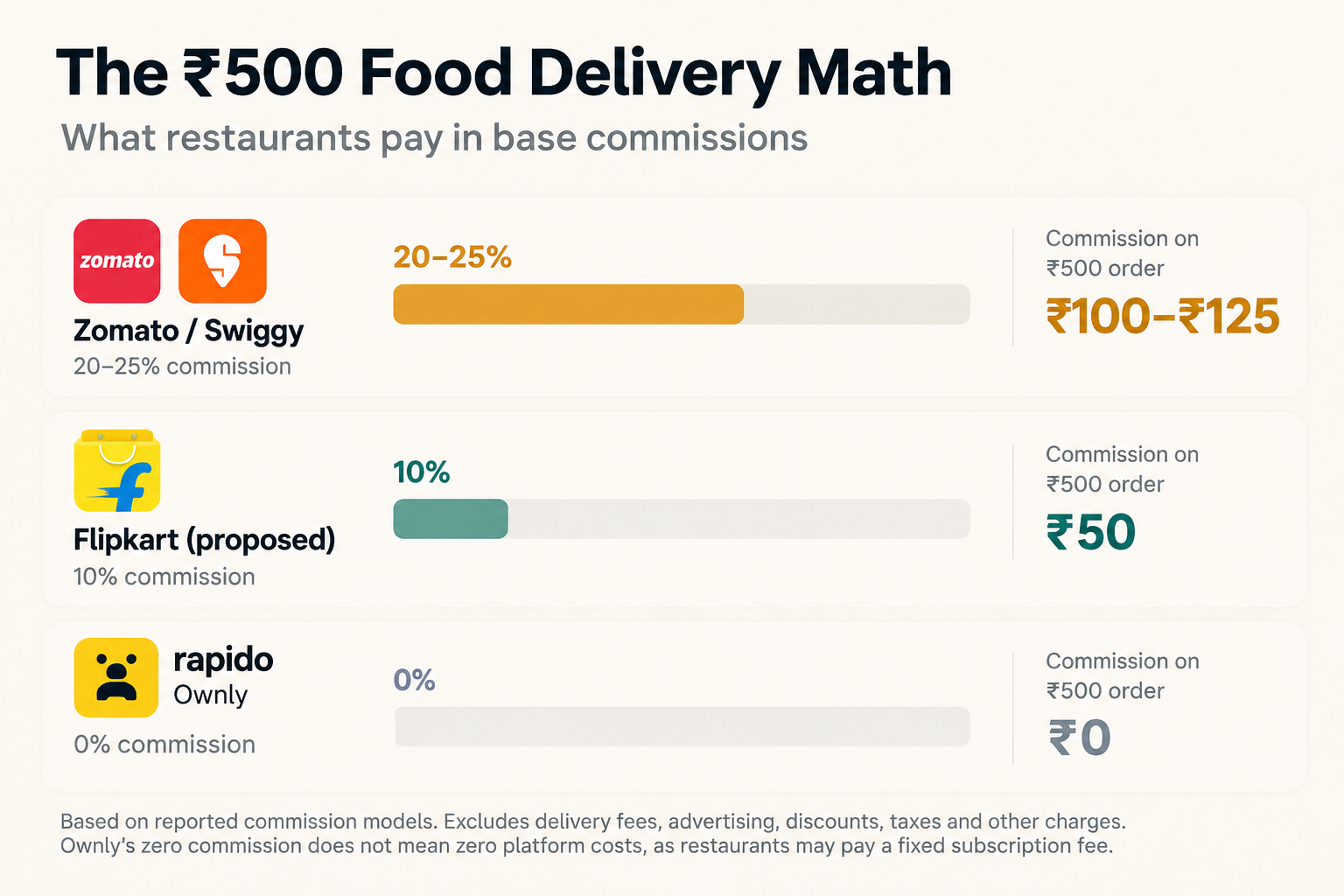
The company is reportedly proposing a base commission of around 10% to restaurants. That's considerably lower than the 20–25% typically charged by established food-delivery platforms such as Zomato and Swiggy, according to Sagar Daryani, president of the National Restaurant Association of India (NRAI).
And Flipkart isn't entering an empty market. Zomato and Swiggy have spent years building delivery networks, signing restaurants and becoming the default apps for ordering food. Amazon tried entering the same business in 2020 and eventually shut it down.
So why does Flipkart believe now is a good time to try?
Well, India's food-delivery business has a rather unusual problem. Customers love the convenience, restaurants depend on the orders, but the cost of bringing the two together has become a growing source of friction.
Consider a restaurant selling a ₹500 meal through a delivery app. At a 25% commission, ₹125 goes to the platform before the restaurant accounts for ingredients, packaging, staff, rent and other expenses. And commissions aren't necessarily the only cost.
Restaurants may also spend on advertisements to appear higher in search results, offer discounts to attract customers and participate in promotional campaigns. Daryani told TechCrunch that these additional expenses can push total platform-related costs to 40–50% of an order's value in some cases.
Of course, these aren't universal rates. Actual costs depend on restaurant contracts, promotions and how much a business chooses to spend on marketing. But they explain why restaurant owners have been looking for alternatives.
At Flipkart's proposed 10% commission, the platform would take ₹50 from that same ₹500 order. That's a potential saving of ₹50–75 compared with a 20–25% base commission.
For a restaurant handling 100 such orders every day, the difference could work out to ₹1.5–2.25 lakh a month in base commissions alone.
That's quite an incentive to try a new delivery partner.
And Flipkart has something that most new food-delivery startups don't: an enormous existing e-commerce operation.
Think about how often you open Flipkart. Perhaps when there's a sale, you need a new phone or you're replacing something at home. Even regular shoppers aren't necessarily ordering electronics, clothes or furniture every week.
Food works differently. People order lunch, dinner, snacks and the occasional late-night meal. A customer who buys a phone once every three years might order food several times in a single week.
For Flipkart, that means more opportunities to bring customers back to its app, sell them other products and build a habit around everyday purchases.
The company has already been moving in that direction through Flipkart Minutes, its quick-commerce business. Instead of waiting for customers to make occasional shopping purchases, it wants to serve more of their immediate needs.
And there's a reason for that urgency.
Quick-commerce platforms such as Blinkit, Zepto and Swiggy Instamart have been expanding beyond groceries into electronics, beauty products, household goods and other categories traditionally associated with e-commerce.
In other words, companies that started by delivering groceries are increasingly competing for the same purchases that Flipkart wants.
Entering food delivery would give Flipkart another way to participate in India's growing market for everyday, on-demand consumption.
It also has a logistics operation to build on.
Flipkart's Ekart network already handles deliveries across India, while Flipkart Minutes has given the company experience in faster, hyperlocal fulfilment. Existing technology, customer relationships and delivery expertise could help it enter the food business without building every part of the operation from scratch.
But delivering a smartphone and delivering a hot pizza are two very different businesses.
An e-commerce parcel can often spend hours moving through warehouses and sorting centres. A food order needs to be picked up shortly after preparation and delivered while it's still fresh. Riders must be available around lunch and dinner, when demand rises sharply, and restaurants need to prepare orders on time.
That means Flipkart will still have to spend money building a reliable food-delivery network. Its reported decision to use dedicated Ekart riders suggests it understands that existing parcel logistics cannot simply be repurposed for restaurant orders.
And this is where its 10% commission becomes a difficult promise.
Food-delivery platforms spend money on riders, technology, customer support, refunds, promotions and acquiring new users. Lower commissions leave less revenue to cover those expenses, unless the platform can compensate through delivery charges, advertising or other income.
Flipkart hasn't publicly explained how its proposed pricing would work at scale, including who would bear the full cost of delivery.
There's also an interesting competitor already experimenting with an even cheaper model.
Earlier this year, Rapido expanded its food-delivery platform, Ownly, across Bengaluru with a zero-commission proposition for restaurants. Instead of taking a percentage of each food order, the model relies on delivery fees and other operating arrangements to support the service.
Ownly claimed nearly 20,000 restaurant partners at its citywide launch in March 2026, and the NRAI has supported its approach.
So Flipkart isn't the first company to recognise that restaurants want lower commissions. Nor is 10% the cheapest proposition available.
The challenge is getting customers to change their ordering habits.
Zomato and Swiggy already have extensive restaurant selections, established delivery networks and membership programmes that encourage repeat purchases. Someone who has spent years ordering through either app may not switch simply because another company has entered the market.
And restaurants won't necessarily move their business either. A platform charging 25% but delivering hundreds of orders could still be more valuable than one charging 10% but generating very little demand.
Flipkart needs both sides to show up. Customers want plenty of restaurant choices, while restaurants want enough customers to justify joining. Building one without the other is expensive.
Amazon learnt that lesson the hard way.
In May 2020, Amazon launched its own food-delivery service in Bengaluru. It had an existing shopping app, logistics experience and considerable financial resources. Yet the business struggled to gain traction against established competitors and was shut down in December 2022.
Amazon's experience is a useful reminder that having millions of shopping customers doesn't automatically make a company successful at delivering food.
Still, Flipkart is entering at a time when restaurants have more reasons to experiment with competing platforms. The emergence of Ownly, continued concerns over commissions and the growing overlap between e-commerce and quick commerce have created an opening.
And a third major competitor could eventually benefit customers too.
If Flipkart manages to lower the cost of delivering food, restaurants might have more room to offer discounts or maintain competitive prices. Existing platforms could face pressure to reconsider commissions and promotional charges.
But lower restaurant commissions don't guarantee cheaper meals. Restaurants may retain the savings, while customers could still face delivery fees, packaging charges and other costs.
Flipkart's entry is also happening as the company prepares for a possible public listing. Expanding into more frequent purchases could strengthen its broader growth story, although food delivery will need to demonstrate that it can generate sustainable business rather than simply attract orders through discounts.
For now, Eat-in by Minutes remains an internally tested service, and its reported launch plans could change.
The first signs of success won't necessarily be how many restaurants Flipkart signs or how aggressively it discounts meals. What matters is whether customers keep ordering after the introductory offers disappear, whether riders can complete enough deliveries efficiently, and whether restaurants continue to find the platform worthwhile.
Zomato and Swiggy have already shown that Indians are willing to pay for the convenience of having food delivered. Flipkart is now betting that it can offer restaurants a cheaper way to reach those customers while giving people another reason to open its app.
Its proposed 10% commission may be enough to get restaurants interested. Whether it can build a sustainable delivery business at that price will determine how serious a challenger it becomes.
Sources: TechCrunch, Moneycontrol (Rapido Ownly), Moneycontrol (Ownly's Growth), TechCrunch (Amazon Food).