
 Newsletter

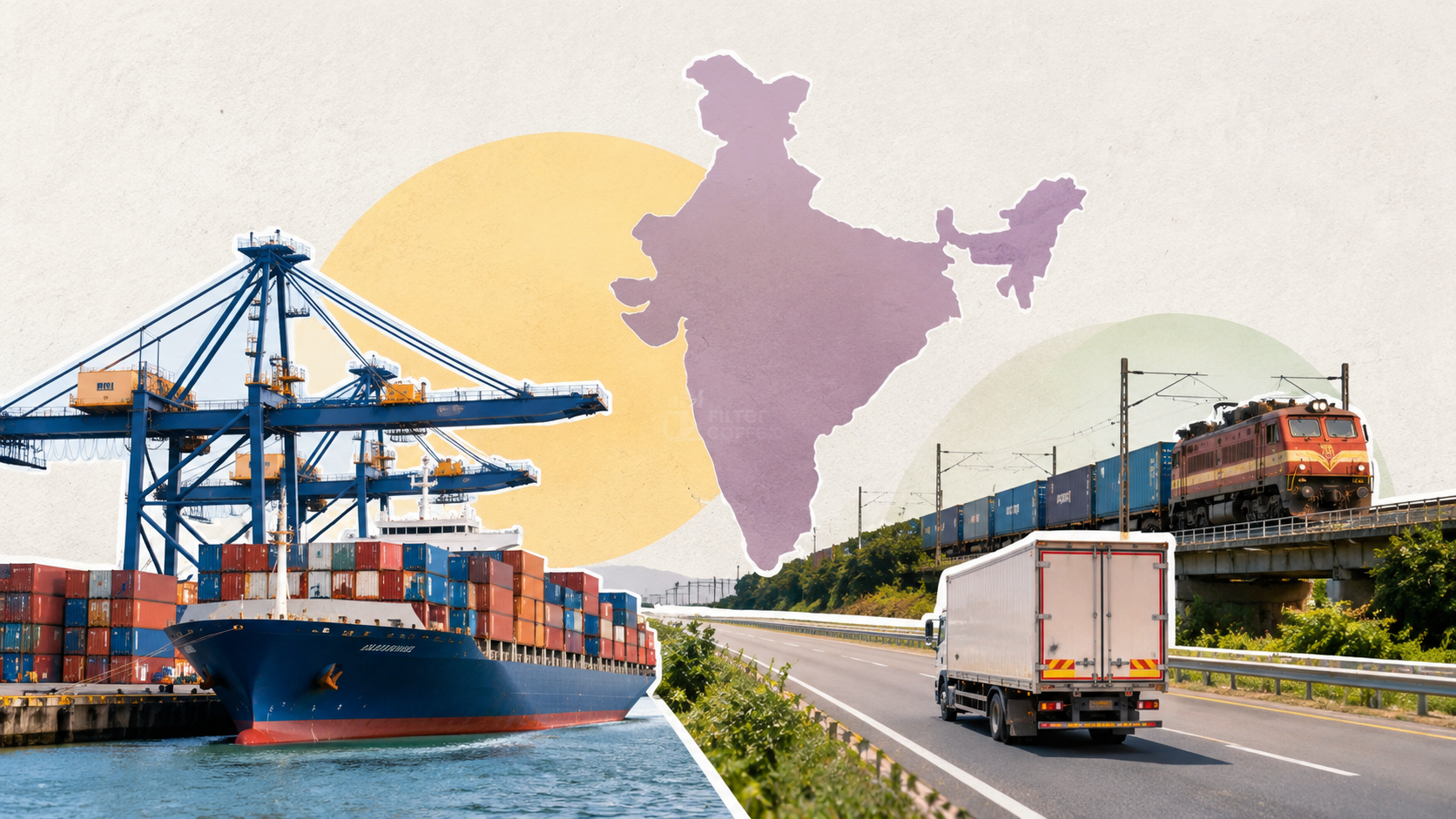
A product made in India can be ready to ship in a day and still spend several more days getting to its destination. Sometimes the problem isn't the factory, the product or even the demand. It's everything that happens in between.
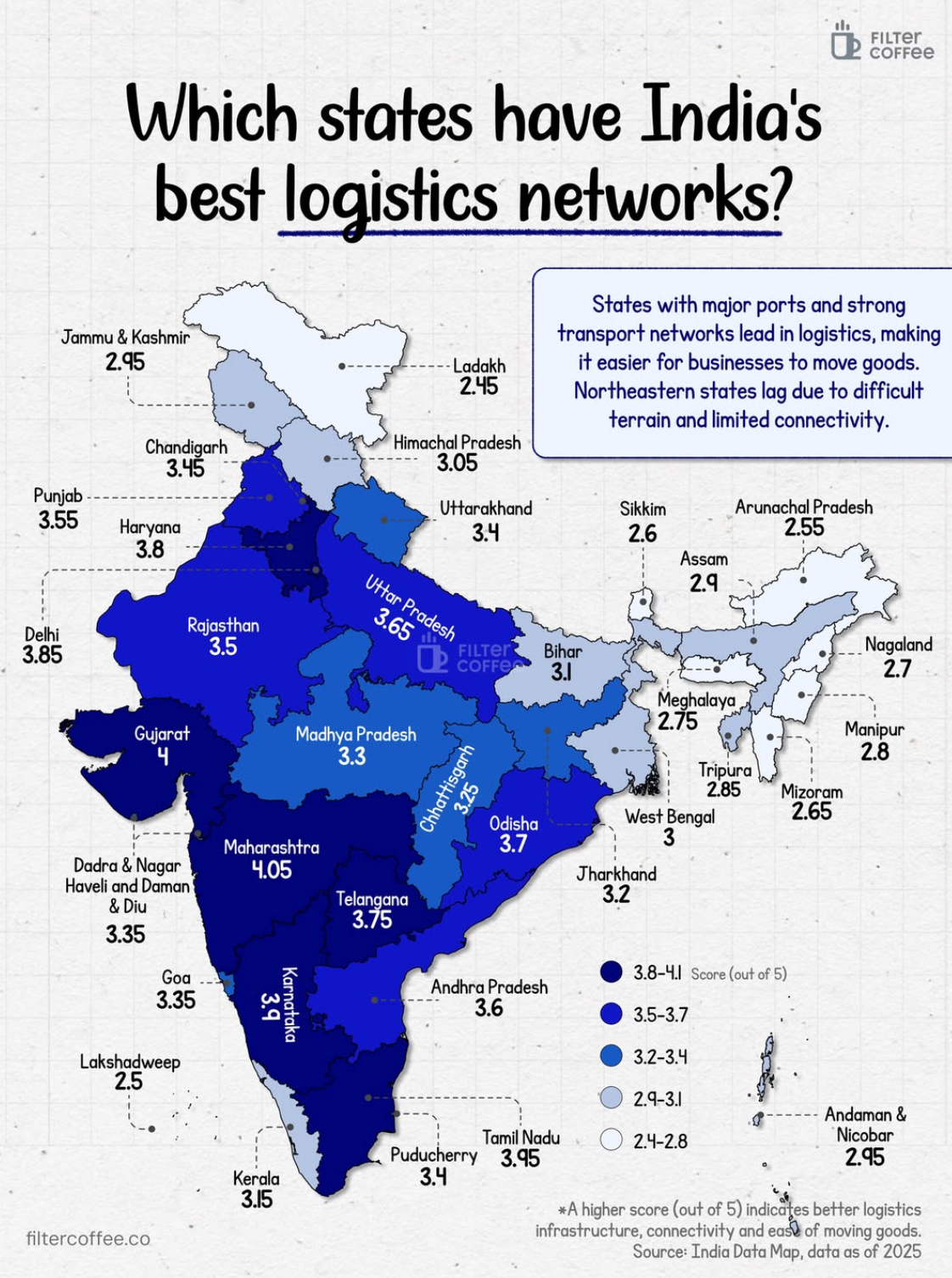
That is what makes India's logistics network so important. And a 2025 state-wise assessment by India Data Map offers an interesting picture of where different states stand. Maharashtra leads with a score of 4.05 out of 5, followed by Gujarat at 4.00 and Tamil Nadu at 3.95. The scores reflect the advantages of strong transport links, industrial activity and access to ports. They are not an official government ranking, but they do point to where India's logistics infrastructure is strongest.
The latest government assessment, LEADS 2025, also puts the spotlight on how states are performing. Tamil Nadu was classified as an Exemplar among coastal states, while Maharashtra and Gujarat were placed in the High Performer category.
There is a good reason these states keep showing up near the top. Maharashtra has the industrial belt around Mumbai and Pune, along with major ports. Gujarat has a long coastline and a strong manufacturing base. Tamil Nadu combines ports with large automobile, electronics and manufacturing clusters. For businesses in these regions, getting raw materials in and finished products out is relatively easier.
The government is now trying to improve those connections elsewhere too. Indian Railways had approved 306 Gati Shakti Cargo Terminals by January 2026, with 118 already operational. The idea is simple: make it easier for businesses to move goods between road and rail, instead of relying on trucks for almost every leg of the journey.
India's ports are seeing more activity as well. In the first five months of FY2026-27, major ports handled 390.4 million tonnes of cargo, 7.2% more than the same period a year earlier.
But the gap between states remains significant. Difficult terrain and weaker connectivity make freight movement more expensive in parts of the Northeast. Even in industrial states, congestion, delays and poor last-mile links can eat into the advantages of having a port or a highway nearby.
For a country trying to become a bigger manufacturing hub, this matters. Companies don't just compare wages or factory costs when deciding where to produce. They also look at how reliably they can get goods to customers. India's next logistics challenge is not simply to build more infrastructure, but to make the network work as one.