

 Newsletter
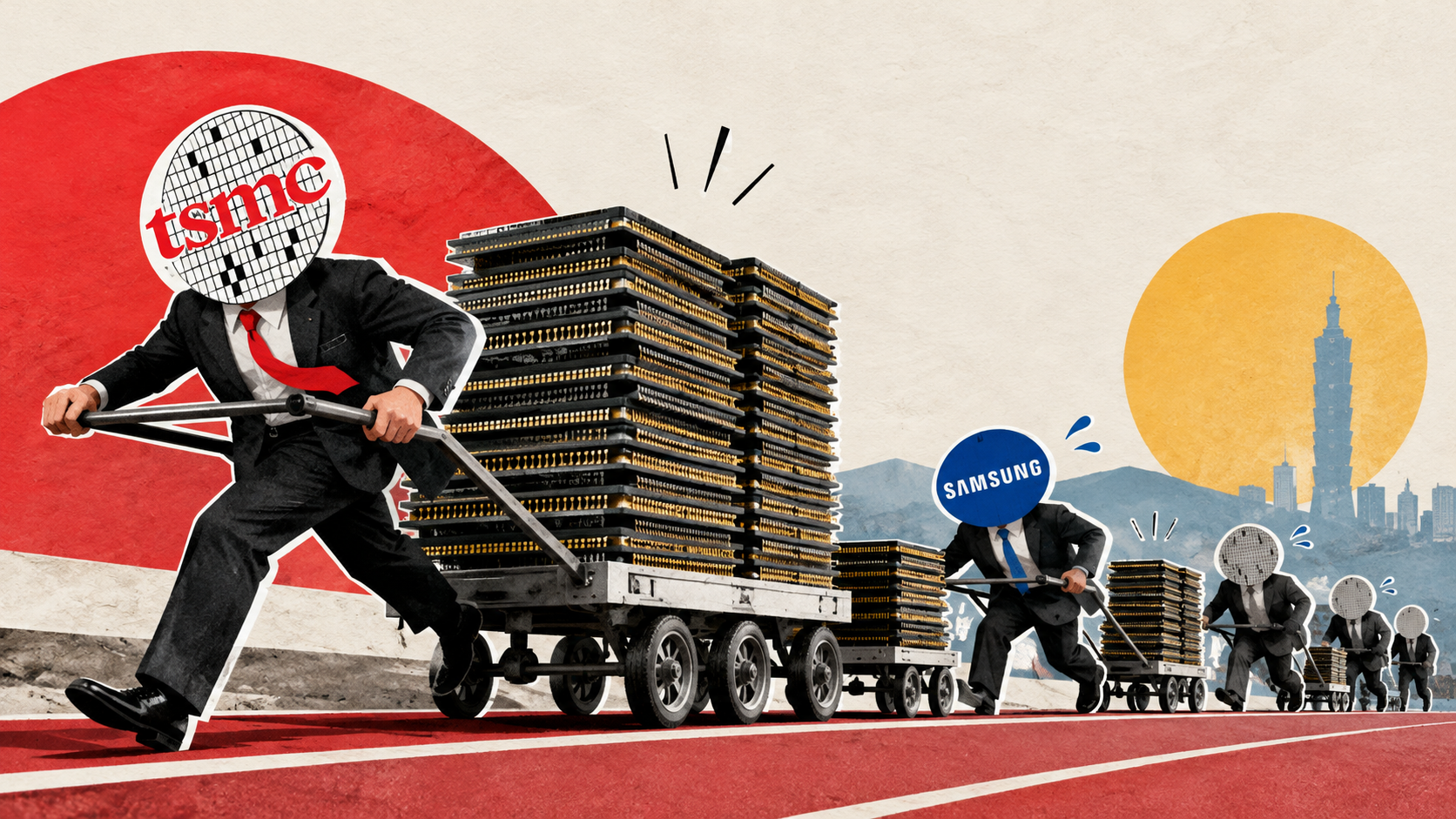
Most people know Nvidia for the chips that power AI. But Nvidia doesn't actually manufacture them. That job largely falls to another company, Taiwan Semiconductor Manufacturing Company (TSMC), which has become one of the most important businesses in the technology industry.
In the second quarter of 2026, TSMC accounted for 73% of the global pure-play foundry market, according to Counterpoint Research. Samsung Foundry, its nearest competitor, had just 7%. The market grew 29% year-on-year, helped by rising demand for chips used in AI systems.
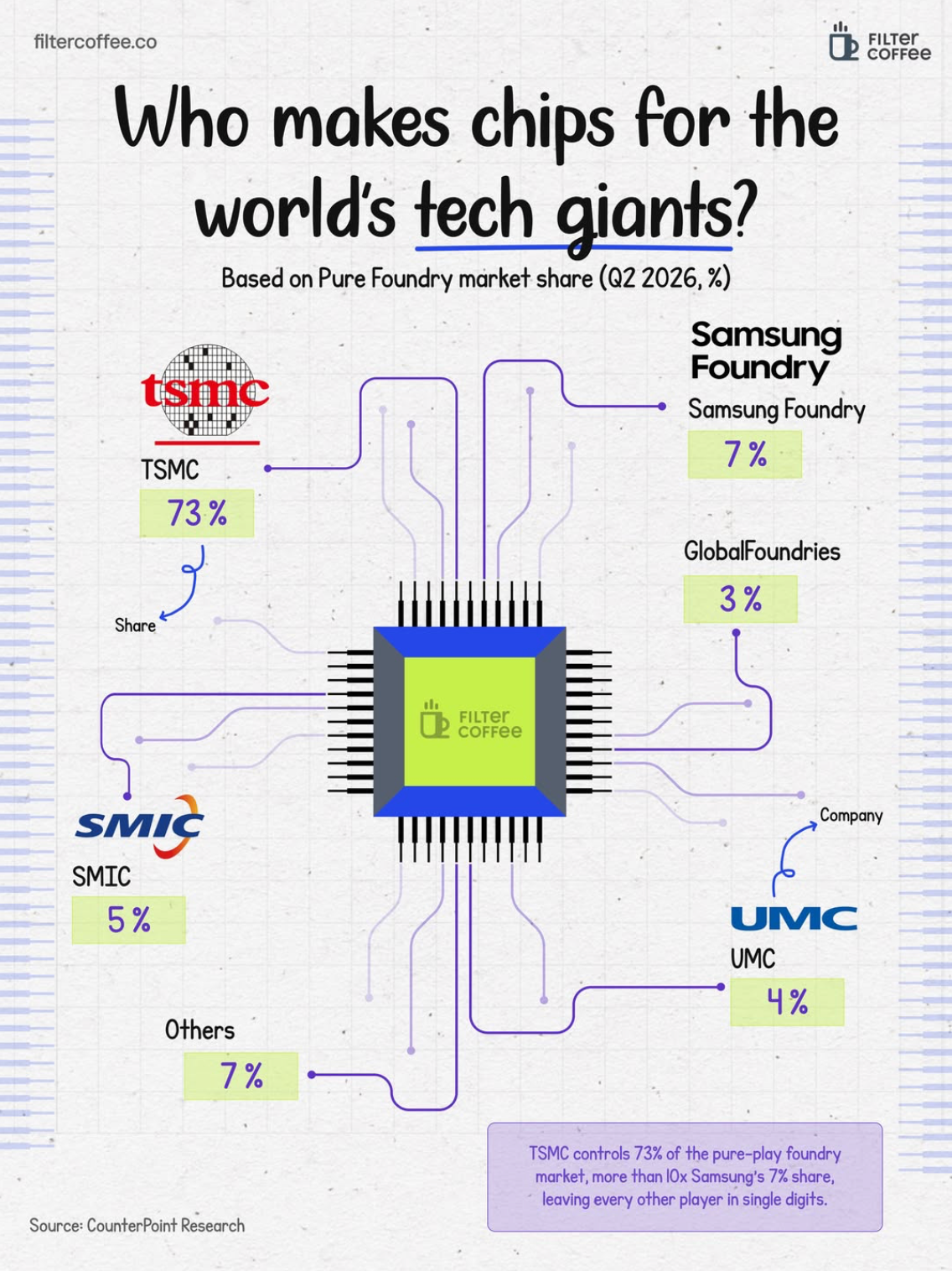
The business model is fairly straightforward. Companies such as Nvidia design chips, while foundries manufacture them for a fee. The tricky part is making them. Semiconductor production requires highly specialised equipment, extremely clean facilities and years of experience. Even a small manufacturing error can affect how many usable chips come out of a production run. TSMC has spent decades getting this process right, which is one reason competitors have struggled to catch up.
The growing demand for AI has only strengthened its position. Training and running AI models requires huge amounts of computing power, and that means more advanced chips. TSMC's third-quarter 2026 revenue rose 50% year-on-year to a record NT$1.49 trillion, reflecting the amount of business flowing through its factories.
India, too, is trying to establish a foothold in chip manufacturing. The government has approved projects across fabrication, assembly and packaging, including Tata Electronics' planned factory in Dholera, Gujarat. The idea is to build local capabilities and reduce dependence on imported semiconductors. But getting a factory up and running is only part of the job. It also takes trained engineers, reliable suppliers and customers willing to trust a new manufacturer.
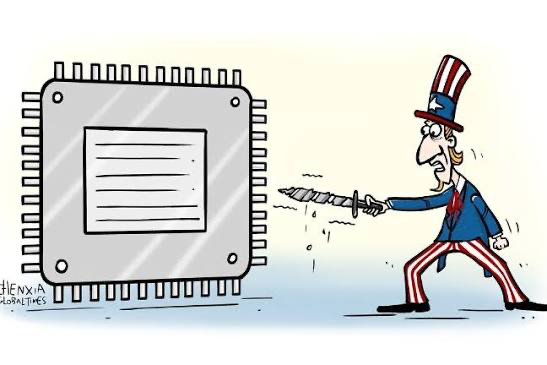
There is another reason countries are paying attention to where chips are made. A large share of advanced semiconductor manufacturing is concentrated in Taiwan, which sits at the centre of tensions between China and the US. Any serious disruption could affect industries around the world, from carmakers waiting for electronic components to companies running cloud services. Having more manufacturing capacity in different countries could help reduce that risk, although it will take years to make a meaningful difference.
The problem is that semiconductor manufacturing doesn't move as easily as other industries. A company can build a factory in a new country, but matching an established manufacturer's efficiency and quality takes time. Equipment is expensive, production processes are complicated, and customers need confidence that their chips will arrive on time and work as expected.
TSMC has spent decades building an advantage that its competitors are still trying to catch up with. And with AI companies ordering more and more powerful chips, its factories are unlikely to be short of business anytime soon. For countries trying to build their own semiconductor industries, catching up will be a long and expensive process.