
 Newsletter

We live in the age of quick commerce. Need groceries? They'll arrive in 10 minutes. Forgot toothpaste? No problem. Need skincare, pet food or even house help? There's probably an app for that.
Consumers today expect almost everything to arrive at their doorstep instantly. But there's one category that's proving much harder to crack: fashion.
Have you spotted those Knot billboards across Mumbai? The startup promises to deliver clothes in just 60 minutes. Last December, it even raised $5 million in funding led by consumer-focused investor 12 Flags.
Who's racing to deliver fashion?
A handful of startups are trying to make instant fashion shopping work. Names like Slikk, Knot, Zilo and Zulu Club are promising trendy clothes delivered within hours or even minutes. Earlier entrants like Klydo and Blip have already shut down.
Even larger players are joining the race. Myntra has expanded its rapid-delivery service, while Ajio and Nykaa Fashion are also experimenting with faster fulfillment.
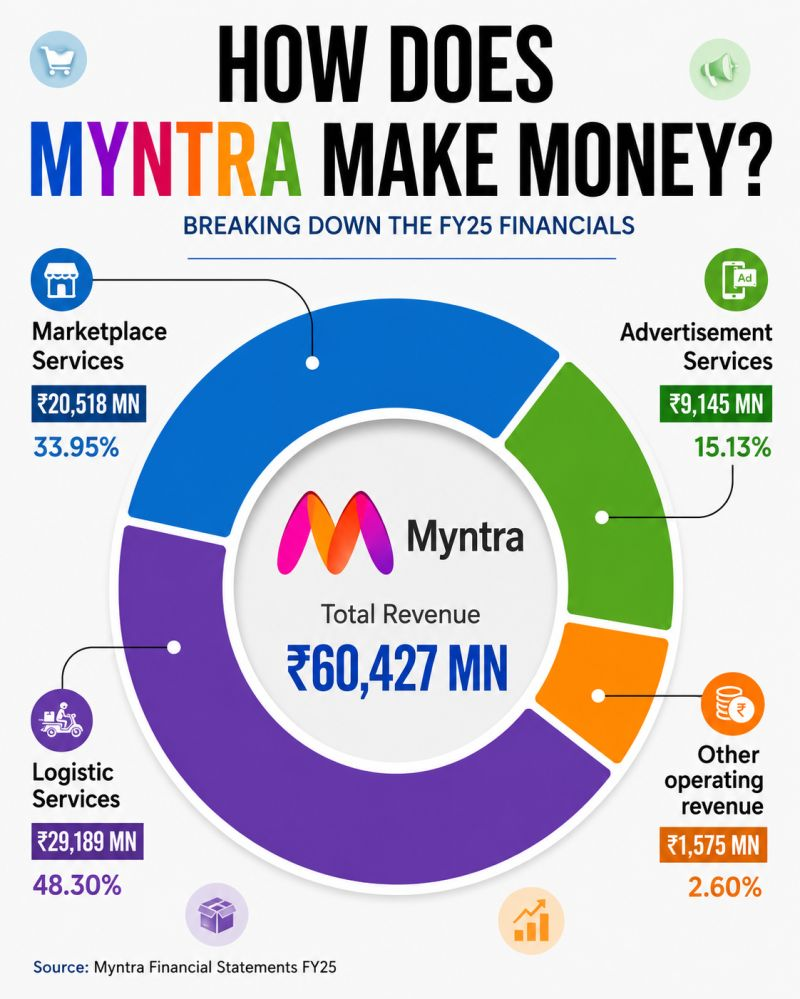
Take Myntra, for example. While it's experimenting with faster deliveries through M-Now, its business isn't built around quick commerce alone.
In FY25, nearly half of its revenue came from logistics services, followed by marketplace commissions and advertising, showing that fashion e-commerce relies on multiple revenue streams beyond simply delivering products quickly.
Instead of shipping from massive warehouses, these companies use neighbourhood dark stores stocked with a limited selection of fast-moving products to speed up deliveries.
So why is fashion so much harder than groceries?
Because people don't shop for clothes the way they shop for vegetables. When you run out of milk or cooking oil, you need it immediately. Clothes rarely create that kind of urgency. And even after placing an order, there's another problem.
Will it fit? Will the colour look the same? Is the fabric what you expected? Fashion comes with uncertainty, which means far more returns than grocery deliveries.
That makes the business incredibly expensive. Companies need to stock thousands of styles, colours and sizes, knowing many products may never sell. On top of that, fashion isn't something people buy every week, making it difficult to generate enough orders to justify expensive neighbourhood warehouses and ultra-fast deliveries.
Here's where the model starts to struggle. Fashion trends change overnight. Inventory has to be refreshed constantly, and every unsold product eats into profits.
Returns make things even worse. Unlike groceries, where most orders stay with the customer, fashion often sees return rates of 30-40% or even higher. Reverse logistics for a product delivered in 15 or 30 minutes can sometimes cost more than the delivery itself.
The popular ‘try before you buy’ model sounds convenient until you're paying a delivery partner to wait outside someone's house while a customer decides whether to keep the outfit.
The numbers tell the story.
- Slikk has raised $13.5 million, but is still handling only around 100 orders a day during its Bengaluru pilot.
- Zilo has raised $15.3 million from Peak XV and is still trying to prove the model.
- Knot has raised $5 million to build its 60-minute delivery network.
- Myntra's M-Now has expanded to 10 cities, but the model is still being tested at scale.
The idea was simple: bring food-delivery speed to fashion. The economics, however, are far more complicated. Quick commerce works best when people urgently need products, buy them frequently and rarely return them. Fashion checks almost none of those boxes.