

 Newsletter
UPI is now accepted across multiple countries. Here's how India's payment system is becoming a global network.
Imagine landing in Singapore, grabbing a coffee, scanning a QR code and paying with the same UPI app you use at your neighbourhood chai stall. No foreign exchange counters, no international card, no cash. That experience is slowly becoming a reality for Indian travellers.
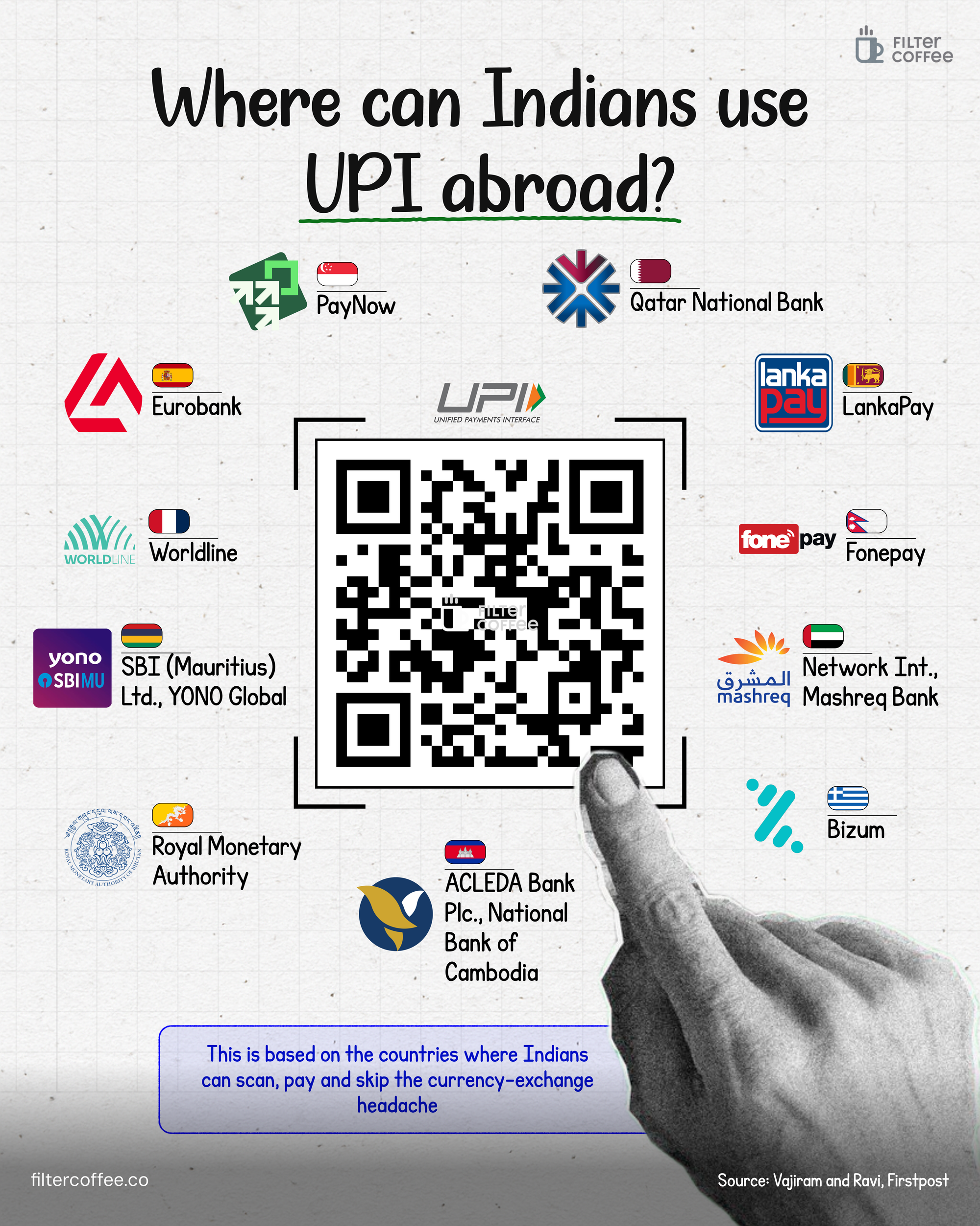
UPI has quietly expanded its global footprint over the past few years, and 2026 has been another big step forward. India and Nepal launched a cross-border remittance corridor for instant transfers, while Cambodia joined the network through ACLEDA Bank and KHQR.
Greece also came on board through Eurobank, adding another destination where Indian users can make merchant payments using UPI.
For most of us, UPI is simply how we split dinner bills or pay the local grocery store. But behind the scenes, it's become one of India's biggest technology exports. In FY26 alone, UPI processed more than 24,000 crore transactions worth over ₹314 lakh crore, cementing its position as the world's largest real-time payments system. More than 55 crore people now use it regularly.
What's interesting is how UPI is expanding. India isn't asking other countries to replace their payment systems. Instead, NPCI International is connecting UPI with existing domestic networks such as Singapore's PayNow, Nepal's Fonepay, Sri Lanka's LankaPay, Qatar National Bank's payment network, Mashreq Bank in the UAE and several others.
That means Indian travellers can increasingly pay local merchants without learning a new app or carrying multiple payment methods. The ambition, however, goes far beyond tourism. Every country that integrates with UPI strengthens India's digital public infrastructure on the global stage.
Discussions are already underway to integrate UPI with larger international payment ecosystems like Alipay+, potentially opening access to merchants across more than 100 markets. A decade ago, India built UPI to solve a domestic payments problem.
Today, it's solving a global one. Just as India became known for exporting software services, it may soon be recognised for exporting the digital infrastructure that powers everyday commerce. And if that happens, the next time you travel abroad, paying for lunch could feel just as effortless as paying for it back home.


