

 Newsletter

There are very few things India cannot grow.
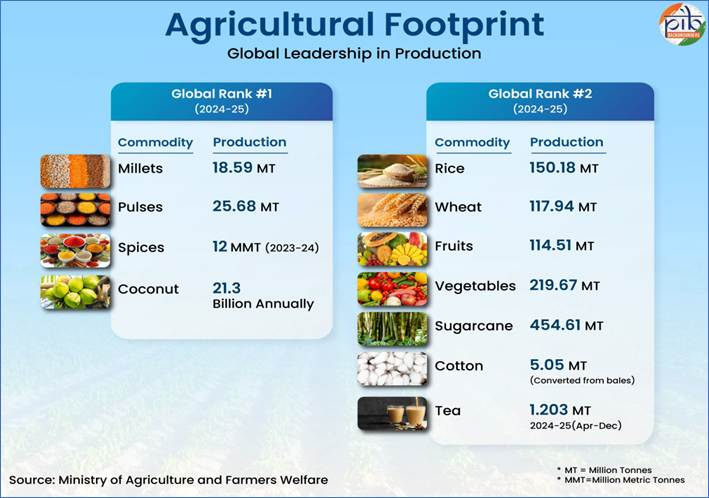
We are among the world's largest producers of rice, wheat, milk, sugar, fruits, vegetables, spices and pulses. Every harvest season, millions of farmers across the country produce enough food to feed over a billion people.
Yet, there is one everyday item that India still cannot produce enough of.
Cooking oil.
The bottle sitting next to your gas stove has probably travelled farther than you have this year. It may have begun its journey in an Indonesian palm plantation, a soybean farm in Brazil or Argentina, or a sunflower field in Russia. It then crossed oceans, reached an Indian port, was refined, packed and finally landed on a supermarket shelf near your home.
That might sound surprising, but it has quietly become normal. India now imports nearly 60% of the edible oil it consumes every year, making it the world's largest importer of cooking oil. In simple terms, every time six litres of oil are poured into Indian kitchens, only about two or three are produced here. The rest come from somewhere else.
That dependence has suddenly become a national talking point because of Nepal.
Indian edible oil producers have asked the government to review duty-free imports of refined edible oil from the neighbouring country after shipments exploded over the last two years. Imports jumped from just 47,295 tonnes in 2023 to more than 8 lakh tonnes in 2025.
Their argument is simple. India has spent years building refining capacity, creating jobs and encouraging companies to process imported crude oil within the country. If refined oil starts entering duty-free in large quantities, that entire strategy begins to weaken.
But why does an agricultural giant like India depend so heavily on imported cooking oil in the first place?
The obvious answer would be that India doesn't grow enough oilseeds. But that isn't entirely true.
Farmers across Madhya Pradesh, Maharashtra, Rajasthan, Gujarat and several other states grow soybean, mustard, groundnut, sunflower and sesame on millions of hectares every year. Oilseed production has steadily increased over the years. The problem is that demand has grown much faster.
Think about how India's eating habits have changed over the last three decades. Our population has grown. Incomes have risen. More people eat outside. Packaged snacks have become part of everyday life. Food delivery apps have made restaurant meals a regular habit instead of an occasional treat. Every samosa, packet of chips, biscuit, instant noodle, frozen snack and restaurant curry consumes edible oil somewhere in the supply chain.
An average Indian today consumes almost five times more edible oil than four decades ago. Production simply hasn't kept pace.
That left India with only one option. Import.
Every year, the country consumes roughly 26 to 27 million tonnes of edible oil. Domestic production contributes only around 9.5 to 10 million tonnes. The remaining 16 to 17 million tonnes have to be purchased from global markets. That makes India the single biggest buyer of edible oil in the world.
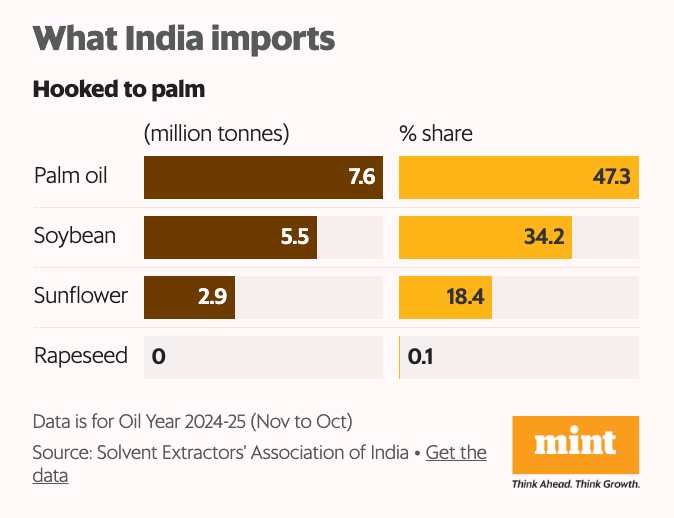
Most of those imports are surprisingly concentrated. Nearly half is palm oil, followed by soybean oil and sunflower oil. Indonesia and Malaysia dominate palm oil exports. Argentina and Brazil supply much of the soybean oil. Russia and Ukraine are major sources of sunflower oil. As a result, a drought in South America, a war in Europe or a biodiesel policy in Indonesia can eventually change the price you pay for a litre of cooking oil in your neighbourhood grocery store.
That is also why India follows a very specific import strategy.
The government doesn't actually want companies to import refined cooking oil. It wants them to import crude oil, refine it inside India and then sell it to consumers. This creates jobs, keeps refineries running, supports packaging companies, transport businesses and port infrastructure, while adding value within the country instead of overseas.
To encourage this, India charges a much higher import duty on refined edible oils than on crude oils.
The recent surge in imports from Nepal has complicated that model.
Under the South Asian Free Trade Area, qualifying products from Nepal can enter India without paying customs duty. Indian refiners argue that this gives imported refined oil an advantage over domestically refined products. They have also asked the government to verify whether these imports genuinely satisfy the agreement's Rules of Origin, which are meant to ensure that products undergo sufficient value addition in the exporting country before receiving preferential treatment.
Whether that concern proves valid will ultimately be for policymakers to decide. But the controversy has highlighted something far more important.
India's edible oil dependence is no longer just a farming issue. It has become a question of food security, inflation, trade policy and geopolitics.
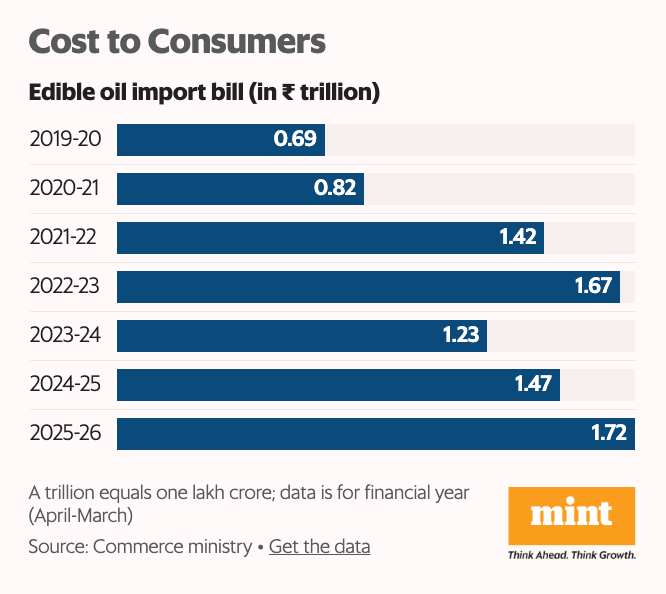
Every time global edible oil prices rise, India's import bill rises too. Every time the rupee weakens, imported oil becomes more expensive. Every disruption in global shipping or commodity markets eventually finds its way into Indian kitchens. Unlike rice or wheat, where India largely controls its own supply, cooking oil prices are heavily influenced by decisions taken thousands of kilometres away.
The government is trying to change that through the National Mission on Edible Oils by improving oilseed productivity and expanding oil palm cultivation. But these are long-term solutions. New plantations take years to mature. Better seeds take time to reach farmers. Productivity improvements don't happen in a single harvest.
Until then, India will continue walking a tightrope. It must keep cooking oil affordable for consumers while making sure domestic farmers and refiners remain competitive. Tilt too far in one direction, and prices could rise. Tilt too far in the other, and domestic production may never become strong enough to reduce imports.
The debate over Nepal may eventually fade. But the bigger question it has brought back into focus will remain. How did one of the world's largest agricultural economies become so dependent on imported cooking oil, and can that dependence ever be meaningfully reduced?
That is the story that really matters.