
 Newsletter
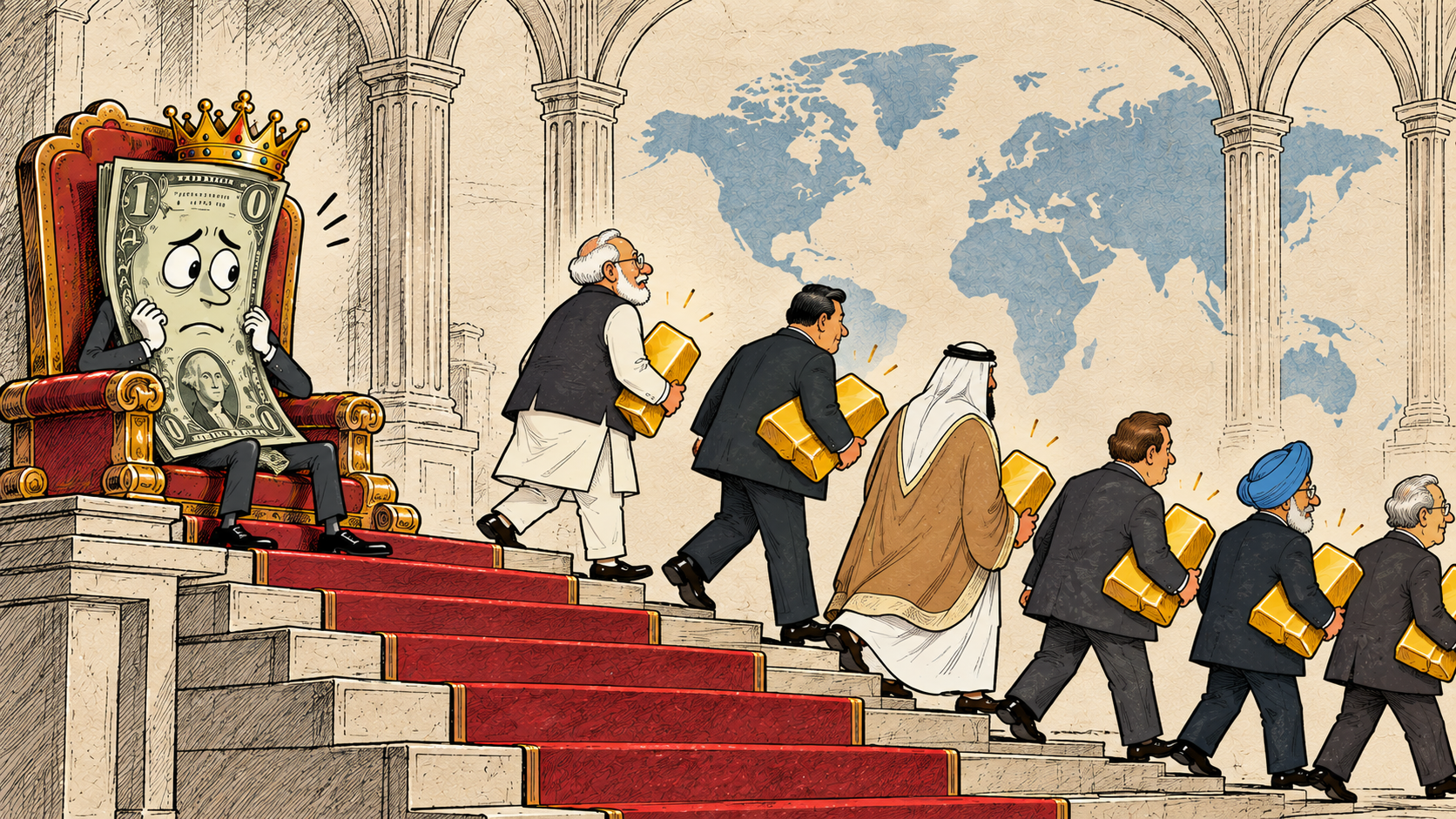
There is a rule about gold that almost everyone seems to know. When the world gets nervous, people buy it. War breaks out, inflation rises, markets wobble, and gold suddenly comes back into the conversation. It is the kind of financial wisdom that has survived generations, passed down by parents and grandparents who may not know what an ETF is but will happily explain why you should own a little gold.
And to be fair, history has mostly given them reasons to believe it. But there is another side to gold that has less to do with people buying jewellery, coins or ETFs and more to do with what countries are doing with their money.
Because countries have savings too. We call them foreign exchange reserves. Central banks keep these reserves to pay for imports, manage their currencies and give themselves a financial cushion when things go wrong. For decades, a large part of those reserves has been held in US dollars.
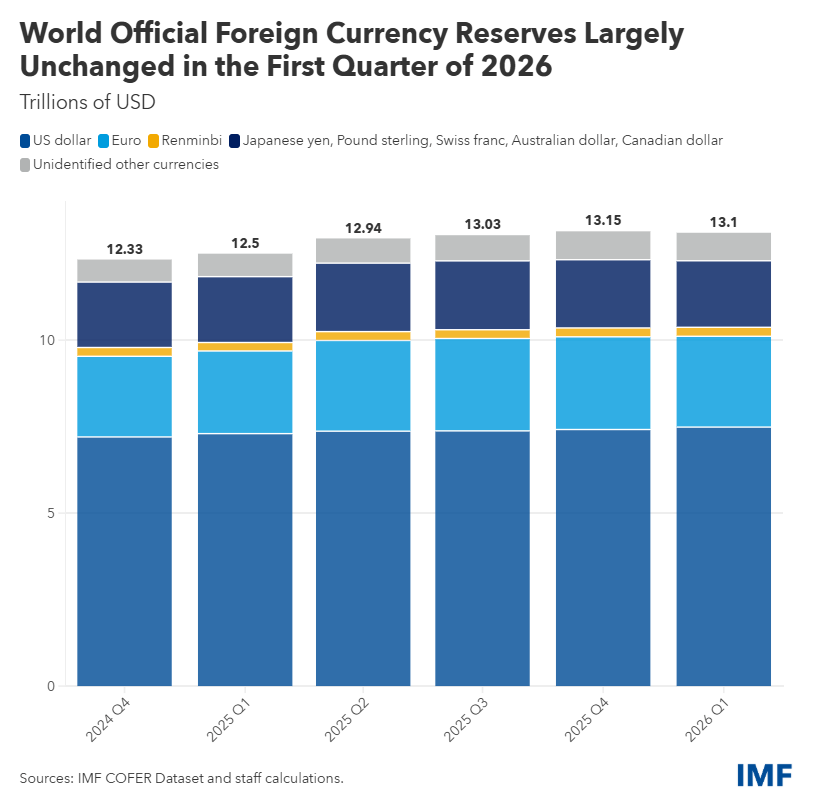
That hasn't really changed. As of the first quarter of 2026, the dollar accounted for 57.13% of allocated global foreign exchange reserves reported to the IMF. It is still, by a wide margin, the world's dominant reserve currency. So this isn't really a story about the dollar disappearing; it is about what happens if countries decide they don't want quite so much of it.
A country doesn't have to believe that the dollar is going to collapse to make that decision. If a central bank is sitting on hundreds of billions of dollars in reserves, it can still trust the dollar and decide that keeping all that money in one currency isn't such a great idea. There are other options, of course. Countries can hold euros, yen and other currencies, or buy government bonds issued by other countries.
Gold is another option, and it has one rather unusual advantage. If a central bank owns US government bonds, those bonds are ultimately a promise from the US government to repay the money. Gold doesn't come with that promise because it doesn't need one. It isn't issued by another country, it isn't somebody else's debt and there is no government on the other side that owes you anything. If you own the gold, you own the gold.
That is one reason gold has managed to stick around for thousands of years. The way we use money has changed many times. Currencies have come and gone, and gold eventually stopped being the thing that backed major currencies. But governments and investors never completely stopped wanting to own it.
And central banks are buying a lot of it again. The World Gold Council's 2026 survey found that 74% of reserve managers expect the dollar's share of global reserves to decline over the next five years, while 84% expect gold's share to increase. Central banks have also accumulated around 1,000 tonnes of gold a year on average over the past four years, roughly twice the annual average of the previous decade.
That doesn't necessarily mean central banks are expecting the dollar to collapse. The dollar is still deeply embedded in global trade, banking and financial markets, and there isn't another currency that can simply take its place overnight. It could simply mean that countries want to spread their reserves around a little more instead of having so much of their money tied to one currency and one financial system.
Imagine a country has ₹100 worth of reserves and ₹60 is sitting in dollars. It doesn't suddenly decide to dump all ₹60. Maybe, over a few years, it decides that ₹55 is enough. The other ₹5 has to go somewhere. Some could go into another currency, some into government bonds and some into gold. Now imagine several countries making similar decisions over several years. Gold doesn't have to replace the dollar for this to matter; it just has to receive some of the money countries are choosing to diversify.
There is a catch, though. A weaker dollar doesn't automatically mean a higher gold price. Gold is affected by plenty of other things, including interest rates, real yields, inflation, geopolitical tensions, investment flows and jewellery demand. Interest rates matter in particular because gold doesn't pay any interest, so when investors can earn more from other assets, gold can become less attractive.
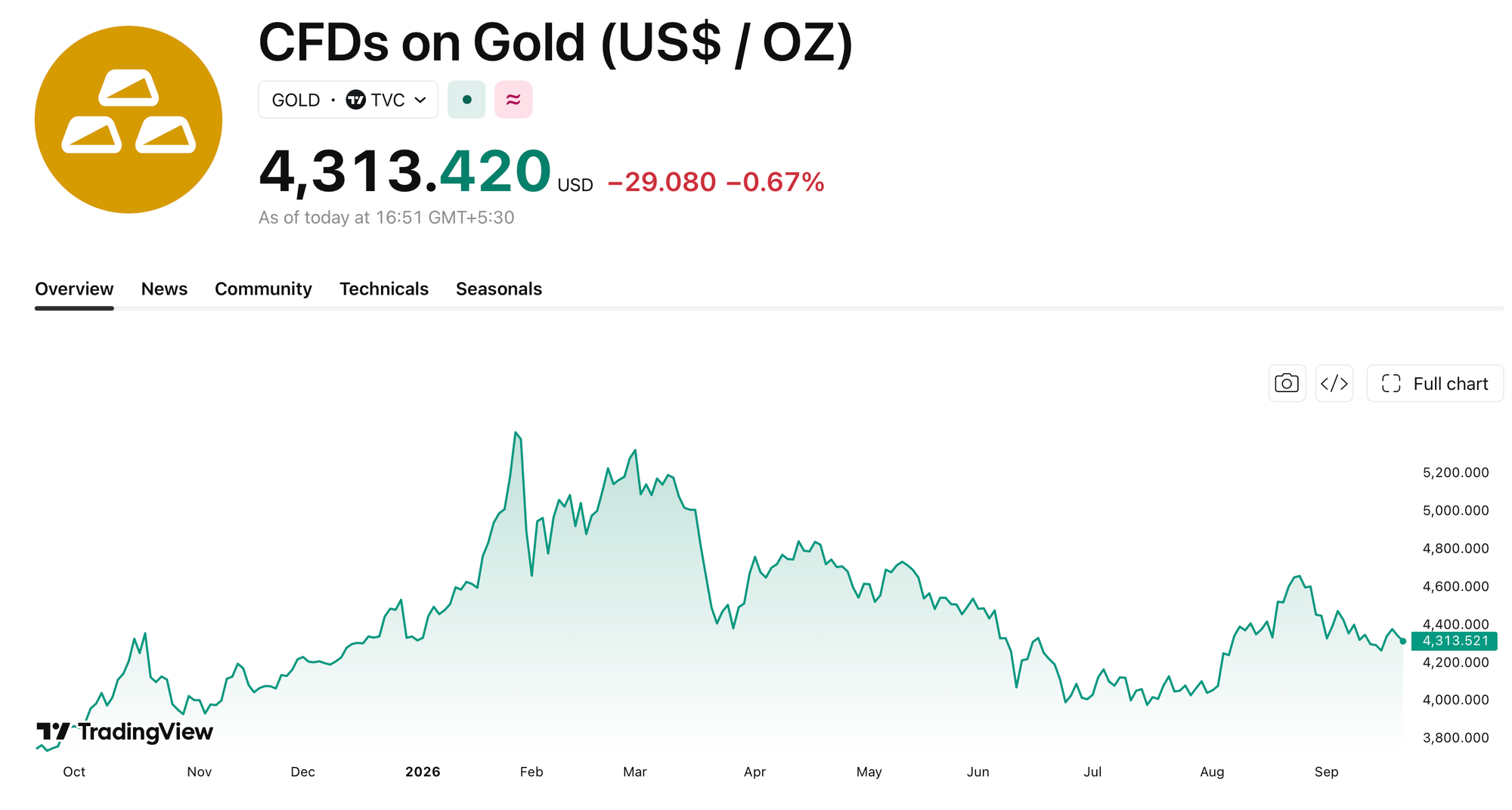
And 2026 has already shown how quickly the price can move. Gold crossed $5,500 an ounce intraday in January before falling below $4,000 by June. So there is a difference between saying that central banks may want to hold more gold and saying that gold is guaranteed to keep going up. The first is about how countries are managing their reserves; the second is a prediction about where a market price will go.
What we can see is that the dollar can remain the world's dominant reserve currency even if it becomes a slightly smaller part of global reserves. Gold doesn't have to become the new dollar either. It just needs to take a bigger share of the money countries are choosing to diversify.
That may be the more interesting part of the gold story today. It isn't really about whether the dollar will suddenly collapse or whether gold will shoot higher.
But if countries around the world decide they want to hold a little less of the dollar, I can understand why one of the oldest stores of wealth in history is suddenly worth looking at again.