
 Newsletter

Once upon a time, South Korea was known for making televisions, smartphones and cars. Today, it exports something far more valuable. Music, movies, TV shows, beauty products, fashion, food and even an entire lifestyle.
The latest proof arrived this week when HYBE, the entertainment giant behind BTS, doubled down on its India plans by holding auditions to build India's first globally marketed girl group. The company opened its Mumbai office last year and is now scouting talent across India and the Indian diaspora, making it clear that this is not a promotional event. It is a long-term investment in one of the world's youngest entertainment markets.
At first glance, this may look like another K-pop story. It is not. It is the story of how South Korea built one of the world's most successful cultural export industries, and why companies like HYBE now believe India could be the next chapter. To understand why a Korean company is investing so much money and effort into Indian artists, we first need to understand what South Korea has been selling to the world all these years. The answer isn't music. It is culture.
Three decades ago, South Korea made a bet.
It had already built a strong manufacturing economy through companies like Samsung, Hyundai and LG, but it wanted something factories alone couldn't deliver: global cultural influence.
So, beginning in the 1990s, successive governments started investing in films, television, music and digital entertainment, hoping culture could become the country's next big export. It worked far better than anyone expected. Korean dramas first spread across Asia, PSY's Gangnam Style became the first YouTube video to cross one billion views in 2012, and BTS eventually turned K-pop into a truly global phenomenon.
Suddenly, millions of people around the world were embracing Korean music, language and culture, proving that entertainment could be just as powerful an export as electronics or cars.
That success created a ripple effect that extended far beyond entertainment.
People who watched Korean dramas wanted to try kimchi and ramyeon. Those who followed K-pop stars started buying Korean skincare and cosmetics. Interest in Korean fashion, language classes and tourism surged. Brands like Samsung, Hyundai and LG benefited from the positive image that Korean entertainment created globally, even though they operated in completely different industries. Entertainment had become the country's most powerful marketing campaign, and unlike a television advertisement, it kept running every single day.
Netflix accelerated this trend even further. Shows like Squid Game, Crash Landing on You and Extraordinary Attorney Woo introduced Korean storytelling to audiences that had never listened to K-pop. Parasite became the first non-English film to win the Academy Award for Best Picture in 2020. Suddenly, Korean content was no longer considered niche. It had become mainstream.
India quietly became one of the biggest beneficiaries of this cultural wave. During the pandemic, millions of Indians discovered Korean dramas on OTT platforms while BTS and BLACKPINK found an enormous fan base across the country. According to industry estimates, K-pop streaming in India grew more than 360% between 2018 and 2023. Today, India is one of the world's largest streaming markets, making it impossible for global entertainment companies to ignore.
That is exactly why HYBE is here.
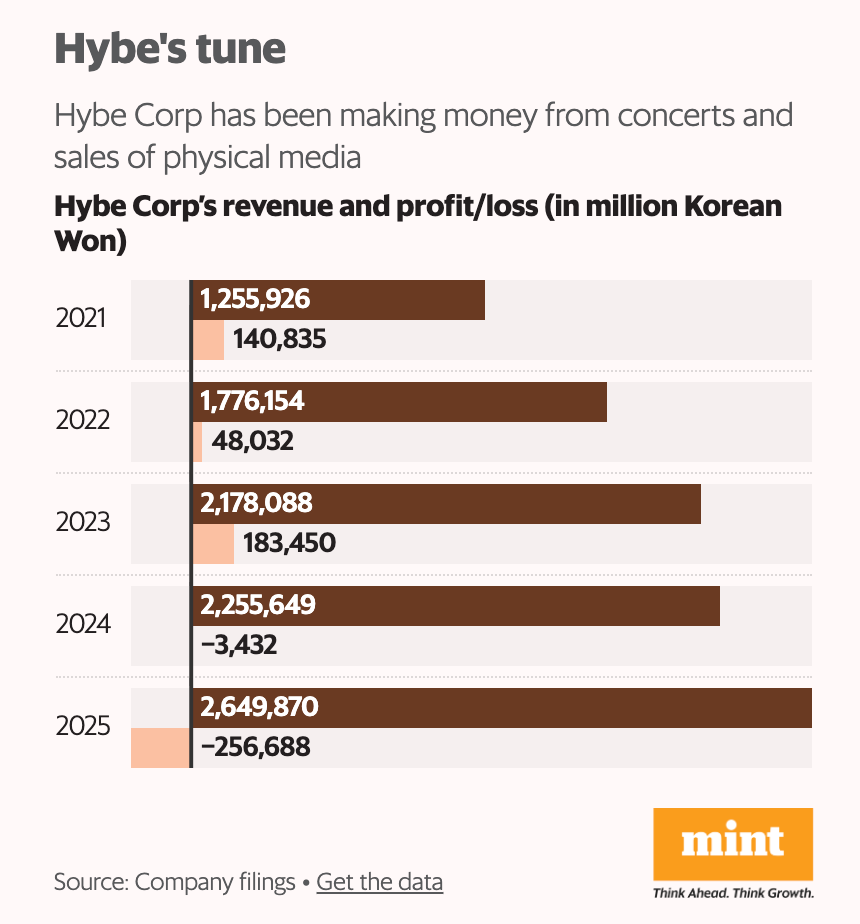
Most people think HYBE is a music company because it manages BTS, SEVENTEEN, ENHYPEN and LE SSERAFIM. In reality, it behaves more like an intellectual property company. Music is only one part of its business. HYBE also earns money from concerts, merchandise, fan memberships, exclusive content, licensing and its fan platform Weverse, where millions of users interact directly with artists and buy products. In other words, songs attract fans, but fandom generates the business.
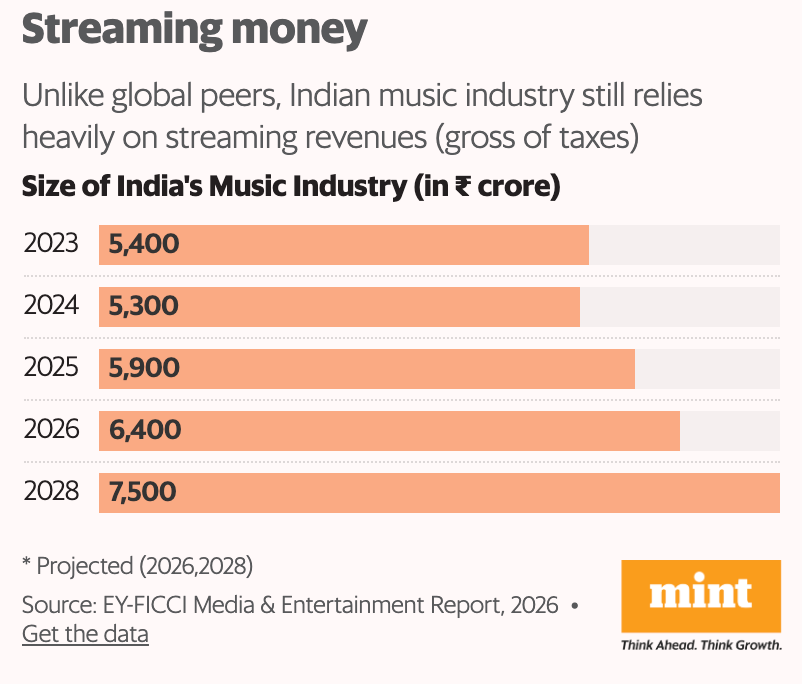
This is where India's opportunity becomes interesting. India's music industry is massive in terms of listeners, but comparatively weak in monetisation. According to the EY-FICCI Media and Entertainment Report 2026, digital licensing, including streaming platforms and social media, contributes well over half of the industry's revenue.
Concerts, merchandise, memberships and artist-led intellectual property remain relatively underdeveloped compared to markets like South Korea or the United States. That means India has plenty of listeners, but has not fully converted them into high-value fan communities.
HYBE believes it can change that.
Instead of simply bringing Korean artists to India, it wants to build Indian artists using a globally tested playbook. The company is auditioning talent across multiple Indian cities and overseas Indian communities, training performers in singing, dancing, media handling and stagecraft, then creating a group that is rooted in Indian identity but designed for a global audience. This is the same strategy HYBE has followed in other markets under its "multi-home, multi-genre" approach, where local talent is developed for international success rather than simply importing Korean acts.
If successful, it could encourage more structured artist development, stronger fan communities and new revenue streams built around concerts, merchandise and creator-led brands. India has never lacked talent. What it has lacked is an ecosystem that consistently transforms talent into globally recognised entertainment brands.
Of course, the Korean model is not without criticism. The industry has often been questioned for intense trainee systems, unrealistic beauty standards, extreme competition and the mental health pressures that come with celebrity culture. India does not need to replicate every aspect of that system. But there is still a valuable lesson in how South Korea treated culture as a serious economic sector rather than just entertainment.
Perhaps that is the biggest takeaway from HYBE's India entry. South Korea never became a cultural superpower because it built an ecosystem where entertainment, technology, branding, exports and global distribution worked together. Over time, that ecosystem changed how the world viewed an entire country.