

 Newsletter
Fashion is preparing for a new body type. Not a new fashion trend, not a new aesthetic, and not a new celebrity influence. A pharmaceutical body type.
For decades, fashion has adapted to changing tastes. It has survived low-rise jeans, skinny jeans, oversized hoodies, athleisure, quiet luxury, and whatever trend TikTok decides to invent next. But beneath all these trends, one thing has remained relatively stable: the customer.
Sure, styles changed. Bodies changed too. But usually not fast enough to disrupt the business itself.
That is exactly what is happening with Ozempic, Wegovy, Mounjaro and a new generation of weight-loss drugs known as GLP-1s.
These medicines, originally developed for diabetes, help regulate appetite and blood sugar, allowing many users to lose significant amounts of weight over relatively short periods.
In the United States, a 2024 KFF survey found that 12% of adults had used a GLP-1 drug at some point, while 6% were actively taking one. By 2025, Gallup found that the share of adults using GLP-1 drugs specifically for weight loss had more than doubled from 5.8% to 12.4%.
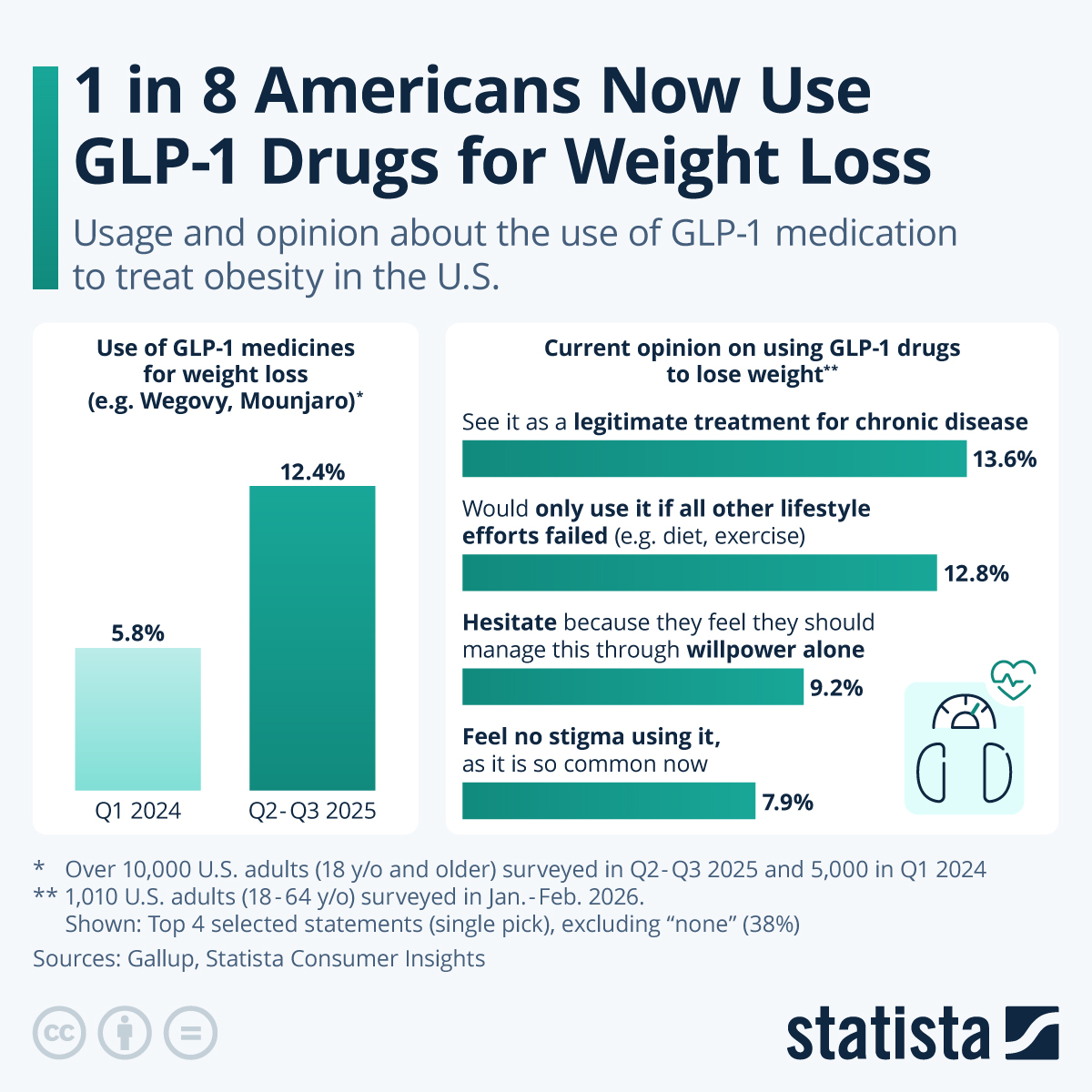
Those numbers represent millions of people whose bodies are changing faster than the industry is used to handling.
Traditionally, fashion has been built around a simple assumption. People's sizes do not change dramatically in short periods of time. A customer who wears a particular size today is likely to wear something similar six months later. Retailers use this assumption to forecast demand, plan inventory, decide how many small, medium, large and extra-large garments to manufacture, and predict what customers will buy next season.
GLP-1 drugs are beginning to challenge that assumption.
According to consumer research firm Circana, 23% of US households were using GLP-1 medications by September 2025. More importantly, 80% of users expected to need new clothes because of body-size changes. Around 55% had already purchased new clothing or footwear as a result.
After all, people buying new clothes means more sales. But the reality is more complicated.
Fashion companies do not simply sell clothes. They spend months predicting exactly what clothes people will need. Most large retailers place orders six to nine months before products reach stores. By the time a shirt appears on a shelf, the company has already committed money to manufacturing, logistics and inventory.
If a growing number of customers suddenly move from XL to L, from L to M, or from M to S within a year, those forecasts start breaking down.
Some analysts now estimate that US apparel retailers could face inventory mismatches worth almost ₹42,000 crore ($5 billion) by 2027 if they fail to adjust to changing body-size patterns. That is because retailers may end up with excess inventory in some sizes and shortages in others. Fashion companies can usually predict trends. Predicting pharmaceutical weight loss at scale is a completely different challenge.
But perhaps the most interesting impact is not happening in jeans or shirts. It is happening in lingerie.
Lingerie is becoming one of the earliest categories to feel the effects of the GLP-1 boom because it depends heavily on precise body measurements. A slightly loose T-shirt can still be worn comfortably. A dress can be altered. A bra that no longer fits properly becomes almost useless.
One of the less discussed effects of rapid weight loss is the change in breast volume and shape. Breasts contain a significant amount of fatty tissue. When people lose weight quickly, breast size often changes as well. The phenomenon has become common enough that social media has even coined terms like "Ozempic breasts" to describe changes following rapid weight loss.
For lingerie brands, this has created a completely new customer need. Women are not simply moving down a size. Fashion companies are beginning to realise that the Ozempic customer is not necessarily a customer who has reached a final destination. It is often a customer whose body is still changing.
Historically, lingerie brands sold products for relatively stable body shapes. Now they are increasingly serving customers who may go through multiple sizes within a year. That creates demand for adjustable designs, flexible fits and products built around body transitions rather than fixed measurements.
The implications go far beyond underwear.
If millions of consumers begin losing weight over several years, entire categories of fashion could evolve. Tailoring services could become more important. Stretch fabrics could become more valuable. Adjustable garments could become more mainstream. Subscription clothing services could become more attractive. Even resale platforms could benefit as consumers cycle through wardrobes more frequently.
There is also a deeper cultural shift taking place.
Over the past decade, fashion has invested heavily in body positivity and size inclusivity. Brands expanded plus-size ranges. Advertising campaigns featured a wider variety of body types. Retailers publicly committed to representing more diverse customers.
The rise of GLP-1 drugs arrives at a complicated moment for those efforts.
Recent runway data suggests that fashion may already be shifting back toward smaller body ideals. According to Vogue Business's Fall/Winter 2026 Size Inclusivity Report, 97.6% of runway looks were presented on straight-size models, while only 0.3% appeared on plus-size models.
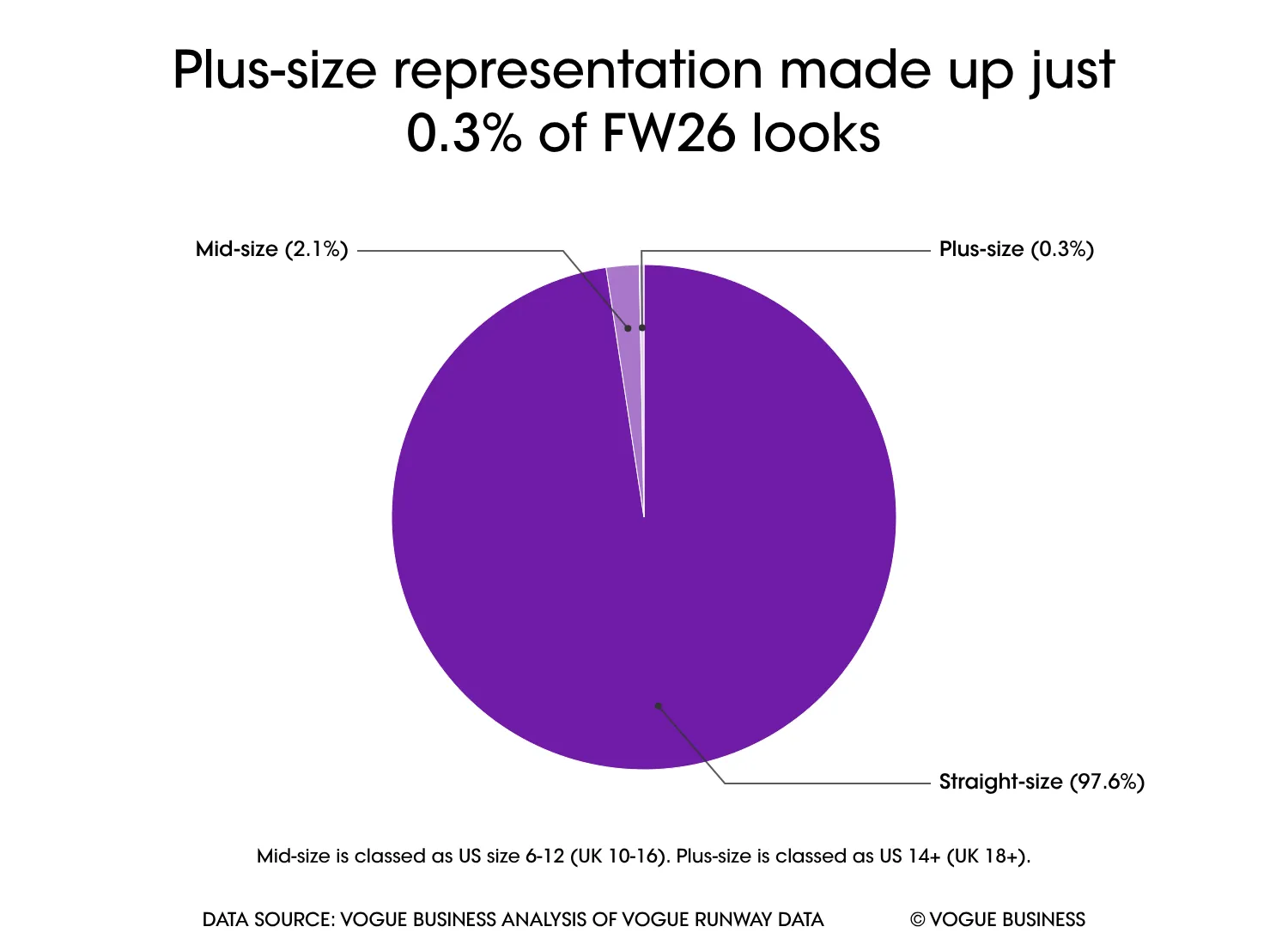
It would be simplistic to blame Ozempic alone for this change. Fashion's relationship with body diversity has always been inconsistent. But the timing is difficult to ignore. The industry is simultaneously talking about inclusivity while preparing for a future in which a growing number of consumers are actively trying to become smaller.
This creates an uncomfortable question. Is fashion responding to changing consumer behaviour, or is it returning to old beauty standards under the cover of a pharmaceutical revolution?
The answer is probably a bit of both.
The most important thing to understand, however, is that this is not merely a fashion story. It is a consumer economy story.
Whenever a large group of people changes behaviour, industries adapt. When smartphones became widespread, entire businesses emerged around mobile apps. When streaming became mainstream, television networks had to reinvent themselves. When internet access became cheap, India's digital economy exploded.
GLP-1 drugs are creating another behavioural shift.
People taking these medications often report eating less, shopping differently, spending more on wellness and becoming more conscious of appearance. Morgan Stanley estimates that the global GLP-1 market could reach hundreds of billions of dollars over the coming decade. The drugs themselves are valuable, but the industries surrounding them may ultimately become even bigger.
Fashion is simply among the first to notice.
For India, the story is still in its early stages. Eli Lilly launched Mounjaro in India in 2025 at prices ranging from ₹3,500 to ₹4,375 per injection, making treatment expensive for most households. Yet India's weight-loss drug market still reached around ₹606 crore in 2025 and grew 27% year-on-year. As patents expire and domestic pharmaceutical companies launch cheaper versions, prices are expected to fall further.
If that happens, India could eventually experience the same consumer shifts already emerging in the US.
The winners may not just be pharmaceutical companies. Apparel brands, lingerie companies, tailoring businesses, beauty brands, fitness platforms, nutrition companies and resale marketplaces could all find themselves serving a new type of consumer.
That is why fashion executives are paying attention today.
They are not preparing for a new trend. Trends come and go every season. They are preparing for a future where millions of customers may no longer stay the same size long enough for the industry's traditional playbook to work.
For decades, fashion has shaped itself around changing tastes. The Ozempic era may force it to adapt to changing bodies instead. And for an industry built on predicting what people will wear next, that may be one of the biggest adjustments it has ever faced.