
 Newsletter


India's corporate gifting industry was estimated to be worth ₹12,000 crore in 2021. And the business has been finding more reasons to sell gifts ever since.
A new report by India Today describes how Indian companies are increasingly giving presents for birthdays, promotions, work anniversaries and even employee onboarding. Diwali remains an important occasion, but employers are spreading their gifting budgets across the calendar.
It's quite a change for an industry that many Indians still associate with boxes of kaju katli, dry fruits and the occasional company-branded diary. So how did corporate gifting grow into a business worth thousands of crores, and why are companies finding more reasons to give presents?
Corporate gifting has a longer history in India than you might expect. During the 1990s and early 2000s, Diwali was a major occasion for businesses to maintain relationships with clients, distributors, dealers and employees. Sweets, silverware, watches, household appliances and other presents helped companies build goodwill with people important to their business.
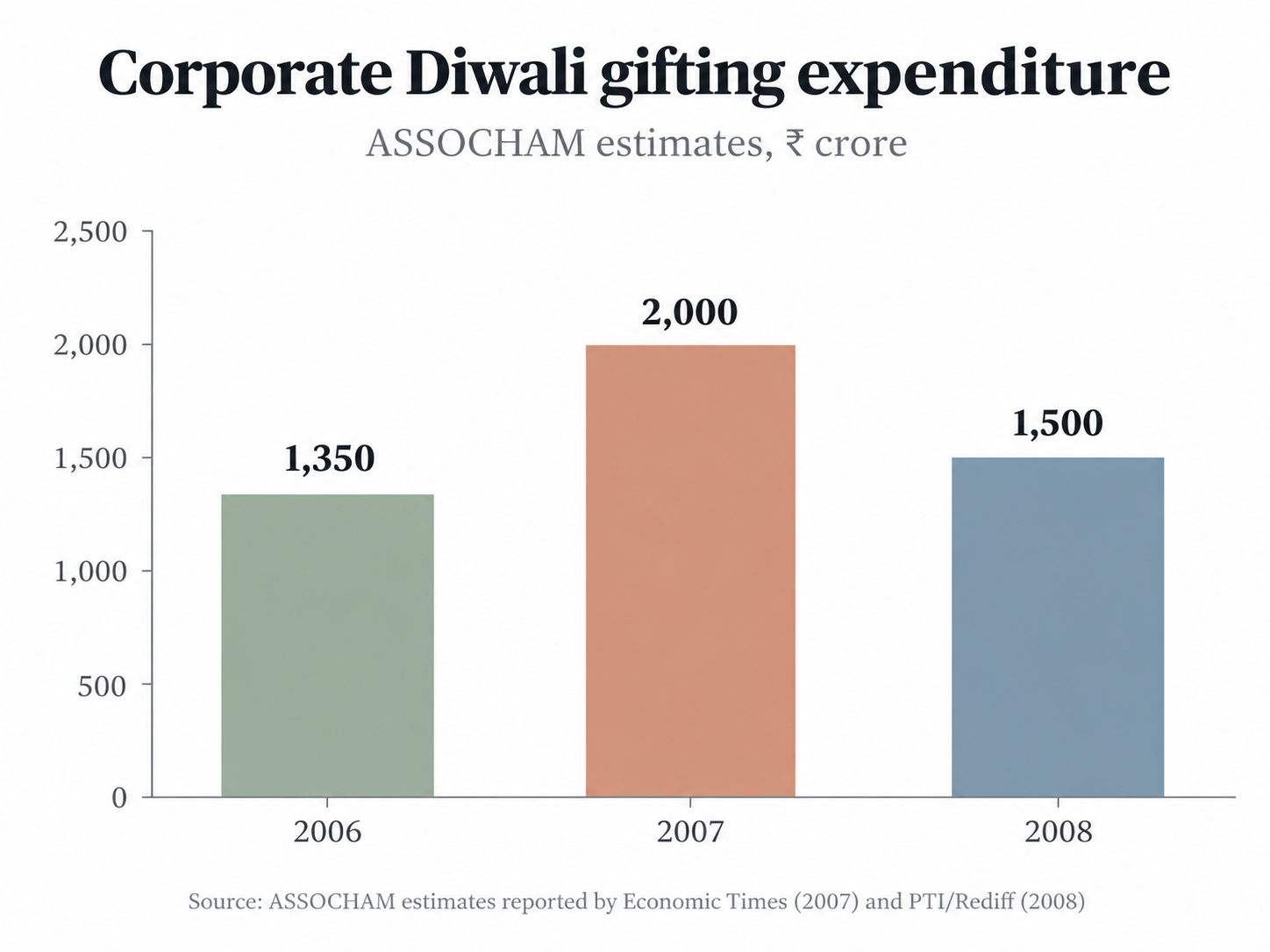
And companies were spending serious money on it. According to industry body ASSOCHAM, Indian businesses were expected to spend approximately ₹2,000 crore on Diwali gifts and greetings in 2007, compared with ₹1,350 crore the previous year. Growing sectors such as pharmaceuticals, IT, real estate, FMCG and aviation were among the major spenders.
But corporate gifting was heavily dependent on festive budgets and business sentiment. When the 2008 financial crisis hit, ASSOCHAM estimated that Diwali gift expenditure would fall by 25%, to ₹1,500 crore. Expensive gold and silver gifts were replaced with cheaper alternatives as companies tightened their belts.
Over the following decade, gifting gradually became more organised. Companies began looking beyond traditional sweets towards electronics, branded merchandise, shopping vouchers and practical products. Although gift vouchers were already popular in 2005, growing e-commerce adoption eventually made them easier to distribute and redeem.
The pandemic accelerated another change.
With employees working from home, distributing hundreds of identical hampers at the office was no longer practical. Companies had to arrange deliveries to individual addresses, sometimes across different cities. Contemporary reporting from 2020 documented employers switching towards headphones, webcams, wellness products and personalised gifts for employees' families.
This created opportunities for businesses capable of sourcing products, customising them, managing thousands of addresses and handling deliveries. Digital vouchers made the process even easier, allowing companies to distribute rewards without shipping physical products.
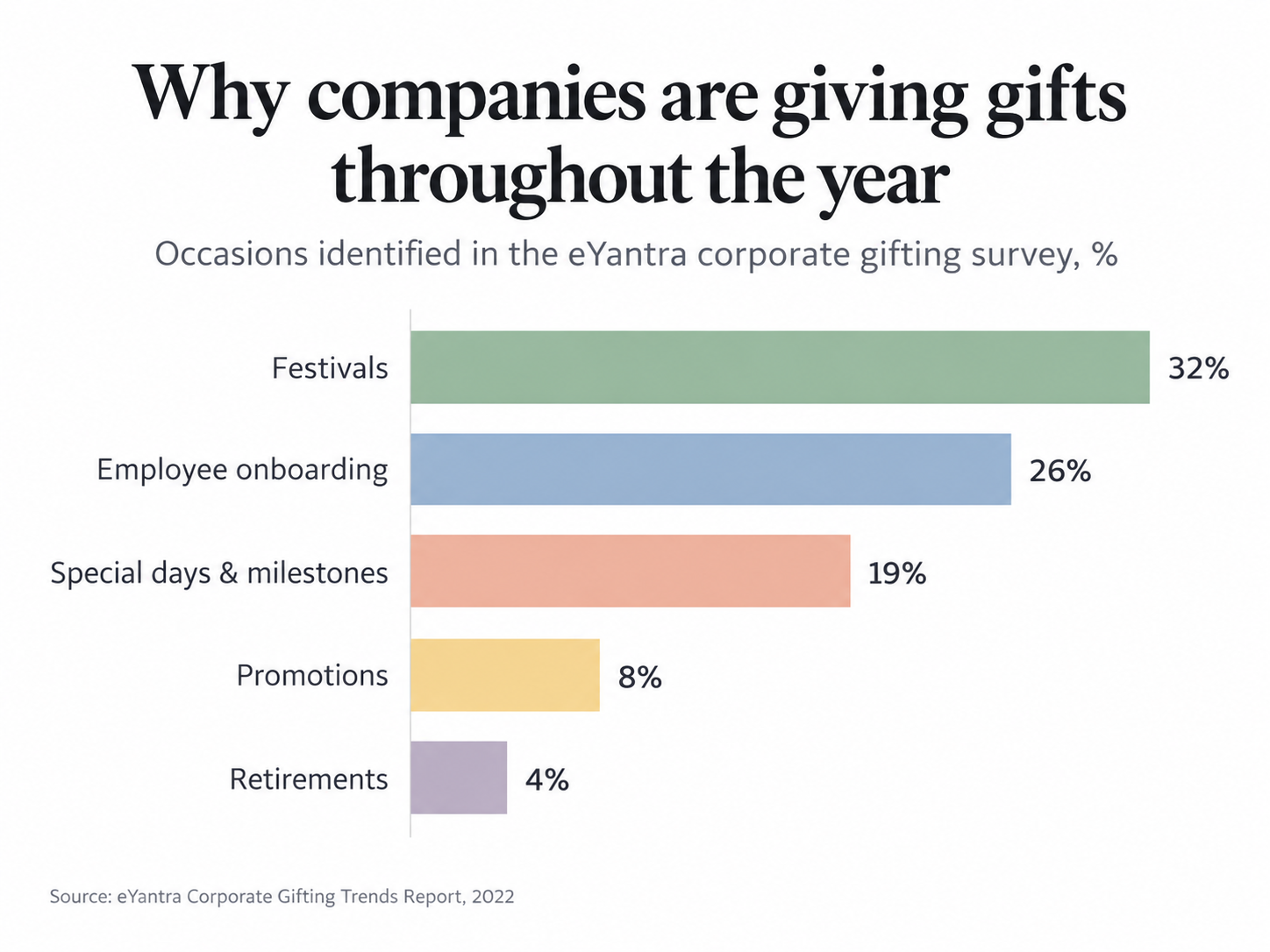
Meanwhile, the purpose of gifting was expanding. Companies were increasingly using gifts to welcome new employees, recognise performance and celebrate milestones. A 2022 corporate gifting survey involving more than 2,500 respondents found that 32% identified festivals as prime gifting occasions, while 26% highlighted employee onboarding. Another 88% preferred high-quality, personalised gifts with more choices.
That changing demand helped support an entire ecosystem of suppliers, packaging businesses, merchandise manufacturers, logistics providers and digital rewards platforms.
And the economics are attractive.
Consider a company with 5,000 employees. At ₹1,500 per person, a single gifting occasion costs ₹75 lakh. Add welcome kits, performance rewards, birthday gifts and work anniversaries, and the company could generate several rounds of orders annually. The actual expenditure would depend on how many employees receive gifts on each occasion.
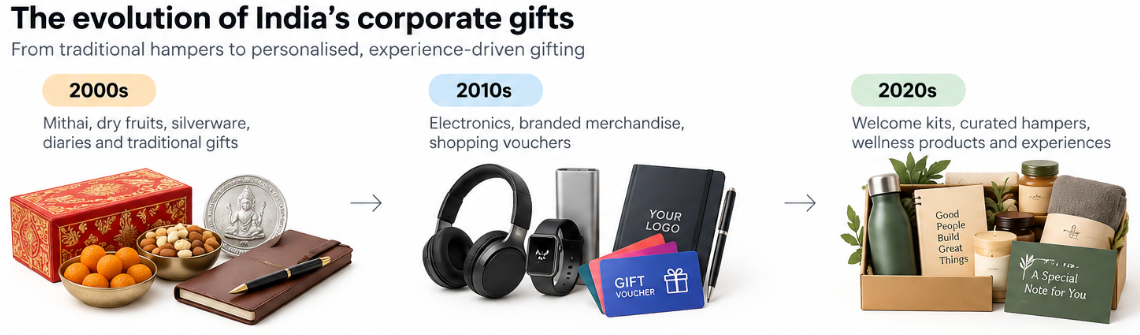
For suppliers, that means more opportunities to earn outside the festive season. Companies also have access to a wider range of products, from ₹500 vouchers and personalised stationery to premium hampers, wellness subscriptions and travel experiences.
By 2021, consultancy Technopak had estimated India's organised corporate gifting market at approximately ₹12,000 crore, as reported by Business Standard.
There are limits to this growth story, too. Corporate gifting remains discretionary, and companies can quickly reduce spending when business slows. There is also little independent evidence that distributing more gifts directly improves employee retention. A birthday voucher may be appreciated, but it won't compensate for poor pay or working conditions.
Still, the business has evolved considerably over two decades. What began largely as a way to maintain festive goodwill now serves corporate marketing, employee recognition and customer relationships throughout the year.
Diwali still brings the biggest rush for many suppliers. But the industry's next phase of growth depends on something much less seasonal: convincing companies that almost any milestone is an occasion worth celebrating.
Sources
- India Today, October 2026 | Year-round gifting trends and employee recognition.
- The Economic Times, November 2005 | Historical corporate gifting preferences.
- The Economic Times, November 2007 | ASSOCHAM estimates of Diwali gifting expenditure.
- PTI/Rediff, October 2008 | Financial crisis and reductions in corporate gifting budgets.
- Moneycontrol, November 2020 | Pandemic-era changes in gifting.
- eYantra Corporate Gifting Trends Report, 2022 | Survey findings on corporate gifting occasions and preferences.
- Business Standard, November 2021 | Technopak's ₹12,000 crore organised market estimate.