
 Newsletter

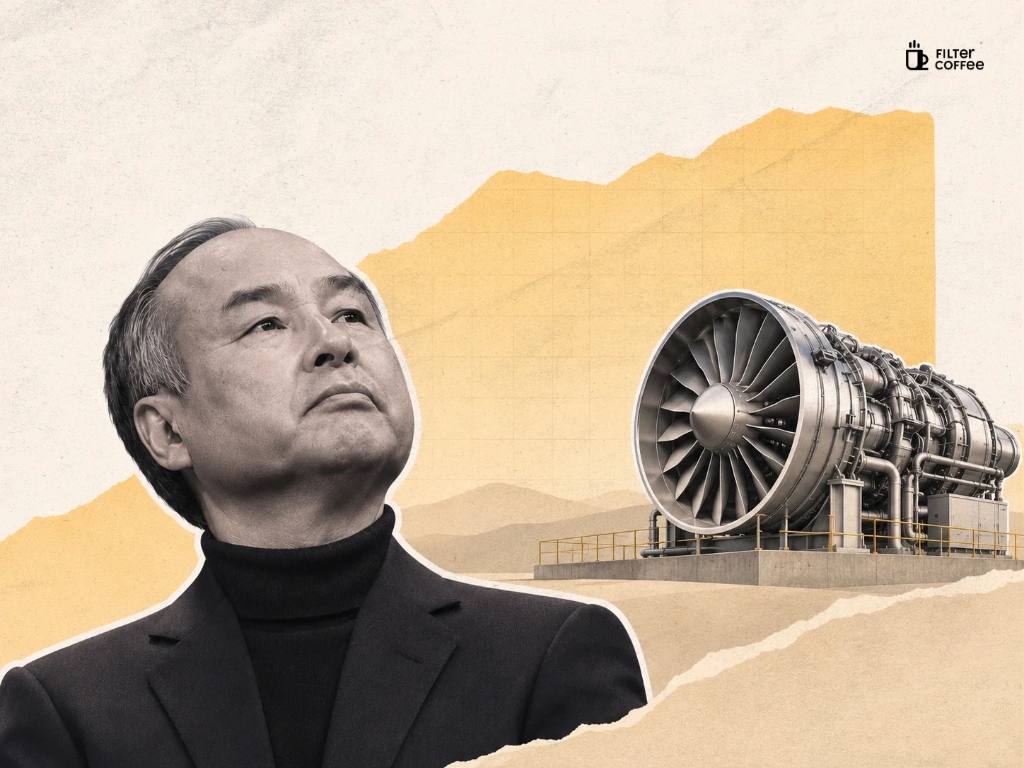
SoftBank has booked a $3.73 billion loss after paying to secure power equipment for AI data centres that no longer fits parts of its plans. Some of those commitments were made before the projects' long-term specifications had even been finalised.
The Japanese investment group disclosed the loss on 10 November, helping push its quarterly net loss to roughly $7 billion.
Masayoshi Son's SoftBank is developing a network of US AI data centres, including a huge campus in Ohio intended to serve OpenAI. These facilities need enormous amounts of electricity, and gas turbines are one way to supply it. They burn natural gas to generate power, allowing developers to plan electricity supply alongside connections to the wider grid.
The trouble is that gas turbines have long manufacturing lead times. Developers cannot simply wait until a data centre is built and then order its power equipment. They may need to reserve a factory slot years ahead, paying deposits to hold their place in the queue.
And that queue is getting longer. At the end of September, GE Vernova had 122 gigawatts (GW) of gas-generation equipment in its backlog and reservation agreements. Of that, 64 GW represented firm orders, while 58 GW was still reserved manufacturing capacity.
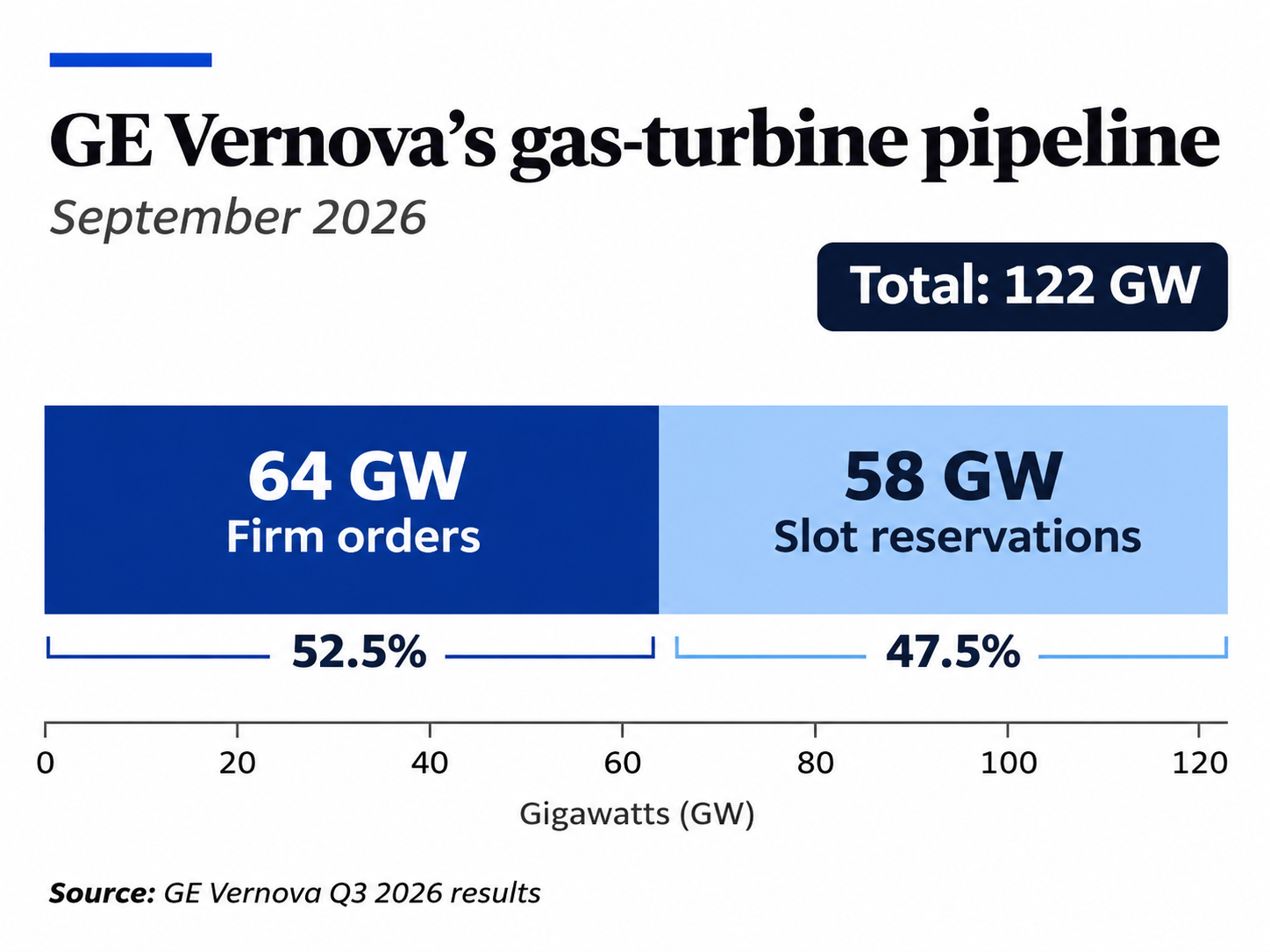
The company had already sold some delivery slots for 2032. It also expected its average 2026 order price per kilowatt to be around 50% higher than in 2025, partly reflecting changes in the types of turbines being ordered.
For SoftBank, booking early was a way to avoid being left without equipment when its data centres needed electricity. The company reportedly reserved more than 13 GW of turbine capacity across its plans. But according to its finance chief, intense competition meant it was committing to equipment before long-term specifications were settled. As its projects evolved, some purchases no longer made sense.
SoftBank's subsidiary Silver Bands 7 had made approximately $9.5 billion in advance payments by September 2026, including $5.6 billion in the preceding six months alone. When it revised procurement plans, $2.85 billion of those advances became non-refundable losses. Another $880 million was recognised for changing or settling contracts, with the associated cash payments expected from the October to December quarter onwards.
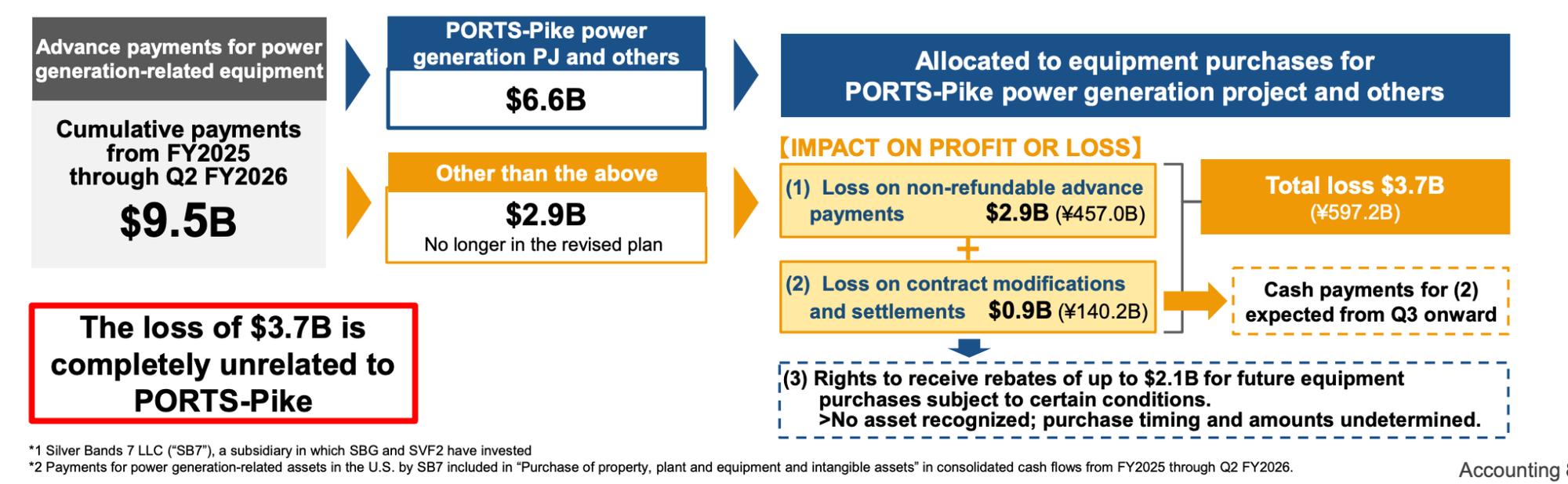
Image from: SoftBank Investor Presentation
That is the expensive part of reserving a place in the queue: cancelling later does not necessarily get your deposit back. SoftBank also negotiated rights to up to $2.1 billion in rebates over ten years, but only on future purchases and subject to conditions. That is no immediate refund, and the company has not counted it as an asset.
Its Ohio plans show the scale of the challenge. The PORTS-Pike campus is designed for 8 GW of computing capacity, with a gross electricity requirement of about 10 GW. The plans include roughly 9.2 GW of gas-fired generation and 17 data-centre buildings leased to OpenAI over 20 years. SoftBank says the $3.73 billion loss is unrelated to PORTS-Pike itself. Its remaining $6.6 billion in equipment advances is allocated to that power project and others, with recovery still expected rather than completed.
There is no evidence here that AI electricity demand has collapsed. GE Vernova's combined orders and reservations actually grew from 116 GW to 122 GW during the September quarter. SoftBank's mistake was committing to equipment that no longer matched its revised plans, not necessarily betting on demand that vanished.
The company could still be right to pursue large AI campuses, and cancelling an unsuitable commitment may be cheaper than spending more to fulfil it. The next test is whether SoftBank can recover the remaining advances without another expensive revision.
Sources
SoftBank Financial Report | SoftBank Investor Presentation | SoftBank Updated Recovery Plan, 12 November | Reuters | The Wall Street Journal | GE Vernova Q3 Results | SB Energy SEC Filing