

 Newsletter

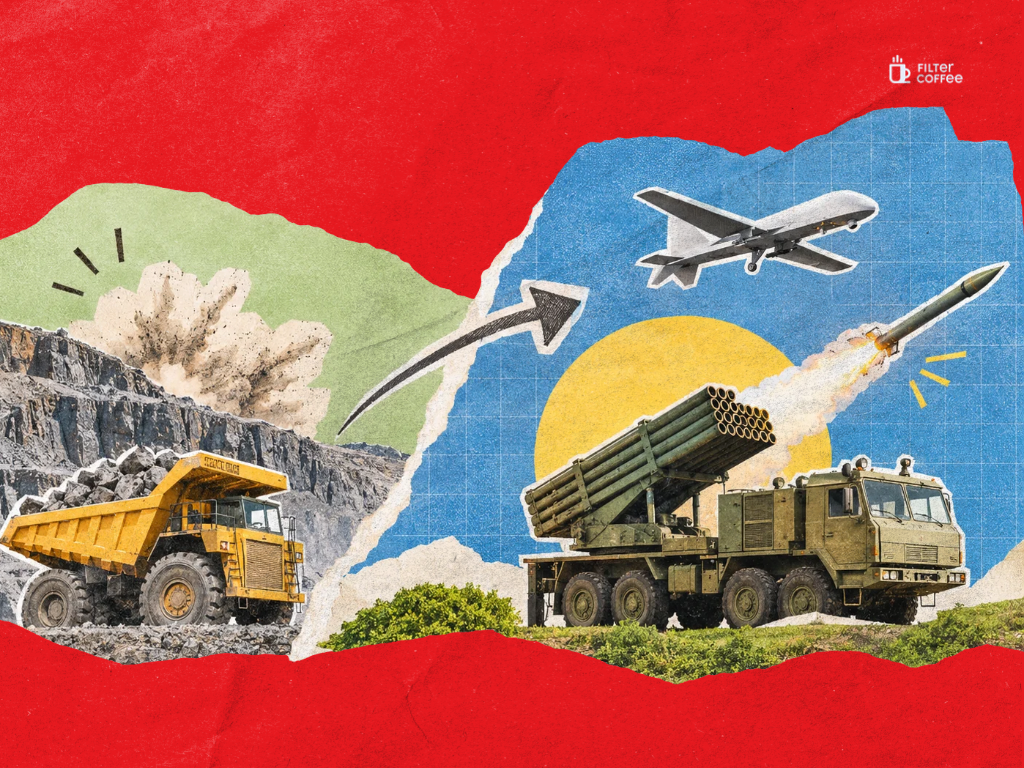
Solar Industries India has just reported one of its strongest quarters yet. The Nagpur-based company's revenue jumped 69% to ₹3,519 crore in the July-September quarter, while net profit rose 80% to ₹650 crore.
But the real story lies in its defence business.
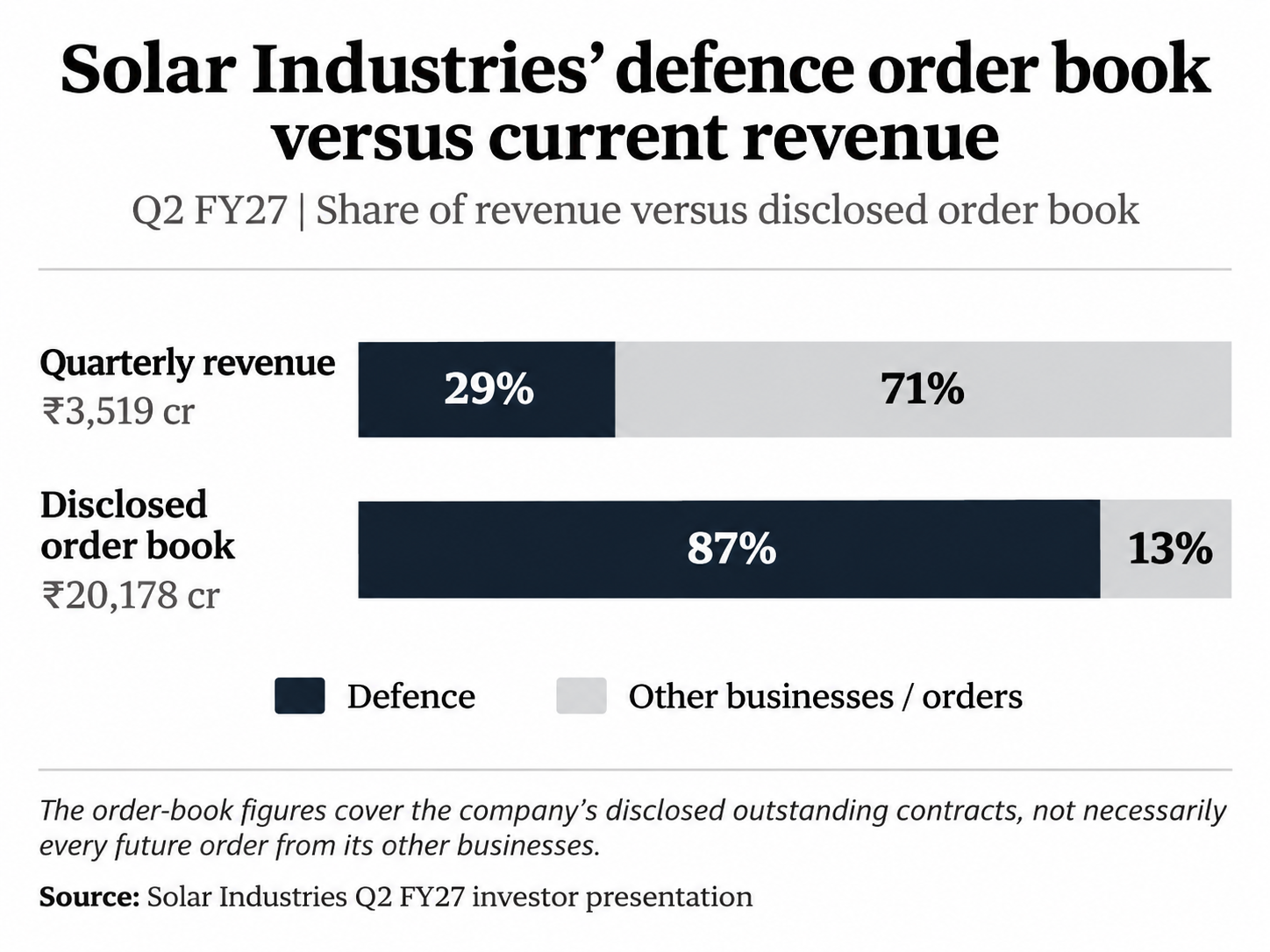
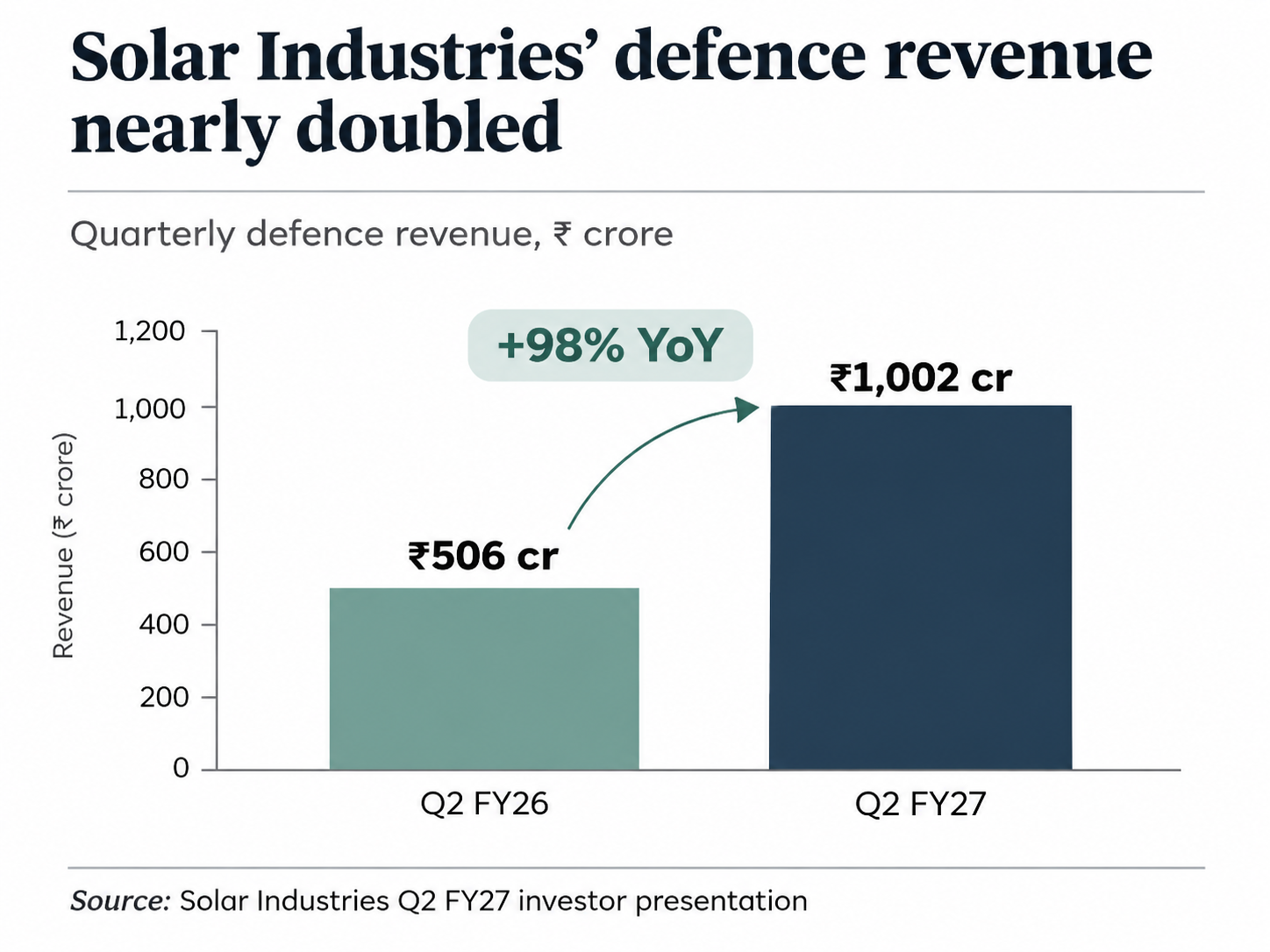
Revenue from defence nearly doubled to ₹1,002 crore. More importantly, of the company's ₹20,178 crore order book, ₹17,568 crore comes from defence contracts. That means nearly 87% of its outstanding orders are linked to military supplies.
For a company that started by making explosives for coal mines, that's quite a transformation.
Today, Solar Industries manufactures everything from hand grenades and artillery ammunition to components for BrahMos missiles, Pinaka rockets and military drones. Its customers now include the Indian armed forces and overseas defence buyers.
So how did a mining explosives company find its way into India's military supply chain?
The story begins with Satyanarayan Nuwal, a businessman from Rajasthan who moved to Maharashtra in search of work in the late 1970s.
After trying his hand at several businesses, including manufacturing ink, Nuwal entered the explosives trade in 1979. He rented a storage facility and began supplying explosives used in mining and construction. In 1984, he became a consignment agent for ICI, one of the world's largest explosives manufacturers.
By 1995, he had established Solar Industries' first manufacturing unit near Nagpur. The company began producing explosives, detonators and other materials used by coal miners, construction companies and infrastructure developers.
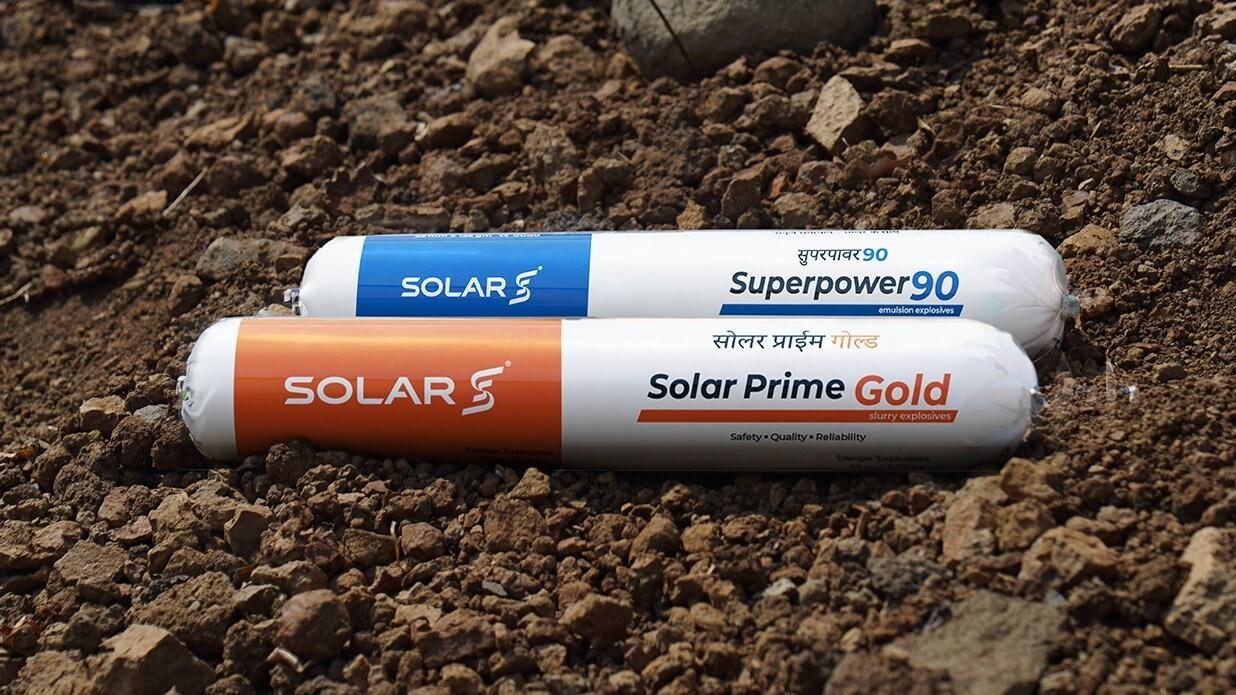
Coal India became an important customer. Solar eventually expanded overseas and listed on Indian stock exchanges in 2006.
But there was a limitation to the business. Demand depended heavily on mining activity, infrastructure spending and industrial customers. Solar needed another avenue for growth.
And in 2010, it entered defence manufacturing.
The move made commercial sense because military ammunition and industrial explosives share certain technical foundations. Both require expertise in energetic materials, chemical processing, safety and controlled detonation.
Of course, manufacturing explosives for a coal mine is very different from producing ammunition for an army. Military products must meet stringent performance, safety and qualification requirements.
Solar had to build those capabilities.
Initially, progress was slow. The company invested in factories, developed products and worked with the Defence Research and Development Organisation (DRDO), but securing orders proved difficult. According to a Business Today interview with managing director Manish Nuwal, defence remained a relatively small part of revenue even until 2020.
Over time, those investments began producing results.
Solar developed capabilities in warheads, grenades, rocket propellants and ammunition. It also began manufacturing solid propellant boosters for BrahMos missiles, which help propel the missile during its initial flight.
A major breakthrough came in 2025 when Solar secured a ₹6,084 crore contract for Pinaka rockets.
Pinaka is an indigenous rocket artillery system developed by DRDO that allows the Indian Army to launch multiple rockets at targets several kilometres away.
For Solar, the contract provided a substantial pipeline of manufacturing work. It also represented a broader change in India's defence industry, where private companies are increasingly participating in ammunition and weapons production.
The company has since expanded into newer products. In October 2026, its subsidiary Solar Defence & Aerospace delivered 450 Nagastra-1R loitering munitions to the Indian Army. These are unmanned aircraft designed to locate and strike targets. Solar is also developing Bhargavastra, a micro-missile-based system intended to intercept hostile drones.
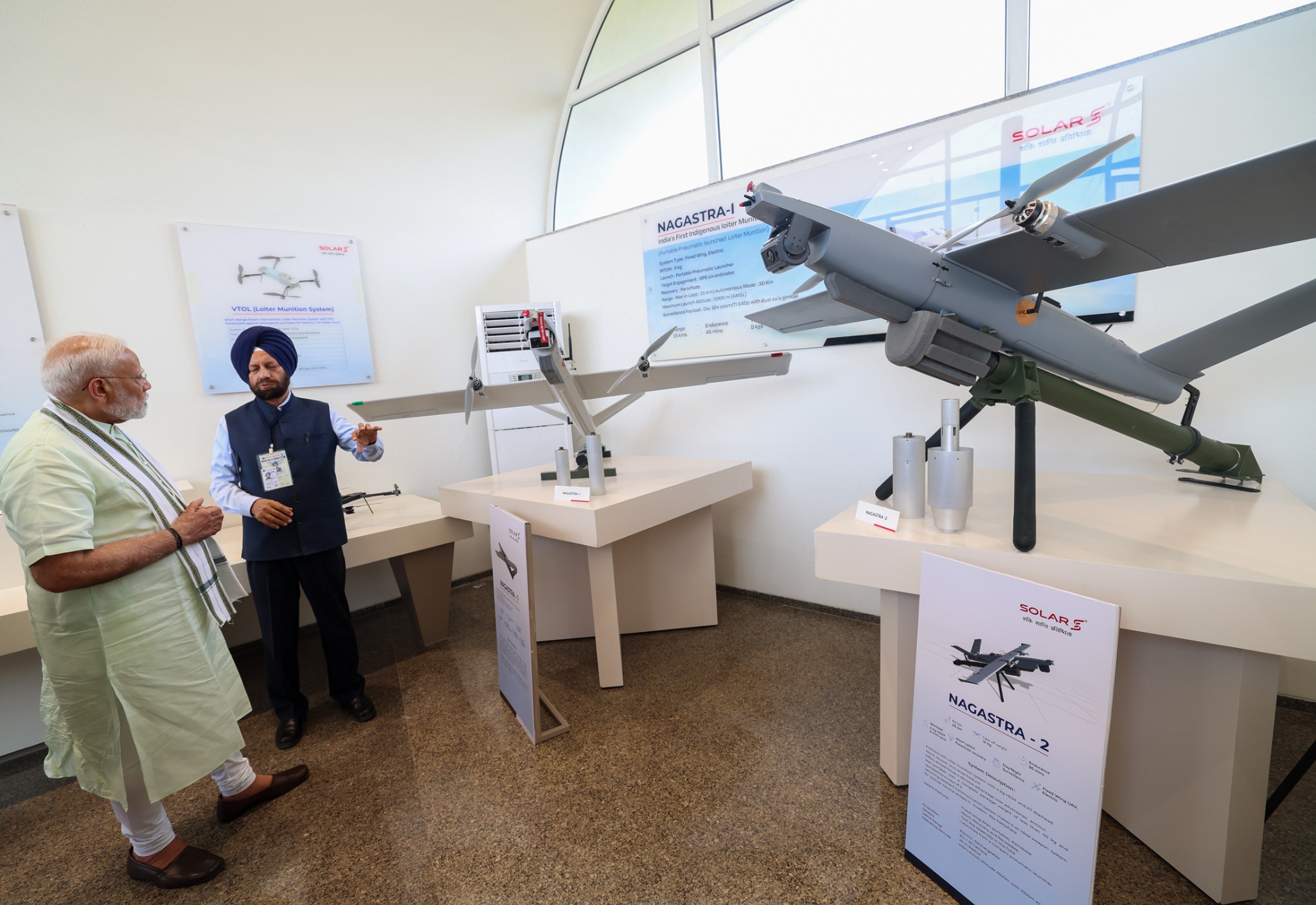
So far, the expansion has worked in Solar's favour.
India has been encouraging domestic defence manufacturing through procurement policies, restrictions on certain imports and greater participation by private companies.
And the market has grown considerably.
According to the Ministry of Defence, India's defence exports reached ₹38,424 crore in FY26, up nearly 63% from the previous year. Private companies accounted for approximately 45% of those exports.
Solar is benefiting from this growing market, although its industrial explosives business remains substantial. In the latest quarter, defence contributed roughly 29% of revenue, while domestic and international explosives businesses together accounted for most of the rest.
In September 2026, it announced a proposed ₹13,000 crore acquisition of South Africa's Omnia Holdings, which has a significant mining explosives business. The deal, subject to approvals, would strengthen Solar's international operations.
But expansion also comes with costs.
Solar's net debt increased from ₹867 crore at the end of FY26 to ₹1,177 crore by September 2026. The company spent ₹873 crore on capital expenditure in the first half of FY27, and its proposed acquisition would require substantial additional funding.
Its defence order book also needs to translate into deliveries and payments. Military contracts involve long production cycles, testing requirements and strict timelines. Orders worth thousands of crores may take several years to fulfil.
Still, Solar's latest results show how far the business has travelled. Defence revenue has nearly doubled, and management expects to exceed its FY27 revenue guidance.
A company that once relied on explosives used to extract coal is now supplying ammunition and weapons to the armed forces. Its next challenge is executing those contracts while expanding its global explosives business without stretching its finances too far.
Sources
- Solar Industries, Q2 FY27 Investor Presentation, 3 November 2026
- Solar Industries, FY26 Annual Report
- Business Today, How Manish Nuwal is turning Solar Industries into a defence player
- Ministry of Defence, India's Defence Export Performance, April 2026
- Omnia Holdings, Proposed Acquisition by Solar Group, September 2026