

 Newsletter
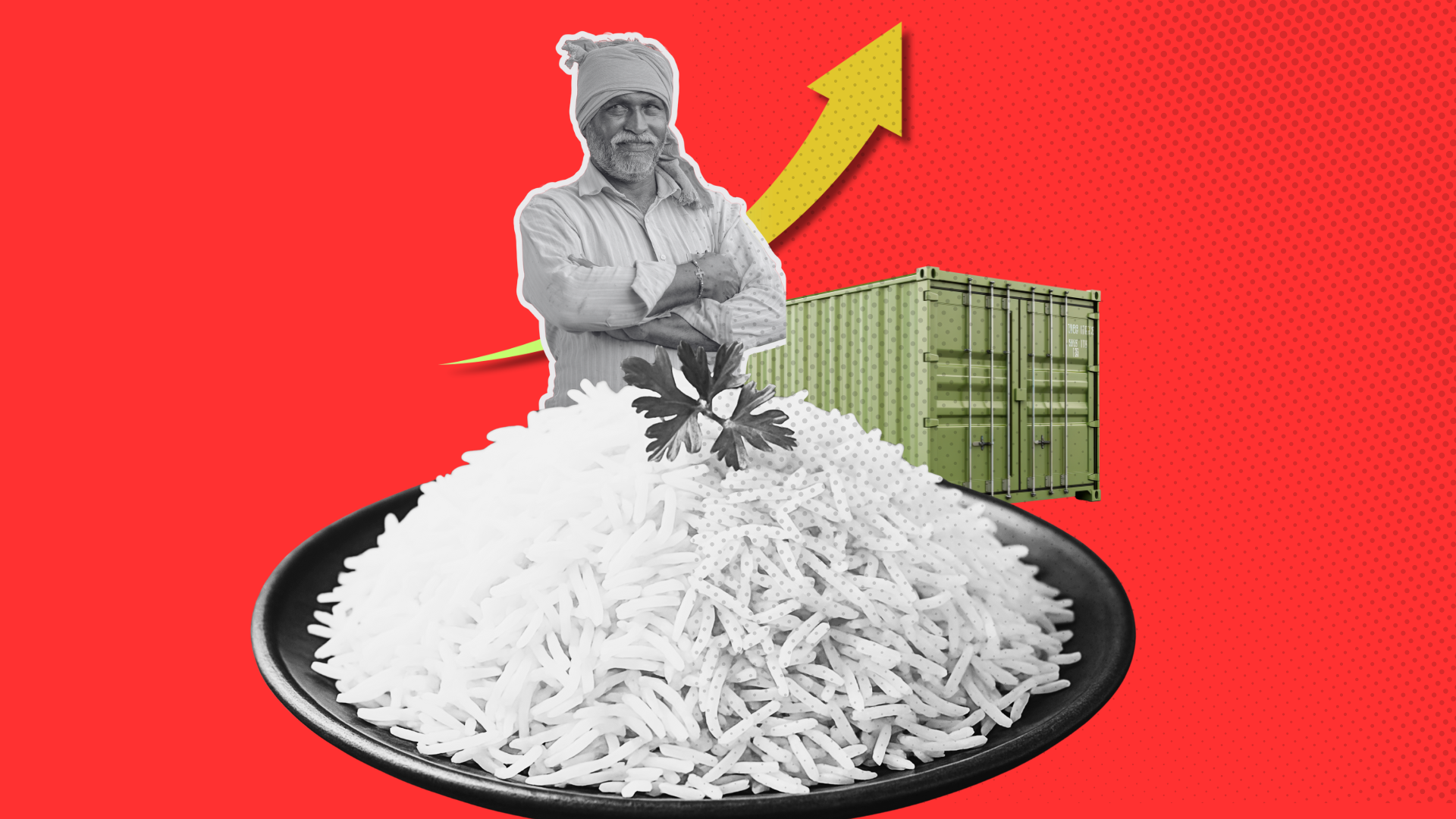
India just pulled off a quiet flex.
For the first time ever, India has become the world’s largest rice producer, overtaking China. In 2025, India produced about 150 million tonnes of rice, edging past China’s output of roughly 145 million tonnes.
It is one of those milestones that says a lot about food security, exports, policy choices, and even geopolitics.
For decades, China held the top spot almost by default. India was always close, but not quite there. This year, that gap finally closed. And no, this did not happen because China suddenly messed up. It happened because India kept pushing production up, year after year, across more states, with better seeds, stronger procurement, and a massive farmer base that never really stopped scaling.
Rice is not just another crop in India. It is what half the country eats daily. It is also what India ships out to the world when global food supply gets shaky.
Today, India accounts for over a quarter of global rice production and exports rice to more than 170 countries. When India sneezes, global rice prices catch a cold. That kind of dominance does not happen accidentally.
The immediate reason behind this jump is scale. India has the largest area under rice cultivation in the world. From the floodplains of the Ganga and Brahmaputra to the deltas of Krishna, Godavari and Cauvery, rice fits naturally into India’s geography. Add canal irrigation, tube wells, and decades of farmer experience, and you get volume. Lots of it.
What also moved the needle this time was productivity catching up. Yields have been climbing steadily since the Green Revolution days, thanks to fertilizer access, and farming practices.
The government recently released over 180 new high-yielding and climate-resilient seed varieties across crops, many of them focused on rice. These are shorter-duration, disease-resistant varieties that give more output with less water.
There is also a regional shift happening quietly. Punjab and Haryana built India’s rice surplus in the past, but at a huge ecological cost of falling water tables and stubble burning.
Now, eastern states like Telangana, West Bengal, Odisha, Bihar and eastern Uttar Pradesh are doing the heavy lifting. Telangana alone produces over 16 million tonnes of rice. These regions have better rainfall patterns and lower irrigation stress, making them more sustainable growth engines.
Exports are the other big piece of the story. Rice has become one of India’s top foreign exchange earners in agriculture. In 2024–25, rice exports brought in over ₹1 lakh crore, with basmati alone contributing nearly half of that. Indian rice travels everywhere, from West Asia to Africa. In many food-importing countries, Indian rice is the default option. That gives India leverage. During global shortages, India’s export decisions can stabilize or shake markets.
But there are cons as well.
India still has a yield problem. Even with recent improvements, India’s per-hectare rice yield is far below China’s. Chinese farms produce nearly 7 tonnes per hectare. India is closer to 4. That gap exists because Chinese farming is far more mechanised, controlled, and water-efficient. India’s growth so far has leaned more on land and labour than precision.
Then there is the water elephant in the room. Rice is a thirsty crop. Growing more of it without changing how it is grown will worsen groundwater depletion.
Policymakers know this, which is why newer rice varieties focus on shorter crop cycles and lower water use. Flood-tolerant and drought-resistant strains are also being developed, especially for eastern India, where climate volatility is rising.
The global angle makes things even more interesting. While India celebrates record output, exports to key markets like Iran are facing disruptions due to political unrest, currency crashes, and tariff threats from the US. This shows the risk of depending too heavily on a few buyers. Production leadership is powerful, but trade stability still depends on geopolitics.
Zooming out, this moment marks how far Indian agriculture has come. At Independence, India produced just about 20 million tonnes of rice and relied on imports to feed itself. Today, it feeds itself, feeds others, and shapes global food flows. That arc is impressive. But the next chapter will be harder. It will not be about producing more at any cost. It will be about producing smarter, with less water, better yields, and fewer ecological scars.
Becoming the world’s largest rice producer is a big deal. Staying there without burning out land, water, and farmers will be the real test.