

 Newsletter
Think about the last banana you ate.
Maybe it was part of your breakfast. Maybe it was the “I’ll eat healthy from Monday” fruit you grabbed between meetings. Or maybe it was just sitting quietly in your kitchen, waiting to turn black.
Either way, chances are it was grown not very far from where you live.
That’s the funny thing about bananas in India. They are everywhere, always available, always cheap, and so normal that we forget how big the story actually is.
Because here’s the not-so-obvious truth.
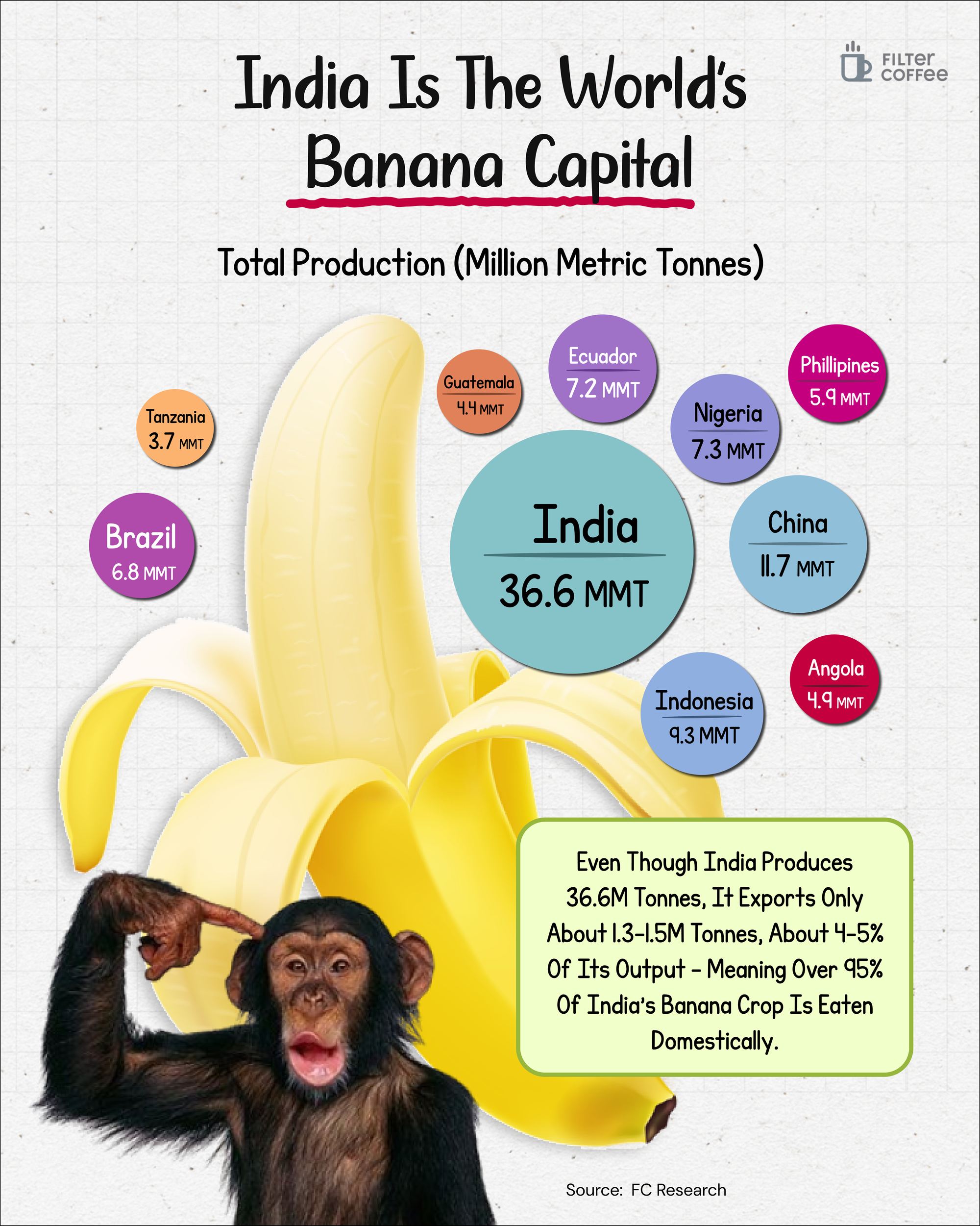
India is the world’s largest banana producer by a massive margin. We produce roughly 36- 37 million tonnes every year. China, which comes second, produces barely a third of that. Countries like Indonesia, Brazil, Ecuador, and the Philippines are serious players globally, but India still towers over them.
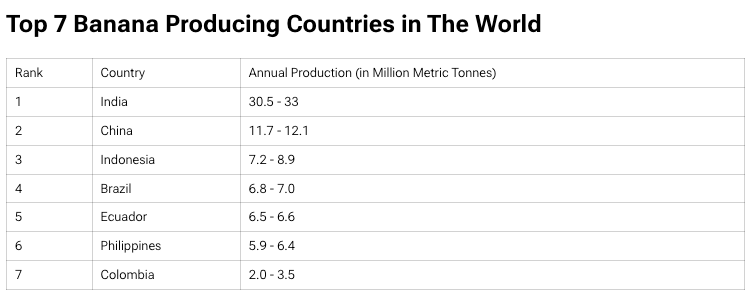
In sheer volume, nobody even comes close.
And yet, for decades, this dominance barely mattered outside our borders. That’s because India didn’t really export bananas. We ate almost all of them ourselves.
Even today, over 95% of India’s banana production is consumed domestically.
Only about 4-5% ever leaves the country. For the longest time, bananas were simply a local staple. Cheap calories. Easy nutrition. A fruit that belonged more to railway platforms and temple prasad than global trade charts.
But that is quietly changing.
In FY25, something interesting happened.
Bananas overtook grapes to become India’s most exported fruit. Export value crossed $375 million, growing nearly 30% in just one year. Even more telling, banana exports are now seven times higher than they were in FY18.
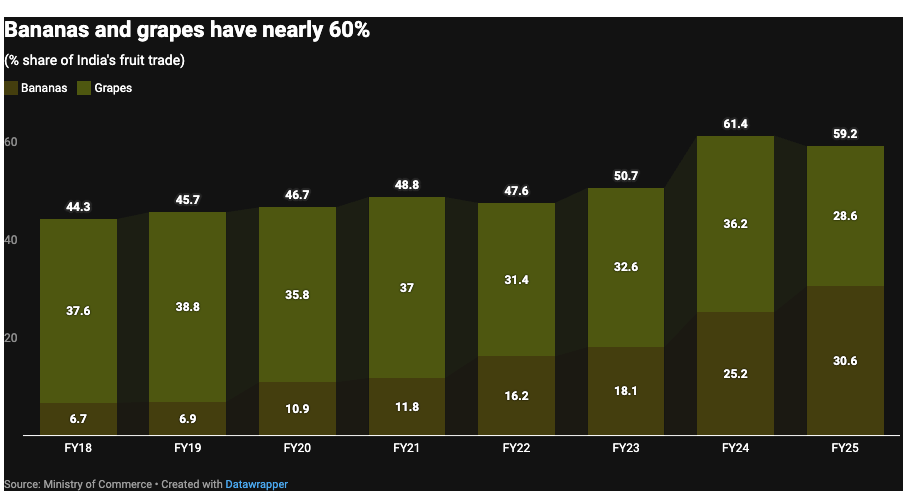
This is not a sudden spike caused by one good season. It’s a steady climb that signals a shift in how India’s banana economy is evolving.
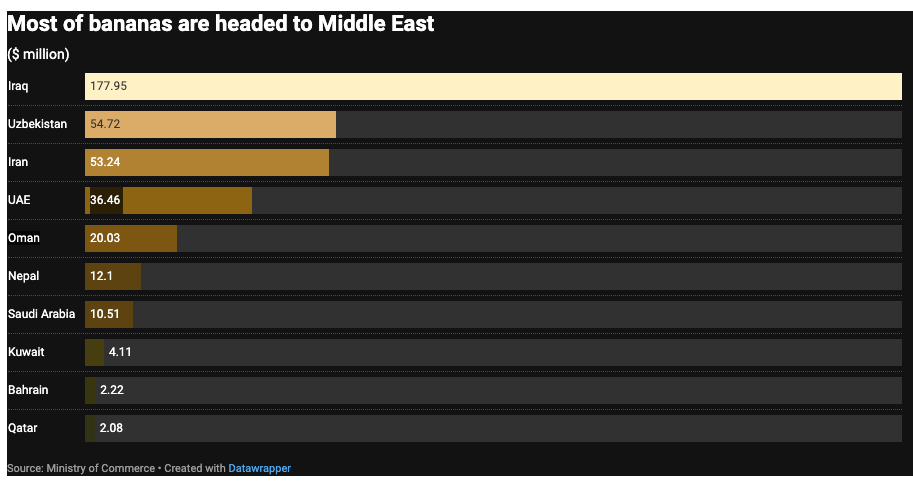
A big reason for this shift lies outside India. The Middle East has emerged as the biggest demand engine. Countries like Iraq, Iran, UAE, Oman, and Saudi Arabia are buying Indian bananas in large volumes. Iraq alone accounted for nearly half of India’s banana exports in FY25, with imports more than doubling in a single year. Central Asia is also opening up. Uzbekistan has quietly become India’s second-largest banana importer after doubling its purchases.
Why bananas, and why India?
The answer is surprisingly simple. Indian bananas are cheap, consistent, and increasingly reliable in quality. Compared to Latin American exporters, India has a pricing advantage.
Compared to Southeast Asian suppliers, India offers scale. And as cold-chain infrastructure improves, bananas can now survive longer sea routes without turning into mush before they reach shelves.
What makes this even more interesting is how uneven the production story inside India actually is. While bananas are grown across many states, a few regions dominate the output.
Tamil Nadu, Maharashtra, Gujarat, Andhra Pradesh, and Karnataka form the core banana belt. Among them, Gujarat stands out in a way that rarely gets attention. While it ranks third in total production, it is the most productive banana-growing region in the world on a per-hectare basis.
Gujarat’s farms produce nearly double the national average yield and almost four times the global average. This comes from heavy adoption of tissue culture saplings, drip irrigation, and modern farm practices. Districts like Bharuch and Narmada are essentially banana factories.
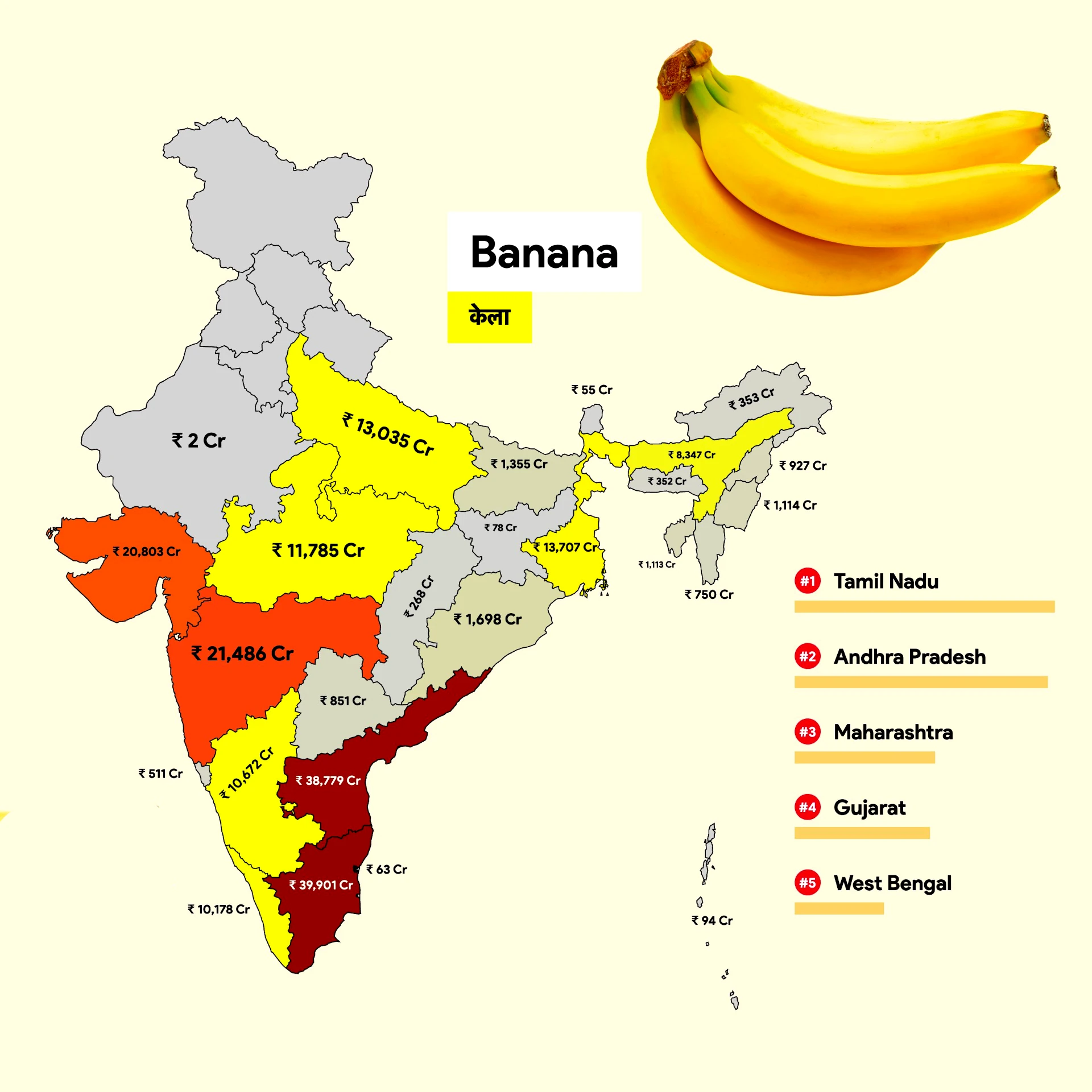
Maharashtra and Tamil Nadu still anchor volumes, but newer stories are emerging from places that were earlier ignored. Odisha is a good example. Once seen as a minor player, it is now building banana export clusters, pushing organic farming, and attracting exporters looking for differentiated produce.
Andhra Pradesh is another quiet disruptor. Its inland banana belts are less affected by cyclones, allow year-round harvesting, and produce fruit with longer shelf life.
This shift also reflects a broader change in India’s fruit export mix. Bananas and grapes now account for nearly 60% of India’s total fruit exports. Overall fruit and nut exports have grown over 50% since FY18.
India is no longer just growing fruit for domestic consumption. It is slowly learning how to sell it to the world.
Of course, this is not a perfect story. Bananas are fragile. Diseases like Panama wilt can wipe out plantations. Climate volatility can mess with yields. Post-harvest losses are still high in many regions due to weak storage and transport. And price volatility continues to hurt farmers when supply spikes.
But the direction of travel is clear. India is moving from being a banana-heavy consumer economy to a banana-capable export economy. Not by abandoning domestic demand, but by building systems that can serve both. Export clusters, farmer producer organisations, better logistics, and stricter quality standards are slowly changing how bananas move from farms to markets.
The irony is that India does not need to become Ecuador to win this game. Ecuador exports aggressively because its domestic consumption is limited. India is playing a different match. It already has scale, demand, and farmer depth. Even a small increase in export share can create a big impact in global markets. When you produce over 36 million tonnes, moving from exporting 5% to even 8% changes the global supply equation.
So the next time you eat a banana, it’s worth remembering this. You are holding a fruit that puts India at the top of a global leaderboard. For years, that fact stayed hidden behind everyday consumption. Now, slowly and quietly, the world is beginning to notice.

FAQs
Why is India called the world’s banana capital?
India is called the world’s banana capital because it produces over 36 million tonnes of bananas every year, more than any other country globally.
How much of the world’s bananas does India produce?
India produces roughly 19 to 27 percent of global banana output, depending on the year and dataset, making it the largest producer by a wide margin.
How much banana does India export compared to production?
India exports only about 4 to 5 percent of its total banana production, with over 95 percent consumed domestically within the country.
Why did India export very few bananas earlier?
India focused on domestic consumption due to high internal demand, limited cold storage, weak export logistics, and lack of global quality standards.
When did banana exports from India start increasing?
Banana exports began rising sharply after FY18 and reached a major milestone in FY25 when bananas became India’s most exported fruit.
Which countries import bananas from India the most?
Iraq is the largest importer of Indian bananas, followed by Iran, UAE, Oman, Saudi Arabia, and Central Asian countries like Uzbekistan.
Which Indian states produce the most bananas?
Tamil Nadu, Maharashtra, Gujarat, Andhra Pradesh, and Karnataka are the largest banana-producing states in India.
Why is Gujarat important in banana production?
Gujarat has the highest banana productivity per hectare in the world due to tissue culture plants, drip irrigation, and modern farming practices.
Why are Indian bananas becoming competitive globally?
Indian bananas are price-competitive, available in large volumes, and increasingly meet global quality standards due to better logistics and cold chains.
Can banana exports significantly grow India’s agriculture economy?
Yes. Even a small increase in export share can create a big impact because India already produces bananas at massive scale.