
 Newsletter
A few years ago, waking up at 5:30 AM on a Sunday would have sounded like punishment to most urban Indians.
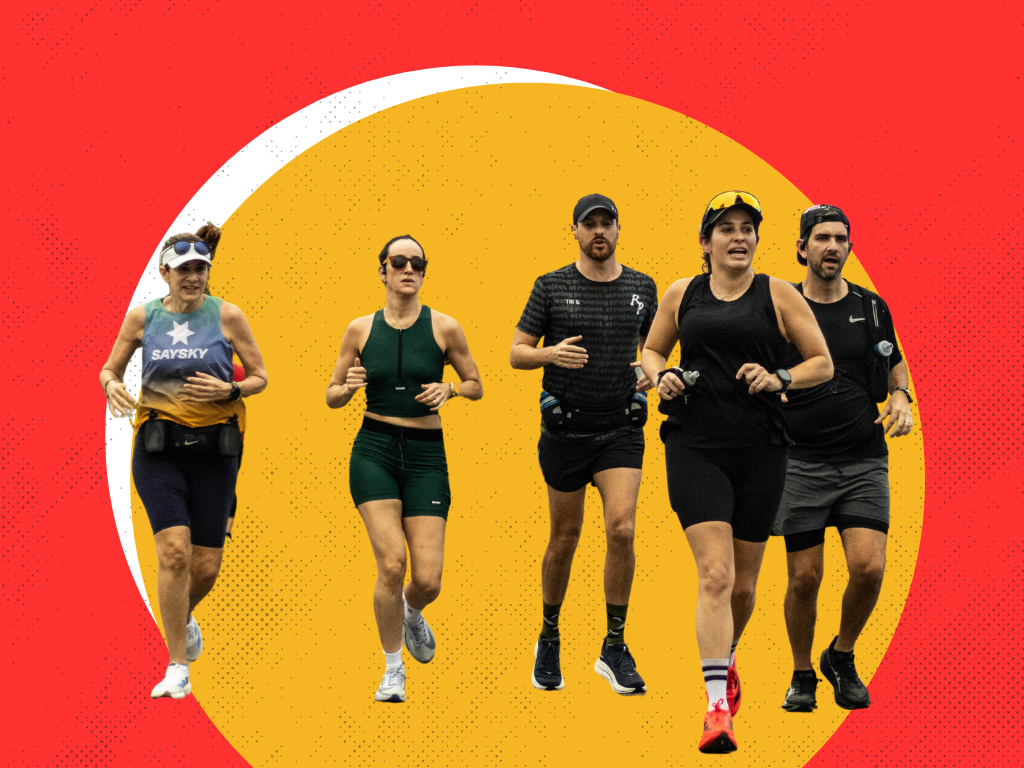
Today, thousands of people voluntarily do it. Across Mumbai's Marine Drive, Bengaluru's Cubbon Park, Delhi's Lodhi Gardens, Hyderabad's Necklace Road, and dozens of parks and promenades across the country, young professionals are showing up before sunrise to run with people they've often never met before.
Some are training for marathons. Most aren't. They're showing up for the community. And that's turning running clubs into one of India's fastest-growing social phenomena.
The trend is visible everywhere. Brands are sponsoring community runs. Cafes are hosting runner meetups. Sportswear companies are building dedicated running communities. Strava screenshots are appearing on Instagram Stories. Major races are reporting record participation numbers.
India now hosts more than 1,500 organised running events every year, attracting roughly 2.5 million participants. The broader running ecosystem, which includes races, apparel, footwear, nutrition, coaching, and fitness technology, is estimated to be worth more than ₹3,700 crore.
The Tata Mumbai Marathon alone attracted around 59,000 participants in its latest edition. Twenty years ago, marathon running was still considered a niche activity in India. Today, races across Bengaluru, Delhi, Hyderabad, Chennai, Pune, Ahmedabad, Jaipur, Indore, and Chandigarh are routinely attracting thousands of participants.
The obvious explanation is that Indians are becoming more health conscious.
That's true. But it doesn't fully explain what's happening. Because if fitness alone were the answer, gyms would have seen the same level of community formation.
Instead, running clubs are becoming something much bigger. They're becoming India's new "third place."
Sociologists use the term "third place" to describe spaces outside home and work where people build relationships and communities. Traditionally, these were neighbourhood clubs, parks, community centres, libraries, religious institutions, or local gathering spots.
The problem is that modern urban India has fewer of these spaces than before.
People move cities more frequently for work. Nuclear families have become the norm. Remote work has reduced office interactions. Social media has increased digital connections but often weakened physical ones. Dating apps have expanded access to people but not necessarily meaningful relationships.
In many cities, people are surrounded by millions of others while simultaneously feeling disconnected.
Running clubs are quietly filling that gap.
Unlike networking events, they don't require professional credentials or participation isn't dependent on spending. Conversations happen naturally and nobody expects you to be fit before joining.
All you need is a pair of shoes. And that's a surprisingly powerful proposition. The pandemic fundamentally changed how people think about health.
After Covid, the conversation shifted toward longevity, cardiovascular health, immunity, mental wellbeing, and lifestyle diseases.
Running fits perfectly into this new mindset.
It's inexpensive. It requires no membership. It can be done almost anywhere. And unlike many fitness activities, progress is easy to measure.
The result has been a sustained boom in participation.
The number of marathon finishers in India has grown significantly over the past decade. Running communities have multiplied across cities. Race registrations continue to rise. Female participation is also increasing steadily, with major races reporting double-digit growth in women runners.
But perhaps the most fascinating part of this story is that running has become social media's newest status symbol.
For years, Instagram defined online identity. Today, Strava has entered the picture.
Strava started as a fitness-tracking platform. Today, many runners treat it almost like a social network.
The platform crossed 150 million registered users globally in 2025, adding tens of millions of users in just a few years. India has emerged as one of its fastest-growing markets.
The concept is simple. Users upload their runs. Friends can comment. They can give "kudos" instead of likes. They can compare performance, join challenges, track progress, and compete on local routes.
In many urban fitness circles, asking someone for their Strava profile is becoming almost as common as asking for their Instagram handle.
The reason is psychological. Instagram often rewards appearance. Strava rewards effort. Completing a 10-kilometre run, maintaining a 100-day running streak, or finishing a half marathon requires visible effort. Social validation comes from discipline rather than consumption.
For years, status was often communicated through what people owned. Today, status is increasingly communicated through what people do like: Running, Cycling, Trekking, Strength training, Hyrox, Pickleball.
Experiences and habits are becoming social signals. Running clubs sit right at the centre of this change.
The business world has noticed.
Sportswear brands like Nike, Adidas, Asics, Puma, Decathlon, and New Balance are investing heavily in community-led running initiatives rather than relying solely on traditional advertising.
Wearable companies such as Garmin, Apple, Coros, and Amazfit are benefiting from increased interest in performance tracking. Nutrition brands selling protein, hydration products, electrolyte mixes, and energy gels are seeing growing demand from amateur runners.
What's also notable is that the trend is spreading beyond India's biggest cities.
Running communities are emerging in Indore, Surat, Coimbatore, Lucknow, Jaipur, Chandigarh, Nagpur, and several Tier II cities. Much like cycling and trekking before it, running is moving from an elite urban activity to a mainstream lifestyle habit.
The rise of running clubs is about how young Indians are rebuilding social connections, creating new communities, redefining status, and finding belonging in increasingly fragmented cities.
The run is just an excuse. The community is the product.