

 Newsletter
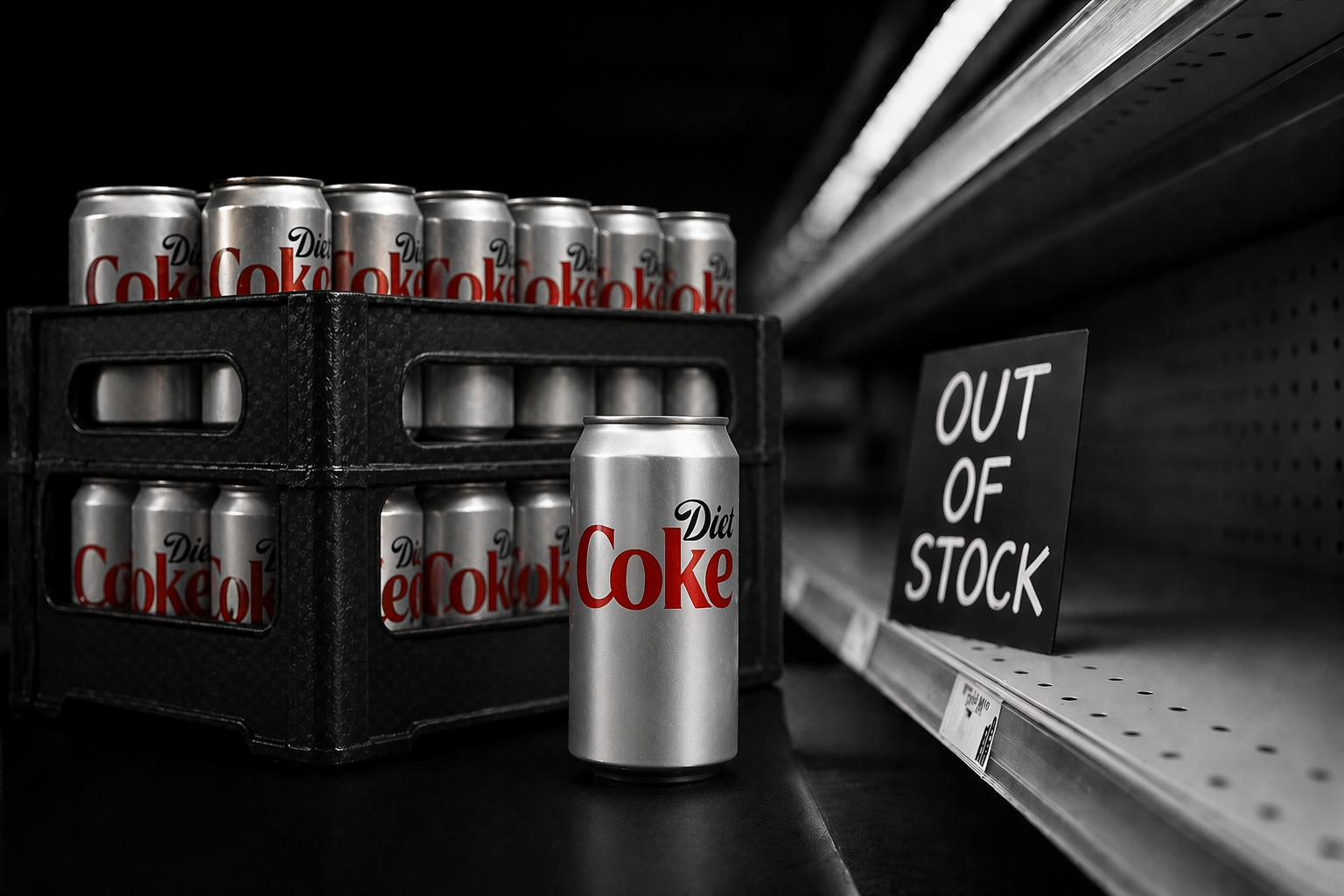
Walk into a premium grocery store in Mumbai or Bengaluru today and there is a good chance you will not find a can of Diet Coke.
Not because people stopped drinking it, but because it simply is not there.
Earlier this year, retailers across India have been reporting stock-outs, and what looks like a small missing product is actually a signal of something much bigger breaking underneath India’s beverage industry.
At the heart of the problem is not Coke, not even sugar-free demand, but something far less glamorous.
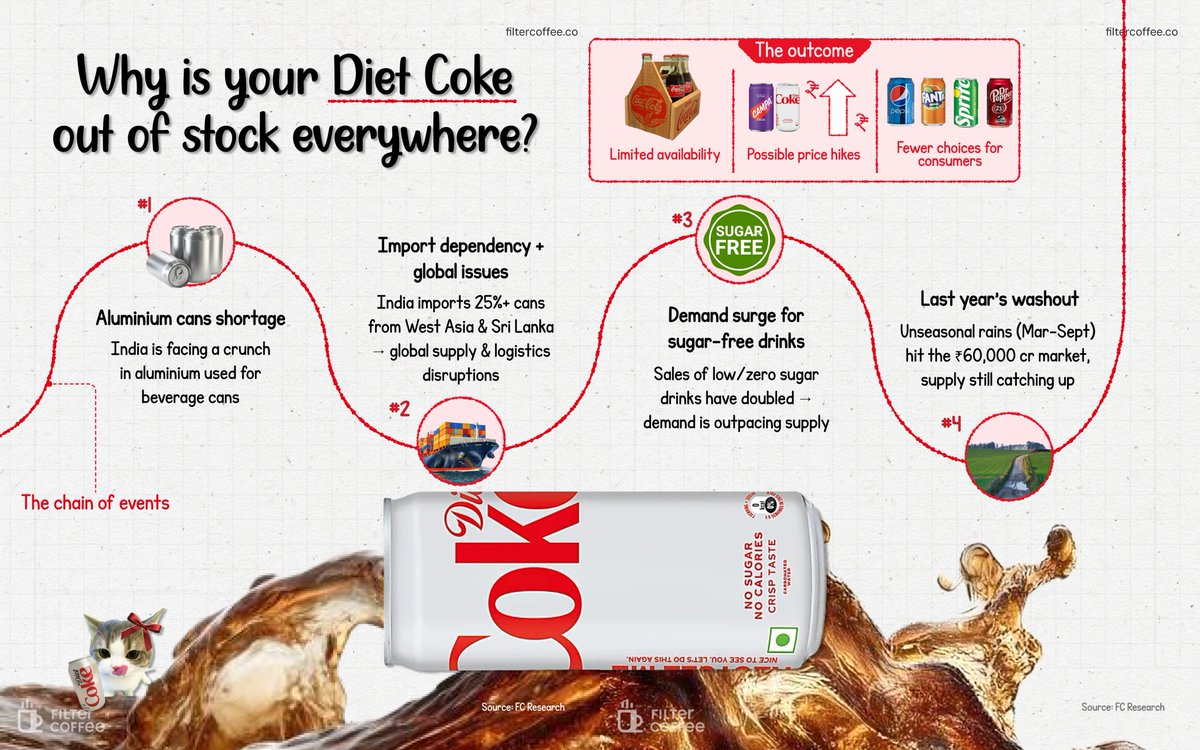
India is facing a genuine squeeze in beverage can supply, and this is hitting products like Diet Coke first because they rely almost entirely on cans instead of plastic bottles or returnable glass.
While regular colas can fall back on PET packaging, Diet Coke does not have that cushion in India, which makes it the most visible casualty of a deeper supply chain issue.
The dependency angle makes this even more fragile.
India still imports roughly a quarter of its aluminium cans, largely from \and nearby regions.
When global logistics get disrupted or geopolitical tensions rise, these imports become costlier and slower.
Recent reports suggest imported cans are now about 25 to 30% more expensive than before. That cost pressure affects availability, and pushes up prices and forces companies to ration supply across markets.
At the same time, demand has been moving in the exact opposite direction.
India’s shift toward low and no sugar drinks has accelerated sharply over the last few years.
In 2020, these drinks made up barely 5% of the market. By 2025, that number had climbed to around 30%.
Coca-Cola’s own zero sugar portfolio has reached similar levels in its India mix, and Diet Coke volumes have reportedly doubled in a single year.
This is not a niche urban trend anymore as companies are launching ₹10 entry packs for zero sugar variants, the category is expanding rapidly into mass markets.
Then comes the capacity gap, as beverage can manufacturing in India is growing but still catching up.
Companies like Ball and CANPACK have announced investments worth over $200 million combined in new plants and expansions between 2025 and 2026. One large greenfield plant is coming up in Uttar Pradesh, while expansions are underway in Andhra Pradesh and Maharashtra.
But these facilities take time to become operational. Until they do, supply remains tight, especially during peak summer demand when beverage consumption spikes.
Policy changes are also a factor.
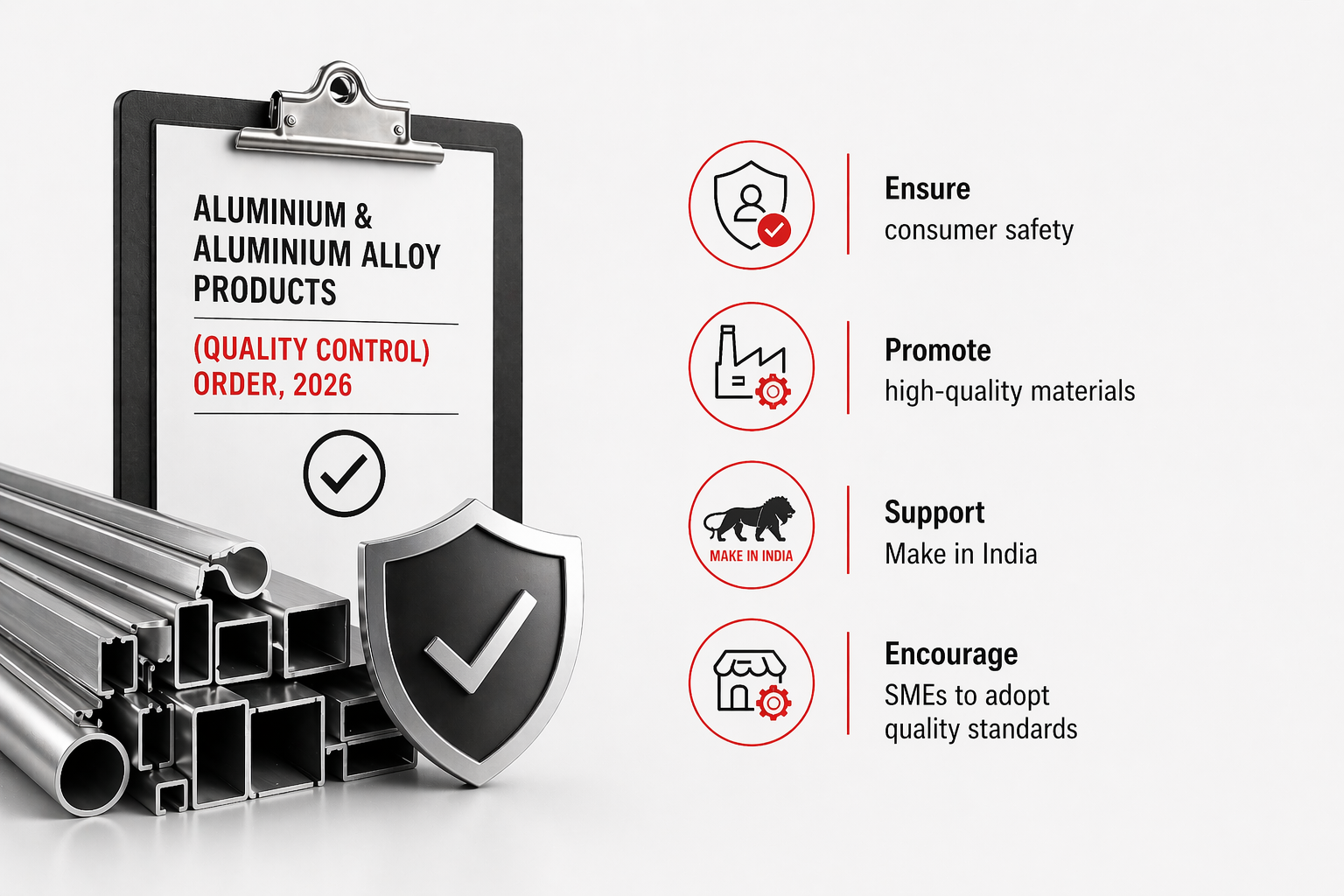
In early 2026, India introduced stricter quality standards for aluminium cans under a new quality control order.
While this is aimed at improving safety and standardisation, industry players warned that immediate implementation could choke supply further, especially for imports.
There were concerns that certification bottlenecks would delay shipments right when demand peaks. This forced a delay in rollout, but it highlighted how regulatory shifts can amplify existing supply stress.
Weather has also played a strange supporting role in this story.
The soft drinks market, estimated at around ₹60,000 crore, was hit by unseasonal rains last year, which disrupted demand patterns and inventory planning.
Companies entered 2026 trying to recalibrate supply, but intermittent rains again in parts of India have made demand uneven. This makes planning harder when packaging supply is tight.
The result is what consumers are now seeing.
Limited availability on shelves, fewer options in the sugar-free segment, and the possibility of high price increases. But the main point goes beyond Diet Coke.
This is a story about how a fast-changing consumer preference collided with an underprepared supply chain.
India’s beverage market is evolving quickly, but its packaging ecosystem is still catching up.
So the next time you cannot find a can of Diet Coke, it is not just a missing drink. It is a reminder that sometimes the smallest part of a product, in this case a simple aluminium can, can decide whether an entire category keeps flowing or suddenly runs dry.