
 Newsletter
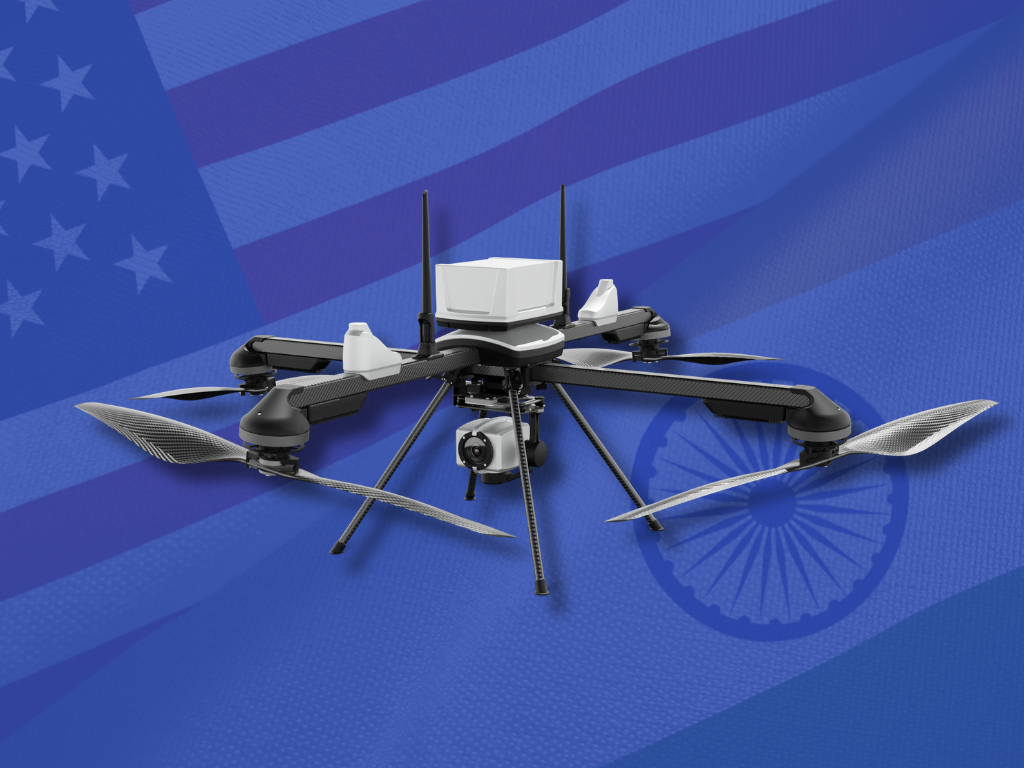
The US has just made it much more expensive to sell a foreign-made drone in America.
Under the new tariff measures announced by the Trump administration, certain imported drones will face tariffs as high as 100%, while others will attract a 25% levy.
The objective is straightforward: America wants to reduce its dependence on foreign countries for a technology that is increasingly important for defence, surveillance, infrastructure and public safety.
One Indian company that could be directly impacted by this move is ideaForge. The company manufactures drones in India and has already started selling them in the US. So, higher tariffs on imported drones could make its products more expensive for American buyers. But ideaForge has one advantage. It already has a 50:50 joint venture with an American company to manufacture drones inside the US.
There are not many Indian drone companies with a meaningful presence in the US yet. India has built a growing drone manufacturing ecosystem with companies such as Garuda Aerospace, Asteria Aerospace, Raphe mPhibr, Dhaksha and Aarav Unmanned Systems, but ideaForge is among the few that has already demonstrated access to American customers.
In March 2026, it secured an order from the Lamar Consolidated Independent School District Police Department in Texas for its Q6 V3 drones, which will be used for aerial monitoring across roughly 20 to 25 schools.
Garuda Aerospace received an export licence in 2025 allowing it to sell drones in markets including the US, Australia and the Middle East.
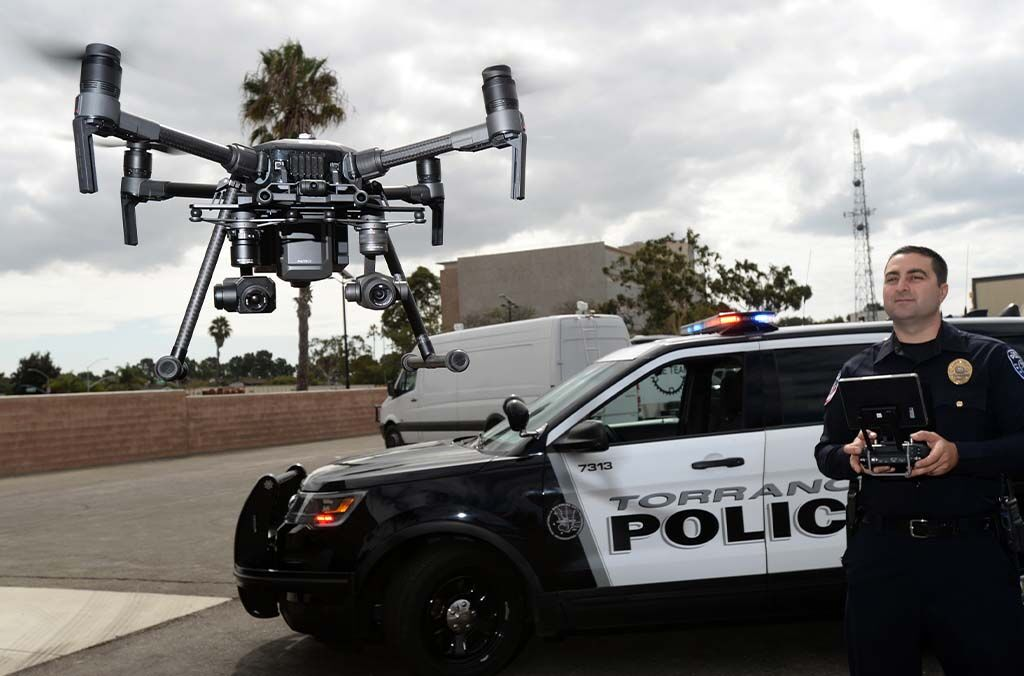
Photo by Dallas Police
The new tariffs could have been a problem for ideaForge. The company has already started selling drones in the US, but those drones are manufactured in India. Now, importing them could attract tariffs of 25% or even 100%, depending on the type of drone. So, if an imported drone costs $20,000, a 25% tariff alone would add another $5,000 to its cost. That makes it harder for ideaForge to compete with a similar drone manufactured inside the US.
Except ideaForge had already started building another route. In September 2025, its US subsidiary partnered with Maryland-based defence manufacturer First Breach to create First Forge Technology.
The two companies own 50% each, and the JV was established to develop, manufacture and sell unmanned aerial systems in the US, with production planned in Hagerstown, Maryland.
First Breach brings the American manufacturing base and local capabilities, while ideaForge contributes its drone platforms, software, avionics and autonomous-flight technology. So this is not simply an American distributor importing ideaForge drones and putting them on shelves.
Instead of depending entirely on India-to-US exports, ideaForge can potentially take its technology and intellectual property to America and manufacture eligible products there.
The JV has said it intends to manufacture products that can qualify as Made in USA and comply with relevant US defence procurement requirements. That gives ideaForge an established structure for manufacturing inside the very market that is becoming harder for foreign-made drones to enter.
Even before tariffs arrived, IdeaForge had already identified this risk. The company told investors that establishing manufacturing capabilities in America could help it deal with tariff and geopolitical uncertainty while improving its ability to participate in US government procurement.
China has dominated the global civilian drone industry for years, with DJI controlling a substantial share of the global commercial drone market and an even larger portion of some US drone categories.
Drones can be used for mapping, policing, border surveillance, infrastructure inspection, agriculture and military reconnaissance. The war in Ukraine has made the military importance of relatively cheap unmanned systems even clearer. America therefore wants fewer foreign dependencies while simultaneously trying to build a larger domestic drone industry.
That could make ideaForge's opportunity bigger than simply avoiding a tariff. When Washington makes imported drones more expensive and encourages domestic manufacturing, American buyers still need alternatives.
First Forge could allow ideaForge's technology to compete for some of that demand without relying entirely on finished drones shipped from India. The company also has some credentials that could help when pitching to defence and government buyers. Its drones have been used by the Indian armed forces and other government agencies, while products including SWITCH and Q6 have received NATO Stock Numbers.
An NSN does not guarantee orders from NATO countries, but it standardises a product within NATO's logistics system and can make identification and procurement easier for eligible buyers.
But there is an important catch. A factory in Maryland does not automatically make the tariff problem disappear. Drones contain cameras, processors, batteries, motors, communication systems, sensors and several other electronic components. If First Forge imports significant components or subassemblies, tariffs and sourcing restrictions can still affect its costs. US government procurement rules can also look beyond the location of final assembly and examine where important components originate. ideaForge therefore has to localise enough of the supply chain, not simply assemble Indian-made drone kits in America and call them American.
The second challenge is scale. First Forge is still a relatively new venture. Announcing a manufacturing partnership is very different from running a large American factory with established suppliers, regulatory approvals, customers and repeat orders.
ideaForge has to transfer technology, establish production, qualify products, build a local supply chain and compete with American defence technology companies that are also chasing the same opportunity. The JV gives it a route into the market, but it does not guarantee that customers will follow.
ideaForge itself has been dealing with an uneven domestic business. India's drone industry received enormous attention after the government restricted drone imports and introduced production-linked incentives, but defence procurement remains lumpy. Large orders can take time to arrive, which means revenue can move sharply depending on when contracts are awarded and delivered.

An international business could reduce ideaForge's dependence on Indian procurement, but building manufacturing capacity abroad requires investment before it produces meaningful revenue.
So the new US tariffs are not simply good news or bad news for ideaForge. They make direct exports from India more difficult and could raise the cost of components that still need to cross borders. But they also make the company's decision to establish a 50:50 American manufacturing JV considerably more valuable. And because ideaForge is among the relatively small group of Indian drone manufacturers that has already demonstrated access to US customers, the stakes are higher for it than for companies merely considering America as a future export market.
The bigger opportunity comes from what happens to everyone else. America still needs drones even as it makes foreign-made drones harder to import. If Chinese and other overseas suppliers become more expensive or face tighter restrictions, buyers will need alternatives that fit America's increasingly domestic supply chain.
ideaForge's bet is that it can remain an Indian technology company while becoming local enough to participate in that shift. The engineering and intellectual property can come from India, while eligible products are manufactured closer to American customers.
The tariffs have made that strategy much more relevant. They have also made the next part much harder. First Forge now has to prove that local manufacturing is more than a clever way to navigate trade policy and can become a real American drone business.