
 Newsletter
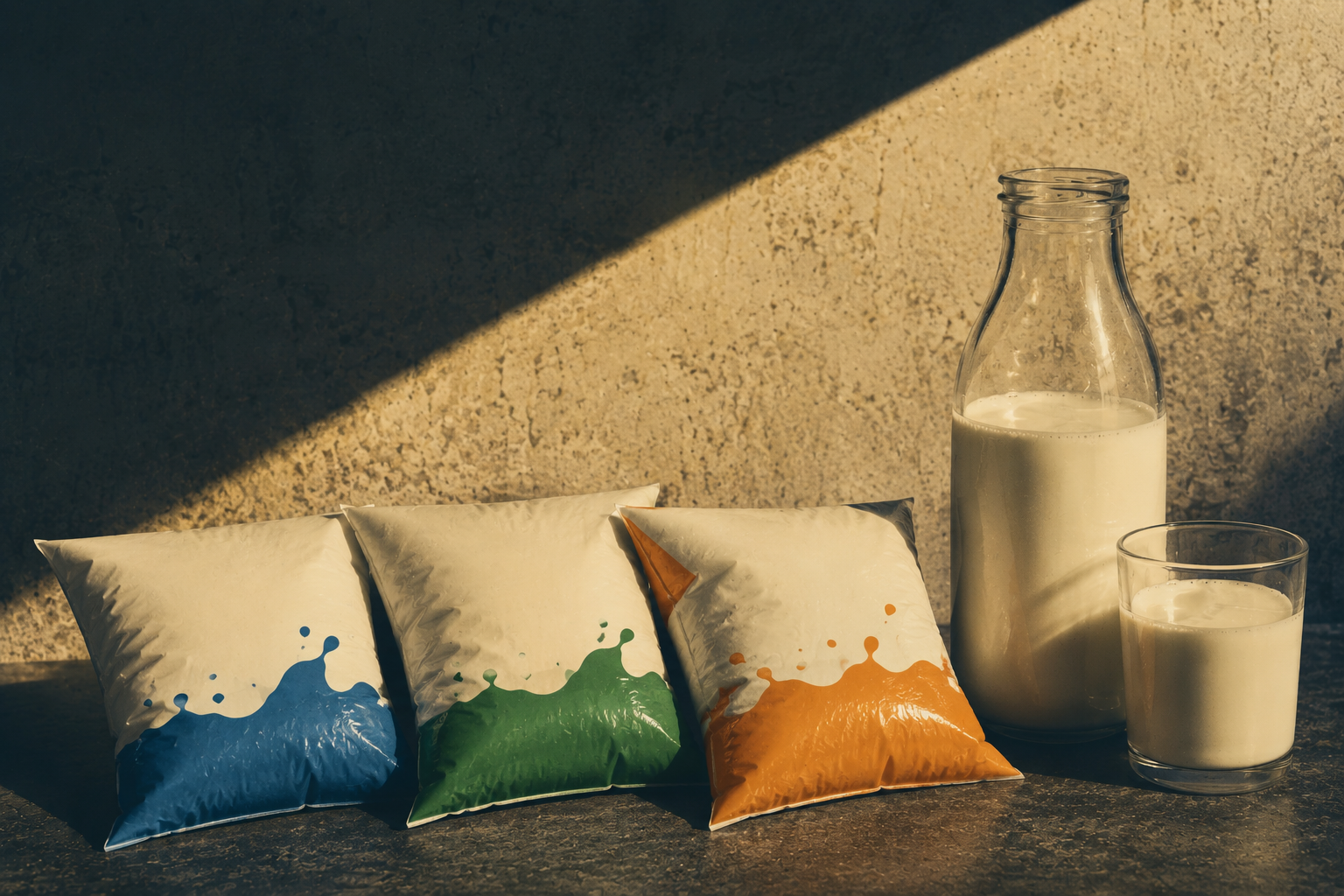
You know that moment at the grocery store when someone says, “Get the blue packet milk, not the green one”?
Most Indians don’t ask for milk by fat percentage. They ask for it by colour. Blue, green, orange, magenta.
Somewhere along the way, milk packets stopped being just packaging and became a coded language every household understood but people don’t know why milk packets carry different colours. These colours are not random design choices but tiny shortcuts into India’s deeply engineered dairy system.
But the real story is much bigger than packet colours.
Because behind that blue packet sitting in your fridge is one of the most ambitious food systems India has ever built.
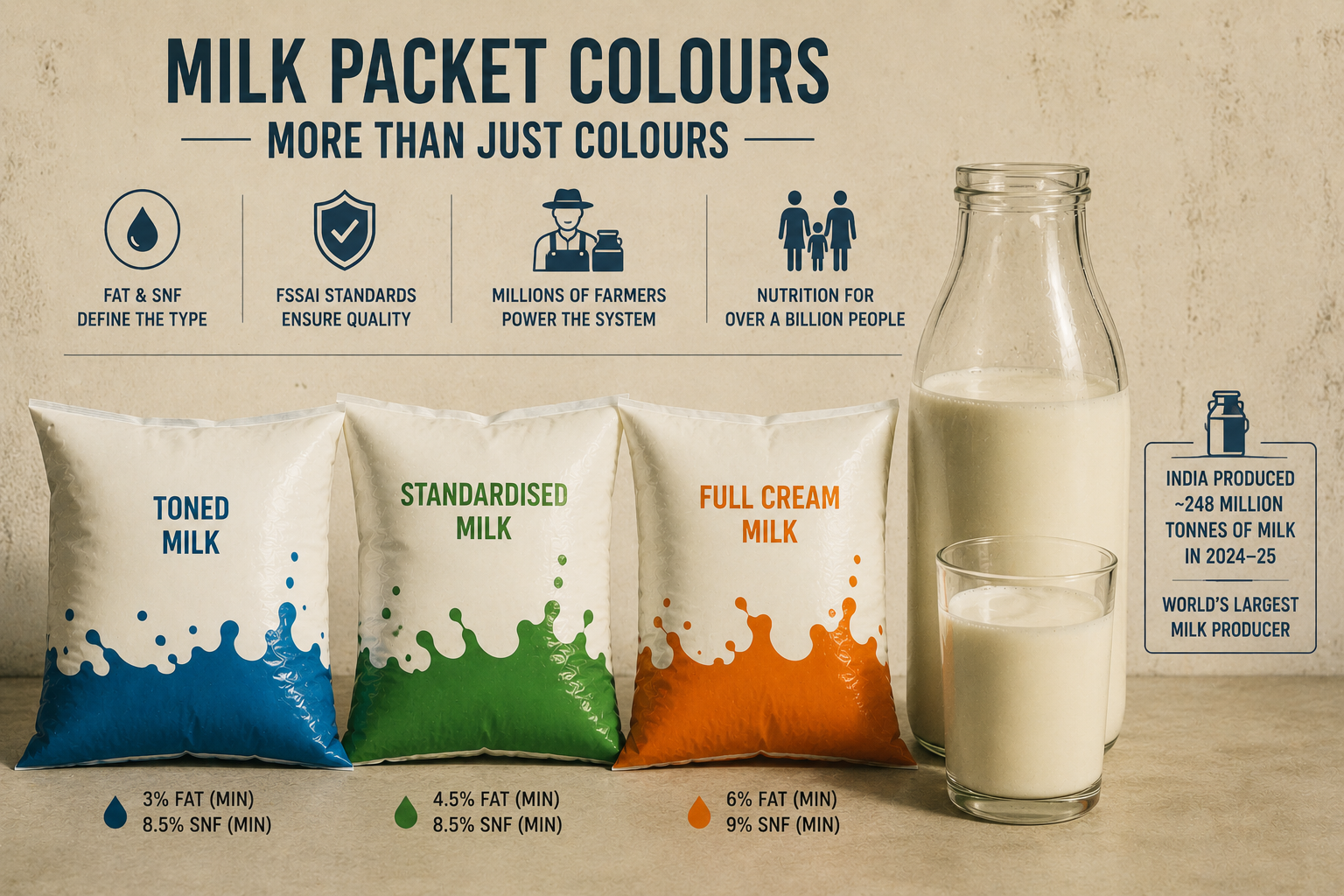
India today is the world’s largest milk producer. In 2024–25, the country produced nearly 248 million tonnes of milk. That is more than the United States and China combined.
Per capita milk availability has risen to around 485 grams a day, almost double what it was in the early 2000s. And unlike many agricultural success stories dominated by large corporations, India’s dairy economy still runs on millions of small farmers, most of whom own just two to five cattle.
The colour coding on packets is actually the last visible layer of a decades-long attempt to standardise milk for a massive and wildly diverse country.
Milk is not naturally uniform as the fat content of milk changes depending on breed, season, feed, region, and even the weather. Buffalo milk in Punjab can be richer than cow milk in Karnataka. Left unregulated, every packet would taste different every week.
So India created categories. Full cream milk. Standardised milk. Toned milk. Double toned milk. Skimmed milk.
Each category has legally defined fat and solids-not-fat levels under FSSAI regulations. Full cream milk must have at least 6% fat. Toned milk must have 3%. Double toned drops to 1.5% or lower.
The colour system evolved because India needed a simple way for millions of consumers to instantly distinguish between them without reading technical labels every morning.
That is why blue usually means toned milk, green often signals standardised milk, orange typically indicates full cream milk, and magenta can represent double toned milk.
But here is the catch. There is no universal law saying every dairy brand must use the same colour code. Amul, Mother Dairy, Nandini, Aavin, Verka, and regional cooperatives often follow similar conventions, but not always. Which means two green packets from different brands may not mean the exact same thing.
And that confusion matters because milk in India is no longer just about nutrition. It is now about pricing, margins, protein intake, urban lifestyles, and even climate pressure.
Take toned milk for example.
Most people think toned milk is “diluted” milk. In reality, toned milk was one of India’s smartest food innovations.
During the White Revolution, India needed a way to stretch limited milk supplies across a huge population while keeping nutritional value reasonably intact. So dairies reduced fat but maintained solids-not-fat content. This allowed more families to afford milk without severely compromising protein and calcium intake. In a country where milk is often the cheapest accessible protein source, that mattered enormously.
Today, India consumes more milk than wheat or rice by value. The dairy sector contributes over 5% to the national economy.
Yet it also faces growing pressure. Feed costs are rising. Heat stress is reducing cattle productivity. Urban demand for high-protein products like Greek yogurt, whey drinks, and paneer is exploding. Meanwhile, consumers are becoming label-conscious.
That is why packaging itself is changing.
FSSAI has proposed stricter front-of-pack labelling norms that could make nutrition disclosures more prominent on milk and dairy products. Some state cooperatives are experimenting with biodegradable milk packets because cities like Bengaluru alone reportedly discard over 20 lakh plastic milk pouches every day.
And then there is the strange irony of India’s milk economy.
For decades, consumers were trained to buy milk based on colour. But the future may force them to read beyond colour. Fat percentages, protein content, sourcing transparency, adulteration checks, shelf life technology, and sustainability claims could soon matter more than whether the packet is blue or green.
Still, there is something uniquely Indian about the whole thing.
In most countries, milk is just milk. In India, it is a coded ecosystem of economics, nutrition, regulation, politics, and household habit wrapped inside a coloured plastic pouch that quietly tells a nation what kind of morning chai it is about to make.