

 Newsletter
For years, the biggest complaint about protein was that people weren't eating enough of it.
Now the problem is that we're trying to put it into everything.
Last month, food companies across the US started sounding the alarm about a whey protein shortage. Some suppliers reportedly ran out of stock for the rest of the year. Prices hit record highs. Smaller brands began reformulating products. Others paused production entirely.
But how can there be a protein shortage when supermarket shelves are overflowing with protein bars, protein shakes, protein chips, protein cookies, protein cereals, protein ice creams, protein coffees and enough protein powders to make every gym-goer feel personally responsible for national muscle growth?
The answer is simple.
There isn't a shortage of protein.
There's a shortage of one specific type of protein that the modern food industry has become heavily dependent on: whey protein. And the reasons behind it reveal how consumer trends can sometimes grow faster than the systems that support them.
To understand what's happening, we need to start with whey itself.
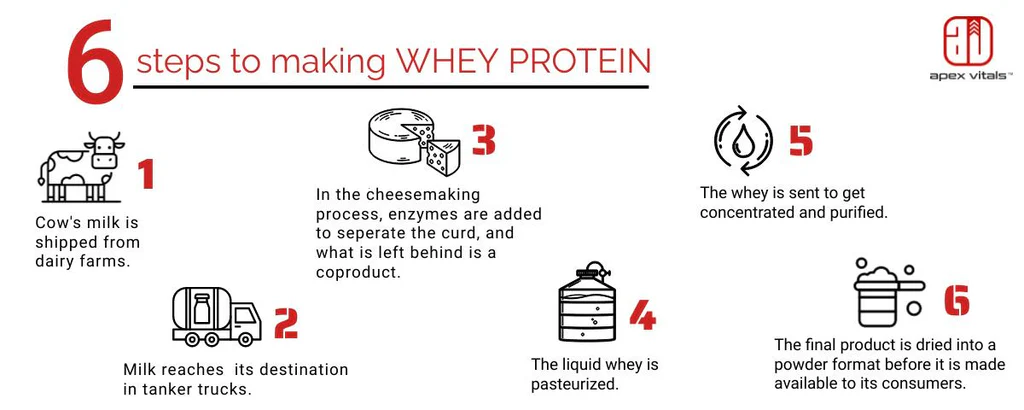
Whey protein comes from milk. More specifically, it is the liquid left behind when milk is turned into cheese. For decades, this liquid was considered a waste product. Dairy producers often fed it to livestock, dumped it on fields or simply threw it away because there wasn't much demand for it.
That changed in the 1980s when advances in food processing made it easier to extract, dry and package whey into powder. Suddenly, the dairy industry had discovered a valuable product hiding inside a byproduct.
For years, supply comfortably matched demand.
Then the world became obsessed with protein.
Today, protein has escaped the gym and entered everyday life.
Starbucks sells protein-enhanced drinks. Chipotle promotes higher-protein meal options. Dunkin has experimented with protein additions. Food companies are adding protein to waffles, chips, cookies, desserts and beverages. Social media influencers compete over who can consume the most grams in a day. The term "protein-maxxing" has become part of internet fitness culture.
The numbers show just how dramatic this shift has become.
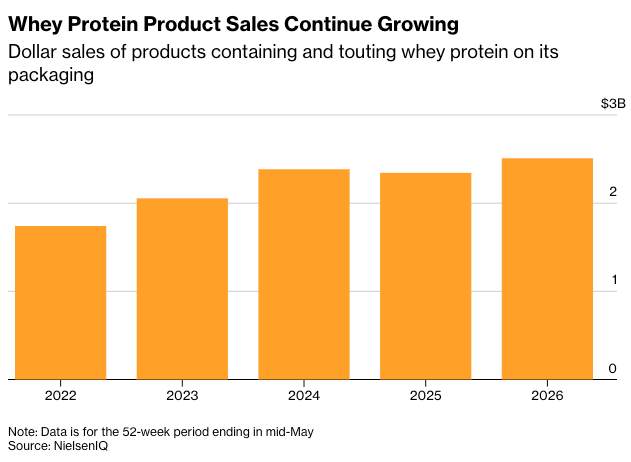
According to NielsenIQ, sales of products that prominently advertise whey protein on their packaging have continued to grow, with total dollar sales rising around 7% over the past year. Meanwhile, products containing whey protein are now generating billions of dollars in annual retail sales.
The protein boom is not limited to athletes anymore. Weight-loss drugs such as Ozempic and Wegovy have added another demand driver. People taking GLP-1 medications often lose muscle mass alongside weight, leading doctors and nutritionists to recommend higher protein intake. That has pushed protein products further into the mainstream.
Governments have also played a role. In the United States, protein has increasingly been positioned as a desirable nutrient, and consumers have embraced the message enthusiastically.
The result is that demand for whey protein has exploded. Unfortunately, whey supply doesn't work like software.
When Netflix needs more streaming capacity, it can add servers. When a cloud company needs more storage, it can build more data centres. When the food industry needs more whey protein, it can't simply manufacture more whey.
Because whey only exists when somebody makes cheese.
That's the fundamental constraint behind the current shortage.
Every kilogram of whey protein starts with milk. That milk must first be converted into cheese. The remaining liquid whey must then be collected, filtered, processed, concentrated, dried and packaged.
The more refined the protein product, the more complicated the process becomes.
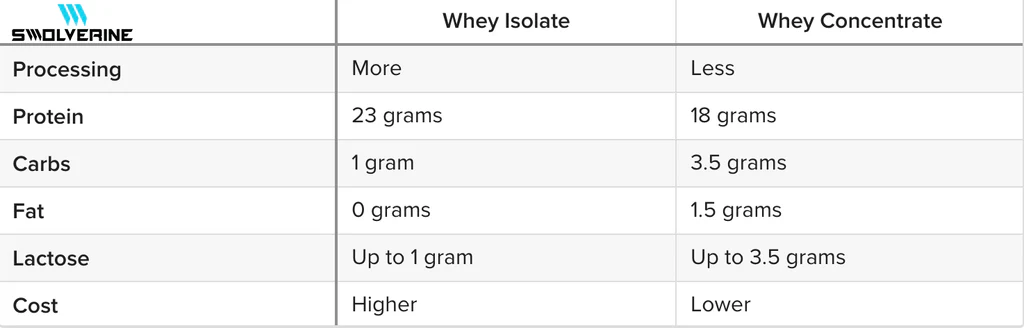
Whey Protein Concentrate (WPC) undergoes several processing stages. Whey Protein Isolate (WPI), the premium version found in many sports nutrition products, requires even more filtration and specialised equipment.
The problem is that demand for whey protein has exploded much faster than the industry can build this infrastructure.
Industry experts estimate that modern dairy processing facilities can cost hundreds of millions of dollars. In some cases, large plants can approach $1 billion in investment. Even if a company decides today that it wants to produce more whey protein, it could take years before new capacity becomes operational.
That's where the mismatch begins.
The numbers coming out of global dairy markets show just how severe the imbalance has become.
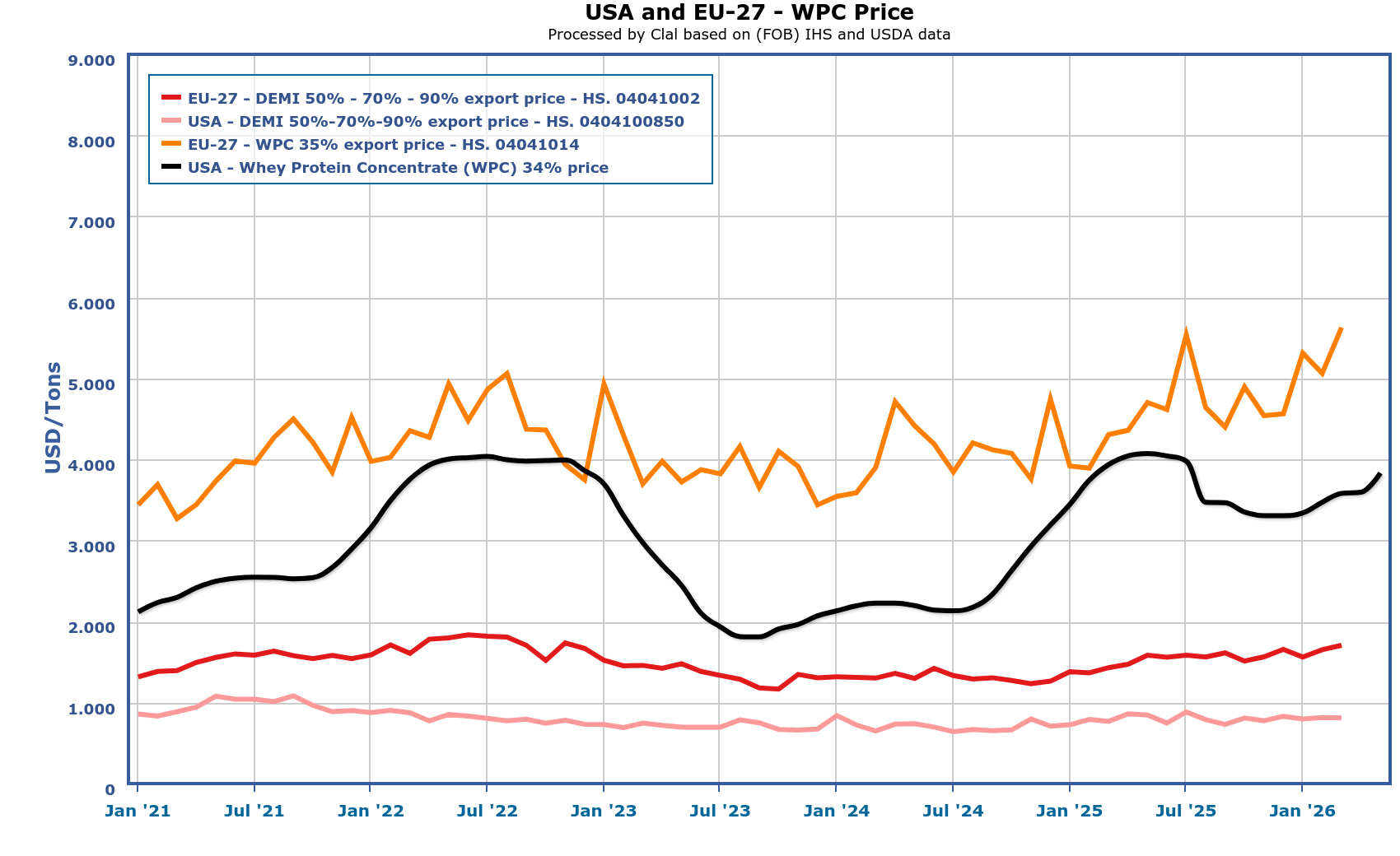
According to DCA Market Intelligence, European food-grade whey powder prices have risen more than 50% since the beginning of 2026, reaching record levels. Higher-end products have surged even more dramatically. Whey Protein Concentrate 80% recently traded at around €20,250 per metric tonne, while Whey Protein Isolate reached approximately €25,750 per metric tonne.
The Financial Times reported that some whey protein isolate prices have increased nearly fivefold compared to 2023 levels.
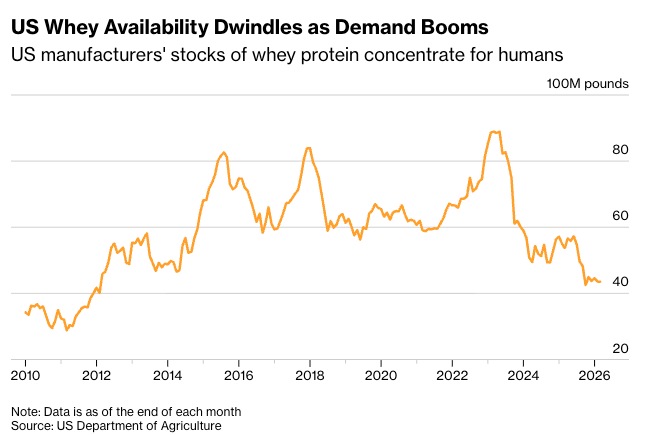
In the United States, wholesale prices for high-protein whey concentrates have jumped more than 40% in just a few months. USDA reports indicate inventories remain extremely tight, with some manufacturers already selling out their production capacity for the remainder of the year.
This isn't just affecting commodity traders.
Real businesses are feeling the pain. Smaller companies without purchasing power are being squeezed the hardest because they lack the scale needed to negotiate favourable contracts.
That creates a difficult choice. Raise prices and risk losing customers. Or absorb the costs and destroy margins.
Neither option is particularly attractive.
What's interesting is that consumers have barely noticed any of this yet.
Protein powders are more expensive than they were a few years ago, but the full impact has not reached supermarket shelves. Industry analysts estimate that ingredient inflation can take 12 to 18 months before it fully appears in retail pricing.
In other words, much of the price shock is still working its way through the system. That means protein bars, shakes, snacks and other fortified products could become noticeably more expensive over the next year.
India faces a slightly different challenge.
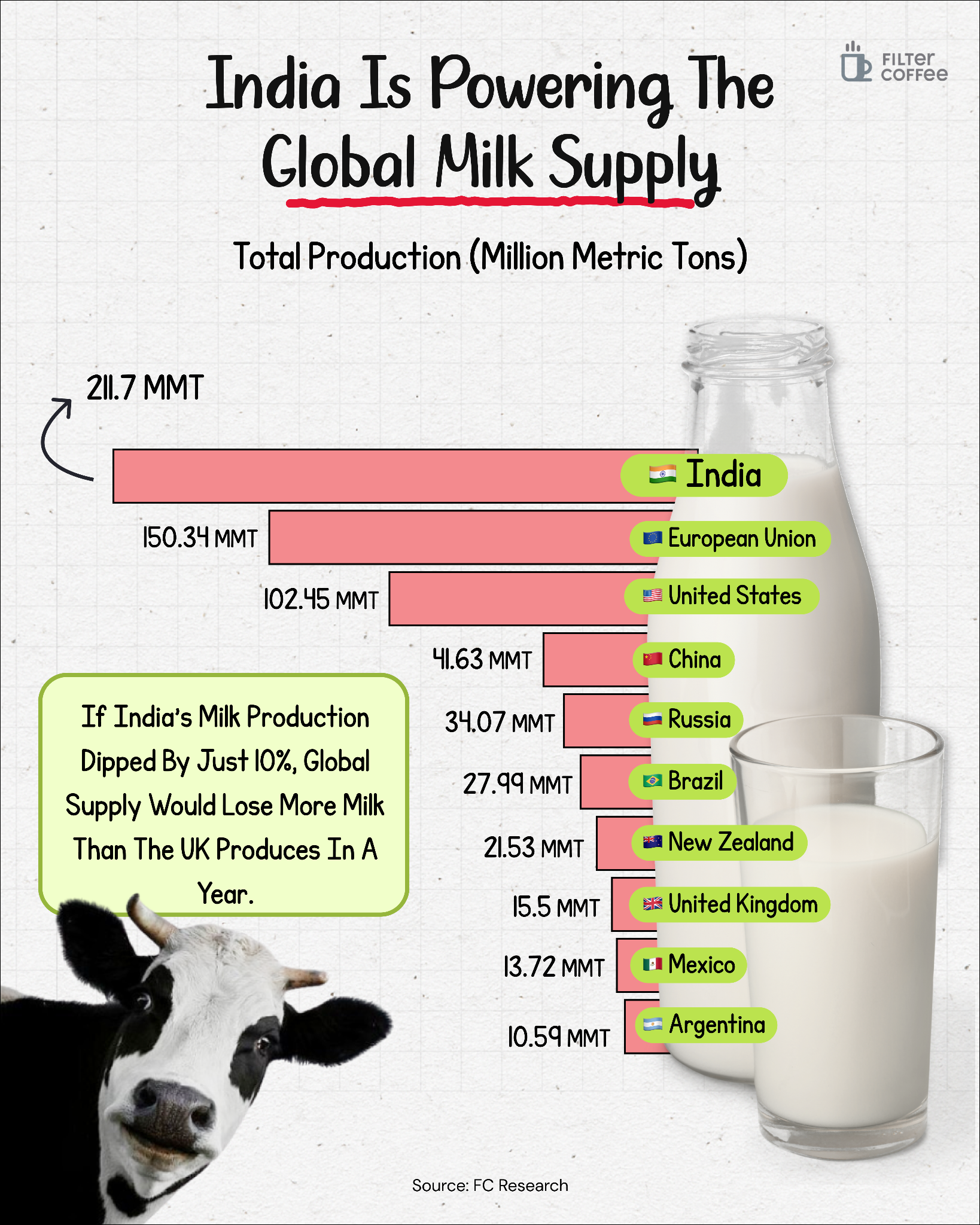
The country is the world's largest milk producer, yet it remains surprisingly dependent on imported whey protein.
India generates enormous quantities of milk, but much of it goes into liquid milk consumption, traditional dairy products and local dairy processing. Large-scale cheese production and advanced whey extraction infrastructure remain relatively limited compared to Western markets.
As a result, sports nutrition companies and protein-food manufacturers often depend on imported whey ingredients. That dependence is becoming costly.
Whey protein concentrate prices in India have climbed from roughly ₹700-800 per kilogram a few years ago to around ₹2,000-2,300 per kilogram today.
Quick commerce platforms have reported protein-related product orders growing by roughly 150% over the past two years. Protein powders have become one of the fastest-growing categories across online nutrition platforms. Every major FMCG company now wants a piece of the protein market.
India also has a genuine nutritional reason to care about protein. Several studies have suggested that large sections of the population consume less protein than recommended levels. Rising incomes, urban lifestyles and greater health awareness are creating long-term demand for protein-rich foods. It's simply becoming more valuable.
The bigger lesson, however, goes beyond protein.
Every few years, consumers discover a new obsession. Sometimes it's low-fat foods. Sometimes it's gluten-free products. Sometimes it's probiotics, collagen or superfoods.
This time, it's protein.
And until new dairy processing capacity catches up, the ingredient that powers everything from your gym shake to your protein coffee may remain one of the hottest commodities in the food business.