
 Newsletter

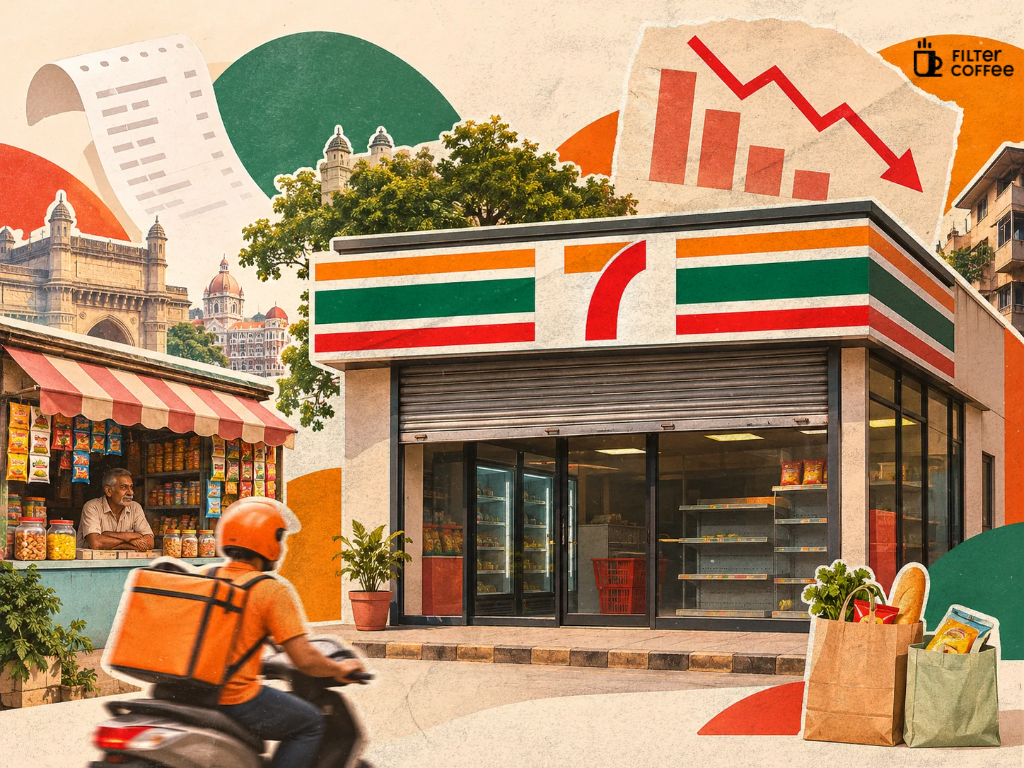
7-Eleven, one of the world's largest convenience-store chains, has shut all its stores in India. On 30 September, Reliance Retail closed the remaining 31 outlets in Mumbai and Pune, ending a five-year partnership with the Japanese-owned retailer.
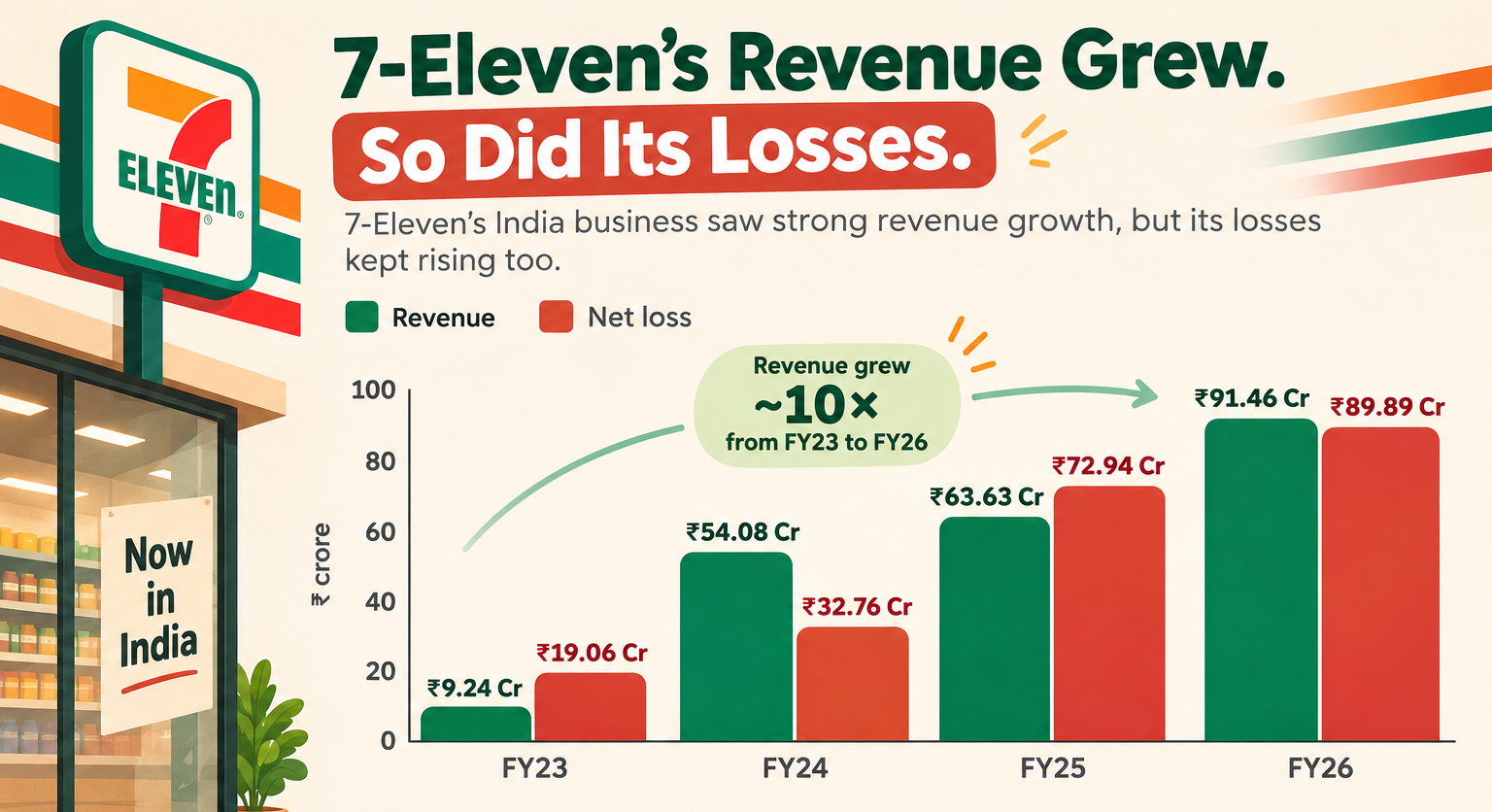
The company had reached 63 stores by December 2025, but its finances were in terrible shape. In FY26, its Indian subsidiary earned ₹91.5 crore in revenue and reported a net loss of ₹89.9 crore. It was losing almost ₹1 for every ₹1 it earned, even though sales had grown 44% during the year.
The timing is ironic. Indians now pay to have groceries and snacks delivered within minutes, yet a company built around convenient shopping couldn't sell enough of it from its stores. The problem was that shoppers already had plenty of alternatives, while 7-Eleven's operating costs were running well ahead of its sales.
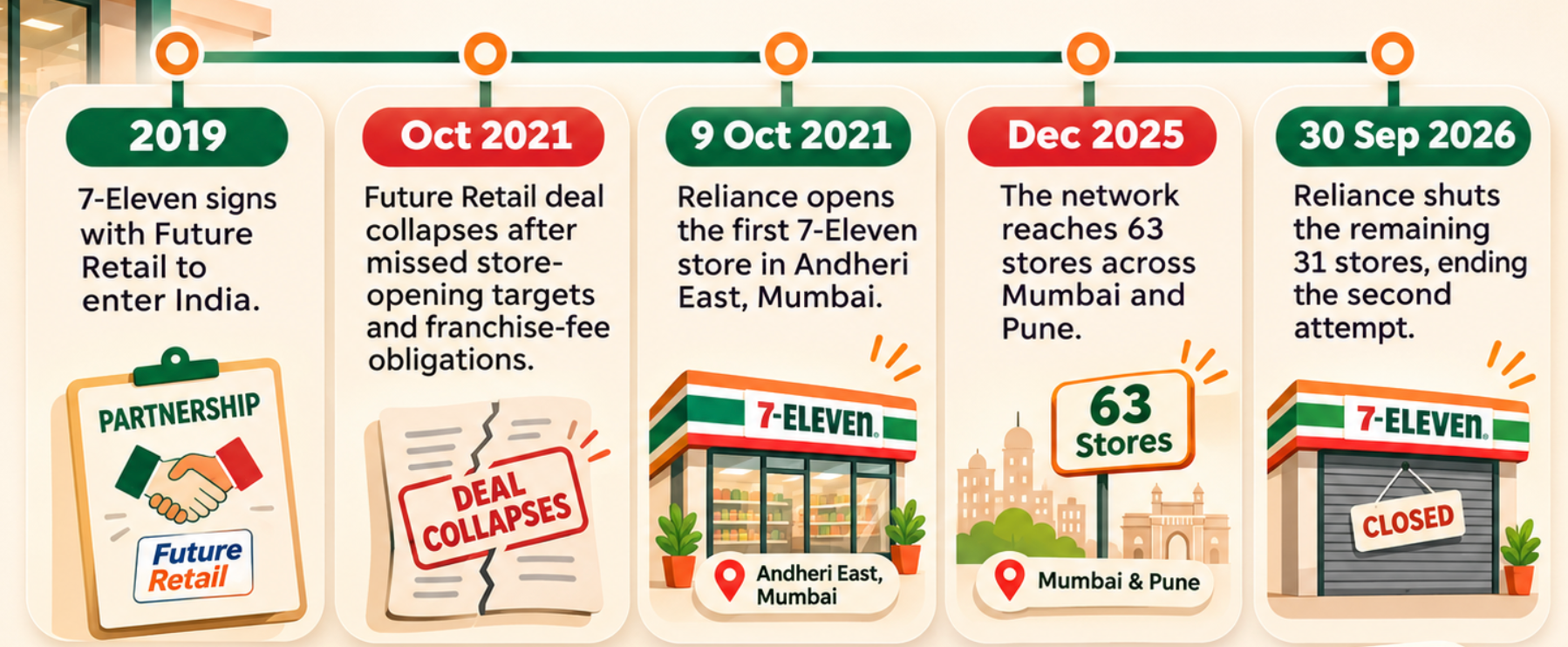
7-Eleven had been trying to enter India long before the Reliance deal. In 2019, it partnered with Kishore Biyani's Future Retail, the company behind Big Bazaar, to open convenience stores across the country. But that plan never got off the ground. In October 2021, the two companies ended their agreement after Future Retail failed to meet store-opening targets and pay franchise fees.
Reliance stepped in almost immediately. On 9 October 2021, it opened India's first 7-Eleven in Andheri East, Mumbai, promising a wider rollout. Alongside drinks and everyday groceries, the shelves and counters would feature food adapted to Indian tastes, including samosas, vada pav, sandwiches and rice bowls. After all, the chain had made a hugely successful business out of the same idea elsewhere.
In Japan, popping into 7-Eleven is part of the daily routine. There are nearly 22,000 outlets, and people stop by for breakfast, lunch, coffee or a quick grocery purchase. Its rice balls, bento meals and sandwiches give customers reasons to return several times a week. That regular footfall is what makes a small convenience store valuable: the same customer can buy something on Monday morning and be back on Tuesday for lunch.
Mumbai was a different shopping market. Need bread, milk or biscuits? There's often a kirana close by. These shops know their neighbourhoods, keep popular products handy and frequently run with far lower overheads than a branded chain. According to Redseer, kiranas still accounted for roughly 91% of India's grocery market in 2025. In many areas, the convenience that 7-Eleven wanted to sell was already available.
Food offered one way to stand apart, but that came with its own competition. Mumbai has vada pav stalls, bakeries, canteens and cafés at practically every price point. A customer might visit 7-Eleven out of curiosity, but the business needed people to make its stores a habit. Selling familiar snacks and the same packaged goods available next door made that a difficult proposition.
Then the market got even more competitive. Blinkit, Zepto and Swiggy Instamart began bringing the little things people need urgently straight to their homes. Redseer and Google estimate that India's quick-commerce market reached about $13 billion in FY26. These apps went after precisely the last-minute purchases a neighbourhood convenience store hopes to capture, from ice cream and soft drinks to bread and toiletries. A physical shop promises a short walk. A delivery app removes the walk altogether.
Yet street food and delivery apps don't automatically make convenience stores unviable. Thailand has both, and 7-Eleven is everywhere there. Its local operator, CP ALL, had 15,945 stores at the end of 2025. The company also runs its own delivery channels, which accounted for 11% of sales that year. Thai shoppers can grab a prepared meal at a store or order from the same network at home. The format can work alongside street-food stalls and digital delivery when customers keep coming back and the network is large enough to serve them efficiently.
India's 7-Eleven operation never reached anything close to that scale. At its peak in December 2025, it had 63 stores. The limited footprint was particularly punishing for a business that needed regular stock deliveries, warehouses, refrigeration, staff and electricity, whether a store sold ten sandwiches or a hundred.
The financial accounts show why sustaining that rollout was so difficult. Of every ₹100 in FY26 revenue, roughly ₹77 went towards buying the merchandise. That left ₹23 for the rest of the business. But employee expenses alone came to about ₹34 for every ₹100 earned. Warehousing and distribution added another ₹18, before electricity, rent and other bills. Revenue grew 44% during the year, yet the chain's costs remained far too high for the sales it was generating.
And opening more stores wasn't an easy fix. A larger network could spread distribution costs over more locations, but each new shop required investment before it could generate enough repeat business. Reliance would have been expanding a format that was still struggling to cover its existing expenses.
The trouble wasn't unique to 7-Eleven. Godfrey Phillips decided in 2024 to exit its loss-making 24Seven convenience-store business, which had around 150 stores and kiosks at the end of 2023. Its operations subsequently closed. Even with an established urban presence, a convenience-store chain could struggle with thin margins and expensive real estate.
Reliance, meanwhile, was building a different way to serve the same demand. By FY26, JioMart's hyperlocal network included more than 3,100 stores serving over 1,200 cities. It already had a much larger system for getting groceries and household essentials to customers, without needing to keep expanding a separate international convenience-store franchise.
7-Eleven's parent has said it remains open to returning to India. Thailand shows the format itself isn't doomed by street food or delivery apps. But the next attempt will need to give Indian shoppers a compelling reason to keep visiting, and enough customers at each store to pay for the convenience being offered.
India wasn't short of people who wanted to shop quickly. It was short of reasons for enough of them to make 7-Eleven their regular stop.
Sources
- C-Store Dive: 7-Eleven Exits India
- Reliance Industries: 7-India Convenience Retail FY26 Financial Statements
- Mint: Future Retail Terminates 7-Eleven Agreement
- Mint: Reliance Brings 7-Eleven to India
- Redseer: Why India's Grocery Market Still Relies on Kiranas
- Redseer and Google: India's Quick-Commerce Market
- Seven & i Holdings: Japan Convenience Store Operations
- CP ALL: Thailand's 7-Eleven Store Network and Delivery Business
- Financial Express: Godfrey Phillips Exits 24Seven
- Reliance Industries: Retail Annual Report FY26