

 Newsletter
For the past few years, if you listened to India’s big consumer companies, the story from villages sounded like a slow tightening of the belt.
Households weren’t stopping purchases altogether. They were shrinking them. A little less here, a cheaper option there, a “maybe next month” for anything that wasn’t urgent. The same family that once picked up a full-size shampoo bottle would quietly switch to sachets. Biscuits, soaps, detergents, everything moved into smaller packs and thinner budgets. In rural India, consumption didn’t disappear. It got carefully rationed, one purchase at a time.
You could almost predict what companies would say next: rural demand is weak, recovery will take time.
That script is finally changing.
In the April-June quarter, the value of FMCG products sold in rural India grew around 9%, according to Bizom. In cities, growth was only 2.3%. Rural markets have now grown faster than urban India in five of the past six quarters.
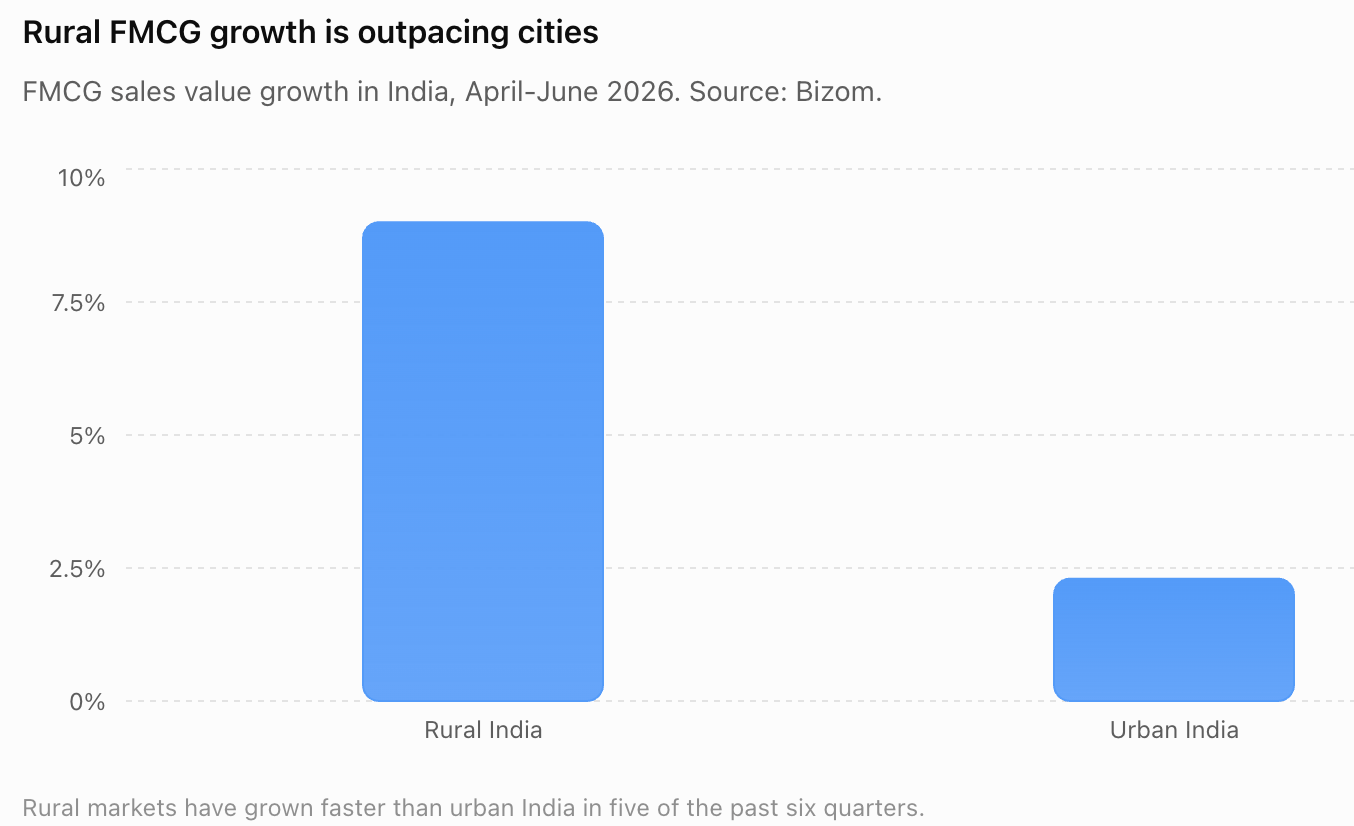
In simple terms, villages and smaller towns are suddenly becoming better customers for companies selling everything from biscuits and detergent to shampoo and packaged food. After years of waiting for rural India to come back, consumer companies finally have something to celebrate.
So why are people spending again?
There is no single answer, but the household budget is a good place to begin.
A NABARD survey in November 2025 found that 79.2% of rural households said their spending had increased over the previous year. By January 2026, that had come down slightly to 73%, but it was still a large majority.
Some of the money is coming from better agricultural activity. When crops do well, farmers earn more, agricultural workers find more work and that money moves quickly through the local economy. The farmer buys clothes, the shopkeeper sells more products, the mechanic gets more customers, and the cycle continues.
Government spending also plays a part.
From July this year, the rural employment programme increased the guaranteed number of workdays for eligible households from 100 to 125 days. The average notified daily wage has also gone up from roughly ₹299 to ₹327.
It is easy to look at a ₹28 increase and shrug. But rural consumption is often built on very small changes in disposable income.
Think about a family that has ₹2,000 or ₹3,000 more available over a period of time. That money is unlikely to go straight into some fancy purchase. It works its way through dozens of boring, ordinary decisions.
Maybe they buy the bigger detergent packet this time. Maybe the children get packaged snacks more often. Maybe a personal-care product that had disappeared from the monthly shopping list comes back. Maybe an old fan or phone finally gets replaced.
One household doing this barely registers. Millions of households doing it can move HUL, Dabur, Marico and pretty much the entire consumer-goods industry.
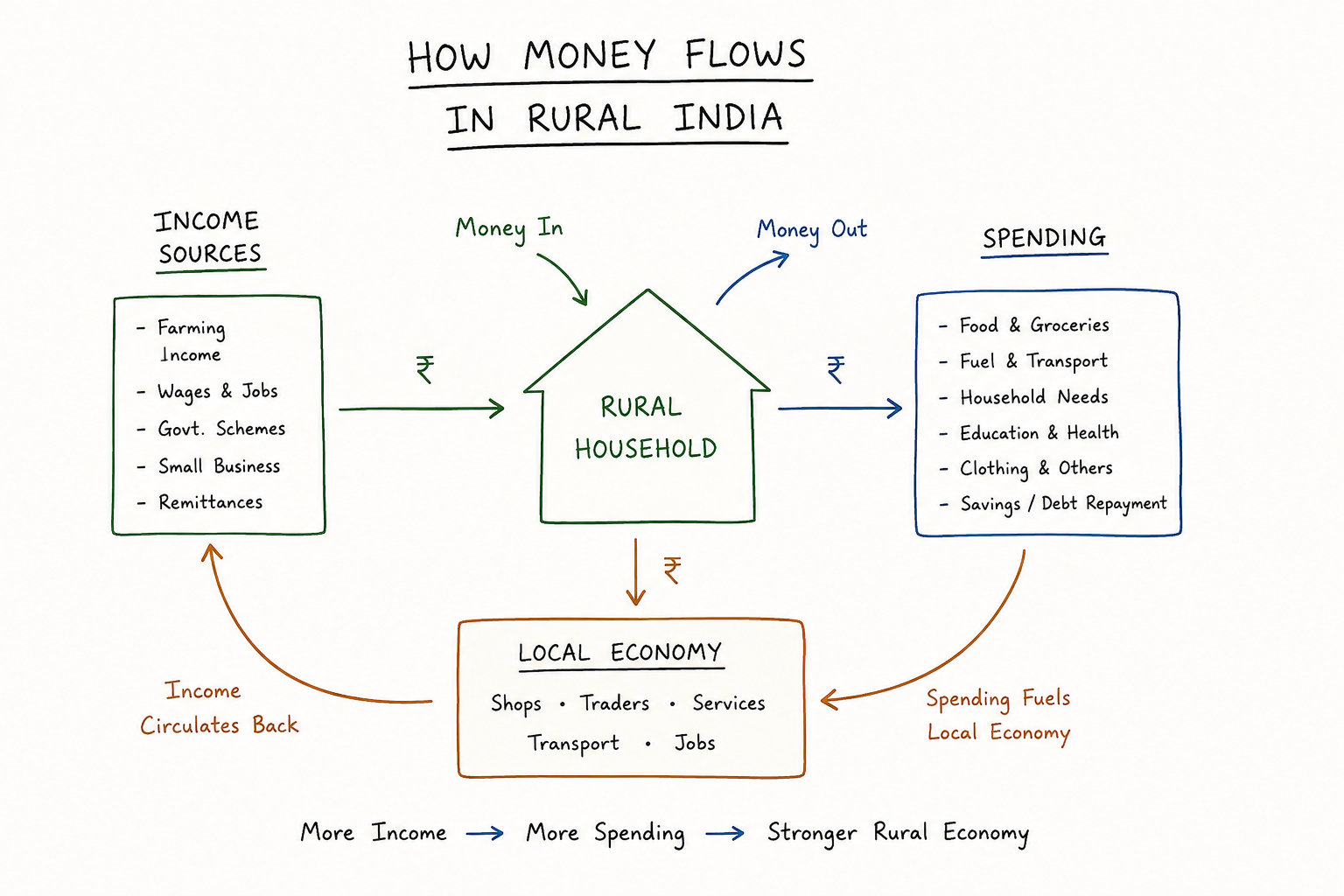
That is why FMCG companies pay such close attention to rural India. You do not need every household to suddenly become rich. You need a large number of households to become slightly less stretched.
And that appears to be happening.
The problem is that just as these households are getting some room to spend, everyday life is becoming more expensive again.
India’s retail inflation rose to 4.45% in July. In rural India, it was higher at 4.84%, compared with 3.96% in cities.
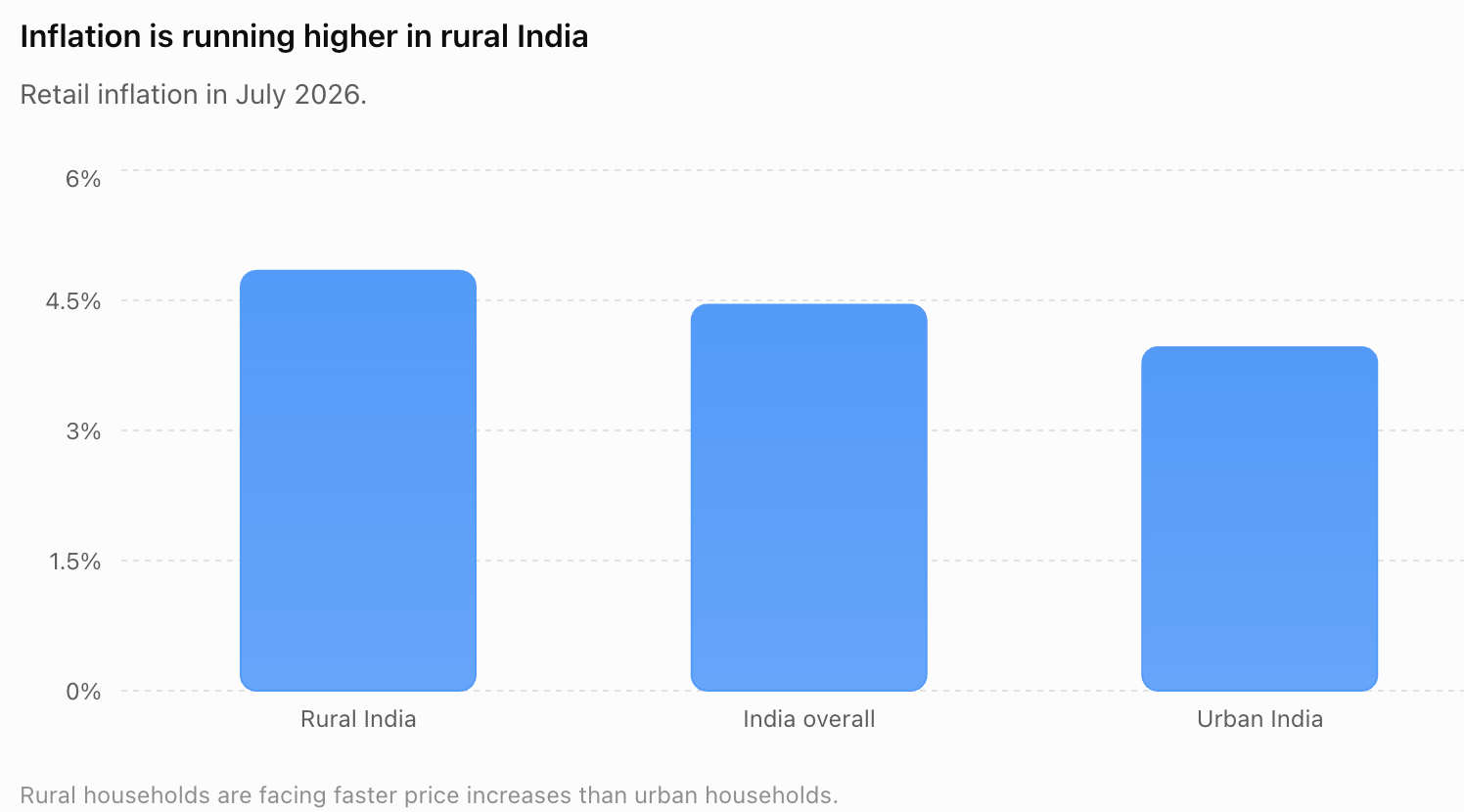
Food prices have also been rising, and that can squeeze a rural household surprisingly quickly.
A wealthy household may notice that vegetables, cooking oil or groceries cost more and still go ahead with most of its other purchases. A lower-income rural household has far less flexibility.
Say a family is earning ₹1,000 more every month than it did last year. That money could go towards better food, clothes, household products or savings.
Now imagine groceries, vegetables, fuel and transport together cost ₹700 more.
Most of that improvement has already disappeared before the family reaches the kirana counter.
Income can rise and people can still feel short of money if essential expenses rise almost as quickly.
Consumer companies are facing their own cost pressures too. Plastic packaging, transport and several chemicals used in soaps, detergents and personal-care products are affected by crude oil and commodity prices.
A company can absorb those costs for some time. Eventually, some of them tend to reach the customer.
That ₹10 product becomes ₹11. The packet gets smaller. The larger pack becomes expensive enough that the customer shifts back to a cheaper one. Suddenly, the same rural consumer who had started loosening the purse strings is calculating every purchase again.
This is also why the 9% rural FMCG growth figure needs to be read carefully. Suppose a shop sold ₹100 worth of biscuits, shampoo and detergent last year. This year it sells ₹109. Sales have grown 9%.
But if the products themselves became 5% more expensive, customers clearly did not buy 9% more stuff. Part of the growth simply came from the same shopping basket costing more.
Over the next few months, the gap between how much money people spend and how many products they actually buy will become especially useful. There are already signs that households remain cautious. Worldpanel data shows that consumers have been making slightly fewer FMCG shopping trips while spending more each time.
That is what careful spending often looks like. Fewer casual purchases, more planned ones. Rural India may be buying more again, but people are still watching prices closely.
The monsoon could support farm incomes, but badly timed or excessive rain can also damage crops and push food prices higher. Some of the extra income can therefore disappear into a more expensive grocery bill.
The festive season will probably give demand another boost. But festivals are when people spend anyway, which makes the months after Diwali a better test.
If rural households keep buying more even after the festive rush fades, the recovery is likely holding up. If sales keep rising mainly because prices are higher while people buy fewer packs, the picture inside rural homes may be very different from the one companies report.
After years of weak demand, rural India finally seems to have a little more room to spend. How long that lasts will depend on how much food, fuel and other everyday expenses take back.