
 Newsletter
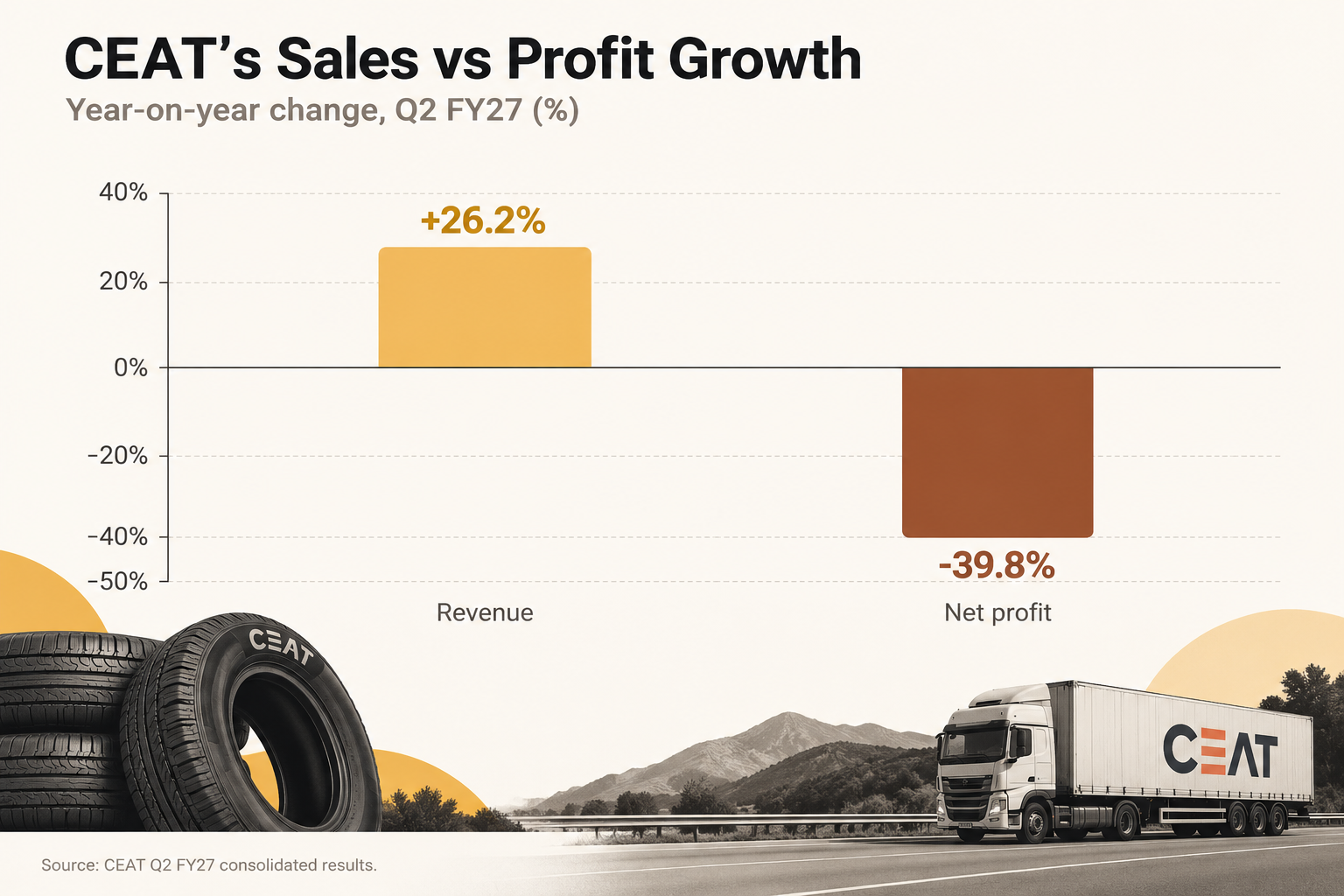
CEAT had the kind of sales quarter most companies would be happy to report. Its revenue rose 26.2% to ₹4,762 crore in July–September 2026, helped by stronger demand and higher prices. Yet its net profit fell nearly 40% to ₹112 crore. Its operating margin shrank from 13.5% a year ago to 9.5%.
So CEAT is bringing in more money but keeping less of it. And part of the explanation begins with the price of oil in West Asia and rubber in Kerala.
To see how, consider what actually goes into a tyre. Natural rubber gives it strength and flexibility. Synthetic rubber, carbon black and nylon tyre cord help it survive heat, weight and thousands of kilometres on the road. Several of those materials depend on petroleum-derived chemicals, which means crude oil prices matter even if the finished product never sees a fuel pump.
The conflict in West Asia has made crude-linked materials and shipping more expensive. At the same time, natural rubber has developed a problem of its own. Unseasonal rain and uneven monsoons have disrupted supplies in Kerala and Southeast Asia. According to Crisil Ratings, natural rubber accounts for nearly half of Indian tyre makers' raw material costs, and its price rose from roughly ₹220 per kg on average in FY26 to ₹275 in June 2026. On 14 October, the Rubber Board quoted the widely used RSS-4 grade at ₹286 per kg in Kottayam.
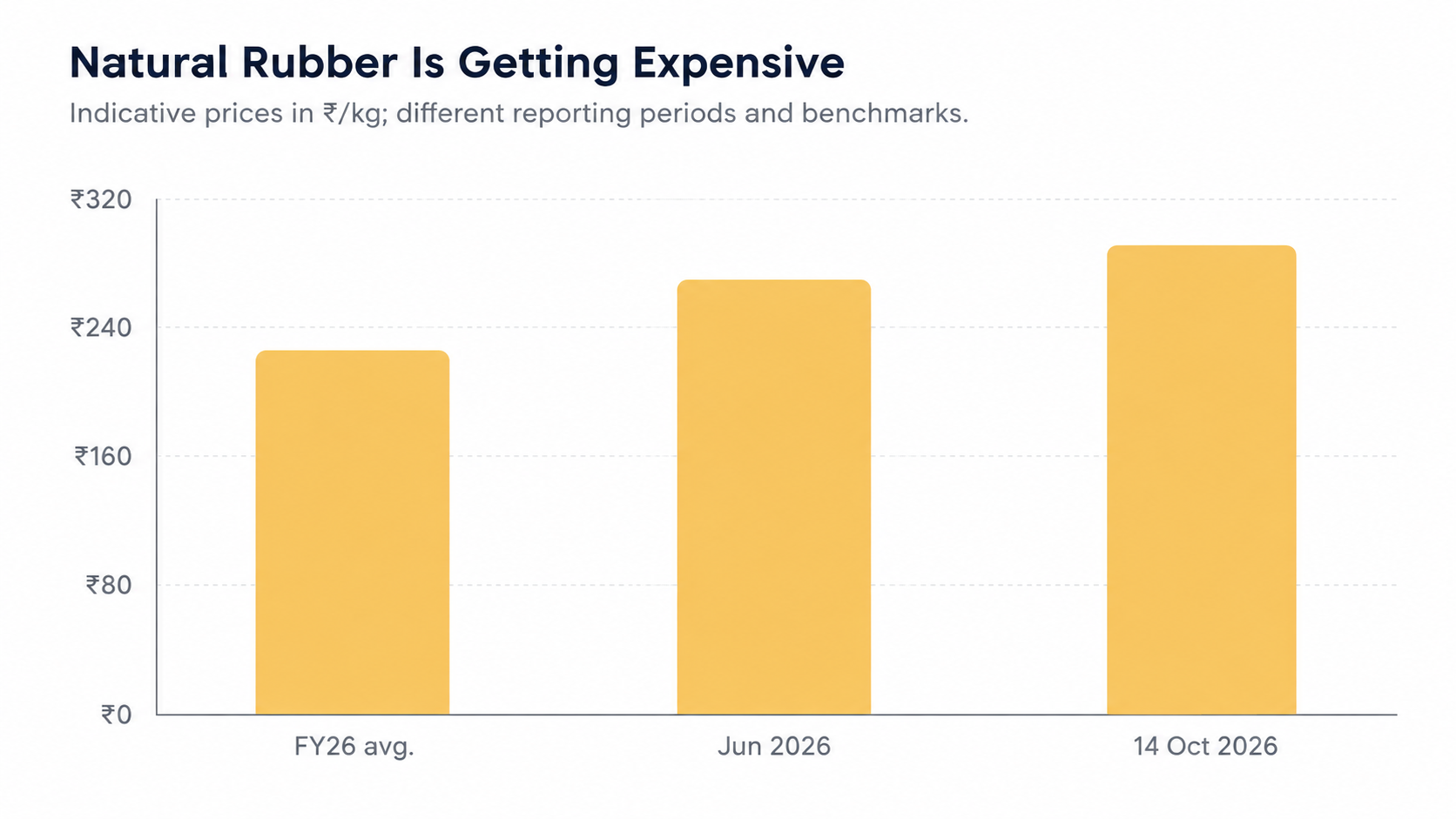
Sources: Crisil Ratings and Rubber Board. FY26 average and June prices are industry estimates; October is the RSS-4 domestic reference price. They are not a continuous, identical-grade time series.
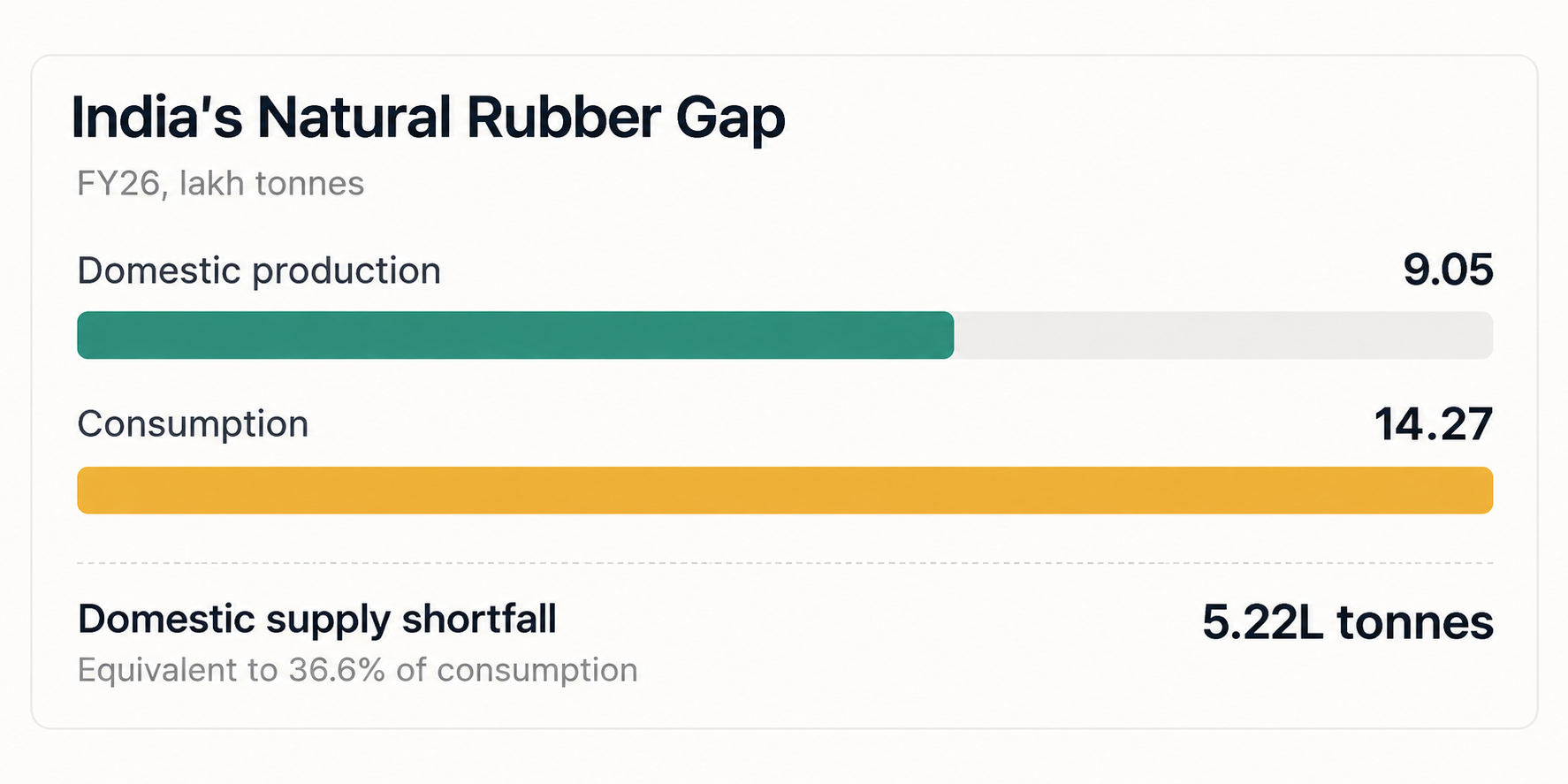
India also uses far more natural rubber than it produces. Industry association AIRIA estimates that consumption reached 14.27 lakh tonnes in FY26 against domestic output of 9.05 lakh tonnes. Imports help fill the gap, leaving manufacturers exposed to international prices and shipping delays as well as local weather.
This combination has turned tyre manufacturing into an expensive business very quickly. CEAT's own results show that its cost of goods sold jumped nearly 40% year-on-year, much faster than its 26.2% revenue growth. For every ₹100 of sales, the company is now left with much less before accounting for salaries, finance costs and taxes.
Why can't they raise prices faster?
CEAT has been trying. In a July earnings call, management said it had raised prices in its replacement-tyre business by roughly 11% cumulatively and was planning further increases. Rival JK Tyre said it planned total hikes of 11–13% by September-end. But tyre pricing comes with a delay.
When CEAT sells to car and truck manufacturers, prices are often negotiated under supply agreements and revised periodically. It cannot simply send an automaker a higher bill every time rubber becomes costlier. In the replacement market, where common people buy tyres, it has more flexibility. Even there, customers can switch to a cheaper brand or postpone a purchase. And higher-cost raw materials bought earlier may still be moving through factories and inventory while new prices take effect.
CEAT has seen this pattern before. In the March 2022 quarter, its revenue grew 13%, while profit fell 84% as rubber and crude-linked costs rose. Higher sales were no guarantee of higher earnings then, either.
The pressure isn't unique to CEAT. Crisil expects the industry's operating margin to drop from around 14.2% in FY26 to about 12% in FY27 as a 35–40% rise in key input costs outruns staggered price hikes. It expects margins to recover next year only if costs stabilise and price increases take full effect.
There is also a company-specific wrinkle.
CEAT completed its $225 million acquisition of Michelin's Camso off-highway tyre business in September 2025. That expansion complicates year-on-year revenue comparisons and has brought integration and financing expenses. In the June quarter, foreign-exchange losses tied to its overseas business contributed to a particularly sharp profit decline. So blaming the entire September-quarter fall on oil and rubber would be too convenient.
Still, tyre makers are not behaving like businesses expecting demand to disappear. Crisil estimates that six leading Indian manufacturers will invest approximately ₹18,000 crore across FY27 and FY28, nearly double their spending over the previous two years. Factories are running close to capacity, and demand from vehicle manufacturers and the replacement market remains resilient.
That leaves manufacturers making an uncomfortable calculation: raise prices fast enough to protect profits, but not so fast that customers stop buying. CEAT expects commodity pressure to continue into the December quarter. For drivers, that could mean costlier replacement tyres. For the industry, the next test is whether selling more tyres can start producing more profit again.
Sources