

 Newsletter
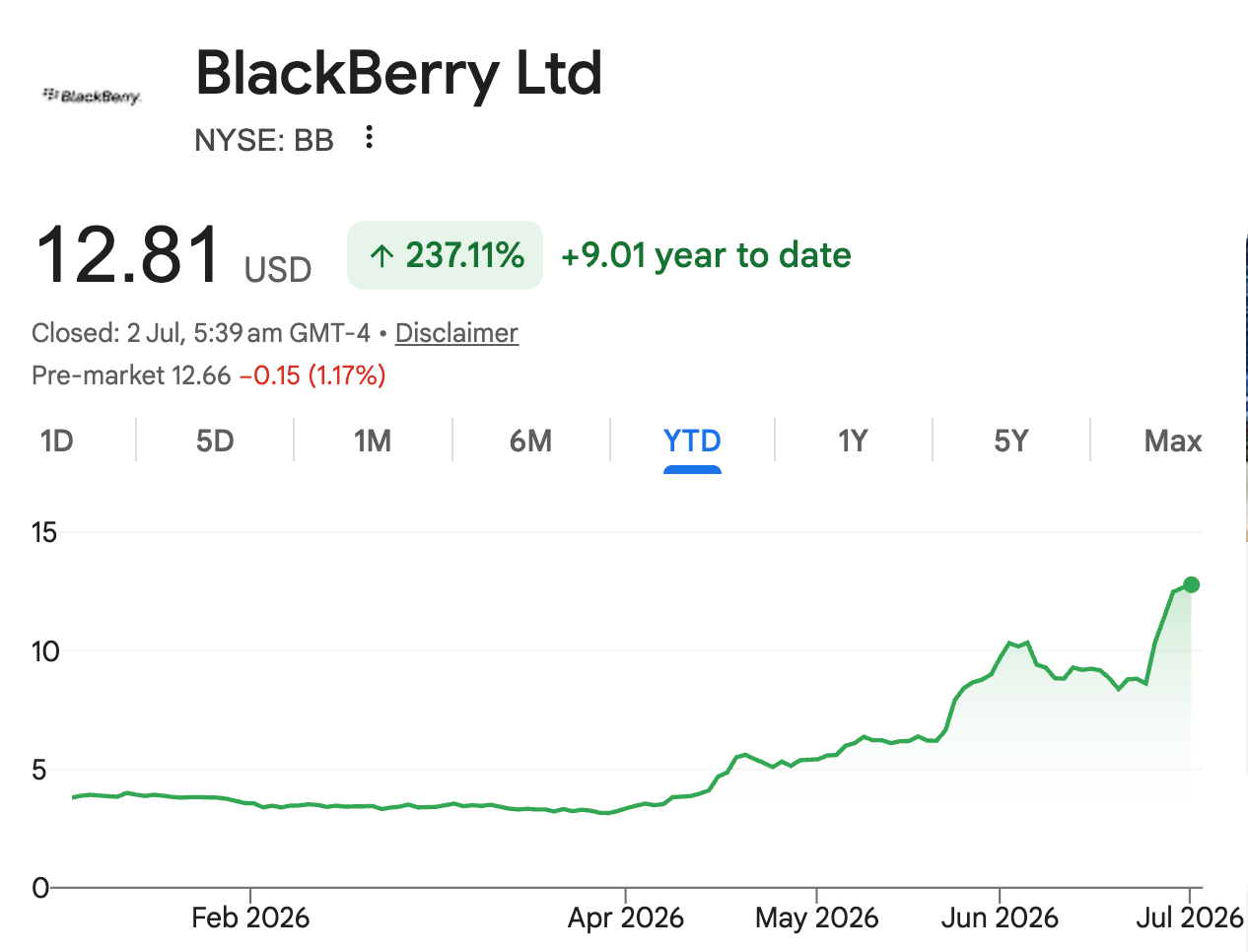
BlackBerry's stock has surged more than 250% over the past six months.
For a company that many people had mentally filed away as another casualty of the smartphone wars, the comeback has been surprising. Investors who once viewed BlackBerry as a relic of the pre-iPhone era are suddenly talking about it as an artificial intelligence play. That naturally raises a question.
What changed? Did BlackBerry somehow return to making phones? Did it build a chatbot to compete with ChatGPT? Or is there something much bigger happening?
The answer is both simpler and far more interesting.
BlackBerry is no longer a smartphone company. In fact, it hasn't really been one for nearly a decade. The company that once defined mobile email has quietly transformed itself into a software business whose technology sits inside hundreds of millions of vehicles, industrial machines and medical devices. Most people have stopped using a BlackBerry phone, but many unknowingly interact with BlackBerry software almost every day.
To understand why investors are suddenly paying attention again, it helps to revisit how dramatic BlackBerry's fall really was.
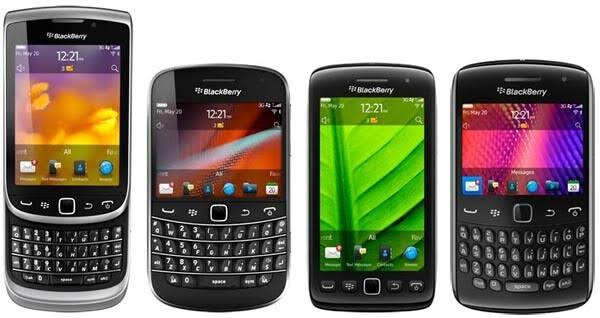
In the mid-2000s, owning a BlackBerry meant you were important. Business executives carried them everywhere. Politicians relied on them for secure communication. Even former US President Barack Obama famously insisted on keeping his BlackBerry after entering the White House because he trusted its security.
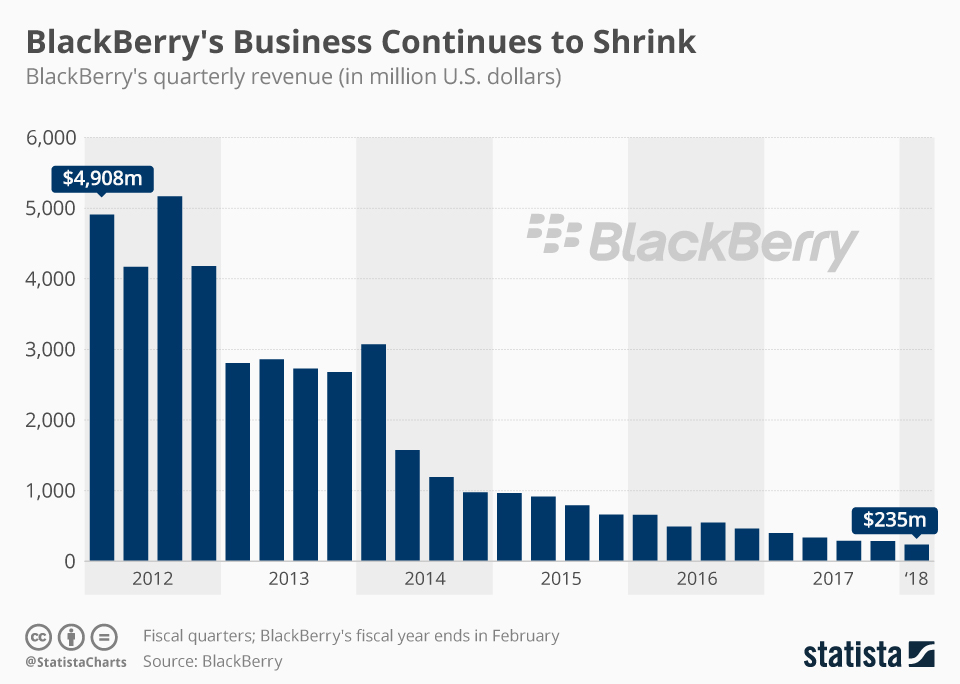
At its peak, BlackBerry controlled more than half of the US smartphone market and generated over $11 billion in annual revenue. It wasn't just another phone brand. It was the smartphone before smartphones became mainstream.
Then Apple launched the iPhone in 2007, followed closely by Google's Android operating system. Consumers suddenly wanted large touchscreens, app stores and multimedia experiences instead of physical keyboards and corporate email. BlackBerry struggled to adapt.
Its market share collapsed, revenue shrank year after year, and its stock price crashed from around $147 to almost $2. By 2016, the company had effectively exited the smartphone hardware business. For most people, that looked like the end of the story.
But while everyone was watching BlackBerry lose the phone war, the company was quietly building something else.
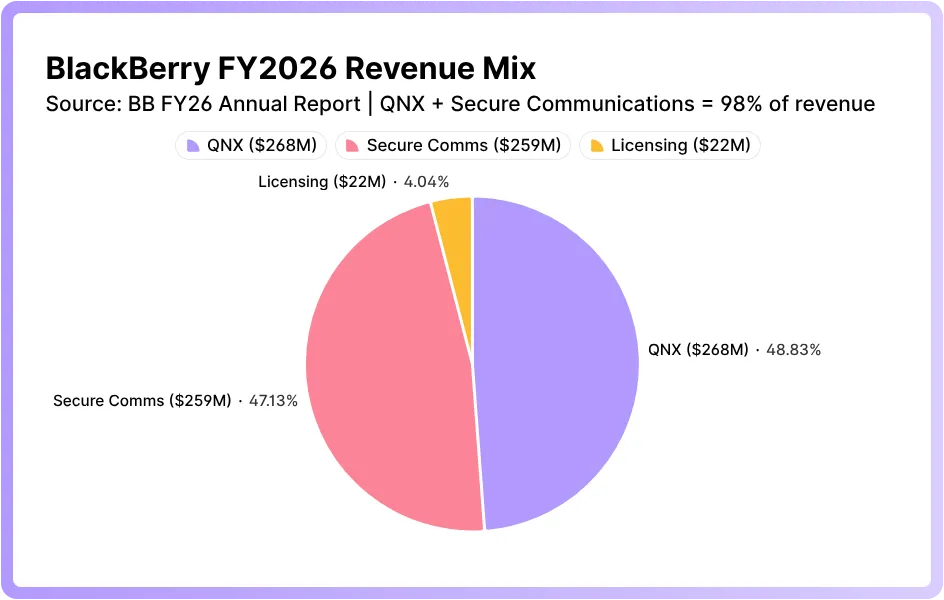
Today's BlackBerry operates two main businesses. The first focuses on secure communication software used by governments, defence organisations and enterprises where cybersecurity is critical.
This business still contributes a meaningful share of revenue because governments and military agencies continue to value highly secure communication systems. However, it is the second business that has completely changed how investors think about the company. That business is called QNX.
Most people have never heard of QNX because it is designed to stay invisible. It is not an app that you download or software that appears on your laptop screen. Instead, QNX is a real-time operating system, often abbreviated as RTOS.
While that may sound technical, the idea is actually straightforward. Traditional operating systems like Windows, Android or macOS are designed to run many tasks smoothly for human users. If an application freezes for a second, it is frustrating but rarely dangerous. A real-time operating system is built for situations where even a tiny delay could have serious consequences.
Imagine driving at 100 kmph when a pedestrian suddenly steps onto the road. The car's sensors detect the obstacle, the software decides to brake, and the braking system must respond within an extremely precise time window. There is no room for a delay because even a fraction of a second can make the difference between avoiding an accident and causing one.
QNX is designed for exactly these kinds of situations. It powers safety-critical systems such as braking, airbags, power steering, collision avoidance, lane keeping and advanced driver assistance systems. Its job is not to entertain the driver. Its job is to ensure that life-critical software performs exactly as expected, every single time.
That focus on reliability has helped QNX become one of the world's most widely used embedded operating systems. According to BlackBerry, QNX software now runs in more than 275 million vehicles globally. It is used by over 45 automobile manufacturers, including all of the world's top 10 automotive companies and 24 of the top 25 electric vehicle manufacturers.
If you have travelled in a modern Toyota, BMW, Ford, Volkswagen or several other major brands, there is a good chance BlackBerry software was quietly working somewhere inside the vehicle without you ever knowing it.
This creates a business model that is very different from selling smartphones.
BlackBerry does not manufacture cars or build dashboards. Instead, it licenses its software to automakers. Every time a vehicle equipped with QNX rolls off the production line, BlackBerry earns a royalty. The fee earned from each vehicle may be relatively small, but when millions of vehicles are produced every year, those royalties become a highly profitable and recurring source of income.
Software businesses typically have low manufacturing costs, and BlackBerry has reported gross margins of around 84-85% for QNX, meaning most of the revenue generated turns into gross profit after direct costs.
There is another important aspect of this business that investors closely watch. Car development takes years. Automakers decide on their software platforms long before a vehicle actually reaches customers. Once QNX is selected during the design stage, BlackBerry knows that royalties are likely to start flowing only when production begins.
To help investors understand future revenue, the company reports something called a royalty backlog. Think of it as the value of future royalties that have already been locked in through design wins but have not yet been recognised as revenue because the vehicles are still moving towards commercial production.
That number has been steadily rising. BlackBerry's QNX royalty backlog increased from about $815 million in FY2024 to $865 million in FY2025 and then reached approximately $950 million by FY2026. This provides visibility into future earnings. Revenue may fluctuate from one quarter to another depending on vehicle production, but a growing royalty backlog suggests that more manufacturers are choosing QNX for upcoming vehicle programmes.
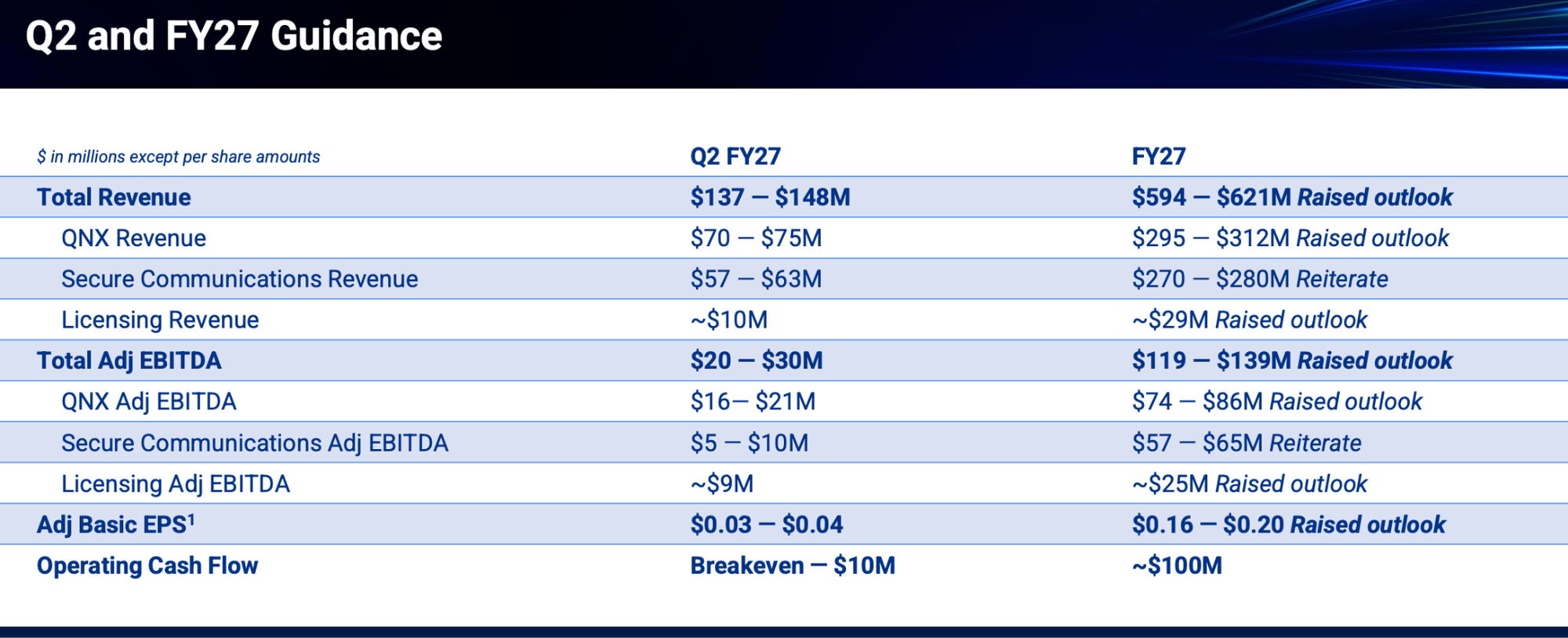
Financially, the turnaround is becoming increasingly visible. QNX revenue has grown consistently over the past three years, rising from about $215 million in FY2024 to $236 million in FY2025 and then to around $268 million in FY2026.
In its latest reported quarter, BlackBerry also generated positive operating cash flow during the fiscal first quarter for the first time in nine years. For investors, that milestone signals that the restructuring phase may finally be giving way to sustainable profitability.
However, cars are only one part of the story. If BlackBerry were simply an automotive software company, the recent excitement around its stock would probably have been much smaller. Investors are looking beyond vehicles because they believe the same technology could become essential for a much larger trend: physical AI.
Artificial intelligence today mostly lives on our screens. We ask ChatGPT questions, generate images, translate languages or receive recommendations from streaming platforms. All of this happens in the digital world. Physical AI refers to something very different. It involves machines that can sense the real world, make decisions and physically interact with their surroundings. Humanoid robots, warehouse robots, autonomous mining trucks, delivery robots, factory automation systems, surgical robots and agricultural machines all fall into this category.
These machines require sophisticated AI models to recognise objects, plan movements and make decisions. But AI alone is not enough. Once an AI model decides to stop a robot arm, avoid an obstacle or activate an emergency brake, another layer of software must guarantee that those instructions are executed safely and predictably. That is where companies like BlackBerry believe QNX fits into the future technology stack.
One of the biggest reasons investors are paying attention is BlackBerry's partnership with Nvidia. Nvidia has become one of the world's most valuable companies because its chips power much of today's AI infrastructure. As Nvidia expands into robotics, autonomous machines and industrial AI, it also needs reliable software that can meet strict safety standards in regulated industries.
BlackBerry's partnership combines Nvidia's AI computing platforms with QNX's safety-certified operating system, creating a software stack designed for real-world autonomous machines. While this does not guarantee that BlackBerry will dominate physical AI, it places the company alongside one of the biggest beneficiaries of the AI boom.
The opportunity extends well beyond transportation. BlackBerry says roughly 20% of QNX revenue now comes from industries outside automotive. The software is increasingly being used in robotics, industrial automation, aerospace, defence and healthcare. The company has said that nine of the world's top ten medical device manufacturers use QNX in some capacity, including AI-enabled medical equipment where software reliability is critical.
As more industries automate operations and deploy intelligent machines, the addressable market for safety-certified operating systems could become significantly larger than automobiles alone.
Of course, this opportunity comes with challenges. Unlike consumer software, where companies can launch products overnight, safety-critical systems move slowly. Automakers often spend several years developing a new vehicle before it reaches customers. Medical devices face extensive regulatory approvals.
Industrial automation projects require long testing cycles. Even if BlackBerry signs new customers today, meaningful revenue may not appear immediately. Investors therefore need patience because this is a business built on long-term contracts rather than rapid sales cycles.
Competition is another factor. BlackBerry is not the only company trying to supply software for software-defined vehicles and intelligent machines. Google, Qualcomm, Wind River and several embedded Linux providers are also investing heavily in automotive and industrial software. Some focus on infotainment systems, while others are expanding into broader vehicle architectures.
BlackBerry's biggest advantage today lies in its decades of experience with safety-certified software, but maintaining that lead will require continuous innovation as the industry evolves.
Despite these risks, the market has started viewing BlackBerry through an entirely different lens. A few years ago, most discussions about the company centred on why it lost the smartphone race. Today, investors are more interested in whether QNX can become a foundational layer for the next generation of autonomous machines. Those are two very different conversations.
There is also a broader lesson here. Technology companies often become prisoners of their own history. Once a business becomes associated with a particular product, it becomes difficult for people to imagine it succeeding elsewhere. Nokia still reminds many people of feature phones. Kodak is remembered for film cameras. BlackBerry remains synonymous with physical keyboards. Yet the company that once competed with Apple now operates in a market that Apple barely touches. Instead of fighting for smartphone users, it is competing to become the software running inside cars, robots and industrial systems where failure is simply not an option.
Whether BlackBerry ultimately becomes a major winner in the physical AI era remains to be seen. That depends on how quickly autonomous machines become mainstream and whether QNX continues winning new design contracts. But one thing is already clear. BlackBerry's comeback has very little to do with smartphones.
It is the story of a company that quietly abandoned the product everyone associated with its brand and repositioned itself inside an entirely different technology ecosystem. Most people stopped carrying BlackBerry in their pockets years ago. They just never realised it had already found a new place to live: inside the machines that increasingly power the modern world.