

 Newsletter

If someone had told you in 2015 that India would become one of the largest consumers of mobile data in the world, it would have sounded absurd. Back then, most people treated the mobile internet like a limited resource.
You switched data off when you were not using it. You hesitated before opening YouTube. Sending a few photos on WhatsApp could noticeably eat into your balance. Streaming an entire movie on mobile data was something very few people even considered.
Today, the average Indian consumes more mobile data in a month than many people consumed in an entire year a decade ago. Depending on the operator and user segment, monthly consumption has crossed 30 GB and continues to rise rapidly.
According to Nokia's Mobile Broadband Index, average monthly mobile data usage in India reached 27.5 GB per user in 2024, more than double the 13.5 GB recorded in 2020. Reliance Jio's own network is seeing even higher numbers, with average users consuming more than 33 GB every month. And this is actually one of the most important economic stories of modern India.
The reason is simple. Cheap data did not just change how Indians access the internet. It changed what kind of country India could become.
To understand why, it helps to remember what India looked like before the data boom.
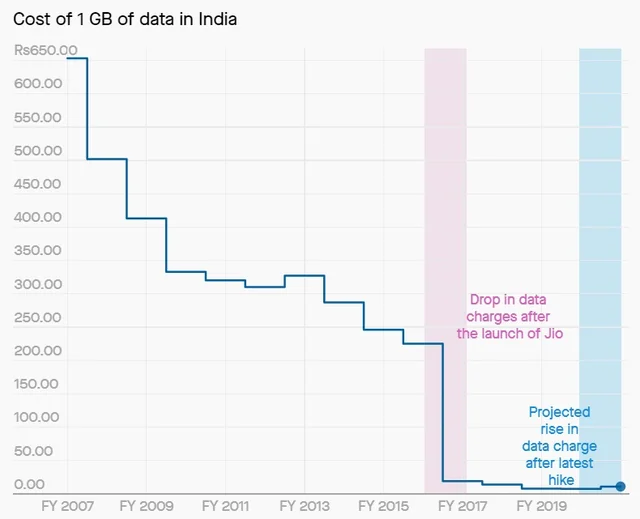
In 2014 and 2015, internet access existed, but it was expensive, inconsistent and limited. According to industry estimates, the average Indian consumed barely 50-100 MB of mobile data per month. Depending on the operator and plan, 1 GB of mobile data could cost well over ₹200 and, in some cases, even ₹250.
Smartphones were becoming more common, but using them fully remained a luxury for many users. Mobile internet was available, but it was far from abundant. For hundreds of millions of Indians, the cost of staying online remained one of the biggest barriers to participating in the digital economy.
Then came one of the biggest disruptions in the history of Indian telecommunications.
When Reliance Jio launched commercially in 2016, it triggered an industry-wide price war that permanently changed consumer behaviour. Data prices collapsed. According to industry estimates, the cost of one GB of mobile data in India fell from well over ₹200 in the early 2010s to among the lowest levels anywhere in the world. For the first time, millions of people no longer had to think carefully about every megabyte they consumed.
This shift sounds small until you realise what happens when the cost of something approaches zero.
When transport becomes cheaper, people travel more. When electricity becomes cheaper, people use more appliances. When internet access becomes cheaper, people build entirely new habits, businesses and industries around it.
The first thing that exploded was video. Indians did not simply start browsing more websites. They started watching. YouTube consumption surged. Short-video platforms became mainstream. OTT services moved from urban niches to mass-market entertainment. Cricket became a streaming product. Regional content found audiences far beyond state borders. For millions of Indians, the smartphone became the primary screen, replacing television for large parts of the day.
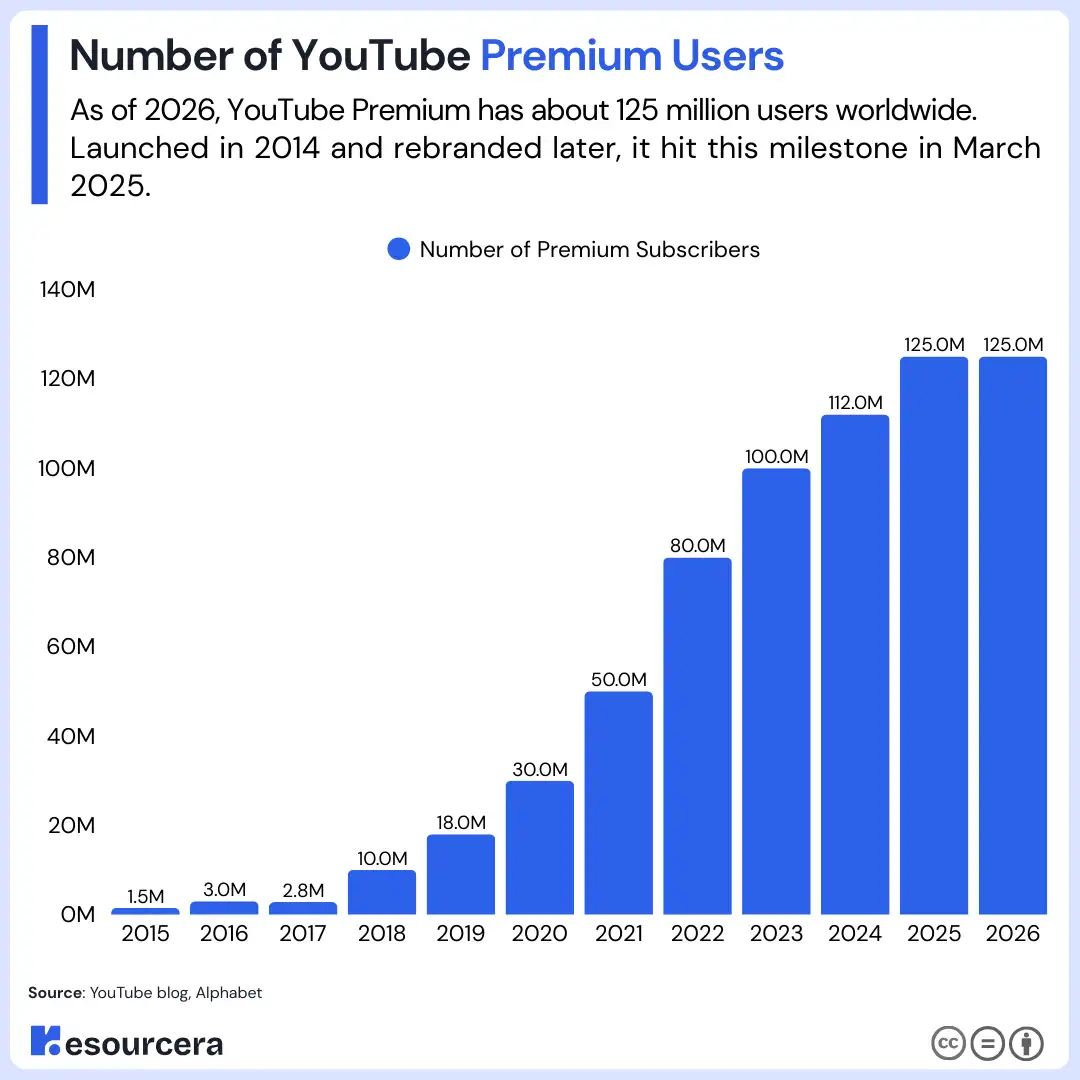
This shift alone created enormous economic activity. Platforms such as YouTube, Instagram, MX Player, Hotstar, JioCinema and dozens of others benefited from a generation of users who suddenly had enough bandwidth to watch rather than read. India gradually became one of the world's largest video consumption markets.
The second transformation was even bigger. Cheap data helped create the conditions for India's digital services economy.
Think about how many apps the average Indian uses today. UPI for payments. Swiggy and Zomato for food delivery. Ola and Uber for mobility. Blinkit and Zepto for groceries. Practo for healthcare. PhonePe, Groww and Zerodha for finance. None of these services simply required internet access. They required reliable, affordable, always-on internet access.
The economics of these businesses only work when millions of people can stay connected throughout the day. A delivery app is useful only when customers, riders, merchants and payment systems remain online simultaneously. A payments app becomes powerful only when connectivity is ubiquitous enough for both buyers and sellers to trust it.
This is where cheap data became far more important than most people realise. It acted as invisible infrastructure.
When people talk about infrastructure, they usually think about highways, airports, ports and railways. Those are visible. Mobile internet infrastructure is different. You do not see it. Yet it quietly enables millions of transactions every minute.
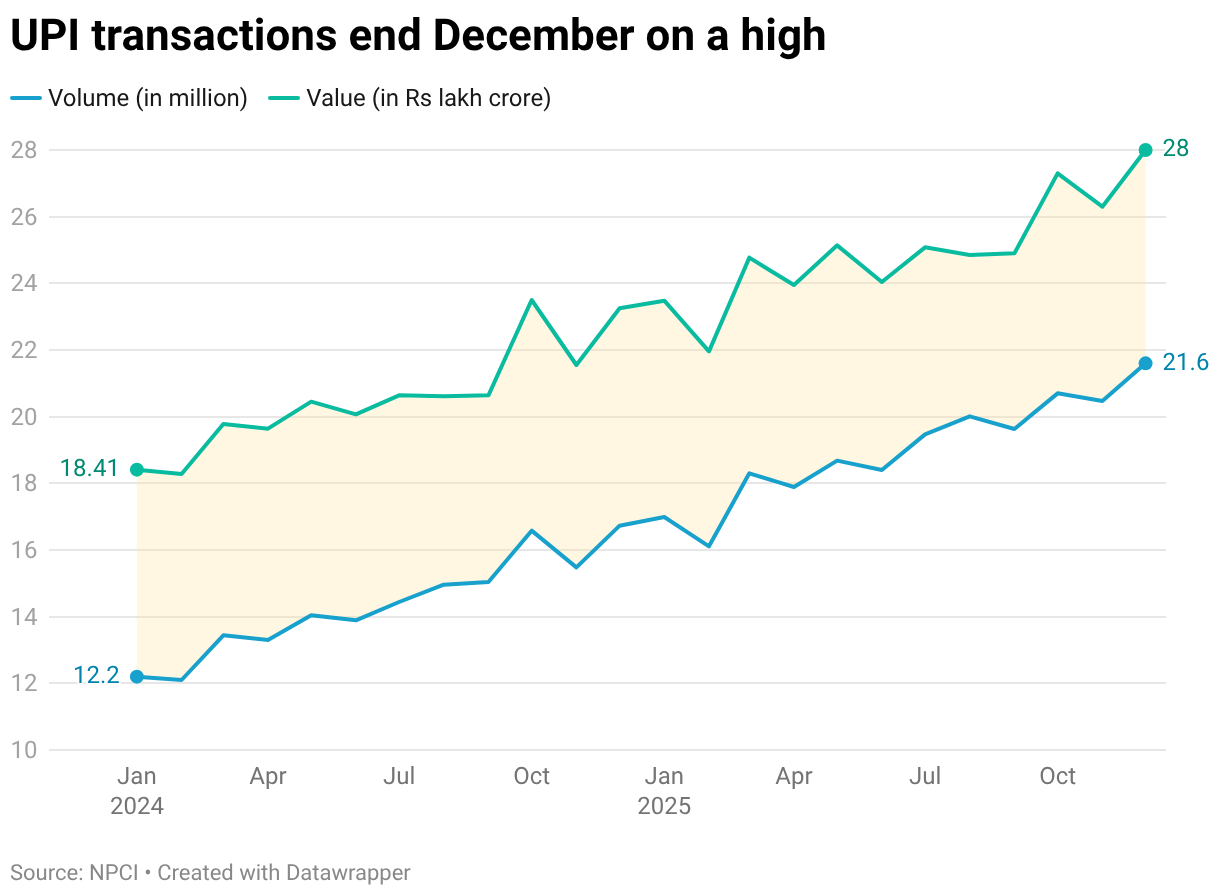
India processed over 185 billion UPI transactions in FY25. That number sounds impossible until you remember that hundreds of millions of people now carry an internet-connected computer in their pockets all day long. Cheap data did not create UPI, but it dramatically accelerated its adoption by making digital transactions effortless and always available.
The same thing happened in education. Before affordable mobile internet, online learning largely remained restricted to a small urban audience with access to laptops and broadband connections. Cheap smartphones and inexpensive data changed that equation. Students across smaller towns gained access to video lectures, test preparation content, language learning and professional courses. The quality and outcomes may vary, but the scale of access fundamentally changed.
Healthcare followed a similar path. Teleconsultations, online pharmacies, digital diagnostics and health platforms became easier to deploy because connectivity stopped being the bottleneck. Even government services increasingly shifted online. Aadhaar-linked systems, digital documentation, direct benefit transfers and citizen services all benefited from a population that could remain connected at low cost.
Perhaps the most overlooked consequence of cheap data was the rise of India's creator economy.
A decade ago, building a media audience usually required television distribution, newspaper circulation or significant capital. Today, a creator with a smartphone can potentially reach millions of people. YouTubers, Instagram creators, podcasters, educators, finance influencers, gaming streamers and independent journalists all emerged from the same underlying trend: the cost of both content creation and content consumption collapsed.
This democratised distribution in a way India had never experienced before. The next media company no longer needed printing presses or satellite networks. It needed attention and internet access.
Businesses adapted accordingly. Marketing budgets increasingly shifted toward digital channels. Brands began spending heavily on influencer marketing because consumers were spending more time online. Entire industries emerged around content production, talent management, creator tools and digital advertising.
The numbers reveal just how dramatic this transformation has become. India's wireless data traffic reached more than 228,000 petabytes in FY25. Mobile data consumption continues to grow at double-digit rates despite already being at massive scale. Interestingly, subscriber growth is slowing while total data usage keeps rising. This means people are not simply getting connected. Existing users are consuming substantially more data every year.
The arrival of 5G is accelerating this trend further. According to Nokia, 5G's share of total mobile data traffic in India jumped from around 15% in 2023 to more than 35% in 2024. As faster networks become more common, consumers naturally shift toward higher-quality video, cloud services, gaming and bandwidth-intensive applications.
This matters because the next phase of India's digital economy may look very different from the last one.
The first phase was about getting people online.
The second phase was about enabling transactions.
The third phase may be about intelligence.
Artificial intelligence, cloud computing, real-time translation, advanced digital services and immersive content all require far more bandwidth than previous internet applications. India enters this phase with one significant advantage: a population already accustomed to consuming enormous amounts of data at low cost.
At the same time, the story is not entirely complete. Cheap data solved the problem of access, but access alone does not guarantee outcomes. The next challenge is no longer connecting people to the internet. It is helping them use it productively.
That may ultimately become the defining question of India's digital future.
Because when historians look back at the past decade, they may not see cheap mobile data as a telecom story. They may see it as one of the most consequential infrastructure projects in modern India. It connected hundreds of millions of people to information, services, payments, entertainment and opportunities that previously sat beyond their reach. It helped create entirely new industries, accelerated digital adoption across sectors and transformed the smartphone into the central device of Indian economic life.
The remarkable part is that most of this happened without fanfare. There was no ribbon-cutting ceremony. No giant structure appeared on the skyline. No monument was built.
India simply woke up one day with some of the cheapest data in the world, and then spent the next decade quietly rebuilding large parts of its economy around it.


