

 Newsletter
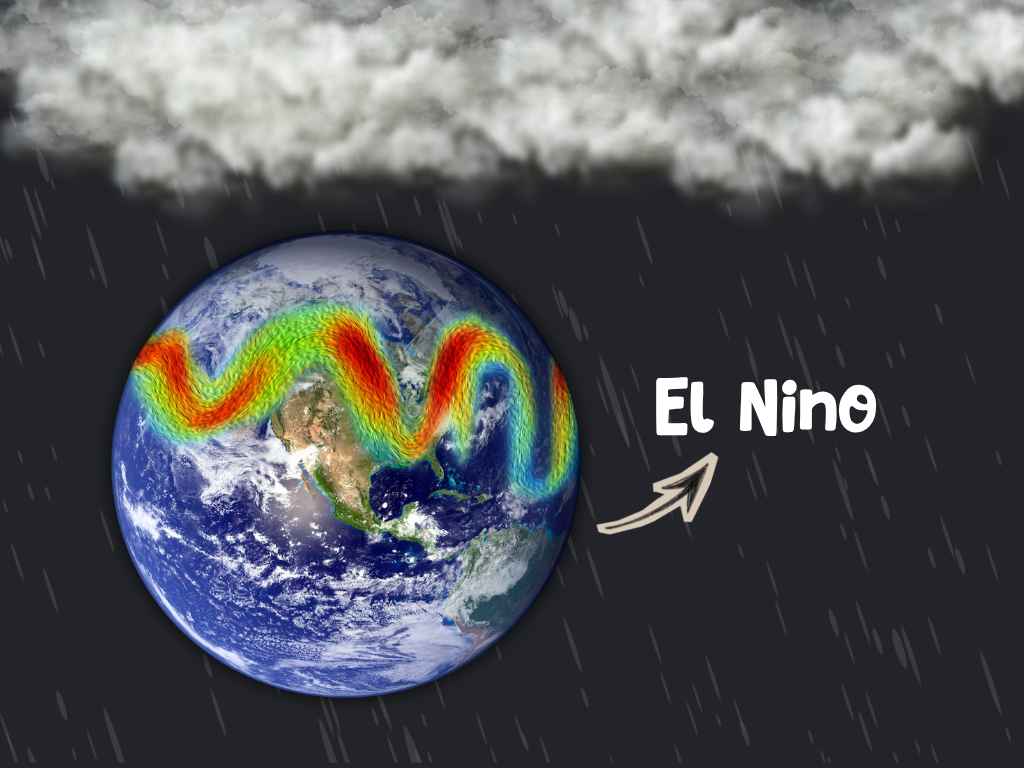
Most conversations around El Niño usually end with one question: Will it rain less this year? But this time, another question is becoming just as important. Will India have enough clean electricity if it does?
That question has come into focus after the Centre for Research on Energy and Clean Air (CREA) warned that the developing El Niño could leave India short of about 17.7 billion units of electricity over the next year, with the deficit potentially rising to 24 billion units in a more severe scenario.
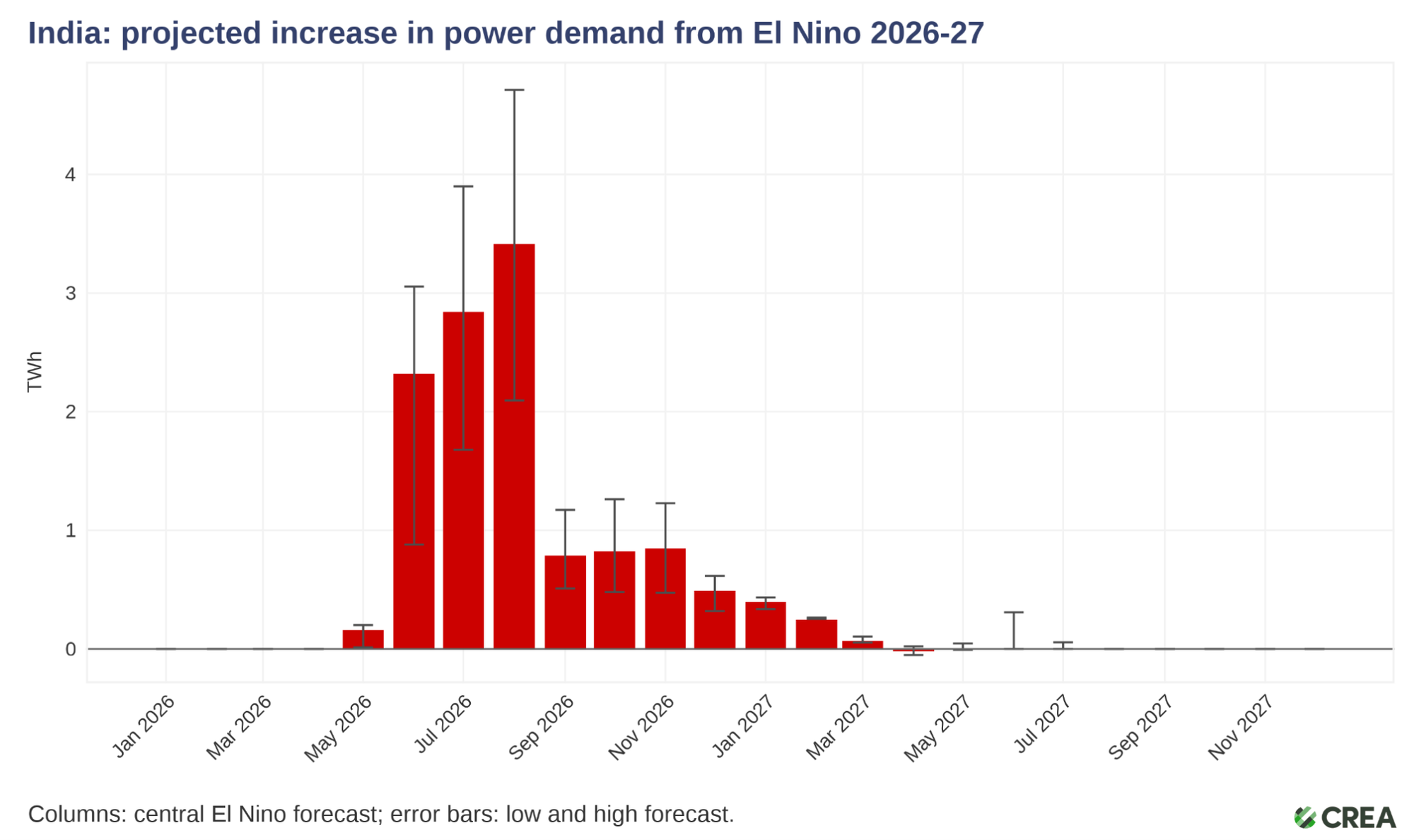
To put that into perspective, India generates nearly 1,848 billion units of electricity annually, so the shortfall is relatively small. The bigger concern is that this missing electricity may have to come from coal because weather conditions could simultaneously reduce wind and hydropower generation while pushing up demand for air conditioning.
At the same time, the India Meteorological Department (IMD) has confirmed that El Niño conditions have emerged over the Pacific Ocean and are expected to strengthen through the southwest monsoon. It has forecast rainfall at just 90% of the long-period average, with a 60% probability of a deficient monsoon. June has already ended with one of the country's weakest rainfall performances in more than a century, and rainfall continued to remain below normal in early July.
On paper, the numbers may not look alarming. India generated about 1,848 billion units of electricity during 2025-26, so a 17.7 TWh shortfall is less than 1% of annual generation. But the concern is not about whether India will run out of electricity. It is about where the replacement electricity will come from when some of the country's largest renewable energy sources start slowing down at the very time people need more power to stay cool.
To understand why, we first need to travel nearly 10,000 kilometres away from India to the Pacific Ocean.
El Niño begins when sea surface temperatures in the central and eastern Pacific Ocean become unusually warm. That warming changes atmospheric pressure patterns across the globe and weakens the circulation that normally helps pull moisture towards the Indian subcontinent during the southwest monsoon.
The result is often a weaker monsoon, lower rainfall and hotter temperatures across large parts of India. Not every El Niño year leads to a drought, but historically many have been associated with below-normal rainfall and extended heat.
For India's electricity sector, that combination creates a chain reaction.
The first impact is on wind power. Around two-thirds of India's annual wind generation typically comes during the southwest monsoon between June and September because the same seasonal weather system that brings rain also brings strong winds across states such as Tamil Nadu, Gujarat, Karnataka, Maharashtra and Rajasthan.
Wind farms are essentially built around the monsoon calendar. When the monsoon weakens, wind speeds also tend to weaken, leaving turbines with less energy to convert into electricity.
Hydropower faces a different but equally important problem. Dams do not generate electricity simply because they exist. They generate electricity because rain fills reservoirs and rivers keep flowing.
A weak monsoon means lower inflows into reservoirs, leaving operators with less water to pass through turbines. The effect also lasts much longer than the rainy season. Reservoirs filled during the monsoon supply electricity well into winter and the following summer. If they begin the year with lower storage, the impact can linger for months. That is why hydropower is often one of the first clean energy sources to come under pressure during poor monsoon years.
Ironically, solar power may actually emerge as the strongest performer during an El Niño year. Clearer skies and fewer clouds often allow solar panels to produce more electricity during the day.
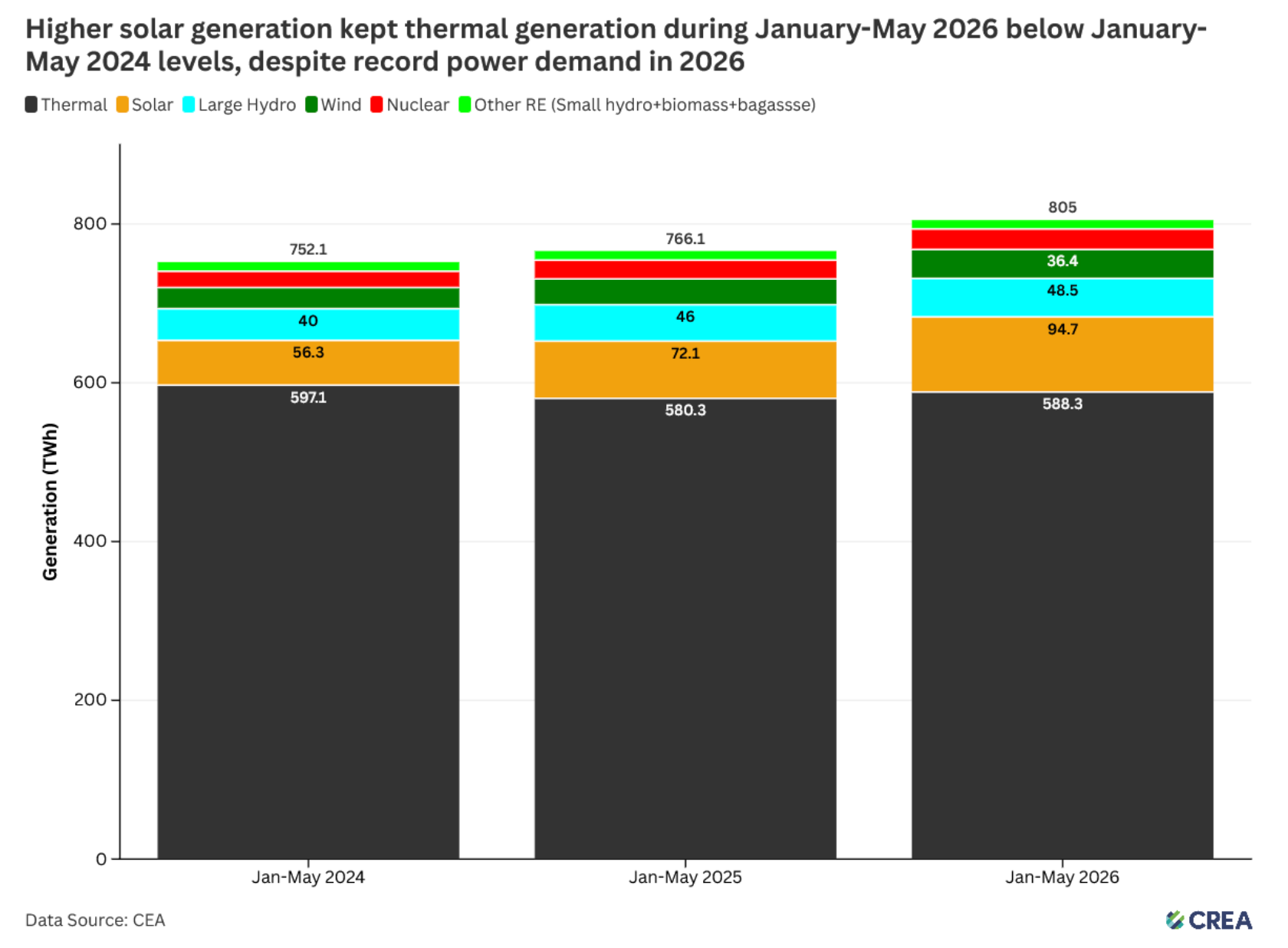
India has been adding solar capacity at record speed, installing 44.6 GW in 2025-26 alone and taking total solar capacity to more than 150 GW. According to CREA, solar now supplies about 24% of India's daytime electricity demand. But solar has one unavoidable limitation. It produces electricity only when the sun shines, while electricity demand often remains high well into the evening when offices, homes and shopping centres continue running air conditioners long after sunset.
That brings us to the second half of the problem. As temperatures rise during an El Niño year, electricity demand also climbs sharply because millions of households and businesses switch on fans, coolers and air conditioners for longer hours. I
India has already seen how quickly demand can rise during heatwaves. Peak electricity demand reached a record 270.82 GW in May this year, highlighting how rapidly cooling requirements are becoming one of the biggest drivers of power consumption.
In other words, India could simultaneously generate less electricity from wind and hydropower while needing more electricity than usual to keep homes and workplaces cool.
This is why CREA believes the most likely response will be an increase in coal-fired generation. The organisation estimates that replacing the missing renewable electricity with coal could release roughly 17 million tonnes of additional carbon dioxide.
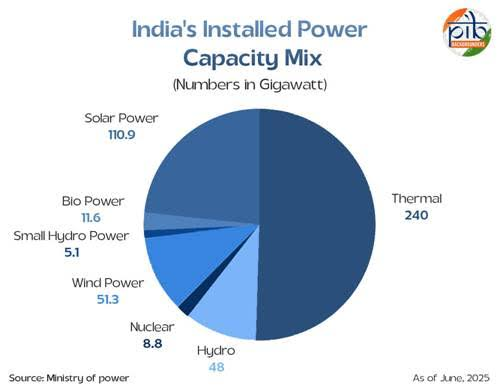
While India has significantly expanded renewable energy over the past decade, coal still accounts for about 42% of the country's installed power capacity and remains the most reliable source of electricity whenever demand suddenly surges. Unlike solar or wind, coal plants can continue supplying electricity regardless of weather conditions, making them the grid's backup system during periods of stress.
At first glance, this may seem like a contradiction. India has never had more renewable energy capacity than it does today. As of March 2026, the country had 283.46 GW of non-fossil installed capacity, including 150.26 GW of solar, 56.09 GW of wind, 51.41 GW of large hydropower and 8.78 GW of nuclear energy.
Renewable additions have been breaking records year after year, while coal's share in electricity generation has gradually started declining. Yet a single weak monsoon still has the potential to increase coal consumption.
The reason is that building renewable capacity is only one part of the transition. The electricity system also needs enough flexibility to use renewable energy whenever it is available and store it until it is needed. That flexibility is still limited.
According to Ember, India curtailed around 2.1 TWh of solar and wind electricity last year because the grid could not absorb all of it while coal plants continued operating. The think tank estimates that around 10 GWh of battery storage could have captured much of this surplus electricity during sunny afternoons and released it later in the evening when demand peaked. Instead, some renewable electricity went unused while coal plants continued supplying power after sunset.
That is ultimately why the developing El Niño matters. It is not because India is heading towards an electricity crisis or because renewable energy has failed. It matters because extreme weather exposes the weakest parts of the power system.
If India can bridge that gap with better storage and grid infrastructure, renewable energy will continue replacing coal over the long term. If it cannot, every difficult monsoon could temporarily pull the country's energy mix back towards fossil fuels, even as renewable capacity keeps breaking new records.