
 Newsletter
HDFC Bank has always had a certain image.
It is the salary-account bank. The bank that gave you your first credit card because your company happened to bank with it. The bank whose relationship manager calls at the exact moment you are trying to avoid spending money. For millions of Indians, HDFC Bank became part of adult life without ever becoming particularly exciting.
And that was probably its biggest strength.
People did not expect drama from HDFC Bank. They expected the app to work, the ATM to have cash and their money to remain exactly where they left it.
Lately though, HDFC Bank has been hard to ignore, and not for good reasons.
HDFC Bank's chairman has quit after saying certain practices inside the bank did not match his personal values and ethics. Its CEO, Sashidhar Jagdishan, has now decided to leave. The bank's own board has penalised Jagdishan and two senior executives over a controversial arrangement with a Maharashtra government company. Its Dubai operation has faced regulatory action. And investors in the US are now suing the bank.
That is a strange list for a bank that built its reputation on being almost aggressively well-run.
So how did HDFC Bank get here?
Jagdishan took charge in October 2020. He had one slightly terrifying advantage and disadvantage: he was replacing Aditya Puri.
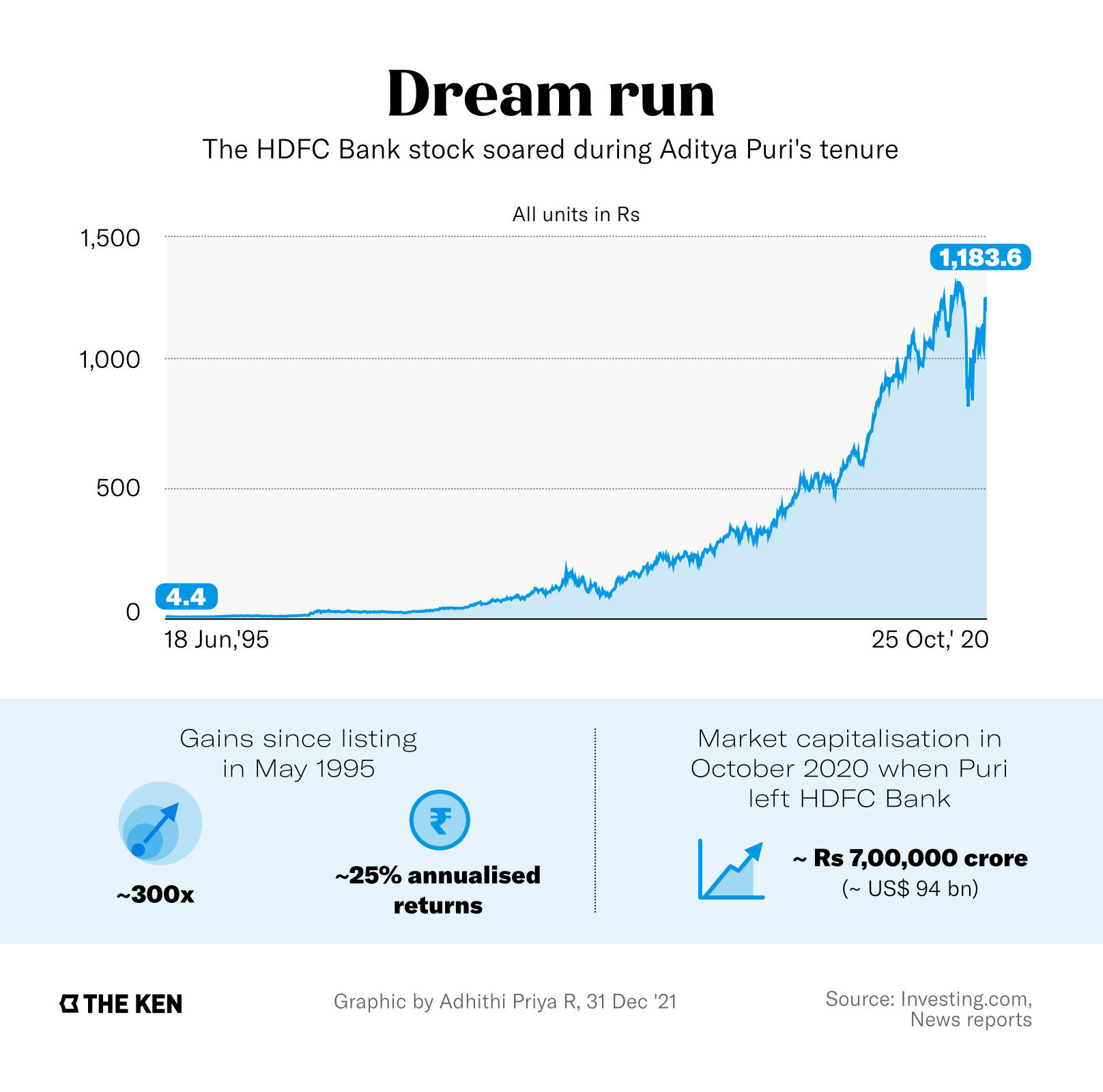
Puri had run HDFC Bank from its birth in 1994. Over 26 years, the bank went from a new private lender to one of India's most valuable companies. Jagdishan was not replacing a CEO who had been around for a few years. He was replacing the person most closely associated with HDFC Bank itself.
Within two months of taking over, things went wrong.
HDFC Bank's online systems had been suffering repeated outages. Customers would suddenly find internet banking or payment services unavailable.
RBI eventually lost patience. In December 2020, it stopped HDFC Bank from issuing new credit cards and launching new digital products until the technology problems were fixed.
One of India's biggest banks was effectively told by the regulator: you cannot keep adding digital business until you prove your technology can handle what you already have. HDFC eventually fixed the problem. By March 2022, RBI had removed the restrictions.
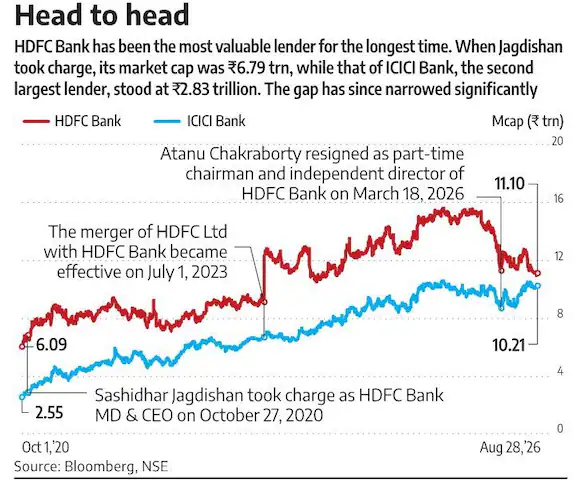
The next challenge was far bigger. In 2023, HDFC Ltd merged with HDFC Bank.
Despite the confusingly similar names, they had been separate businesses. HDFC Ltd was primarily known for home loans. HDFC Bank collected deposits and offered everything from credit cards and personal loans to corporate banking. Combining them created a banking monster.
But HDFC Ltd came carrying something very heavy: a giant pile of home loans. What it did not bring was an equally giant pile of deposits. Banks depend heavily on deposits to fund loans. You keep ₹1 lakh in your savings account, the bank keeps some of it available and uses the rest of its funding pool to lend to someone buying a house, car or running a business.
After the merger, HDFC Bank ended up with roughly ₹110 of loans for every ₹100 of deposits. The bank suddenly needed to collect deposits much faster. That meant offering attractive rates, pushing employees harder to bring money in and slowing down new lending while the gap improved.
By March 2025, things were getting better. HDFC Bank had brought the ratio down to roughly ₹96 of loans for every ₹100 of deposits.
So the merger problem was painful, but manageable. Then came March 2026. HDFC Bank's chairman, Atanu Chakraborty, resigned. Chairmen resign all the time. Usually the statement says something wonderfully uninformative like "personal reasons", everyone wishes everyone else the best, and life moves on.
Chakraborty did something very different. He said certain happenings and practices inside HDFC Bank were "not in congruence" with his personal values and ethics.
He did not explain what those happenings were. For HDFC Bank, that was almost worse. You now had the chairman of India's largest private bank walking away while publicly invoking ethics, leaving investors to guess what exactly had bothered him.
Within weeks, attention moved to one particularly odd deal involving the Maharashtra State Road Development Corporation, or MSRDC.
> MSRDC is a Maharashtra government company responsible for large road projects.
It also happens to have a lot of money. And banks love organisations with a lot of money because they want their deposits. Imagine MSRDC has ₹1,000 crore sitting around. HDFC Bank would much rather that ₹1,000 crore sit with HDFC Bank than with SBI, ICICI Bank or Axis Bank.
According to an investigation by The Indian Express, HDFC Bank paid around ₹45 crore to MSRDC during FY24 and FY25 through marketing expenses, reportedly linked to something called “differential interest”.
HDFC Bank wanted MSRDC to park its large deposits with the bank. Usually, a bank competes for such money by offering an attractive interest rate. But banks have rules around the rates they can offer, especially when giving one depositor a better deal than others.
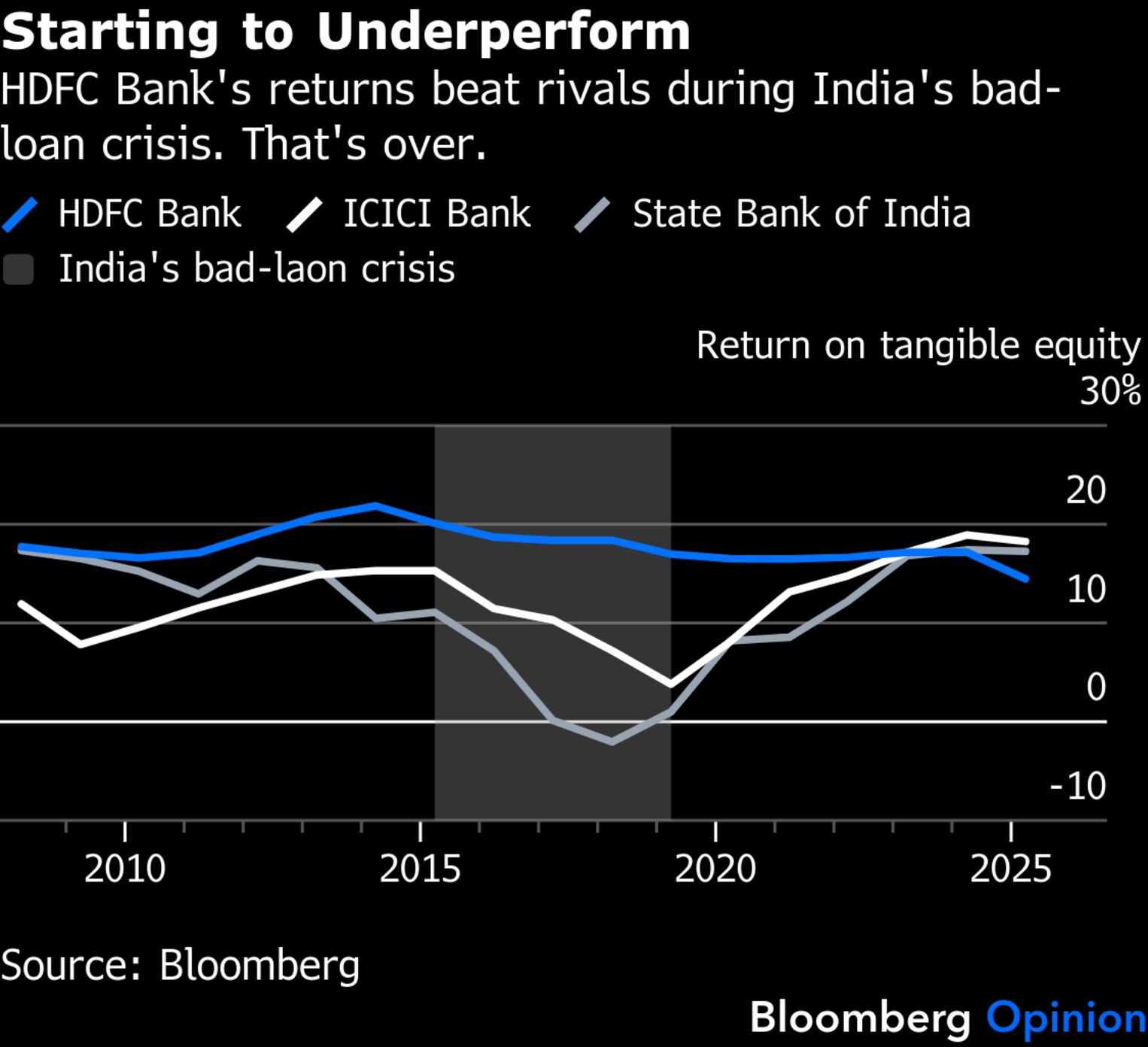
The concern was that HDFC Bank may have found another way to make MSRDC’s deal more attractive. Instead of paying the entire amount as interest, part of the additional benefit was allegedly booked as marketing expenses. In effect, the bank may have been paying more to secure MSRDC’s deposits, while recording some of that cost under a different name.
Why would anyone do that? Because banks cannot simply offer every large customer a secret special interest rate whenever they feel like winning a deposit. There are rules and internal limits around how deposits are priced.
HDFC Bank denied wrongdoing. Its board investigated the issue and did not find evidence that Jagdishan or the other executives personally made money from the arrangement. It also did not conclude that they had deliberately acted with a dishonest motive.
But the board did find something had gone wrong. It called the episode "business overreach".
Jagdishan, CFO Srinivasan Vaidyanathan and retail-assets head Arvind Vohra were each fined ₹1 lakh and given warning letters.
₹1 lakh is obviously not financially painful for senior banking executives. The awkward part was the fact that HDFC Bank's own board had decided its CEO and CFO deserved punishment at all.
There was still one unanswered issue. Was this what Chakraborty had been talking about when he quit?
We do not know.
HDFC Bank hired two law firms to investigate the broader concerns raised by the former chairman. They eventually said they had found no evidence supporting the implications of his resignation statement. Chakraborty did not participate in that investigation.
Which leaves HDFC Bank in a peculiar position. Its former chairman left talking about ethics. The external investigation did not substantiate his broad concerns. At the same time, a separate investigation into the MSRDC affair still ended with the CEO and CFO being penalised.
And India was only one part of the problem. HDFC Bank had also been dealing with trouble in Dubai.
Its Dubai branch sold investment products to wealthy Indians and NRIs. Among them were bonds issued by Credit Suisse, the Swiss bank that spectacularly collapsed in 2023.
These were not normal fixed deposits. They were risky investments known as AT1 bonds. Investors could earn higher returns, but if the bank issuing them got into serious trouble, they could lose their money.
That is exactly what happened. When Credit Suisse collapsed, about $17 billion worth of its AT1 bonds were wiped out. Some customers who had bought these bonds through HDFC Bank later complained that they had not properly understood the risk they were taking.
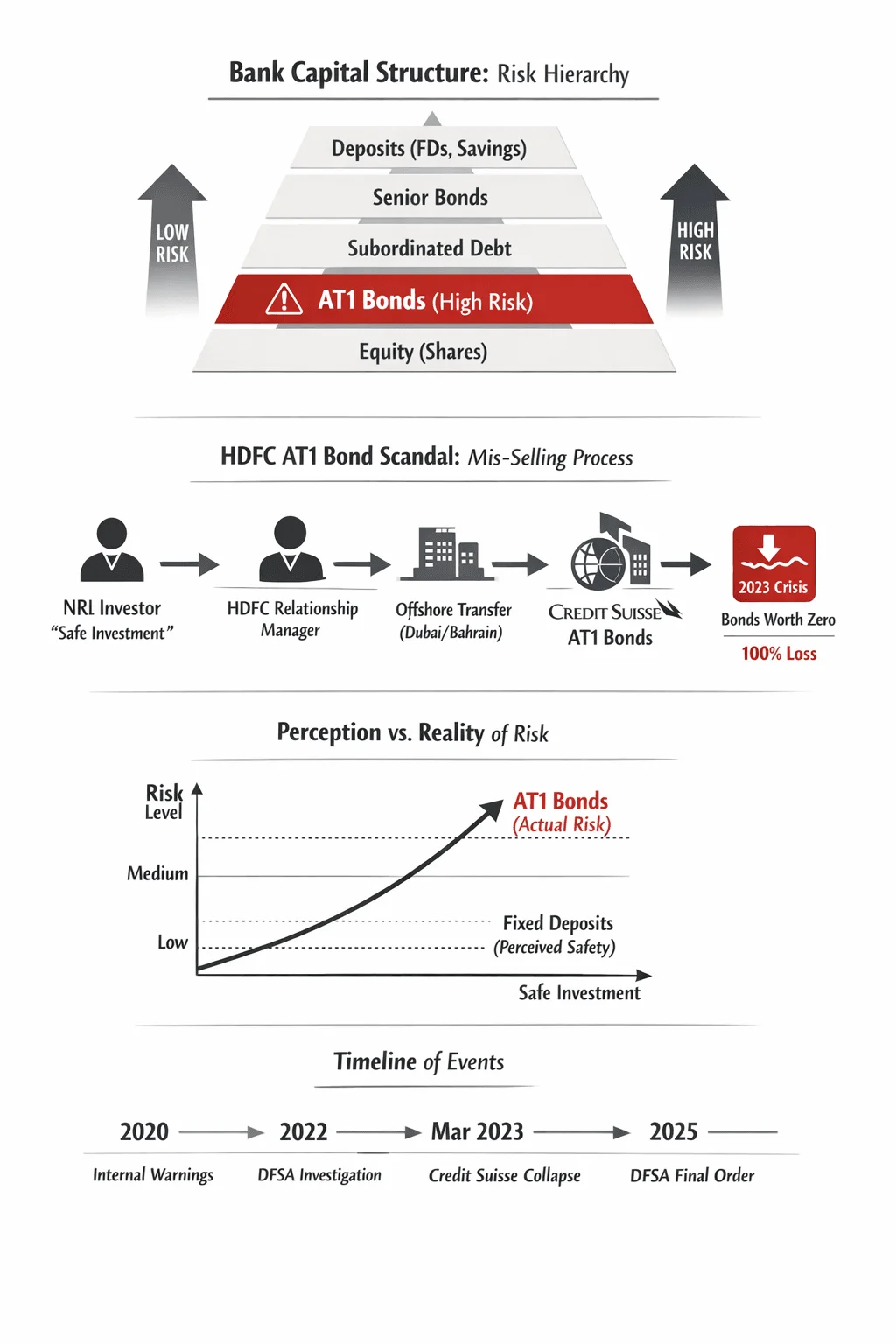
Image Credit: Finance Flash cards
Dubai's financial regulator subsequently found compliance problems at HDFC Bank's branch and restricted it from taking on certain new customers and carrying out some investment-related services.
By then, HDFC Bank had already dealt with a technology ban, a difficult merger, the chairman’s ethics-related exit, the MSRDC investigation and compliance problems in Dubai. A US investor lawsuit followed. And now Jagdishan himself has decided to leave when his term ends on October 26.
There is an easy mistake to make here: assume HDFC Bank itself is financially falling apart.
It isn't. This is still an enormously profitable bank. Its post-merger deposit problem has improved considerably. There is no indication that ordinary depositors need to panic or that HDFC Bank is facing some Yes Bank-style financial emergency.
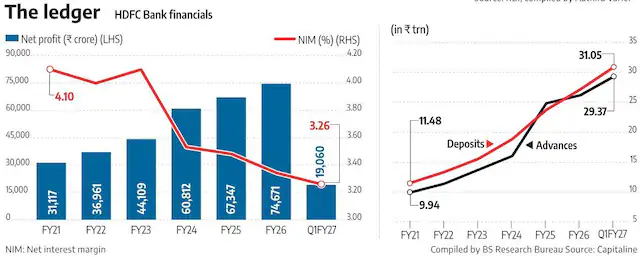
Image Credit: Business Standard
The crisis is about something less visible. Trust.
A bank can survive a bad quarter. It can fix a broken app. It can collect more deposits. It can even recover from a poorly executed merger.
But governance is trickier.
Banks run on trust. Your salary, savings and loans all sit inside a system you cannot really inspect yourself. HDFC Bank spent decades earning that trust. Jagdishan’s successor now inherits a bank that is still huge and profitable, but has to rebuild some of that confidence.
For HDFC Bank, becoming boring again may actually be a win.