
 Newsletter

A few years ago, cancer treatment in India followed a familiar script. If you were diagnosed in a smaller city, chances are your doctor would eventually tell you the same thing: “You should go to Mumbai,” or maybe Delhi, Chennai, Bengaluru, Hyderabad.
Serious cancer care was concentrated inside a handful of metro hospitals, and patients often ended up travelling hundreds of kilometres for consultations, scans, genomic tests, chemotherapy, surgery, or simply a second opinion.
That model is now starting to crack.
This week, a report in Mint highlighted something interesting. India’s oncology ecosystem is quietly expanding beyond metros, with hospitals, diagnostics firms, and patient-support organisations moving aggressively into Tier II and Tier III cities.
The report specifically mentioned companies like 4baseCare, which is setting up advanced cancer genomics and diagnostics capabilities in cities such as Srinagar, Guwahati, Coimbatore, Jammu and Kottayam.
At first glance, this may look like just another healthcare expansion story. Hospitals expanding. Diagnostics chains growing. Startups raising money. But something much larger is happening underneath.
India’s cancer economy is decentralising.
And it’s happening because the old metro-centric system is no longer sustainable.
The numbers explain why.
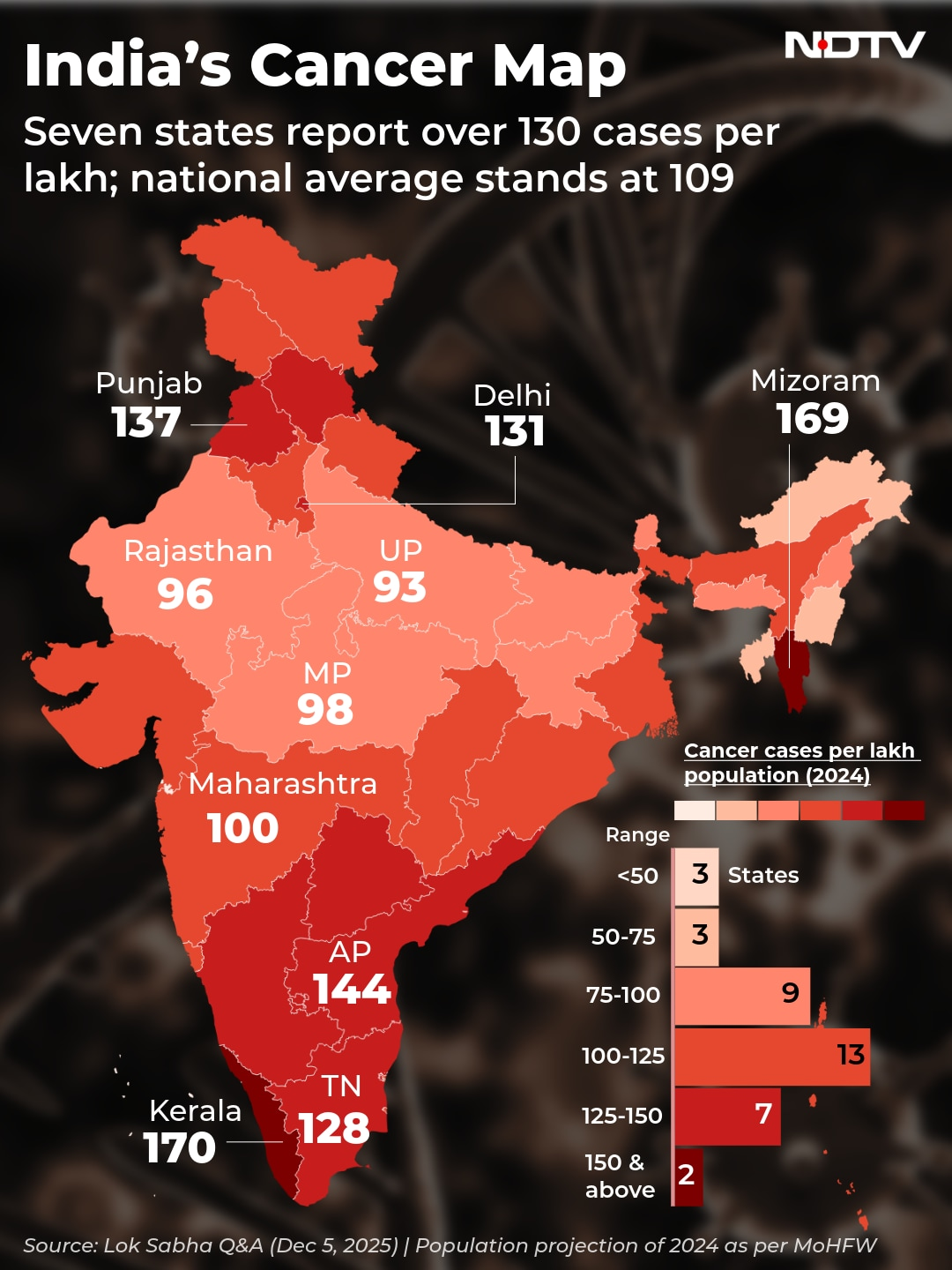
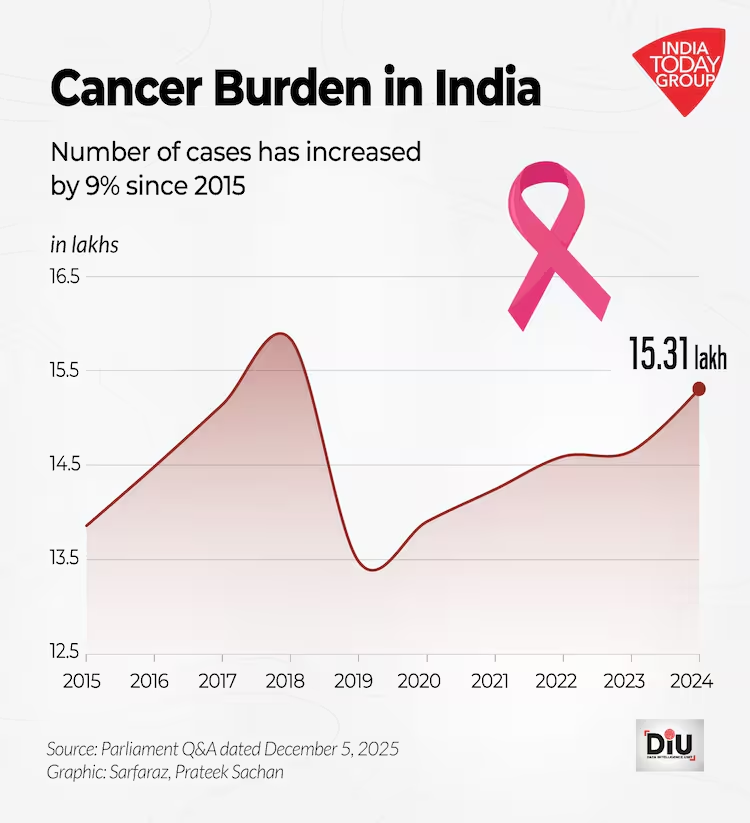
India records roughly 1.5 million new cancer cases every year, according to ICMR estimates. That number is expected to rise steadily because of ageing populations, lifestyle changes, pollution, tobacco use, delayed diagnosis, and better screening rates. But here’s the important part. The cancer burden is no longer concentrated only in big cities. Smaller towns and semi-urban regions are seeing a sharp increase in cases too.
The problem is that healthcare infrastructure did not grow at the same pace.
India has fewer than 3,000 oncologists for millions of patients. PET scan facilities, radiation centres, precision diagnostics labs, and specialised oncology hospitals remain heavily skewed toward metros. So patients migrate. Entire families travel to bigger cities for treatment, often for months at a stretch.
And the costs go far beyond hospital bills.
Multiple studies show that non-medical expenses like accommodation, food, transport, and lost wages can account for nearly 40-50% of the total financial burden of cancer treatment in India.
For lower-income families, this becomes catastrophic. In many cases, treatment gets delayed not because medicine is unavailable, but because survival in another city becomes unaffordable.
That is exactly the gap companies are now trying to solve.
Take 4baseCare, for example.
The Bengaluru-based oncology startup recently raised ₹90 crore in a Series B funding round led by investor Ashish Kacholia and Lashit Sanghvi. The company says the money will be used to expand its AI-powered oncology platform, strengthen genomics infrastructure, and push deeper into India’s underserved cities.
But this is not just about opening more labs.
One reason companies like 4baseCare are expanding now is because cancer treatment itself is changing. Earlier, treatment decisions relied heavily on scans, pathology reports, and broad treatment protocols.
But oncology is becoming far more data-driven. Doctors increasingly study genetic mutations inside tumours to identify which therapies may work better for specific patients, especially in complex cancers.
That requires genomic testing infrastructure, something India is still building at scale. It also raises another issue. Most global cancer genomic databases are heavily Western-focused, while mutation patterns and treatment responses can differ across populations. This is creating demand for more India- and Asia-specific cancer datasets, AI-led diagnostics tools, and local precision oncology infrastructure.
That broader shift is attracting investors. India’s oncology market is estimated to be worth over $7-8 billion currently and is expected to grow at double-digit rates over the next decade. Diagnostics alone is seeing rapid expansion because cancer care increasingly depends on early detection, molecular profiling, and targeted therapies.
That explains why multiple oncology-focused startups are suddenly attracting funding.
Everhope Oncology recently raised around $10 million. MOC Cancer Care raised roughly $18 million. Distributed oncology chains like OnCare are expanding into smaller cities. Large hospital groups are scaling radiation and chemotherapy centres outside metros. Even patient-support organisations are decentralising.
Access Life Assistance Foundation, for instance, has expanded into cities like Tiruvannamalai, Raipur, and Puducherry after seeing children travel from rural India to metros simply because support systems did not exist locally.
Think about how India built its banking system over the last decade. Banking stopped being something that existed only inside physical branches in major cities. Digital infrastructure expanded access across the country. Something similar may now happen in oncology, except the infrastructure here includes diagnostics labs, AI tools, hospital partnerships, genomic testing, tele-oncology networks, and patient support systems.
And interestingly, many of these companies are not starting with giant cancer hospitals.
That part is important.
Building a full-scale oncology hospital is extremely capital intensive. Radiation equipment alone can cost tens of crores. Advanced genomics labs can require ₹3 crore to ₹10 crore in setup costs. Skilled oncologists are difficult to recruit. Compliance costs remain high regardless of city size. Even though rent and real estate are cheaper outside metros, the expensive part of oncology infrastructure largely stays expensive.
So instead of building huge hospital networks first, many players are building distributed ecosystems.
One company handles genomics. Another handles diagnostics. Another provides treatment coordination. Some focus on AI software. Others provide accommodation and patient support. Hospitals become partners rather than fully owned assets.
This creates a more asset-light model for expansion into smaller cities. At the same time, there’s another shift happening quietly. Cancer detection itself is improving.
Awareness campaigns, cheaper diagnostics, insurance penetration, health-tech platforms, and preventive screening are helping detect cases that earlier went unnoticed in smaller towns. That naturally increases patient volumes outside metros. And once patient volumes rise, healthcare infrastructure follows.
You can already see this pattern in dialysis, IVF, cardiac care, and diagnostics chains. Oncology may simply be the next category moving outward from India’s biggest cities.
But none of this means the challenges are solved.
India still faces severe shortages of trained oncology professionals. Precision medicine remains expensive. Advanced genomic testing is still inaccessible for large parts of the population. Many targeted cancer drugs remain unaffordable without insurance coverage. Public healthcare oncology infrastructure is still stretched thin.
And then there’s the awareness problem.
A large percentage of cancer cases in India are still diagnosed at late stages because screening rates remain low, especially in rural areas. Early-stage cancer survival rates can improve dramatically with timely detection, but access gaps continue to delay diagnosis.
So the sector still has a long way to go. But the direction of travel is becoming clearer.
For years, India’s healthcare growth story was largely about building bigger hospitals in bigger cities. Now the focus is shifting toward distributed healthcare infrastructure that follows patients instead of forcing patients to follow infrastructure.
And that changes the economics of healthcare entirely.
Because if cancer care truly starts moving closer to where patients live, India may not just reduce treatment costs and pressure on metro hospitals. It may also fundamentally change who gets access to advanced oncology treatment in the first place.
The next oncology hub in India may genuinely not be a metro anymore.