
 Newsletter

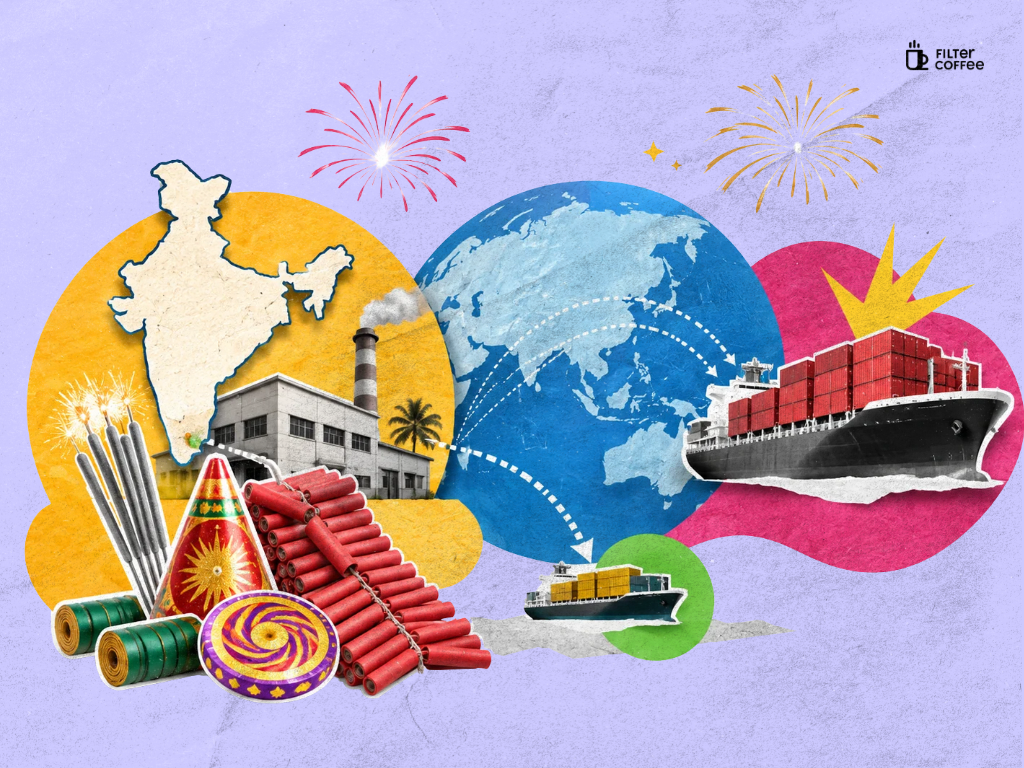
India has a ₹7,000 crore fireworks industry, but barely sells any firecrackers to the rest of the world.
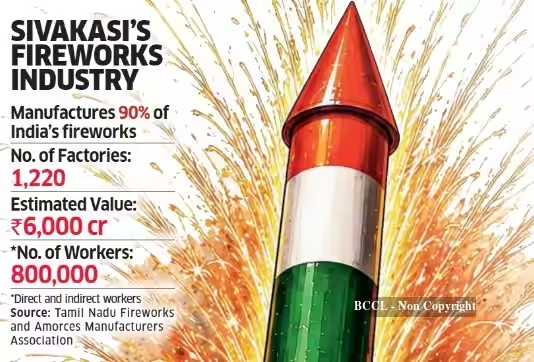
According to a recent Business Standard report, nearly 90% of India's fireworks come from Sivakasi, a small industrial town in Tamil Nadu. Yet the country's recorded fireworks exports amounted to just $77,820 in 2025, according to World Bank trade data. That's less than ₹70 lakh at an illustrative exchange rate of ₹90 per dollar.
And exports have actually been shrinking. In 2024, India shipped approximately $232,000 worth of fireworks overseas. By 2025, that figure had fallen by nearly two-thirds.
China, meanwhile, exported $1.16 billion worth of fireworks in 2024, supplying customers from the United States to Germany.
What's particularly striking is that India and China both have towns that have specialised in fireworks manufacturing for generations. But while China's Liuyang became a global supplier, India's Sivakasi built its business almost entirely around domestic celebrations.
The reason goes back nearly a century.
In 1923, two entrepreneurs, P Ayya Nadar and A Shanmuga Nadar, travelled to Calcutta to learn matchstick manufacturing. They returned to Sivakasi, imported German machinery and established a match factory.
Sivakasi was well suited to the business. Its hot, dry climate helped with production, while limited agricultural opportunities encouraged workers to seek factory employment. Match manufacturing also introduced local entrepreneurs to chemicals and production techniques that could be adapted for fireworks.
Soon, factories began producing sparklers and other firecrackers. When World War II disrupted imports from countries such as Britain and Germany, Indian manufacturers found a growing domestic market waiting for them.
Over the following decades, Sivakasi became India's fireworks capital. According to the Tamil Nadu Fireworks and Amorces Manufacturers Association, the industry's estimated ₹7,000 crore domestic market includes roughly ₹2,000 crore in factory-level manufacturing and another ₹5,000 crore across distribution, transport, wholesale and retail.
Most of this business is concentrated around Diwali. Manufacturers spend months producing crackers that sell within a few weeks.
China's Liuyang, another historic fireworks manufacturing centre, developed a different commercial network.
Located in Hunan province, Liuyang has generations of fireworks expertise. But its manufacturers also built relationships with international wholesalers, supermarket chains and professional fireworks distributors.
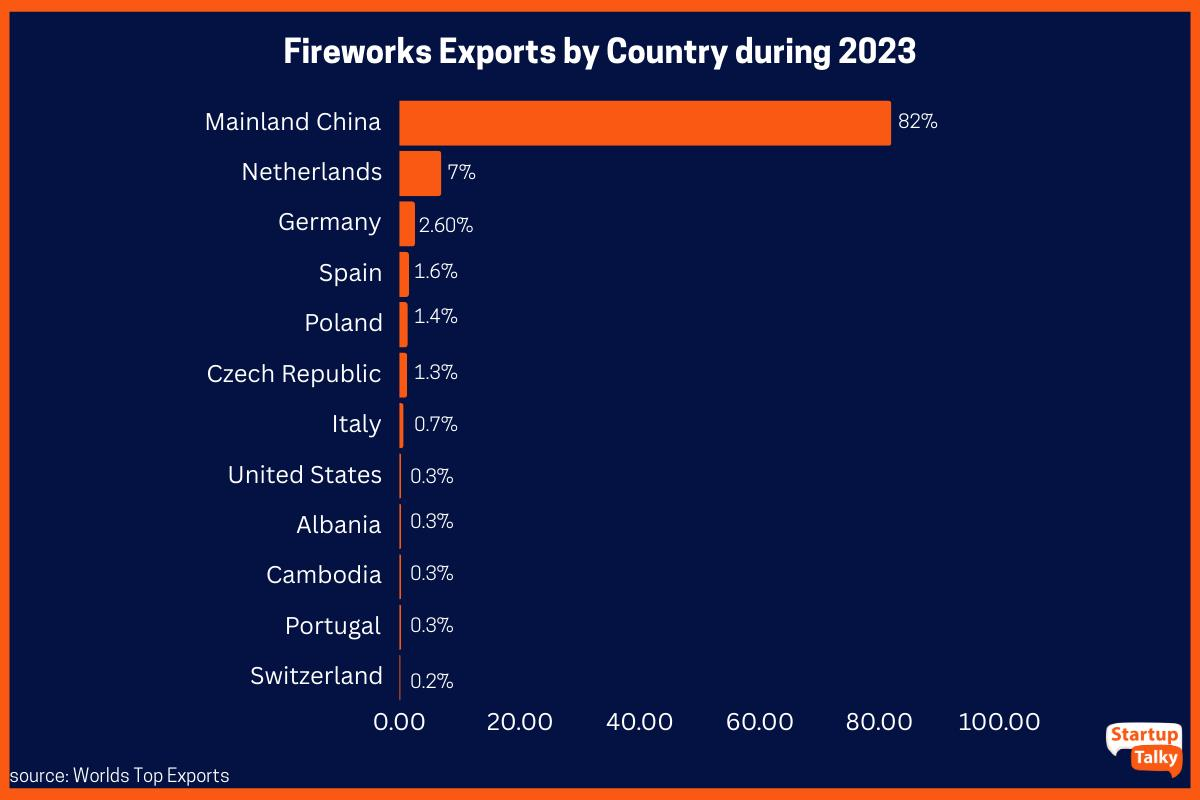
In 2024, Liuyang's fireworks exports reached 6.58 billion yuan, approximately $900 million at prevailing exchange rates, according to the Hunan provincial government. Its products were being sold in German supermarkets, where customers reportedly queued before dawn to buy fireworks ahead of New Year's Eve.
China's wider export network is enormous. In 2024 alone, it shipped approximately $463 million worth of fireworks to the United States and $119 million to Germany.
And the demand is substantial.
According to the American Pyrotechnics Association, China manufactures around 99% of consumer fireworks and 90% of professional display fireworks used in the US.
That dependence became a headache during the US-China tariff dispute in 2025. American fireworks businesses warned that higher tariffs could severely disrupt their supply chains, particularly ahead of Fourth of July celebrations.
India might seem like an obvious alternative supplier. It already has manufacturing expertise, established factories and a large workforce.
But making firecrackers and exporting them profitably involve different costs.
Fireworks are classified as dangerous goods, requiring specialised packaging, transport, insurance and port handling. Unlike ordinary consumer products, they cannot simply be loaded into a shipping container without complying with explosives regulations.
International buyers also have their own safety standards. The European Union, for instance, requires fireworks to undergo conformity assessments, carry CE markings and meet specific labelling requirements.
For Sivakasi's smaller manufacturers, obtaining certifications and arranging specialised shipments can be expensive, particularly when export orders are small.
There is also the question of what customers actually want.
India's fireworks market is built around familiar products such as sparklers, flowerpots, chakris and crackers. European retailers sell a wider range of multi-shot batteries and compound fireworks that create coordinated aerial displays.
A manufacturer supplying Germany must develop products for that market rather than assume its existing Diwali catalogue will sell overseas.
Indian regulations add another complication. The Supreme Court's restrictions on barium-based fireworks have affected formulations commonly used internationally. Manufacturers must therefore navigate Indian chemical restrictions while meeting foreign product requirements.
And then comes the commercial calculation. Why would a Sivakasi manufacturer spend more on certification, freight and international distribution when domestic buyers already absorb most of its production?
There is a cost to this domestic dependence, however. Environmental restrictions, factory safety concerns and the concentration of sales around Diwali leave the industry vulnerable to disruptions in a single market.
Building an export business could diversify demand, but India would need shared testing facilities, reliable shipping arrangements, safer and more modern factories, and partnerships with established overseas distributors.
China's advantage wasn't built by manufacturing fireworks alone. Liuyang also developed the infrastructure and commercial relationships needed to sell them internationally.
Sivakasi has the manufacturing history. Turning that into an export industry will require building the business around it.
Sources
- Business Standard | India's fireworks industry, manufacturing economics and export barriers, 5 November 2026.
- World Bank WITS: India, 2025 | Fireworks exports worth $77,820.
- World Bank WITS: India, 2024 | Fireworks exports worth $232,240.
- World Bank WITS: China, 2024 | China's exports and international destinations.
- Science History Institute | Origins of Sivakasi's match manufacturing industry.
- Hunan Provincial Government | Liuyang's export performance and German supermarket distribution.
- American Pyrotechnics Association | US dependence on Chinese fireworks and tariff concerns.
- European Union: Directive 2013/29/EU | Fireworks safety, conformity assessment and labelling requirements.
Data note: The trade figures use HS code 360410 (fireworks). India's 2025 exports are compared with China's 2024 exports because those are the independently verified figures used in this article. The ₹7,000 crore domestic market figure is an industry estimate, not an official national production statistic.