

 Newsletter

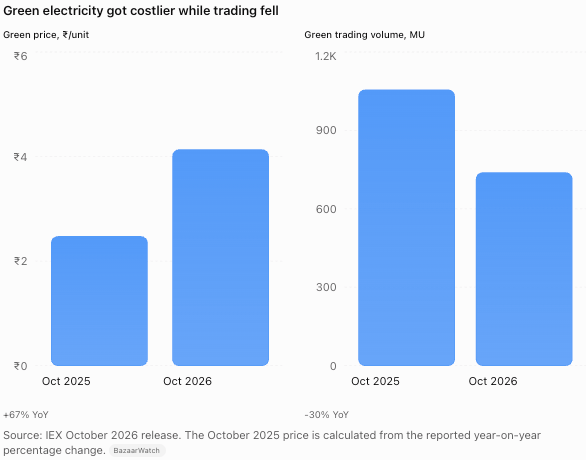
Green electricity became 67% more expensive on the Indian Energy Exchange (IEX) in October 2026. The average price in its green day-ahead market, where renewable power is bought for the next day, rose to ₹4.13 per unit. Meanwhile, trading volumes across IEX's green markets fell 30% year-on-year.
Yet IEX reported something rather different in another part of the market that same month: electricity prices fell close to zero in several trading intervals. The regular day-ahead market also recorded an average price of ₹6.66 per unit, up 149% year-on-year. Cheap and expensive electricity were showing up on the same exchange.
An electricity exchange works like an auction. Power generators offer electricity, while buyers such as distribution companies and large businesses place bids. The exchange matches supply with demand and discovers a price. Some power is bought a day ahead; other trades happen closer to delivery. Prices can change sharply between trading intervals. Household bills are generally based on regulated tariffs, not individual exchange trades.
October was a particularly volatile month. India's electricity consumption reached 159.8 billion units, 21.9% higher than a year earlier. IEX attributed the early-month surge to hotter weather and below-normal rainfall, which increased cooling demand. Later, cooler weather, rain and a cyclone reduced the pressure. Buyers competing for limited available power pushed prices up during busy periods; when demand eased and more electricity was offered, some real-time prices collapsed. A low base in October 2025 also exaggerated the annual percentage increases.
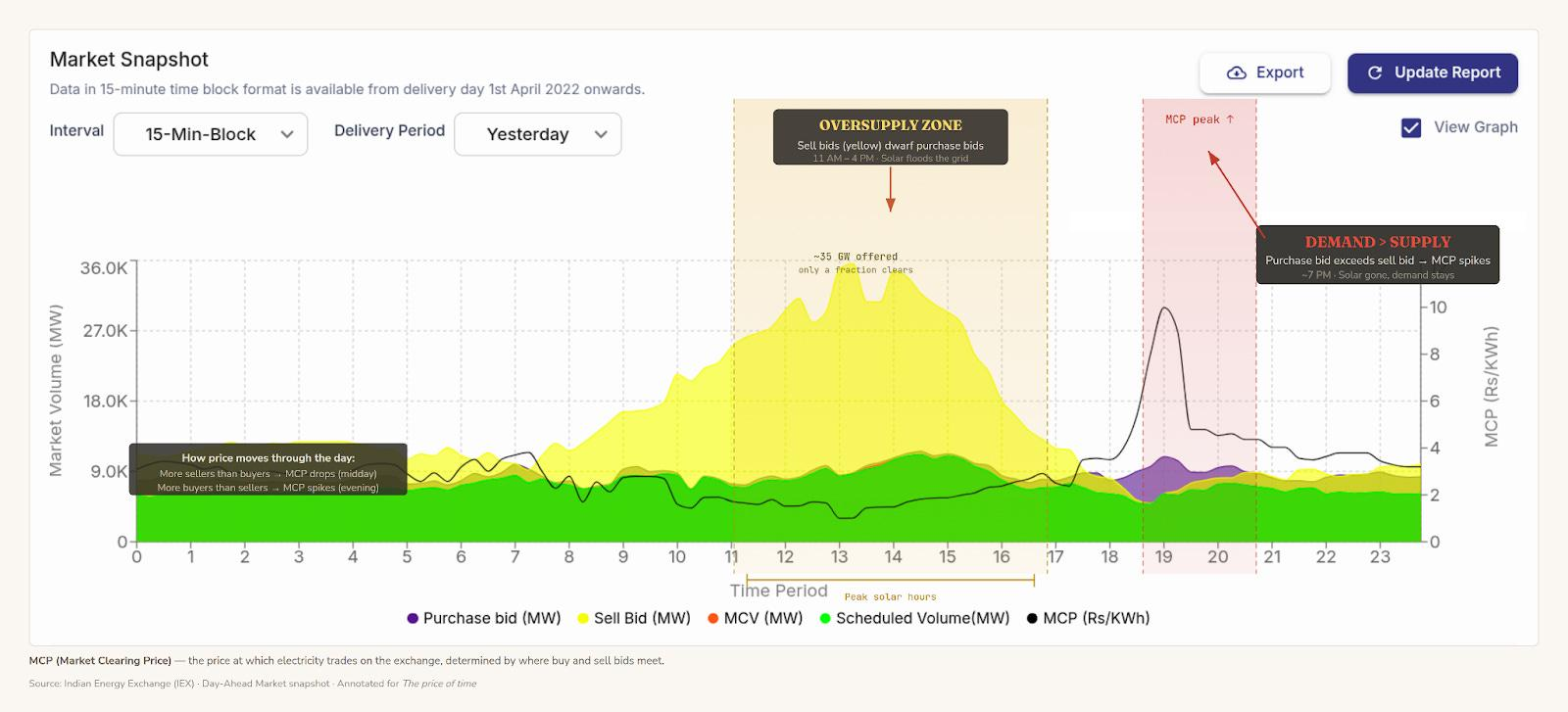
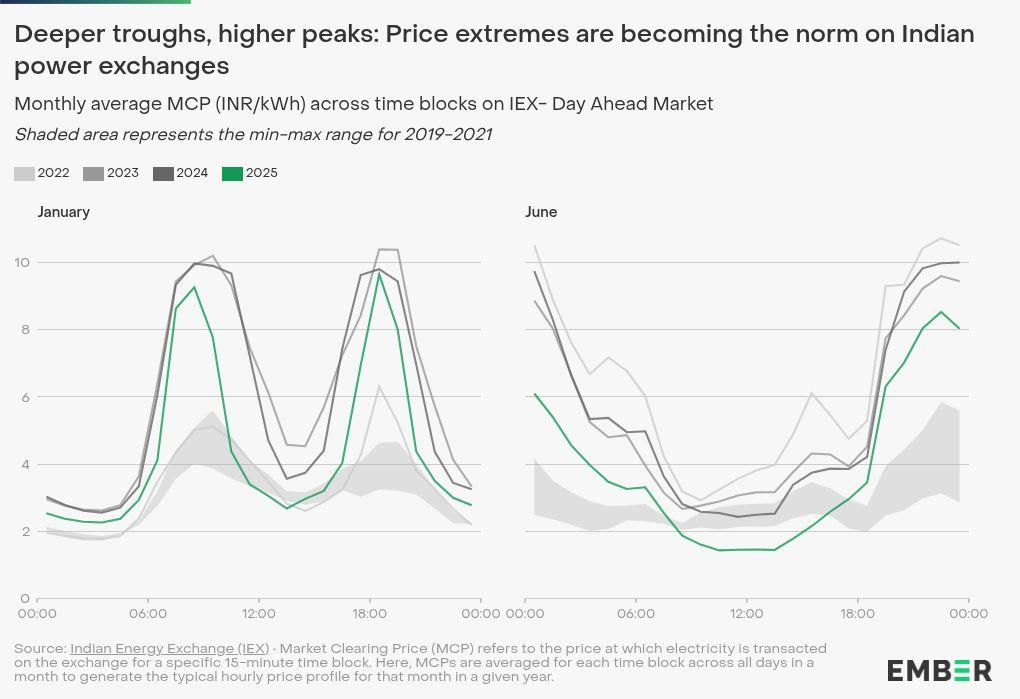
Weather is only part of the explanation. Solar electricity is changing the supply pattern. India had installed about 171 gigawatts of solar capacity by the end of September 2026, according to the renewable energy ministry. Solar farms often feed large amounts of power into the grid around midday. In some trading intervals, supply outstrips what buyers need, dragging prices down.
Evening is a different story. Solar generation fades just as people return home, switch on appliances and keep air conditioners running. Other generators or storage must fill the gap. Earlier this summer, IEX's real-time prices dropped near zero during daytime intervals but reached ₹10 per unit in some night-time slots. A cheap afternoon does little to solve an expensive evening when that electricity cannot be saved.
There is also the problem of getting power to the right place. Rajasthan can generate plenty of solar power while other regions need electricity, but transmission lines have limits. In April, grid operators curtailed nearly 694 million units of solar generation, according to an Indian Express analysis of Grid India data. Curtailment means asking generators to reduce output because the grid cannot safely absorb or move all the available electricity. So India can have surplus solar power that it cannot use, even as it keeps building more plants.
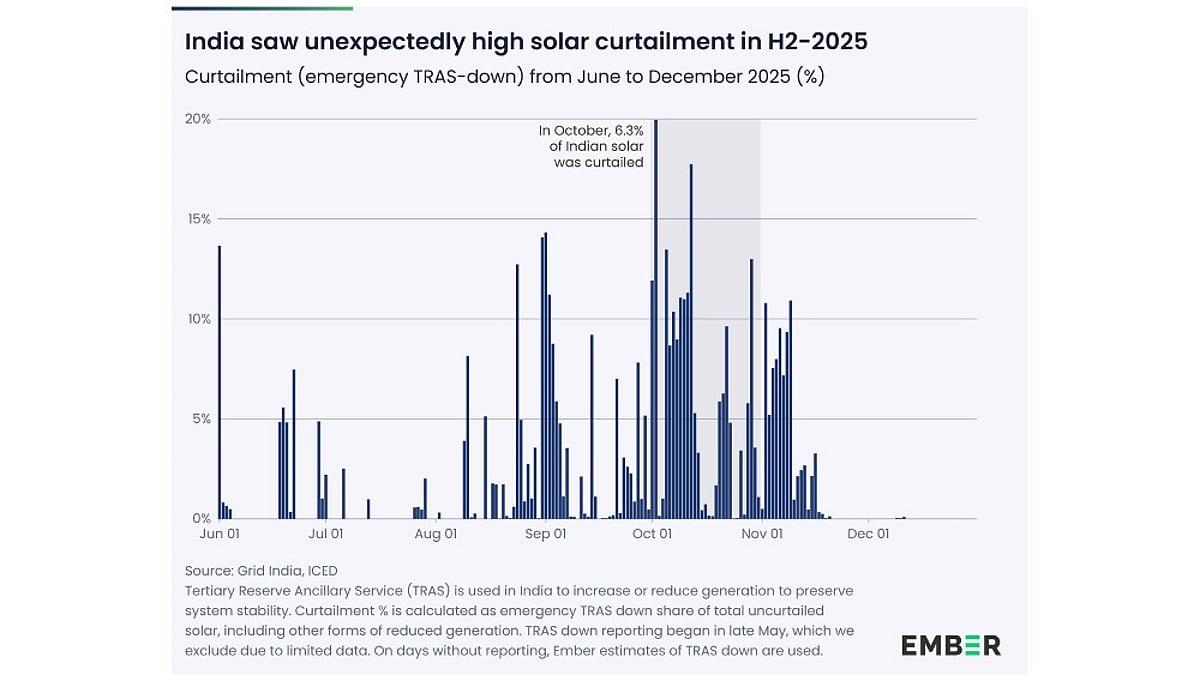
The financial consequences run through the industry. Renewable developers selling power at spot prices can earn very little during surplus hours, while distribution companies exposed to exchange purchases may face high costs when supply tightens. Long-term power contracts can protect both sides from some of these swings, but they cannot remove the physical problem. A near-zero wholesale price does not mean free electricity bills.
India's proposed fix is to add more flexibility. Batteries can store daytime electricity for evening use. Pumped-storage hydropower does something similar by using surplus power to lift water uphill and releasing it later through turbines. The Central Electricity Authority projects that by 2031-32 India will require roughly 47 GW of battery storage and 27 GW of pumped storage. Neither is installed capacity.
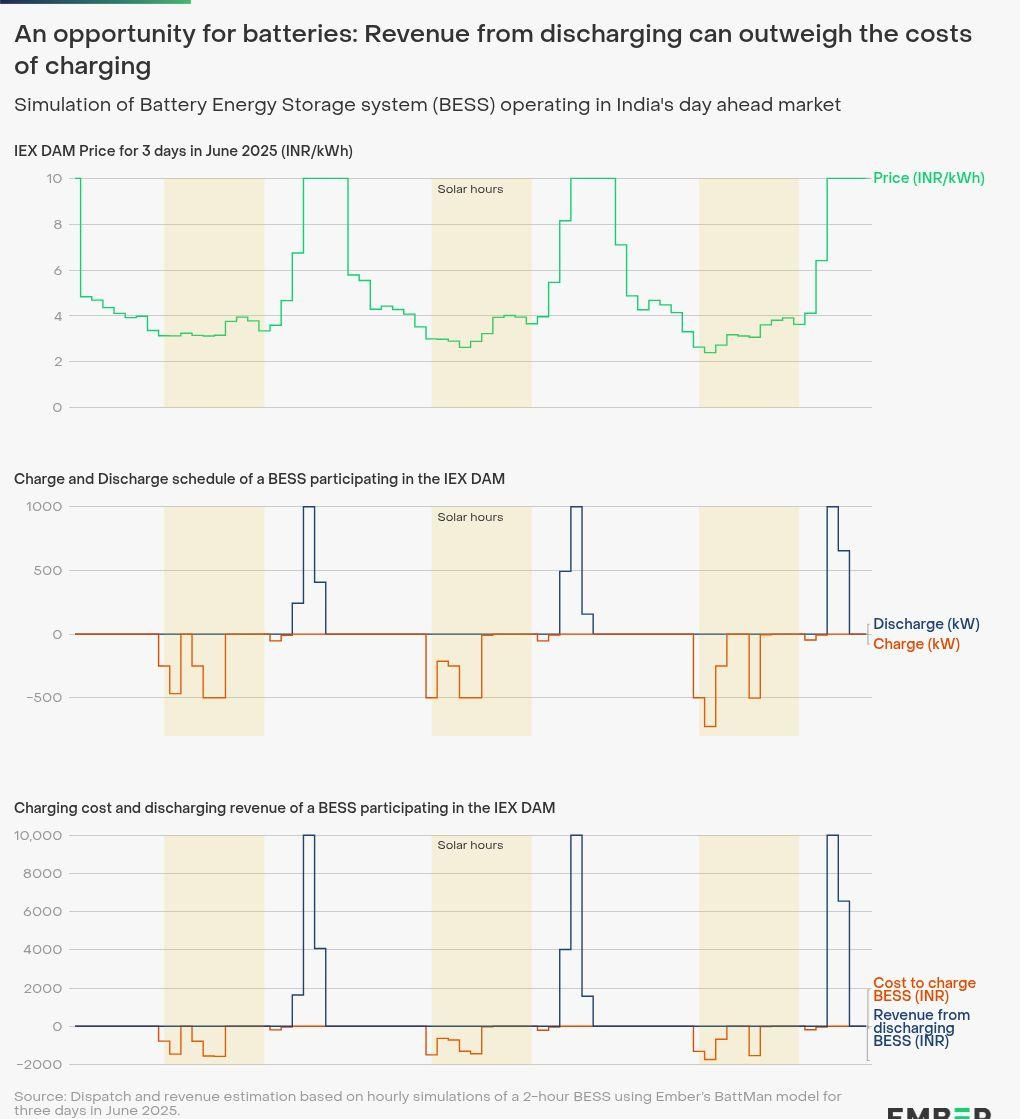
The October figures do not prove renewable electricity is becoming permanently expensive. They show how much the price depends on when power is available, where it is needed and whether the grid can move or store it. India has become increasingly good at generating solar electricity. Getting that electricity to the right customer at the right hour is the next expensive job.
Sources
- Indian Energy Exchange: October 2026 Power Market Update | 3 November 2026
- Ministry of New and Renewable Energy: Installed Renewable Energy Capacity | September 2026
- The Indian Express: Why Electricity Prices Crash by Day and Spike at Night | 31 May 2026
- The Indian Express: Why India Curtailed Solar Energy During Peak Summer Demand | 9 May 2026
- Ministry of Power: Grid Stability and Energy Storage | 27 July 2026