
 Newsletter

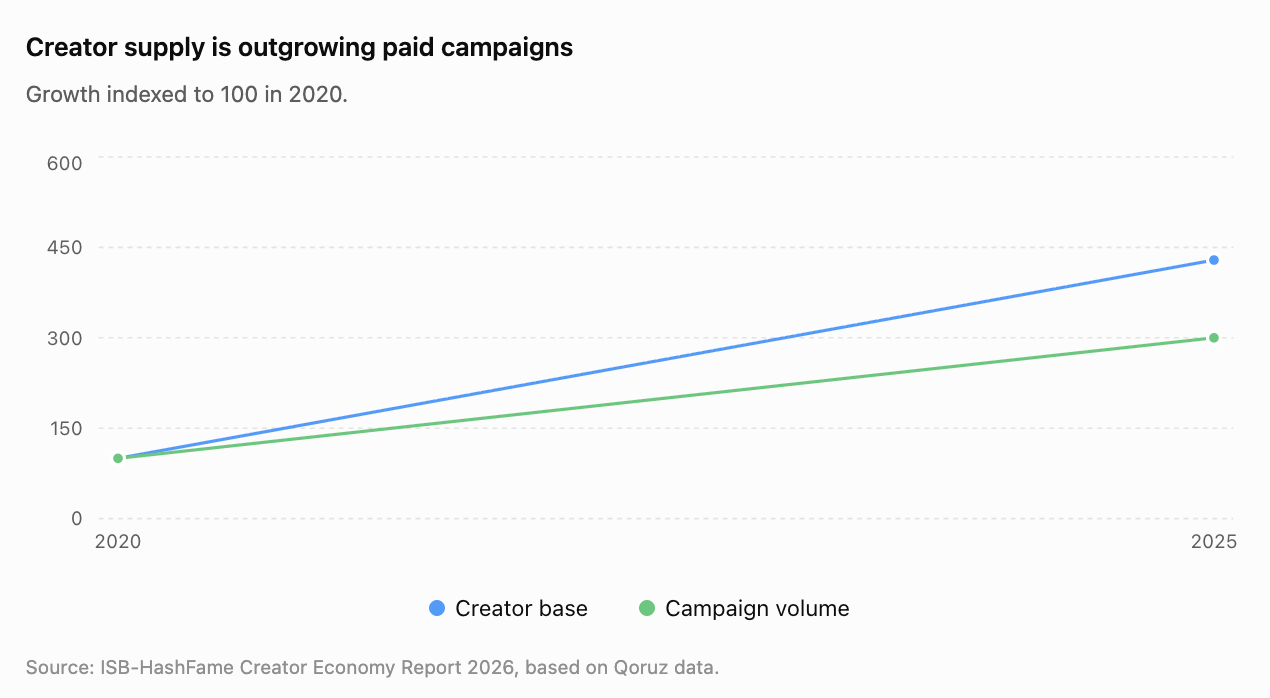
India had 41.2 lakh creators in 2025, up from 9.6 lakh in 2020, according to a new report by the Indian School of Business and creator platform HashFame. Two-thirds of them came from outside the major metros, and more than 80% of this non-metro base consisted of nano and micro creators.
Brands are paying attention. The number of influencer campaigns tracked by Qoruz rose from around 14,000 in 2020 to 42,000 in 2025. Average spending per campaign also increased 3.6 times.
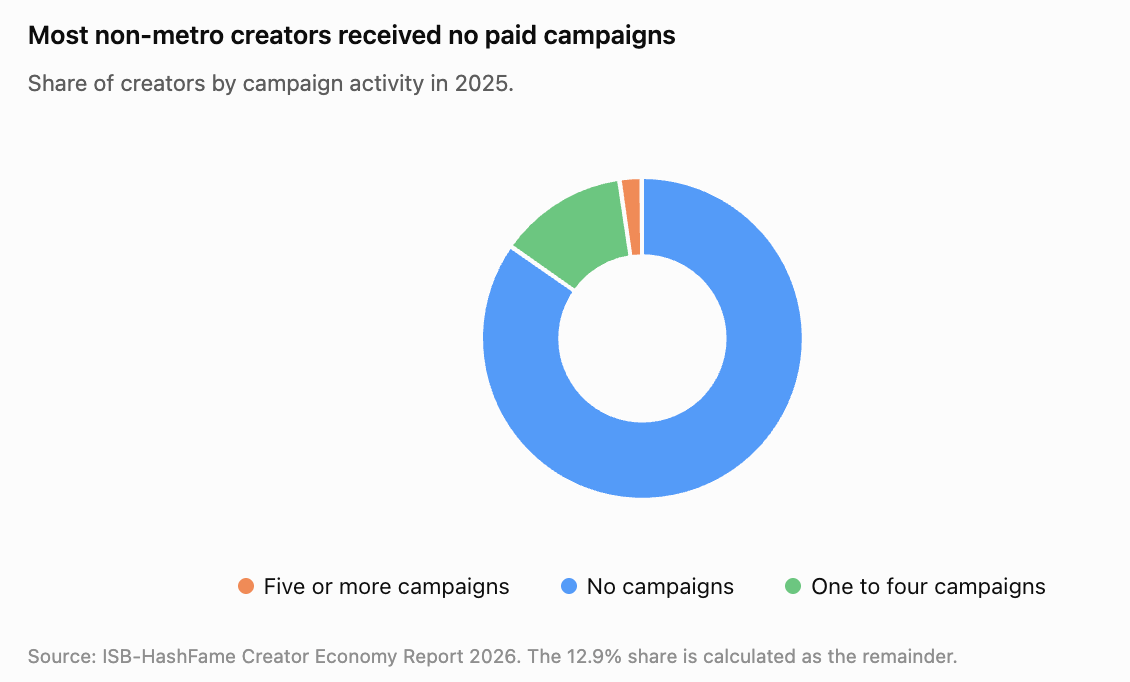
Yet very little of this work reaches the average creator. Around 85% of non-metro creators completed no paid campaigns in 2025. Only 2.1% managed five or more. And even getting a campaign does not guarantee getting paid on time.
Small creators, big business
Brands increasingly want creators with smaller audiences because they can reach communities that a celebrity campaign may miss. A food creator in Jaipur or a beauty creator in Kochi can speak in the local language, discuss familiar products and recommend something to followers who have watched them for months.
This also works out cheaper. Instead of spending the entire campaign budget on one famous face, a brand can hire 20 or 30 creators across different cities. It gets more videos, more local reach and several chances to see which pitch actually works.
According to Kofluence, 52% of marketers prefer micro creators for regional and hyperlocal campaigns. Nano creators, however, are often paid between ₹500 and ₹5,000 for a Reel. Some are offered only the product being promoted.
A free moisturiser is nice. It is less useful when the editor wants money.
Creators still accept these deals because paid campaigns are scarce. With millions of people hoping to work with brands, anyone who rejects a barter deal, requests an advance or refuses a 90-day payment period can be replaced quickly.
That gives brands access to affordable content while leaving creators with little room to negotiate.
Where the money gets stuck
Say a creator agrees to make a video for ₹30,000. She buys props, travels to the location and pays an editor. The agency asks for two revisions before the client approves the final cut. The video is published, performance data is submitted and only then is the creator allowed to raise an invoice.
The invoice may carry a 60-day payment period. If the campaign began in July and went live in September, the money may arrive in November or December. The creator has already paid the production costs and completed the job.
The payment takes so long because the brand and creator often sit at opposite ends of a crowded chain. A large company may hire a media agency, which appoints an influencer agency, which works through a smaller vendor or talent manager, which finally contacts the creator.
Each company has its own approvals, purchase orders and payment cycle. Brands may take 60 to 90 days to pay agencies. Smaller agencies may lack the cash to pay creators before receiving that money, so the delay moves down the chain.
Moneycontrol reported that India has around 1,500 to 2,000 influencer marketing agencies. Industry executives estimate that the top 30 to 35 control nearly 70% to 75% of the business. Hundreds of smaller agencies compete for what remains, often with thin margins and just a few major clients.
The result: Brands blame procurement. Agencies say they are waiting for clients. Creators keep following up with whoever sent them the brief.
For larger creators, a manager or accountant can handle this. Smaller creators usually chase invoices themselves while continuing to shoot unpaid content for their feeds. Staying visible is necessary to land the next campaign, even when the previous one has not been paid.
Several creators have started discussing these delays publicly. The Nod recently reported that one creator had ₹3.5 lakh pending from around ₹8 lakh worth of brand deals. Another said she was owed ₹2.2 lakh for campaigns completed three to nine months earlier. Some creators said they had stopped pursuing smaller amounts because months of messages and legal threats were no longer worth the effort.
These are individual cases, but they show how weak a creator’s position can be. Publicly calling out a brand may speed up payment. It may also cost the creator future work.
Plenty of creators, not enough careers: The ISB-HashFame report estimates that a nano creator completing two campaigns earns the equivalent of around ₹5,000 a month. Only micro creators completing five campaigns come close to regular salary benchmarks. These are modelled estimates rather than verified bank income, but the gap is clear: occasional sponsorships are useful side income, not a stable career.
Creators are often advised to make money elsewhere through YouTube advertising, affiliate links, subscriptions, courses or their own products. Those options generally require a large or highly loyal audience. A creator with 20,000 followers may have enough influence to sell shampoo for a company but not enough reach to build a paid community.
So brand deals remain important, especially for creators who mainly post on Instagram. Unfortunately, many of these deals are still agreed through WhatsApp messages or DMs. Contracts may not clearly mention when payment is due, how many revisions are included or what happens if the campaign is cancelled.
What could help: Partial advances would stop creators from funding production themselves. Clear approval periods and late-payment fees would remove some ambiguity. Escrow systems could hold campaign money before the work begins. Longer brand retainers would also give creators regular income and save companies from finding a new set of accounts for every launch.
India already has delayed-payment protections for eligible micro and small enterprises registered through Udyam. But many individual creators are not formally registered businesses and may not know whether these protections apply to their work. Taking legal action over a ₹20,000 invoice is hardly an efficient payment system anyway.
India does not have a shortage of creators, audiences or brand interest. It has a shortage of repeat work and reliable payment.
The creator economy will feel like an actual economy when fewer creators have to choose between accepting bad terms and receiving no campaign at all.
Sources
- India’s Creator Economy: From Participation to Productivity, Indian School of Business and HashFameCreator population, non-metro share, campaign growth, engagement, language distribution and creator-income estimates.
- India’s micro creator base is growing, but payment delays remain a pain point, MintPayment cycles, inconsistent campaign income and challenges faced by smaller creators.
- Decoding Influence: 2025 Influencer Marketing Report, KofluenceNano creator payouts, marketer preference for micro creators and influencer-spending categories.
- Payment delays and agency glut hit India’s influencer economy, MoneycontrolAgency concentration, working-capital pressure, informal contracts and delayed payments.
- The ugly truth about India’s content creator economy, The NodFirst-hand creator accounts covering unpaid dues, production expenses, barter deals and irregular earnings.
- Payment delays cripple the creator economy, Exchange4MediaThe chain of intermediaries and industry allegations around payments extending beyond 90 days.
- ASCI Influencer Advertising Guidelines, Advertising Standards Council of IndiaDisclosure and advertising responsibilities applicable to creators.
- Online dispute resolution guidelines for delayed MSME payments, Ministry of MSMEExisting delayed-payment protections and dispute-resolution mechanisms for eligible registered enterprises.