

 Newsletter

Prime Minister Narendra Modi recently shared a video about India’s avocado boom on his social media and YouTube channel.
Yes, avocados.
The fruit that spent years living mostly on ₹500 café plates is now becoming interesting enough for Indian farmers to plant at scale. And the reason is sitting right inside India’s import bill. India imported just 234 tonnes of avocados in FY21. By FY25, that had jumped to 11,828 tonnes, according to commerce ministry data. In the first quaters of FY26 alone, another 7,397 tonnes arrived.
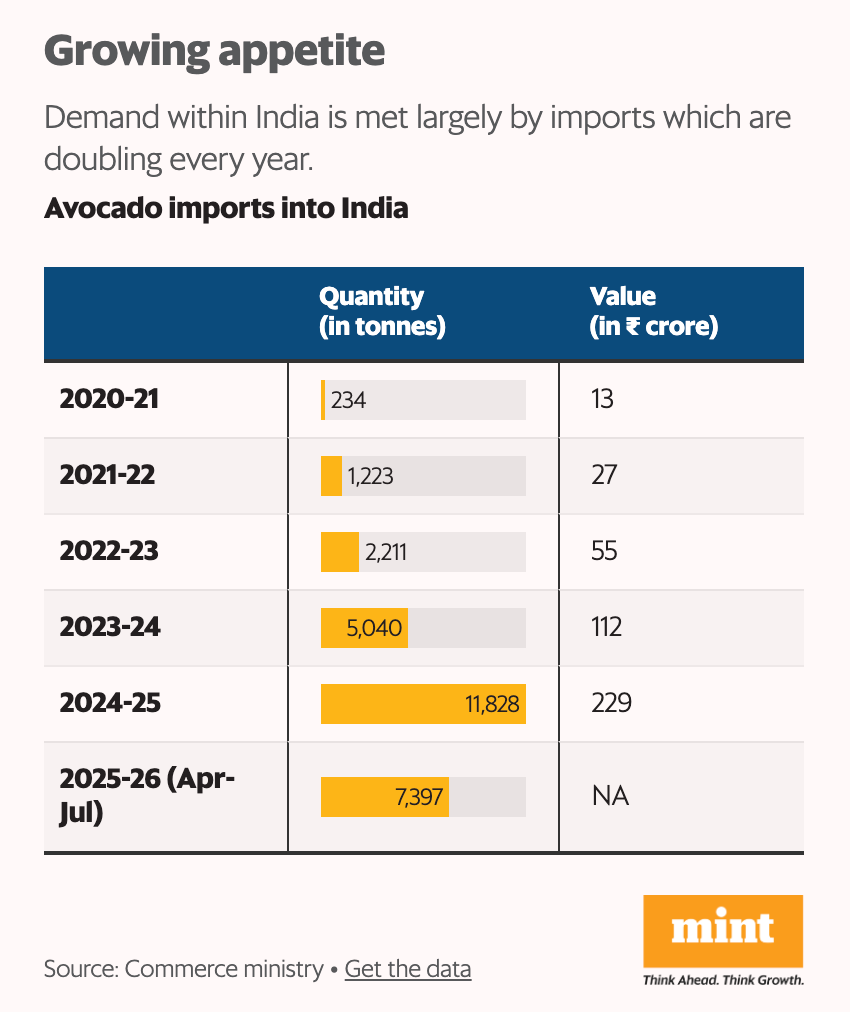
Domestic production, meanwhile, is estimated at roughly 9,000 tonnes in 2026.
That gap has sent farmers looking for saplings.
Everyone wants green gold
Avocado cultivation is spreading across Karnataka, Kerala, Tamil Nadu, Maharashtra and other parts of India. Farmers in Kadappa and Kodaikanal are growing the fruit, while some coffee growers in Chikkamagaluru are planting avocado alongside coffee and pepper.
And farmers have a good reason to be interested. Imported avocados sell for roughly ₹350-500 per kg, while Indian varieties can fetch around ₹150-300 per kg. One Coorg farmer quoted by Mint estimated avocado could eventually generate ₹6-8 lakh in net returns per acre, compared with roughly ₹3.5-4 lakh from coffee.
ICAR-IIHR has also developed varieties such as Arka Supreme and Arka Coorg Ravi for Indian conditions, while private nurseries have started supplying growers across the country.
There’s just one issue: avocado trees are in no hurry.
A commercial orchard can take four to five years to start producing meaningful returns. Setting one up can cost around ₹4-5 lakh per acre, excluding land, while a single sapling can cost anywhere between ₹800 and ₹2,500.
Farmers planting today are therefore making a bet on what avocado demand and prices will look like around 2030.

And Tanzania is already here
Even with more Indian farms entering the business, imported fruit still has a big head start.
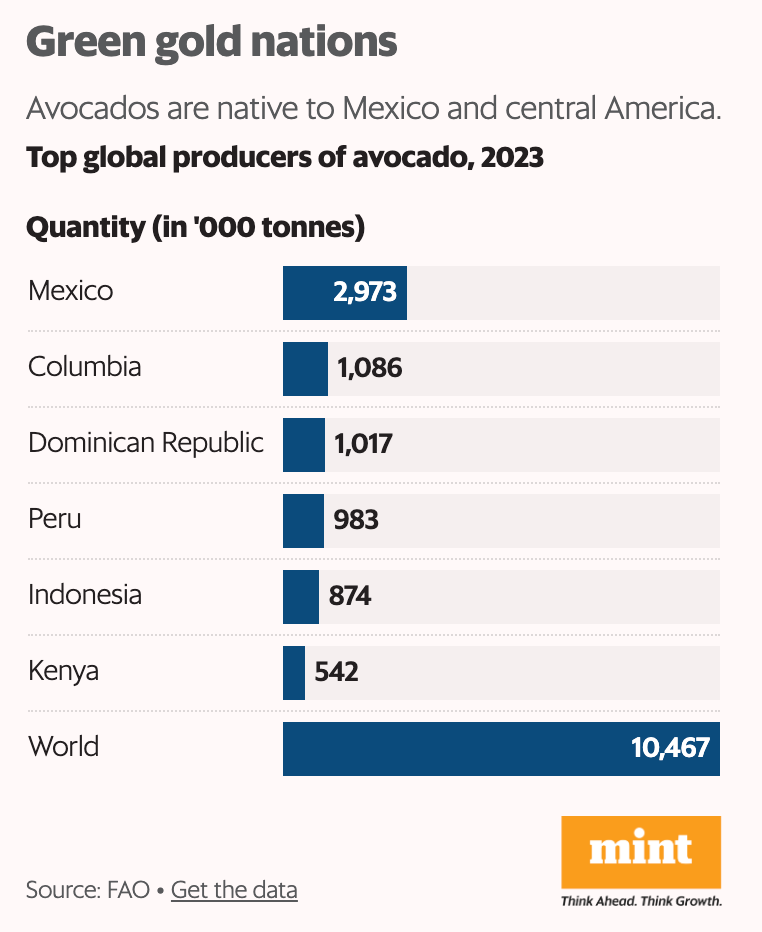
Tanzania supplies most of India’s imported avocados, helped by established plantations and favourable trade economics. India also brings in fruit from countries including Kenya, Australia, New Zealand, South Africa, Mexico and Peru.
And Indian farmers won’t have the market to themselves.
More local avocados should mean cheaper fruit. Great news if you enjoy guacamole without wanting to review your monthly budget first. Less great if you planted an orchard assuming today’s premium prices would stick around.
There’s also the weather to deal with. Hass, the avocado most people recognise from supermarkets, doesn’t do well once temperatures go much above 35°C. That’s a problem in a country where large parts of the map spend months hotter than that.
So farmers can’t just plant whatever avocado variety is popular abroad and hope for the best. They need varieties that actually suit their local climate, and getting that choice wrong can mean waiting years before finding out.

Zoom out: India clearly wants more avocados. Imports went from 234 tonnes to nearly 12,000 tonnes in four years, domestic cultivation is expanding, and farmers are chasing the gap.
The strange bit is that agriculture moves much slower than food trends.
India has an avocado shortage today. The thousands of trees being planted to solve it will only start answering that shortage several years from now. By then, the fruit could be cheaper, imports could be larger and a lot more Indian farmers could be selling the exact same thing.
Green gold, maybe. But with a four-year lock-in period.


Sources
- Business Today: Avocado boom in India: how farmers are turning a premium fruit into a new income source
- Mint: India’s avocado boom fuels import surge as local supply lags
- Mint: India’s avocado awakening: From Aztec roots to Coorg plantations
- ICAR: Landmark avocado varieties and yield information
- ICAR-IIHR: Avocado research, planting material and farmer programmes
- Prime Minister Narendra Modi, YouTube: Video on India’s avocado boom