
 Newsletter
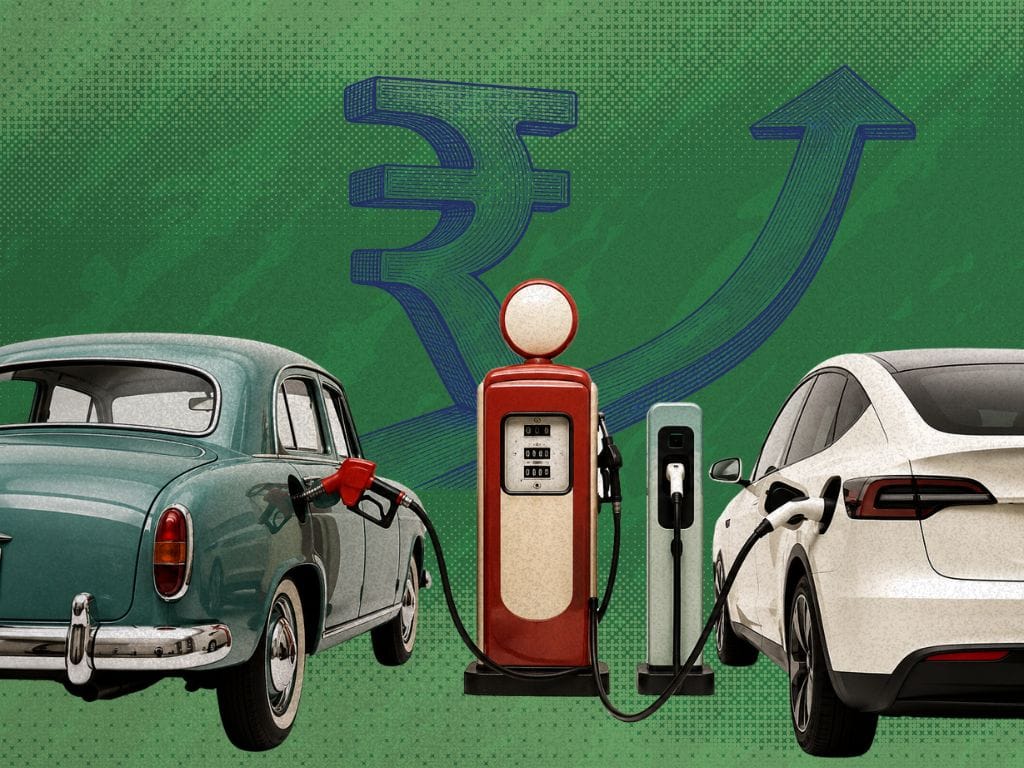
India’s EV story is slowly becoming far more immediate and practical rather than just being about climate goals or futuristic mobility.
It is becoming a story about fuel anxiety.
And that changes everything.
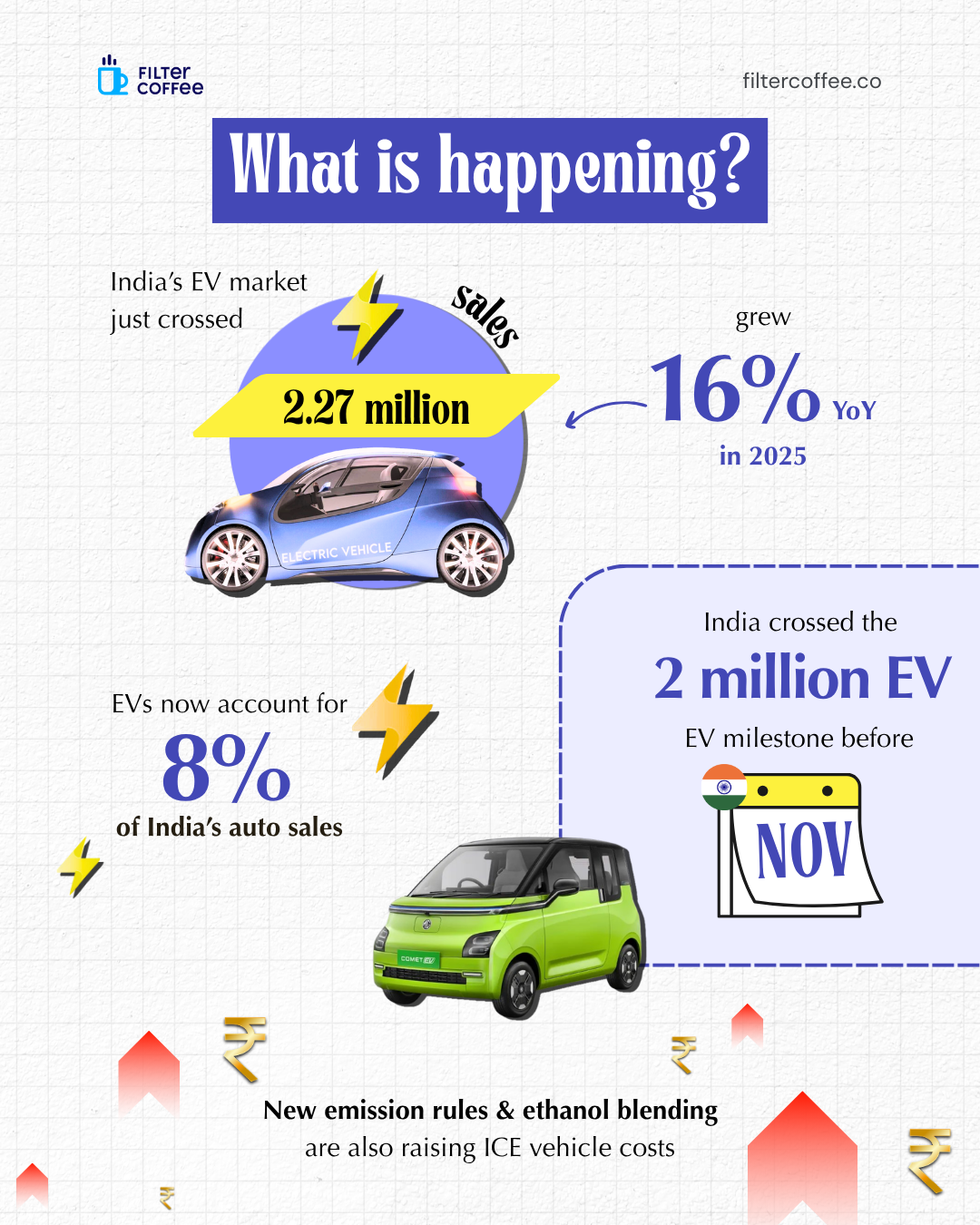
In 2025, India’s EV market crossed 2.27 million vehicle sales, growing more than 16% year-on-year. EVs now account for roughly 8% of India’s total automobile sales, which is a huge jump for a market that was still considered niche just a few years ago. But the interesting part is not the growth itself but why this growth is happening now.
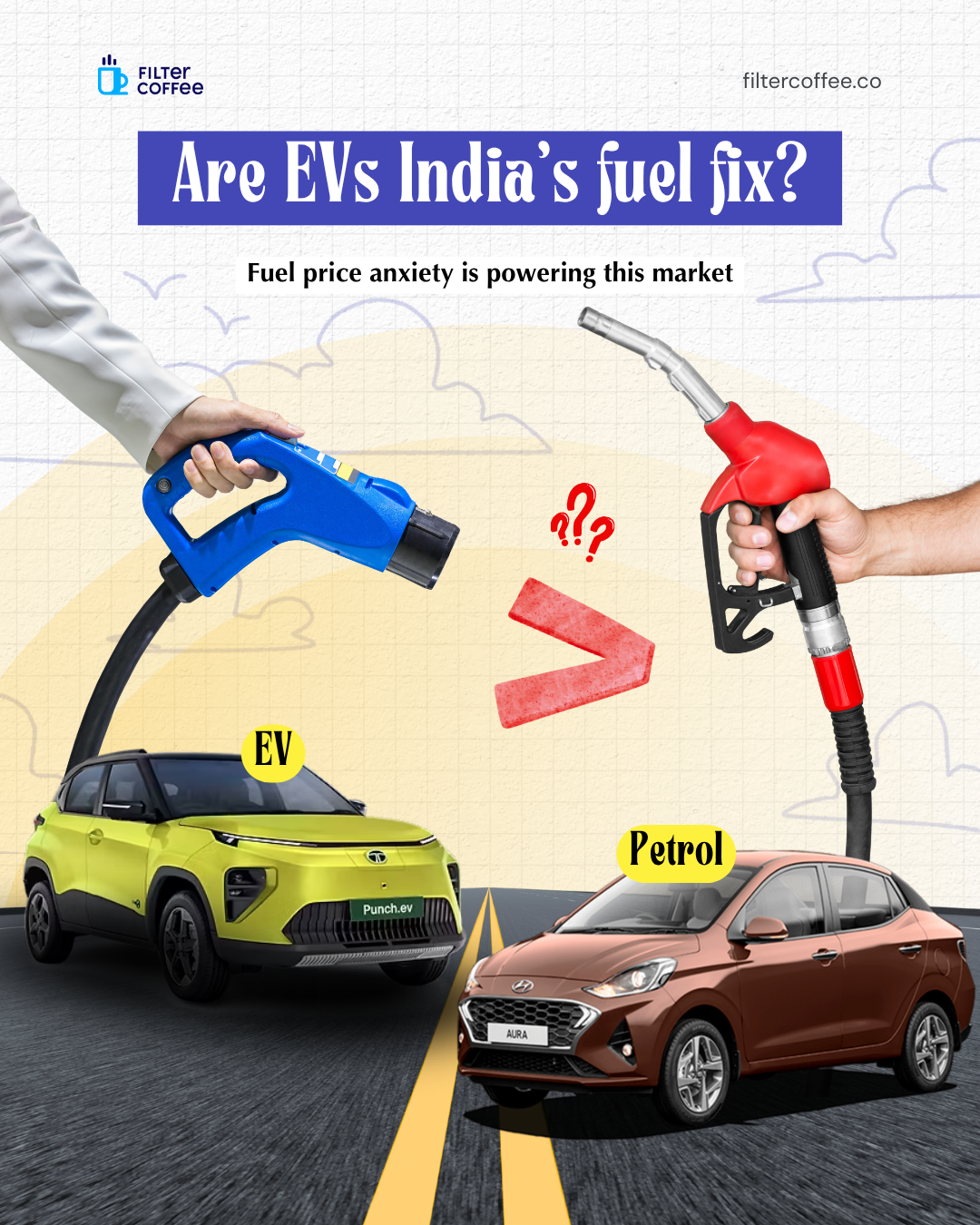
For years, the EV conversation in India revolved around pollution, sustainability and government subsidies. But today, a growing number of buyers are entering the EV market for a much simpler reason. Petrol no longer feels predictable.
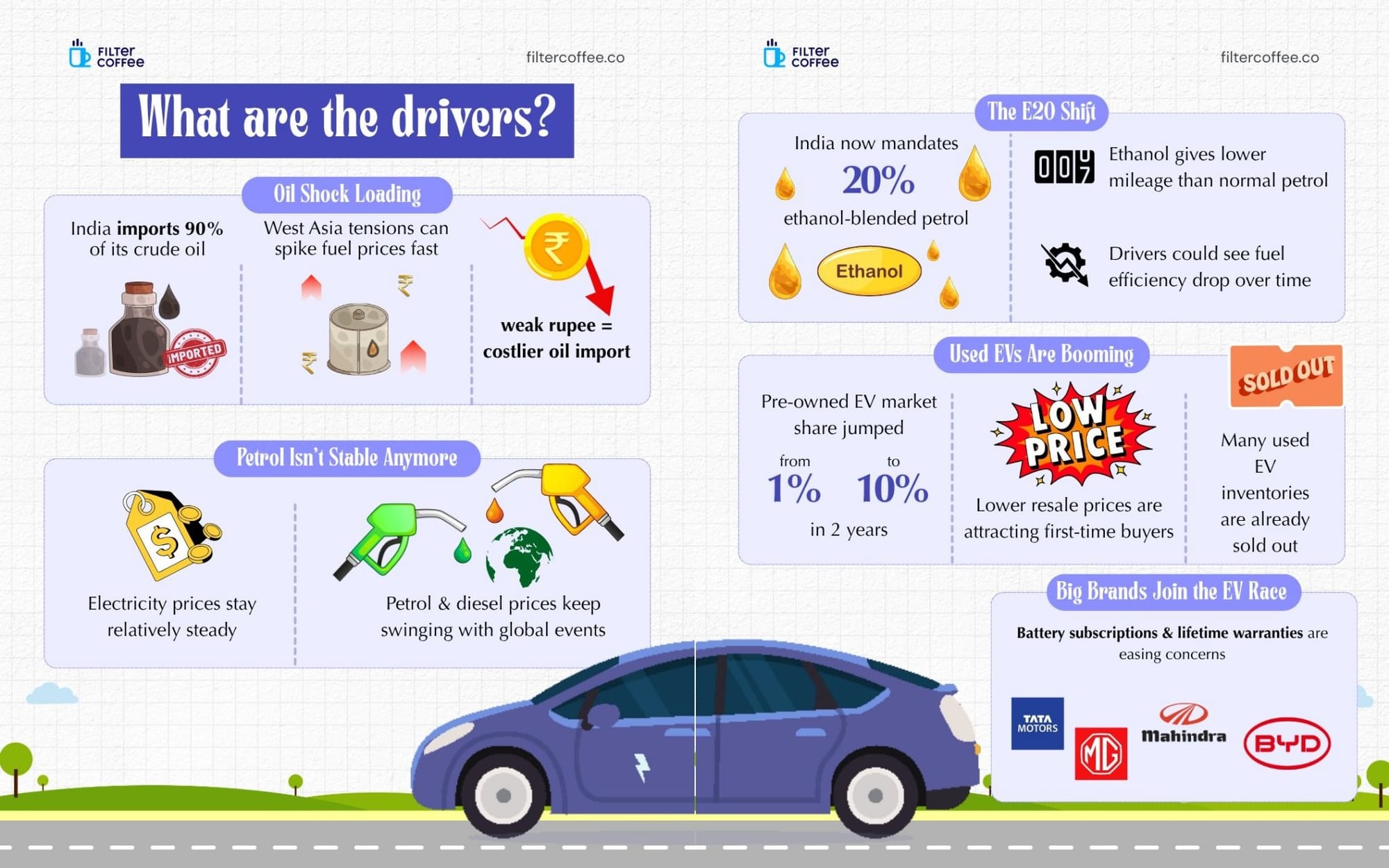
India imports close to 90% of its crude oil requirement. That means every geopolitical tremor in the Middle East, every shipping disruption, every rupee weakness and every crude oil spike eventually reaches Indian consumers standing at fuel stations making them painfully aware of how quickly fuel bills can spiral.
Electricity, on the other hand, feels relatively stable.
That psychological shift matters more than people realize. Consumers are beginning to look at EVs not as premium gadgets but as protection from uncertainty. The average Indian household is extremely sensitive to recurring monthly expenses, and fuel is one of the biggest.
Once buyers start comparing lifetime running costs instead of just showroom prices, EVs suddenly start making sense.
And then came the E20 transition.
India has aggressively pushed ethanol blending to reduce oil imports, and the country now mandates 20% ethanol-blended petrol in many areas. On paper, the move is strategically important because it cuts crude dependence and supports sugarcane farmers.
But for consumers, the conversation quickly shifted to mileage.
Ethanol carries lower energy content than pure petrol, which means vehicles can see lower fuel efficiency over time. The government has repeatedly clarified that newer vehicles are E20 compatible, but mileage anxiety is still a question. And that matters because Indian car buyers obsess over mileage more than almost any market in the world.
So now consumers are facing the harsh reality of petrol being expensive, volatile and increasingly blended with ethanol.
Meanwhile, the EV ecosystem itself is finally becoming more mature.
Charging infrastructure, once considered India’s biggest EV weakness, is expanding rapidly. India now has over 27,000 public EV charging stations, with thousands of fast chargers added in recent years. Government schemes like PM E-DRIVE have allocated thousands of crores specifically for EV infrastructure and incentives. Large automakers are also trying to remove the biggest fear people still have, battery replacement costs.
That is why companies like Tata Motors are now offering lifetime battery warranty programs on several EV models. MG, Mahindra and BYD are also aggressively expanding their electric portfolios with bigger ranges and subscription models that reduce upfront ownership costs.
But perhaps the biggest surprise in India’s EV story is not luxury electric SUVs or expensive technology. It is the used EV market.
Pre-owned EVs are suddenly booming because falling resale prices are making them accessible to first-time buyers. Some industry reports suggest the used EV market share has jumped from nearly 1% to around 10% in just a couple of years. In several cities, affordable used EV inventory gets sold out quickly because buyers see them as a practical urban commuting solution rather than a status symbol.
And interestingly, India’s EV revolution is not even being led by cars.
Electric scooters, bikes and three-wheelers still dominate EV sales volumes. Delivery fleets, ride-sharing operators and small business owners are adopting EVs faster because daily fuel savings directly impact income.
For someone driving 80 to 100 kilometres every day, fuel economics becomes impossible to ignore, which is why India’s EV transition feels different from what happened in many Western markets.
In the West, EVs were often marketed as premium technology products first. In India, they are increasingly becoming financial decisions.
People are not buying EVs because they suddenly stopped caring about petrol. They are buying them because petrol has become impossible to stop thinking about.