
 Newsletter

Indonesia has become the latest country to buy India's BrahMos supersonic cruise missile, marking another milestone in New Delhi's growing ambitions to become a major defence exporter.
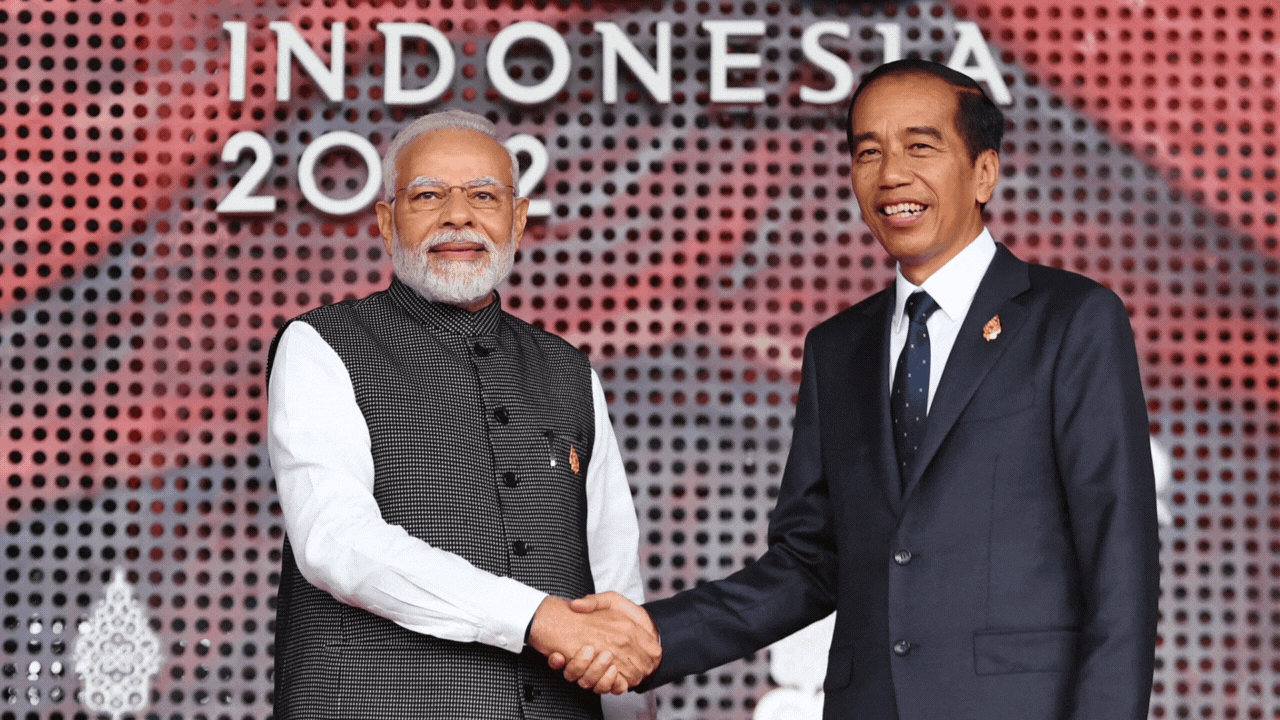
During Prime Minister Modi's visit to Jakarta, India and Indonesia signed a series of strategic agreements covering defence, maritime security and critical minerals.
Among them, the BrahMos missile deal stood out. Reports also indicate that Indonesia will procure India's Astra beyond-visual-range air-to-air missile, potentially making it the first foreign customer for a weapon that has so far only served the Indian Armed Forces.
For decades, India was known as one of the world's largest importers of military equipment. Fighter aircraft came from Russia and France. Air defence systems came from Russia and Israel. Submarines, helicopters and surveillance platforms largely came from foreign suppliers. Today, the countries are beginning to buy Indian weapons instead. That is exactly what the government has been trying to achieve under its push for defence self-reliance and exports.
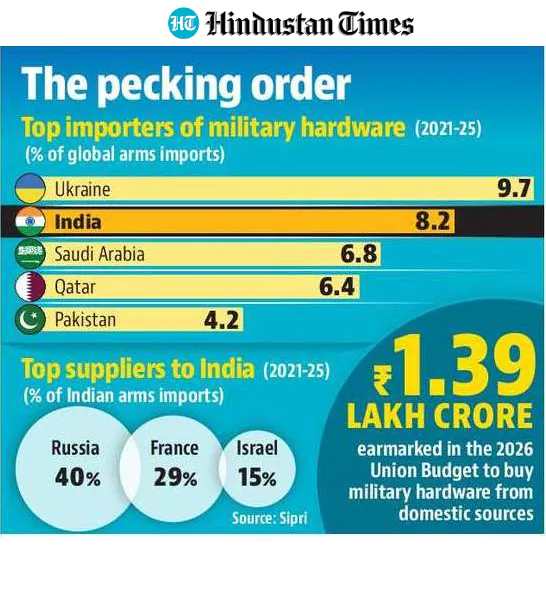
The Indonesia deal is also significant because it follows a clear pattern. The Philippines signed a ₹3,100 crore (about $375 million) deal for BrahMos missiles in 2022. Vietnam has reportedly signed its own agreement worth around ₹5,400 crore (about $629 million). Indonesia now becomes another Southeast Asian nation to join the list. These suggest that India's missile technology is finding acceptance in one of the world's most strategically sensitive regions.
To understand why this matters, it helps to understand what exactly BrahMos is.
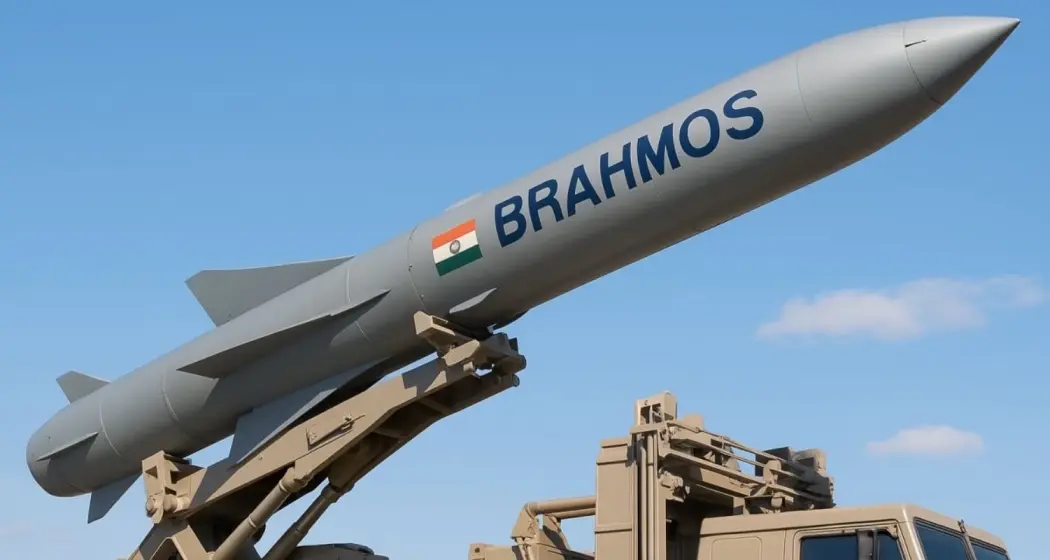
BrahMos is a supersonic cruise missile jointly developed by India's Defence Research and Development Organisation (DRDO) and Russia's NPO Mashinostroyeniya. The name itself combines two rivers: the Brahmaputra in India and the Moskva in Russia. Unlike ballistic missiles, which travel high into the atmosphere before descending onto their target, cruise missiles fly at relatively low altitudes and continuously guide themselves towards the target using onboard navigation systems. That makes them harder to detect and intercept.
What makes BrahMos particularly feared is its speed. It can travel at nearly Mach 3, or roughly three times the speed of sound. Most conventional cruise missiles travel below the speed of sound. BrahMos reaches its target so quickly that an enemy has very little time to detect it, track it and launch an interception. Military planners often describe this as reducing an opponent's reaction window. Simply put, by the time enemy radar identifies the missile, there may only be seconds left to respond.
The missile can strike targets over hundreds of kilometres away with high precision. Different versions can be launched from land, naval ships, submarines and fighter aircraft. It can attack enemy warships at sea or high-value military infrastructure on land. Because it flies at low altitude for much of its journey, it also becomes more difficult for radar systems to track compared to missiles following predictable high-altitude trajectories.
This is exactly why countries facing maritime tensions are interested in it.
Indonesia sits at the centre of some of the world's busiest shipping routes. The Malacca Strait, Sunda Strait and Lombok Strait together carry a significant share of global trade and energy shipments. Protecting these sea lanes has become increasingly important as strategic competition between China, the United States and regional powers intensifies across the Indo-Pacific. Indonesia has also witnessed repeated tensions around the North Natuna Sea, where China's expansive maritime claims overlap with Indonesia's Exclusive Economic Zone.
For Indonesia, buying BrahMos is therefore less about preparing for war and more about deterrence. In defence strategy, deterrence simply means convincing a potential adversary that attacking would become too costly. A missile that can rapidly destroy enemy warships before they approach the coastline makes that calculation much more difficult for any opponent. Sometimes, simply possessing such a capability can discourage conflict from happening in the first place.
The reported deal with Indonesia includes two batteries of the BrahMos missile system, along with launchers, radars and associated equipment. Reports value the BrahMos portion at around $200 million, while some estimates suggest the broader package, including Astra missiles and related systems, could exceed $600 million. The exact commercial details have not yet been officially disclosed.
The Astra missile is another important part of the story. Unlike BrahMos, which targets ships and ground assets, Astra is designed for aerial combat. It is an indigenous beyond-visual-range air-to-air missile developed by DRDO and integrated on fighter aircraft such as the Sukhoi Su-30MKI.
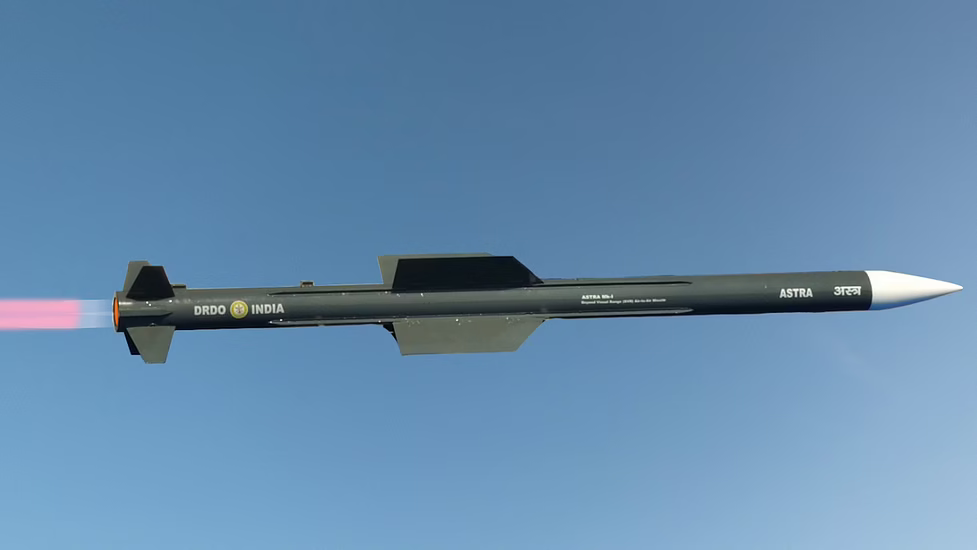
Beyond-visual-range simply means the missile can engage enemy aircraft long before pilots can physically see each other. Modern air combat rarely happens through close-range dogfights anymore. Instead, aircraft attempt to detect, track and destroy each other from tens of kilometres away using radar-guided missiles. If Indonesia becomes Astra's first export customer, it would mark another milestone for India's domestic missile programme.
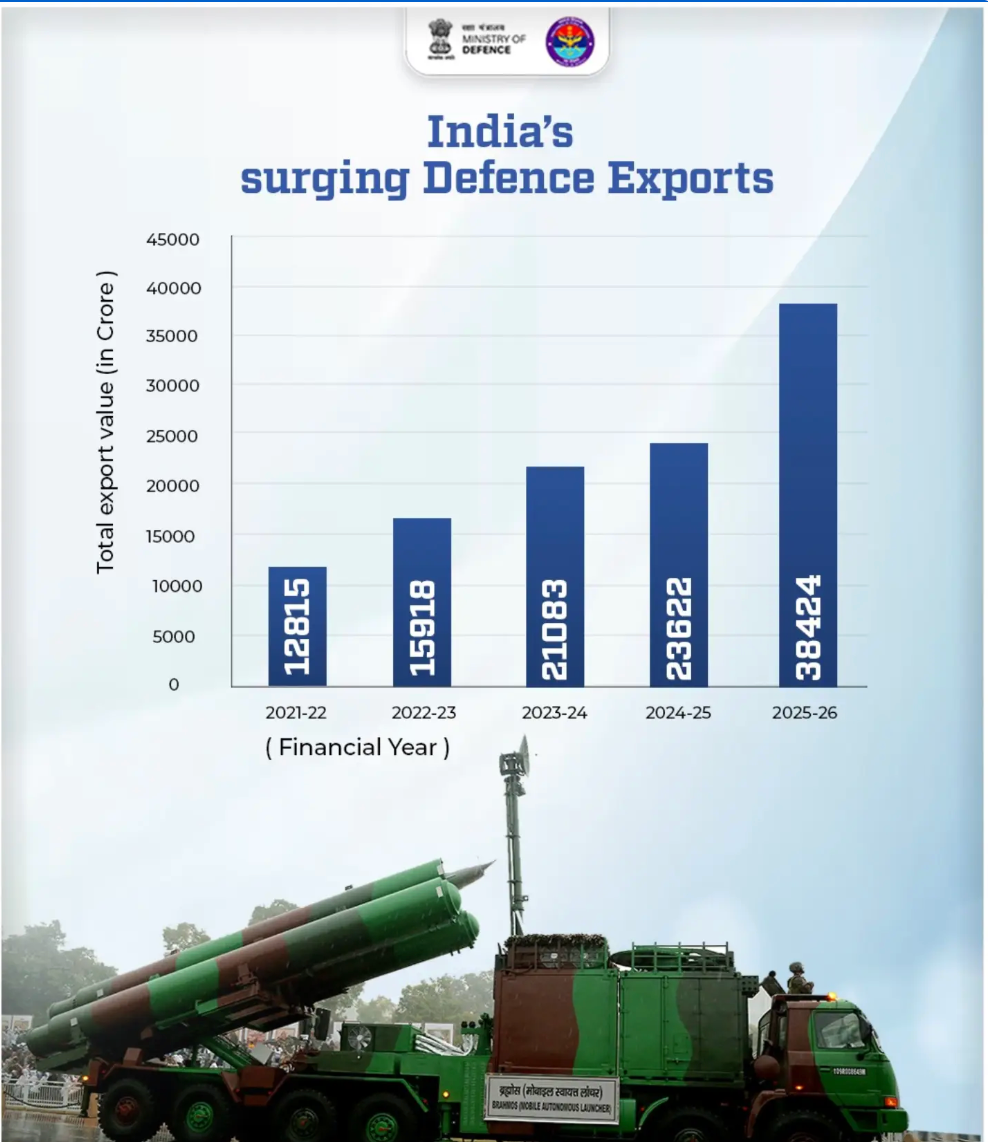
These exports are becoming increasingly important because India's defence industry is expanding rapidly. According to government data, India's defence exports reached a record ₹38,424 crore in FY26, up nearly 63% from ₹23,622 crore in FY25. Defence equipment made in India is now being exported to more than 80 countries. A decade ago, these numbers were a fraction of today's levels. The government has repeatedly set ambitious export targets because every overseas order strengthens domestic manufacturing, creates high-skilled jobs and reduces dependence on imports.
The economic impact goes well beyond one company. BrahMos Aerospace leads the programme, but manufacturing involves hundreds of suppliers spread across India's defence industrial ecosystem.
Companies such as Bharat Dynamics manufacture missile systems, while Bharat Electronics supplies radar and electronic systems. Larsen & Toubro, Tata Advanced Systems and several MSMEs produce components ranging from launch canisters to precision engineering parts.
Every export order keeps this network running for years because missile sales are typically followed by maintenance contracts, training programmes, spare parts and future upgrades.
There is another reason these deals matter. Global defence markets have traditionally been dominated by the United States, Russia, France, China and a handful of European manufacturers.
Breaking into this club is extremely difficult because countries usually buy military equipment only after years of testing its reliability, political stability and long-term support. Once multiple countries successfully deploy the same system, future buyers become more comfortable placing orders because the product already has an operational track record.
The geopolitical timing also works in India's favour. Many Southeast Asian countries are trying to modernise their armed forces without becoming overly dependent on any single supplier. Some have concerns about buying Chinese weapons because of regional disputes.
Others want to reduce dependence on Russian systems following supply disruptions after the Ukraine war. Western equipment is often highly capable but can be significantly more expensive and sometimes comes with political conditions. India positions itself somewhere in the middle by offering proven military systems at competitive prices while maintaining strategic relationships with countries across different geopolitical blocs.
The Indonesia deal ultimately reflects how India's role in global defence is changing. The country is still a major importer of sophisticated military platforms, but it is no longer only buying weapons from the world. It is beginning to sell advanced missile systems that other nations are willing to trust with their own security.
That transformation has taken decades of investment in research, manufacturing and testing. If more countries follow the Philippines, Vietnam and Indonesia, BrahMos may become far more than India's most successful missile. It could become the product that firmly establishes India as a credible exporter in one of the world's most competitive industries.