
 Newsletter

Nineteen years ago, Apple launched the first iPhone. At the time, it was simply another product in Apple's lineup. Today, it has become the foundation of one of the world's most valuable companies.
In its first full year, the iPhone generated $1.8 billion in revenue and sold 11.6 million units.
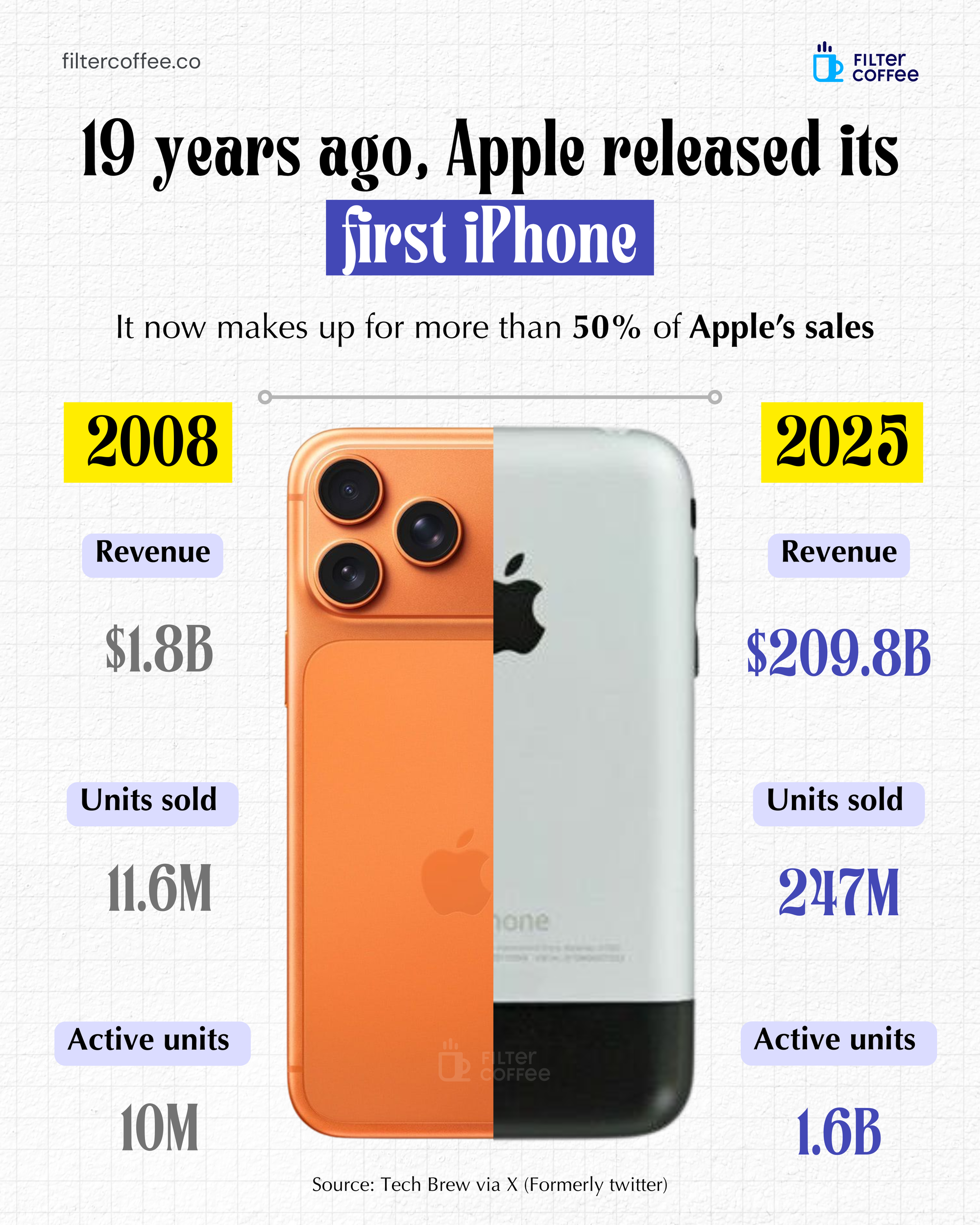
Fast forward to 2025, and annual iPhone revenue has grown to nearly $210 billion, with Apple selling around 247 million iPhones every year. More than 1.6 billion iPhones are now actively used worldwide.
Most remarkably, a product introduced nearly two decades ago still contributes over half of Apple's total revenue.
That isn't something you see often in business.
Most companies gradually reduce their dependence on a single product as they grow, expanding into new categories to diversify revenue. Apple certainly expanded. It launched the Apple Watch, AirPods, iPads, Macs, Apple TV, Vision Pro and built a fast-growing services business that includes Apple Music, iCloud, Apple Pay and the App Store.
Yet despite all those businesses, the iPhone remains Apple's biggest revenue engine. The reason is simple.
Apple never just sold a smartphone. It built an ecosystem.
Buying an iPhone often leads to buying AirPods, subscribing to iCloud, using Apple Pay, purchasing apps, or eventually upgrading to another iPhone. Every new customer becomes part of an ecosystem that continues generating revenue long after the original device is sold. The iPhone isn't just Apple's bestselling product, it's the entry point to almost everything else the company offers.
The iPhone has also achieved something very few consumer electronics products ever do, it has stayed relevant for nearly two decades.
Most gadgets enjoy a few years of success before demand slows or competitors catch up. The iPhone has continuously reinvented itself through better cameras, faster chips, improved battery life and new software features, giving existing users a reason to upgrade while attracting new customers into Apple's ecosystem.
What's remarkable isn't that the iPhone became a blockbuster. It's that, nearly two decades later, it still sits at the centre of Apple's business.