
 Newsletter

PVR INOX wants to bring multiplexes to smaller Indian towns, with tickets priced around ₹150–175. And it plans to do so without spending as much money building them.
In August 2026, the cinema chain announced a new format called SMART Cinemas, aimed at roughly 300 smaller cities. Its first property opened in Muzaffarpur, Bihar, in September. By October, the company said the pilot was performing better than expected, with an average ticket price of around ₹190, compared with ₹298 across its network.
The company now wants to expand this format into more towns, with properties in Rampur and Bharatpur already under development.
But there's an interesting contradiction behind this expansion. India desperately needs more cinema screens, yet existing theatres are struggling to survive.
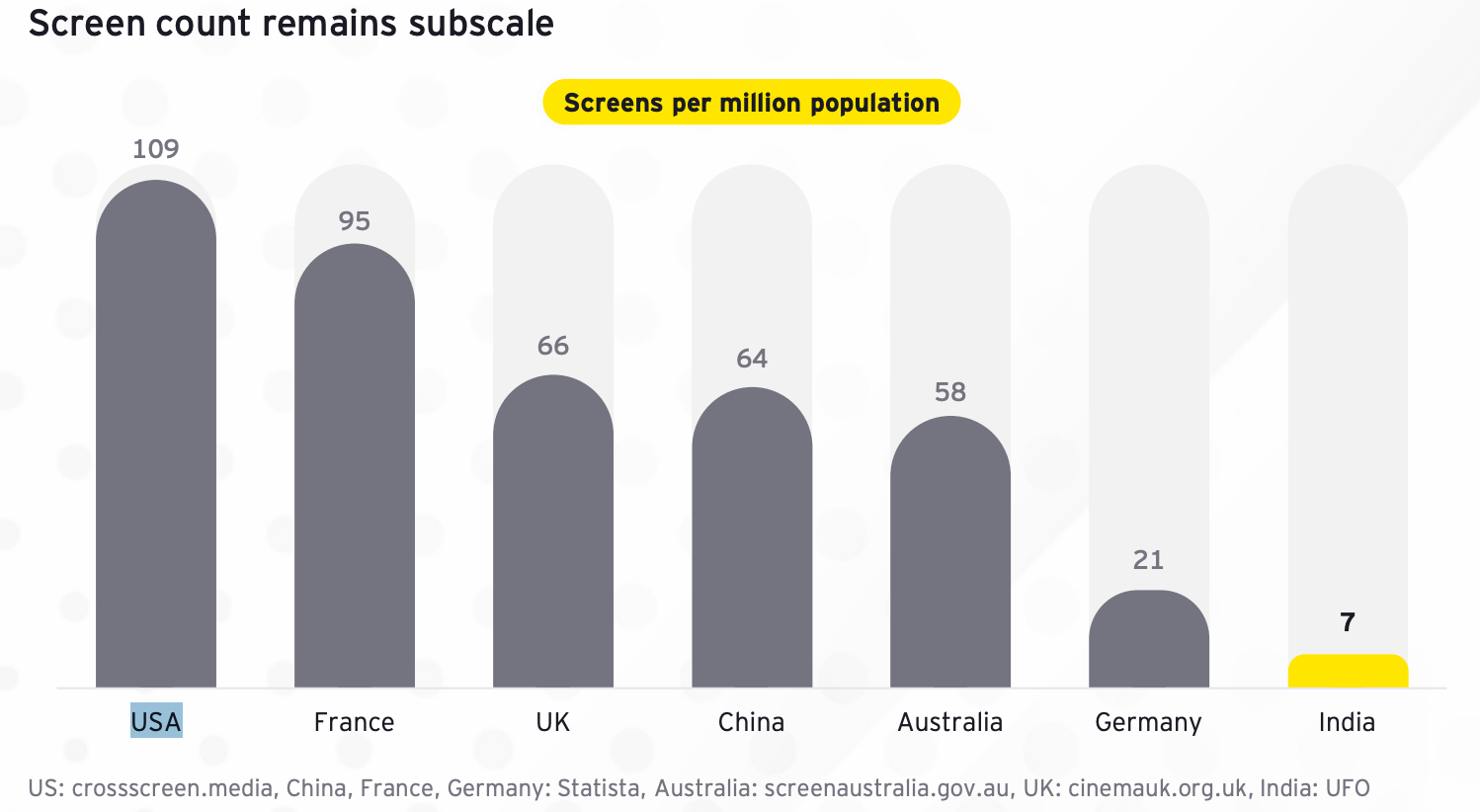
India released 1,972 films, including dubbed releases, in theatres in 2025. Despite that, the country had just 10,033 cinema screens, or roughly 6.8 screens per million people. Compare that with 64 in China and 109 in the US.
And the shortage goes much deeper. According to the FICCI-EY media and entertainment report, only about 3,150 of India's 19,500 PIN codes have cinema halls.
You would think this leaves plenty of room for multiplex operators to expand. But opening cinemas hasn't always been a profitable business.
In 2025, India added 240 cinema screens while 124 shut down, many of them single-screen theatres. Some theatres in Hindi-speaking markets reportedly operate only on selected days or when a major film releases.
PVR itself opened 24 screens during the first half of FY27 while closing 25, mostly at loss-making properties.
So why build more?
The difficulty lies in how cinemas make money.
A traditional multiplex requires considerable upfront investment. There are projection systems, seating, interiors, air conditioning and other equipment. Once operational, the cinema must keep paying for electricity, maintenance, employees and property costs, even when auditoriums are half-empty.
And unlike restaurants or retail stores, cinemas cannot simply manufacture more demand. Their business depends heavily on the films being released. A blockbuster can fill seats for weeks, while a disappointing release can leave an expensive auditorium nearly empty.
This is particularly difficult for single-screen theatres, which can show only one film at a time. A three or four-screen multiplex can offer several movies and showtimes, spreading demand across different audiences.
PVR believes it can make this model work in smaller towns by reducing costs considerably.
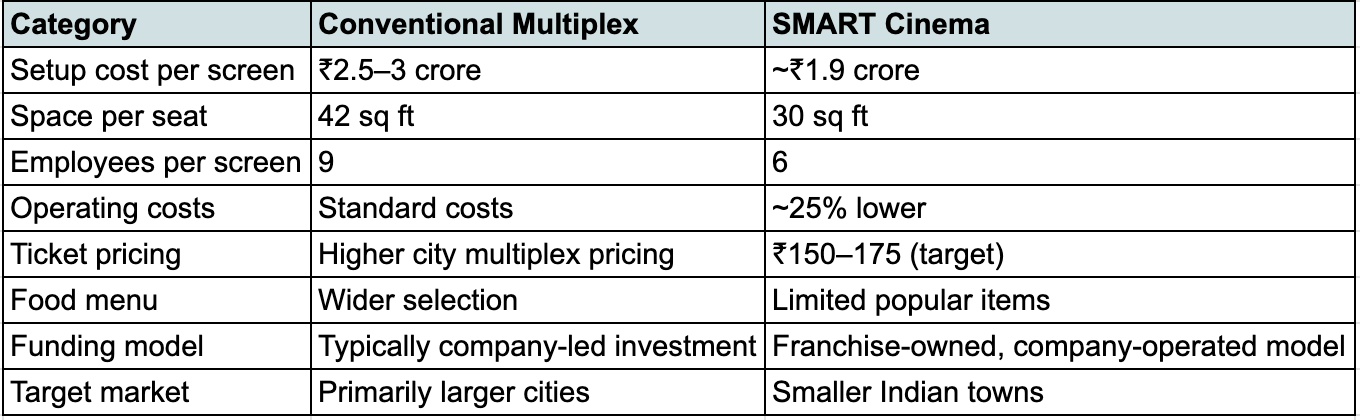
A conventional multiplex screen costs around ₹2.5–3 crore to build. Under the SMART Cinema model, that falls to approximately ₹1.9 crore.
The company is reducing floor space per seat from 42 square feet to 30, cutting staffing requirements and offering a smaller food menu. Management expects operating expenses to be roughly 25% lower than at conventional properties in bigger cities.
There is also a change in who funds these cinemas.
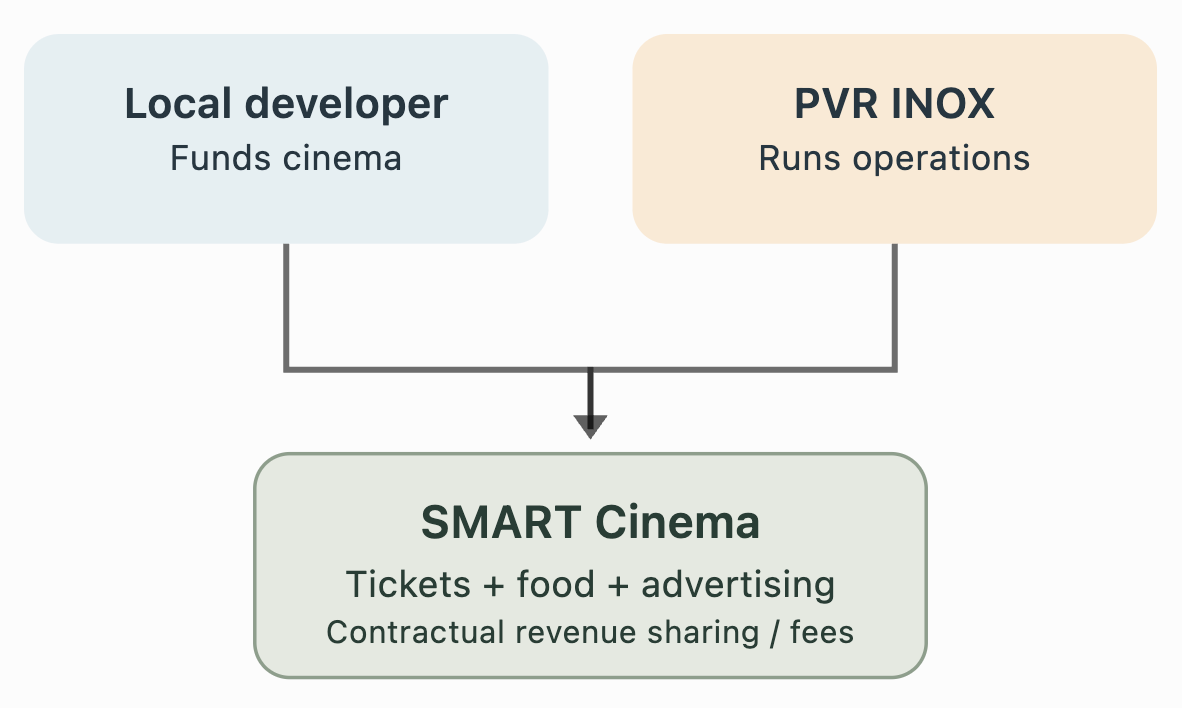
Under its franchise-owned, company-operated model, local developers and entrepreneurs can invest in the property while PVR manages operations. Depending on the arrangement, PVR earns management fees rather than directly funding and operating every aspect of the business itself.
This allows the company to expand its network while limiting its own capital requirements. But developers still need sufficient returns on their investment. And cheaper tickets make those returns more challenging.
Consider an illustrative 200-seat screen running four shows daily. At 25% occupancy and a ₹190 average ticket price, it would generate around ₹1.39 crore in annual gross ticket sales.
That is before taxes, distributors' shares and operating expenses. Food, beverages and advertising provide additional income, but the cinema still needs consistent attendance to remain viable.
PVR's early Muzaffarpur results are encouraging. However, the company hasn't disclosed the property's profitability or occupancy figures, making it difficult to judge whether the model will work across hundreds of towns.
Management is targeting a payback period of three to four years for new cinema investments. It has also identified around 300 potential cities and is targeting roughly 500 new screens across formats over the next three years.
India's cinema shortage presents an opportunity, but access alone cannot guarantee audiences. Ticket affordability, good films and repeat visits will determine whether these smaller multiplexes can sustain themselves.
PVR has found ways to reduce the cost of building cinemas. It still has to prove that enough people will keep buying tickets once the excitement of a new multiplex wears off.