
 Newsletter

Every month, Ipsos asks people across the world a simple question: What worries you the most right now? The latest edition, based on responses from 22,032 adults across 30 countries collected between 22 May and 5 June 2026, has thrown up an interesting contradiction.
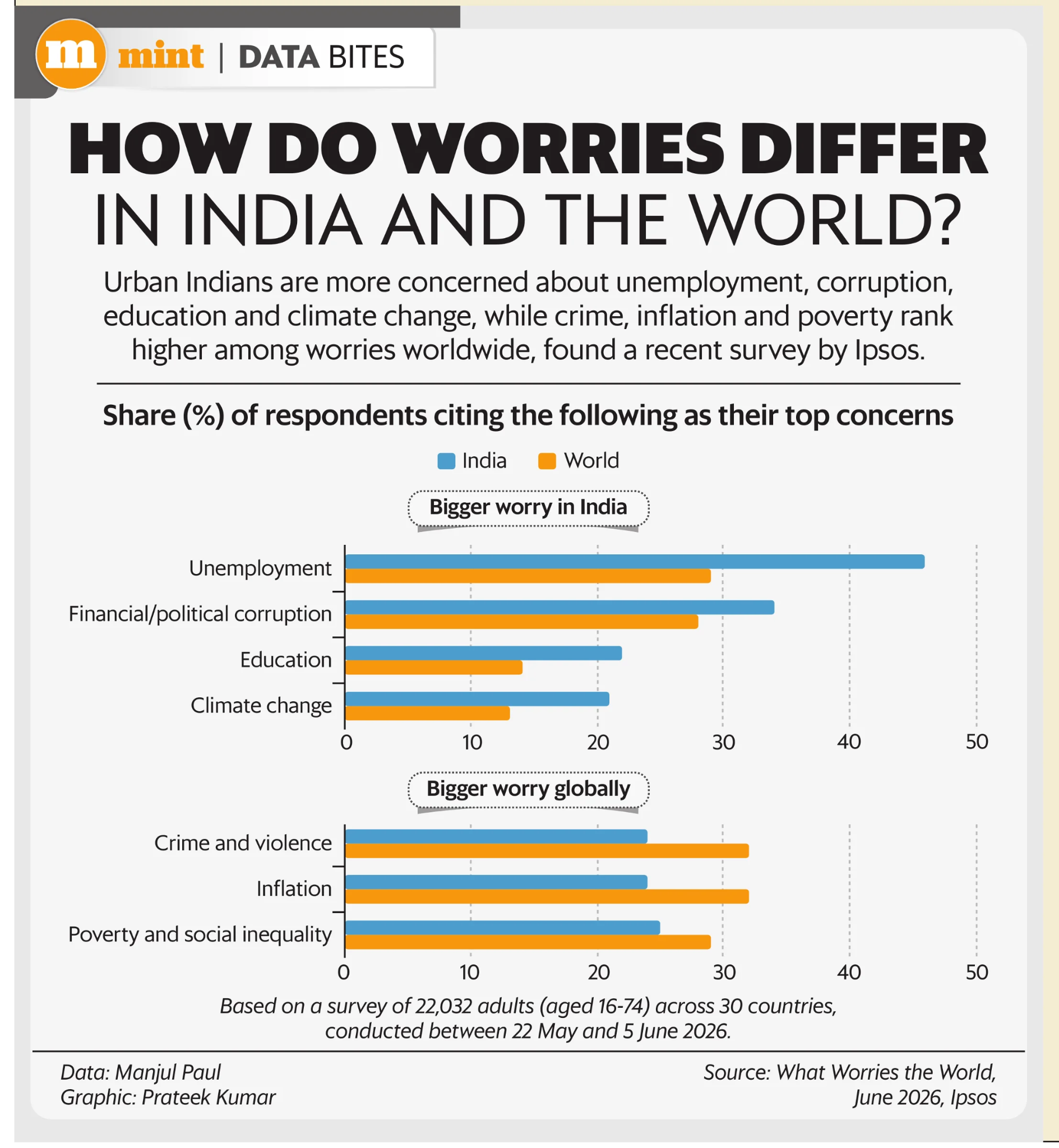
Indians are worrying about very different things than the rest of the world. While people globally are losing sleep over inflation, crime and poverty, urban Indians are far more concerned about unemployment, corruption, education and climate change.
Around 75% of urban Indians believe the country is moving in the right direction, making India one of the world's most optimistic countries. The global average is just 36%. In other words, Indians are overwhelmingly positive about the country's future, yet they remain deeply anxious about the problems they face in their own lives. That isn't a contradiction. It is what happens when expectations rise faster than reality.
Nothing captures this better than unemployment. Nearly 43% of Indian respondents said unemployment is among their biggest concerns, compared to roughly 28% globally, making it by far India's biggest worry. Interestingly, this isn't because India's official unemployment rate has suddenly shot up.
According to the latest Periodic Labour Force Survey (PLFS), the unemployment rate stood at 5.5% in June 2026, largely unchanged from previous months.
So why is unemployment still dominating public opinion?
The answer is that people are no longer thinking only about whether they have a job. They are thinking about whether that job pays enough, whether it is secure, whether it matches their qualifications and whether opportunities will still exist five years from now.
Every year, millions of young Indians enter the workforce after spending years preparing for competitive exams or earning college degrees. Many eventually find themselves underemployed, working in jobs that neither match their education nor offer long-term growth. Add growing conversations around AI replacing white-collar work, and it becomes easier to understand why job anxiety remains so high even when unemployment numbers appear stable.
The second biggest concern is financial and political corruption, with about 34% of Indians citing it as a major worry, compared to around 28% globally. This is notable because India has spent the past decade digitising everything from payments and taxes to welfare transfers and public services.
Digital systems have undoubtedly reduced many forms of everyday corruption, yet the survey suggests people continue to distinguish between small transactional corruption and larger questions around governance, public accountability and misuse of power. The concern has evolved rather than disappeared.
Education also stands out.
Around 22% of Indians identified education as a top concern, compared to only about 14% globally. In many developed economies, education rarely features among the biggest national worries. India is different because education is closely tied to economic mobility.
Families invest significant portions of their savings into schools, coaching institutes and higher education with the expectation that it will lead to stable careers. When exam paper leaks, skill gaps, employability concerns or intense competition dominate the headlines, education stops being just a social issue and becomes an economic one.
Climate change appearing high on India's list is another sign of changing public priorities. Roughly 21% of Indians now consider it one of their biggest worries, well above the global average. That shift reflects lived experience more than environmental awareness campaigns.
Over the past few years, India has witnessed prolonged heatwaves, severe flooding, water shortages and worsening air pollution across several cities. Climate change is no longer seen as a distant environmental challenge. It has become something that affects electricity bills, crop yields, health and daily life.
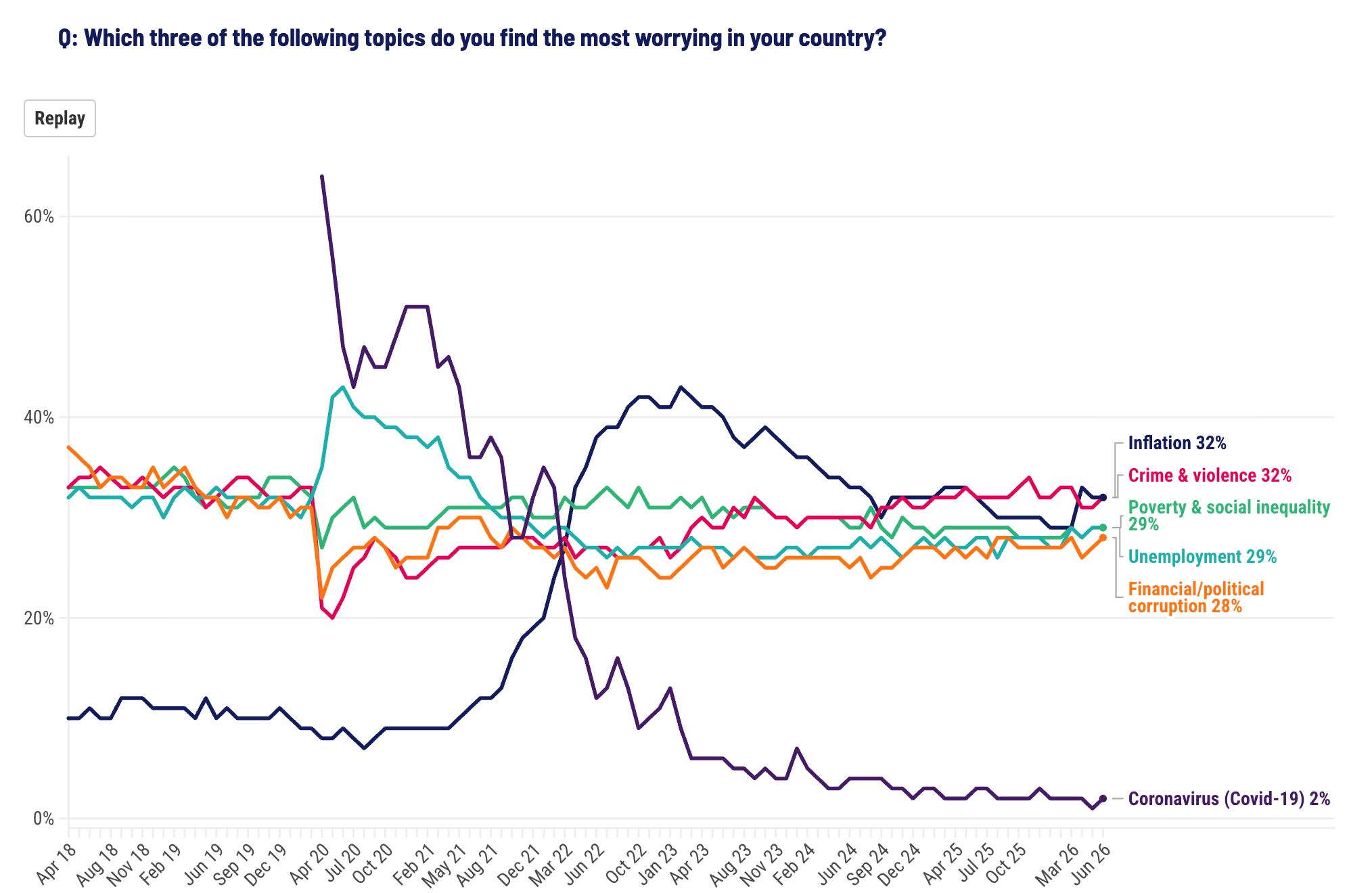
The global picture, however, looks very different. Crime and violence, inflation, and poverty and social inequality rank higher worldwide than they do in India. Inflation, in particular, continues to dominate concerns across many countries, with roughly one in three respondents globally naming it as a major issue.
India was in a similar position just a few years ago when food and fuel prices surged after the pandemic. But as inflation gradually moderated and economic growth remained relatively strong, public attention shifted toward structural concerns that cannot be solved with lower prices alone.
That may be the most important takeaway from this survey. The worries of a country often reflect its stage of development. Countries struggling with high inflation naturally focus on the rising cost of living. Countries facing economic stagnation worry about basic affordability.
India's concerns increasingly revolve around creating enough quality jobs, improving education, strengthening institutions and preparing for long-term challenges like climate change. These are problems that emerge when people begin looking beyond immediate survival and start thinking about future opportunities.
In many ways, the Ipsos findings capture a country in transition. India remains one of the world's fastest-growing major economies, optimism is exceptionally high and confidence in the country's direction remains strong.
But people also recognise that sustaining that progress will require more than GDP growth. It will require better jobs, stronger institutions, an education system that prepares students for tomorrow's economy and policies that make growth more inclusive. That is why India's list of worries looks so different from the world's. It is less about where the country is today and more about where people hope it can go next.