
 Newsletter
India’s rush for instant delivery is breaking warehouses. Robots are stepping in to hold the system together.
Hi folks,
Most of us experience modern commerce through a screen. A tap, a swipe, a tracking link, and a parcel that shows up before we’ve even forgotten we ordered it. What we rarely see is the system straining behind that convenience, the warehouses, the machines, and the people trying to keep up with impossible expectations.
That’s why The Filter Coffee team went on-ground, looking for answers to a simple question: how is India even pulling this off?
That search led us to a company working deep inside the logistics stack, solving problems that don’t show up on your app screen but decide whether deliveries arrive on time or spiral into chaos.
We sat down with Pramod Ghadge, Co-founder and CEO of Unbox Robotics, to talk about warehouse pressure, automation, and why the future of Indian commerce depends on rethinking how parcels move.
Full story here 👇
TLDR:
- India’s push for instant delivery is breaking traditional warehouses, with rising volumes, shrinking timelines, labour churn, space constraints, and accuracy pressures all hitting at once.
- Sorting has become the biggest bottleneck in modern logistics, and fixing movement inside warehouses unlocks speed, accuracy, and scale without expanding physical space.
- Unbox Robotics rebuilt warehouse sorting from the ground up using vertical, modular, robot-led systems that handle thousands of parcels per hour in far less space.
- As e-commerce, quick commerce, and D2C brands scale, warehouse automation in India is shifting from a cost saver to a survival tool, deciding who wins and who falls behind.
The Bite:
Pune fools you at first. You land here expecting forts, student crowds, the usual misal pav debates, and that familiar Maratha pride stitched into every street name. And all of that is true. But stay a little longer and the city slowly shows you its real engine.
Warehouses tucked behind tech parks. Machine shops inside old industrial lanes. Trucks entering gates that don’t even have signboards. Pune is a builder’s city. It always has been. That’s why people call it the Detroit of the East without blinking.
This whole ecosystem didn’t appear overnight, it grew with a lathe shop here, a tooling unit there. By the time EVs, precision engineering and AI arrived, Pune wasn’t surprised. It simply absorbed them like it had been preparing all along.
If Mumbai is the country’s financial brain, Pune is the muscle quietly lifting the heavier stuff.
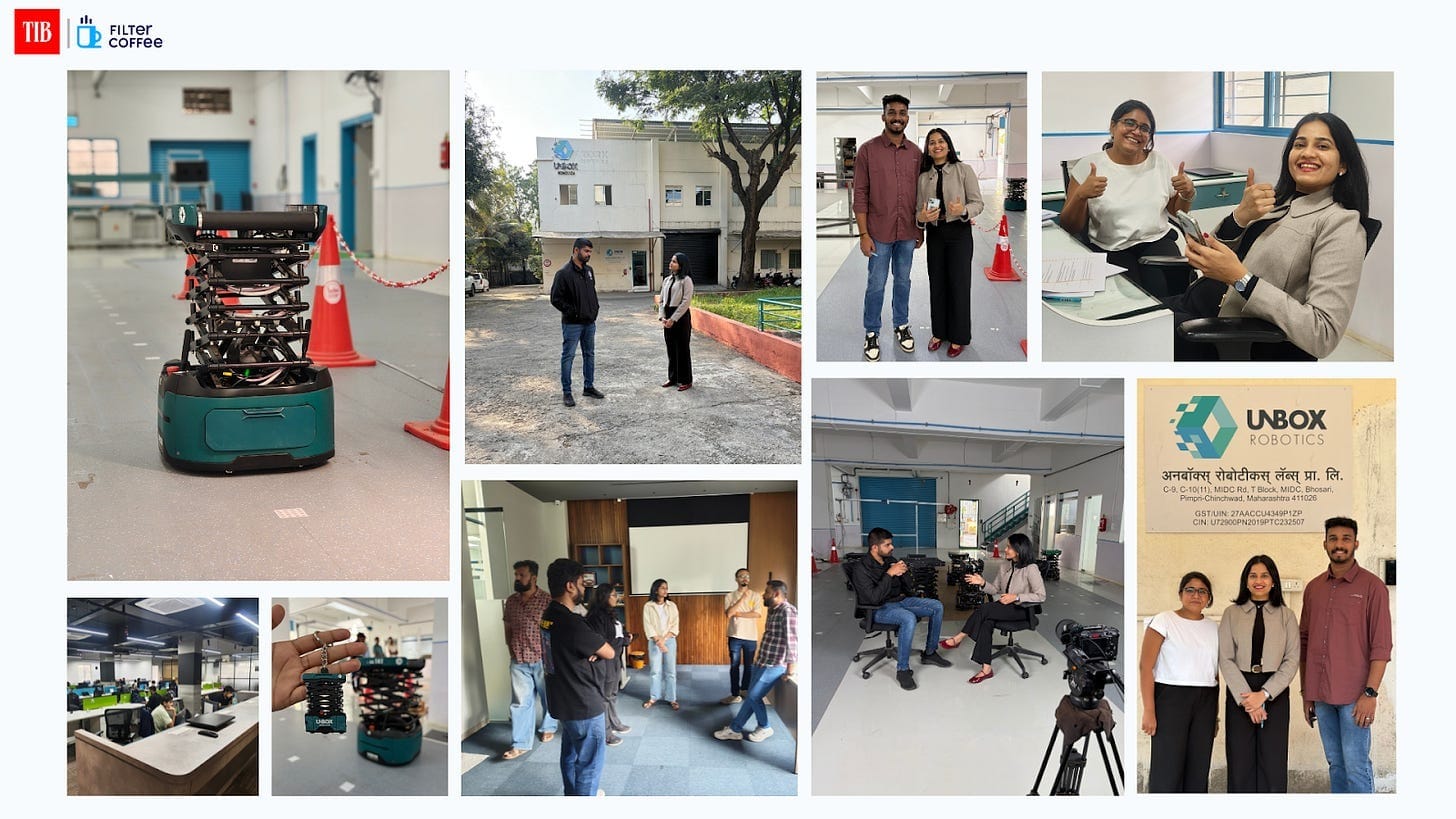
And last week, the Filter Coffee team walked into one of these places. Set in the middle of Bhosari’s industrial maze, the building looked like any other. But inside, something far more interesting is happening.
This is where we met Unbox Robotics. A team of engineers, product folks, and robotics nerds building the kind of tech that fixes problems most people don’t even realise exist.

Because while the rest of India keeps ordering ten minute groceries, flash sale gadgets, clothes, accessories, and same day deliveries like it’s nothing, warehouses across the country are cracking under that pressure.
You don’t need to visit a warehouse to imagine the chaos. Just think of a peak hour traffic jam, but indoors. Parcels stacked in every corner. Workers zigzagging between racks like they’re dodging obstacles. Stickers peeling off, scanners beeping non-stop, batches going missing, someone yelling because a lane has jammed again. A hundred things happening at once, and no one is really in control.
It’s fast on your screen. It’s a storm behind the scenes.
Warehouses weren’t built for this. People weren’t meant to sprint for eight hours. Conveyor belts weren’t designed to handle this kind of volume. And every company knows it.
This is the crack in the system. This is the pain no one sees. And this is exactly where our Pune visit gets interesting.
The real pain point no one sees
Warehouses in India right now are dealing with four massive headaches.
First, volumes. Every year, more households are ordering everything online. Clothes, groceries, gadgets… whatever exists ends up in those familiar brown bags. And inside warehouses, the workload just keeps climbing. In the first half of 2025 alone, India’s warehouse leasing jumped 42%, touching 32.1 million sq ft. E-commerce players went even harder, grabbing 61% more space and now accounting for about 10% of all warehousing activity.
Basically, the volume graph is going straight up like it’s trying to impress someone.
But the number of people working inside these warehouses? Not growing at the same speed. In fact, finding reliable labour has become its own full-time pain. Engagement levels in warehouses crashed to 19% this year. Attrition moved from 2–3% to 5–7%. And nearly 69% of all hires are temporary workers. That tells you everything.
People join, survive one or two months of back-breaking manual work, and bounce. Younger workers aren’t interested, wages haven’t kept up, and dependency on migrant labour means the system feels shaky even on days when everything goes right.
Second, speed. Customers today are not waiting around. Same-day delivery is basically the default now, growing at nearly 20% a year. In metros, people have already graduated to expecting their parcels in a few hours. More than half of online retailers now offer same-day delivery because it boosts conversions by up to 30% and cuts cart drops. And to keep this whole beast running, warehouses are expected to work nonstop, 24x7, without a single dip in pace.
Third, space. Warehouse real estate is expensive, especially in big cities. You can’t keep adding racks or workers every time demand spikes. India’s total warehouse stock crossed 500 million sq ft by mid-2025, but vacancy has fallen to 12.1% in the first half of the year.
Meaning the moment new space appears, it gets occupied instantly.
Building new facilities isn’t casual either. A standard warehouse costs ₹1,200–₹1,800 per sq ft, and cold storage goes up to ₹2,500–₹3,500 per sq ft. Operators are stuck doing more with the same footprint, squeezing every inch of the warehouse because expansion is basically a luxury.
Fourth, accuracy. When thousands of items hit inbound at once, the risk of error shoots up. One wrong label, one misplaced parcel, and the whole chain reacts. Wrong deliveries, returns, delays. Humans can only maintain accuracy up to a point, and that limit gets tested every single day.
And then peak season arrives and turns all of this into a full-blown panic.
The traditional fix has always been the same: add more people or add more conveyor belts. But both have limits. People get tired. Conveyors eat up huge amounts of space. And the ROI doesn’t always justify the cost.
So a bigger, cleaner question began to emerge.
What if, instead of stretching the current system till it breaks, you redesign the system itself?
This was the thinking that eventually gave birth to Unbox Robotics in 2019.
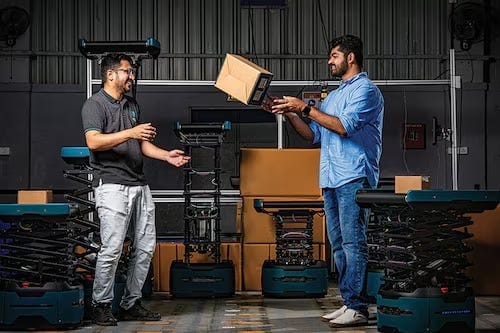
Image Credit: Forbes | Shahid Memon (left), co-founder and CTO, and Pramod Ghadge, co-founder and CEO, Unbox Robotics.
The co-founder, Pramod Ghadge’s focus wasn’t “let’s build robots.” It was far more practical. Almost every breakdown inside a warehouse could be traced back to one activity: sorting. It happens at multiple stages and becomes the bottleneck the moment volumes rise. Fixing that single step had the potential to make everything else smoother, from inbound to dispatch to last mile.
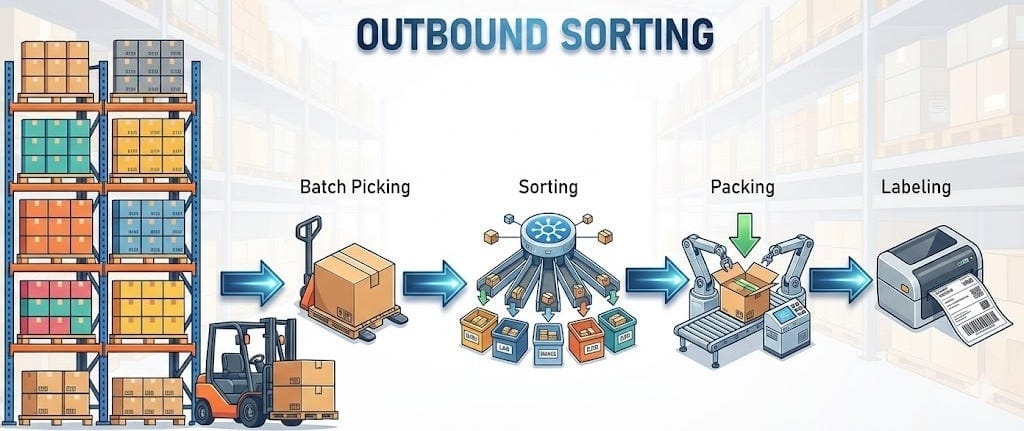
Content by: FC Research | Image made with the help of Gemini
So Pramod and the team went back to the basics. They met warehouse operators across India, China, Europe etc, asking them what an ideal system would look like if they could design it from scratch. The answer was consistent.
They wanted something compact, modular, fast to deploy, and capable of handling fluctuations without redesigning the entire facility. In short, they didn’t want a bigger machine. They wanted a system that could flex with reality.
That clarity became the starting point for everything that followed.
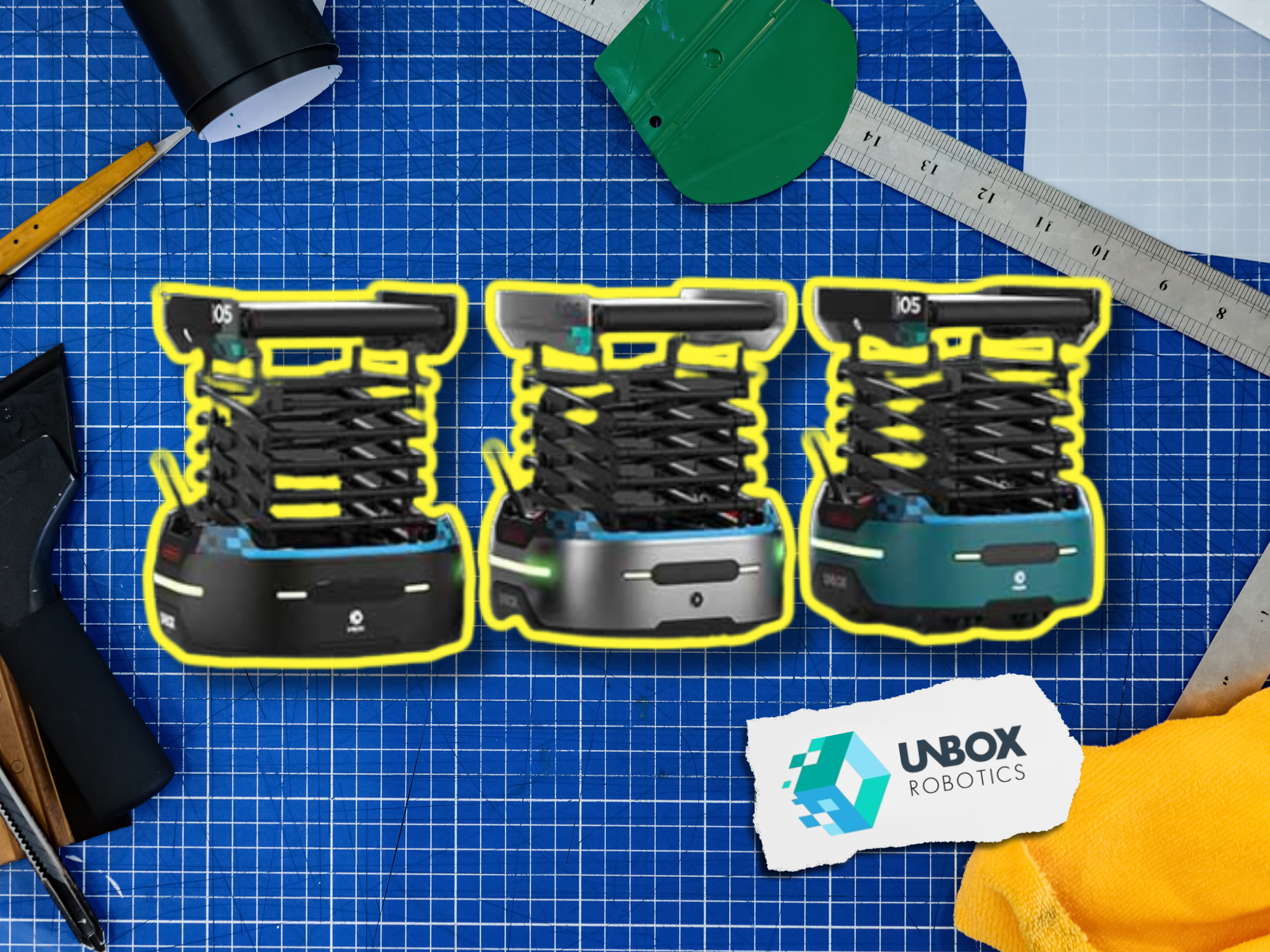
Unbox designed a vertical parcel sorting system powered by small autonomous robots. Instead of long conveyor belts stretching across a warehouse, the entire operation fits into a compact, stacked structure. Robots pick up parcels, move along the system, and drop them into the right chute based on pin code, route, or delivery zone.
The system can handle thousands of parcels per hour without needing the massive footprint traditional sorters demand.
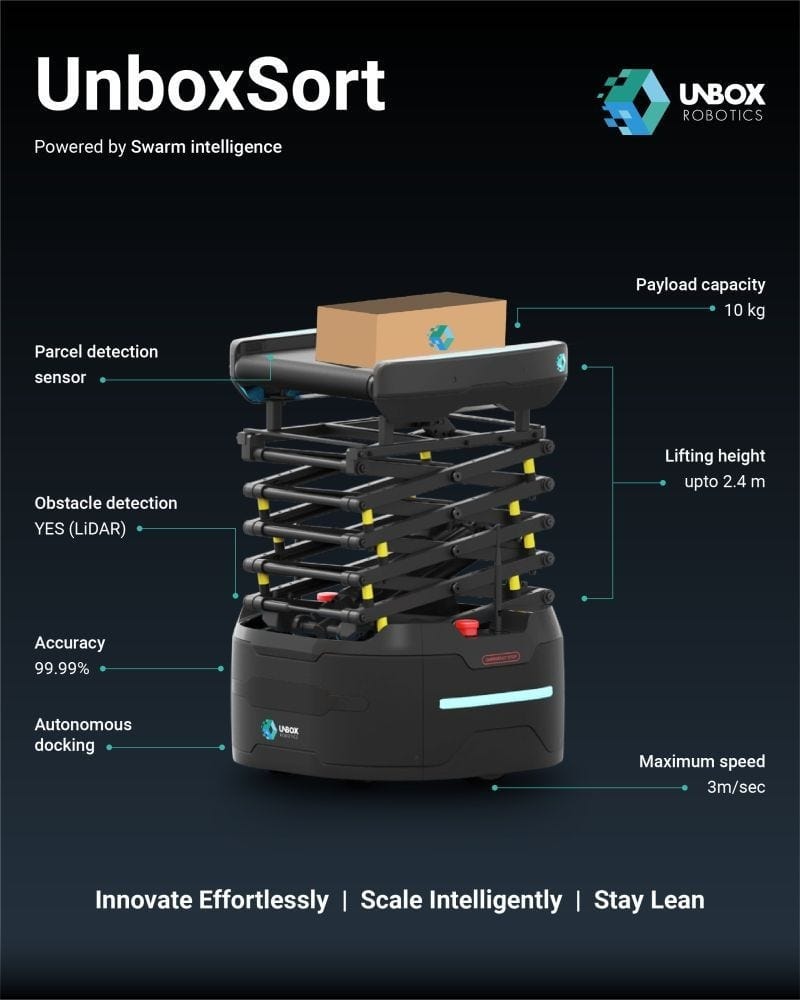
Image Source: Unbox Robotics | LinkedIn
Because the design is modular, companies can start with a smaller setup and add more robots or more levels during peak season. And unlike fixed automation, the system can be deployed in a few weeks without ripping apart the warehouse or shutting it down for months.
In short, the idea was simple. Use less space. Sort faster. Deploy quicker. And survive the unpredictable volume swings that define Indian logistics.
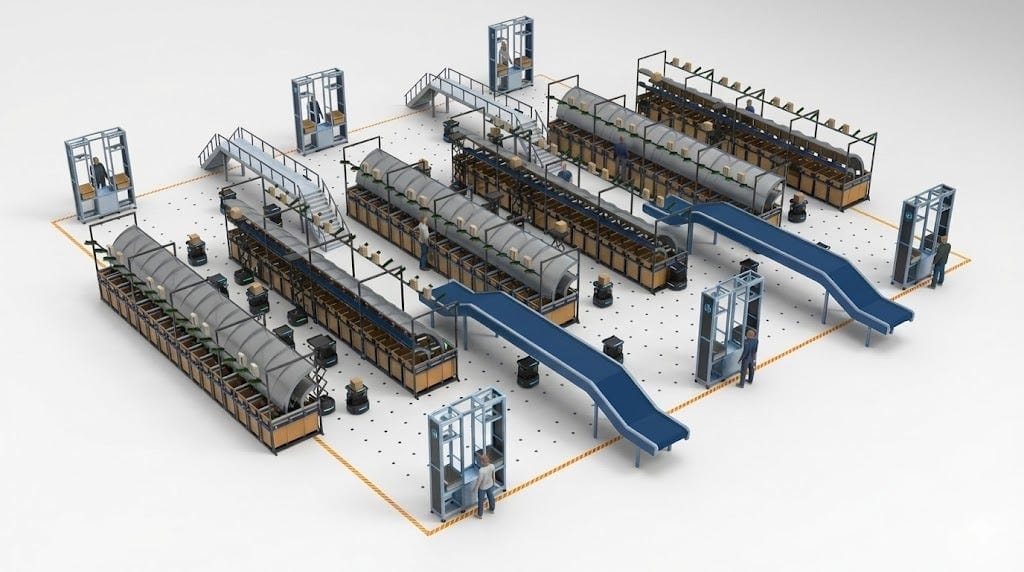
This is what an on-ground Unbox Robotics setup looks like. Image sourced from the company.
How the robots actually think?
Once the hardware problem was solved, the next step was movement. A warehouse is unpredictable. Some zones get overloaded, some stay empty, and the traffic inside keeps shifting by the hour. If robots followed one fixed route, the entire system would choke on day one.
So Unbox designed their software around one idea: robots should decide their path in real time.
Every robot knows where others are, where congestion is rising, and which route will clear the backlog faster. The system constantly recalculates paths so no robot ever queues up behind another, which means you get throughput that normally needs double the space and triple the manpower.
What this really does is change the geometry of a warehouse. A 10,000 sq ft operation suddenly behaves like a 20,000 sq ft one. Sorting that took hours now finishes in minutes. And expansions stop requiring civil work. You just add more robots the way you’d add more tabs on Chrome; ideally without crashing anything.
The robots avoid crowded zones and keep the field balanced. That’s why the system never feels stuck, even when thousands of parcels hit it at once.
It isn’t magic. It’s just a smarter way of moving things inside a space that refuses to stay still.
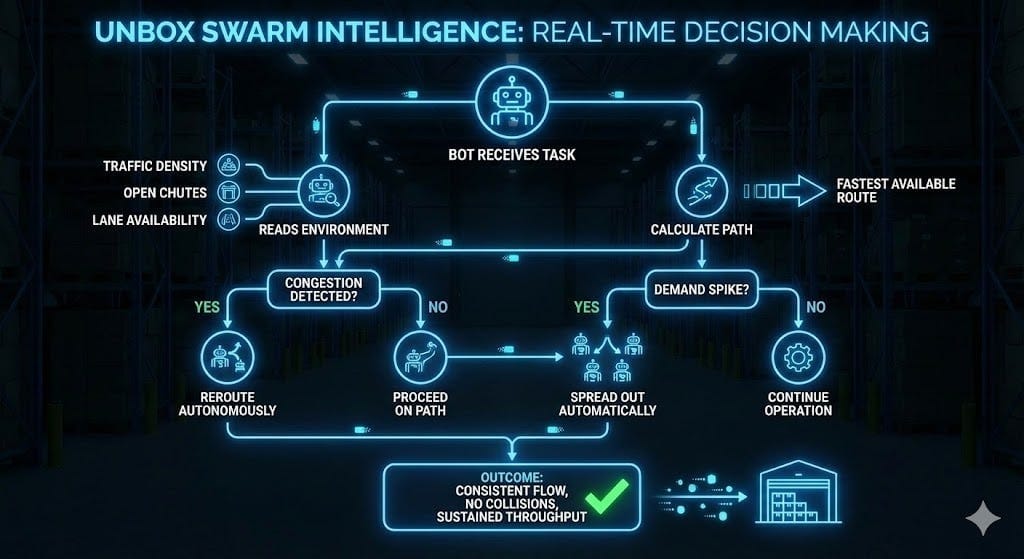
Source: FC Research
Once you rethink movement, the entire flow of a warehouse starts to look different. And you see that most of the chaos begins with one simple moment: the parcel entering the system. That’s the point where the old world and the new world collide. In a manual setup, this is where human fatigue, speed pressure, and tiny errors start multiplying. In Unbox’s setup, this is where the system takes over.
One robot can sort 60- 100 parcels an hour with 99.9% accuracy. Multiply that across an entire swarm and you start hitting numbers that only very large warehouses could manage before. A parcel that once passed through four or five hands now moves from scan to drop in one continuous flow.
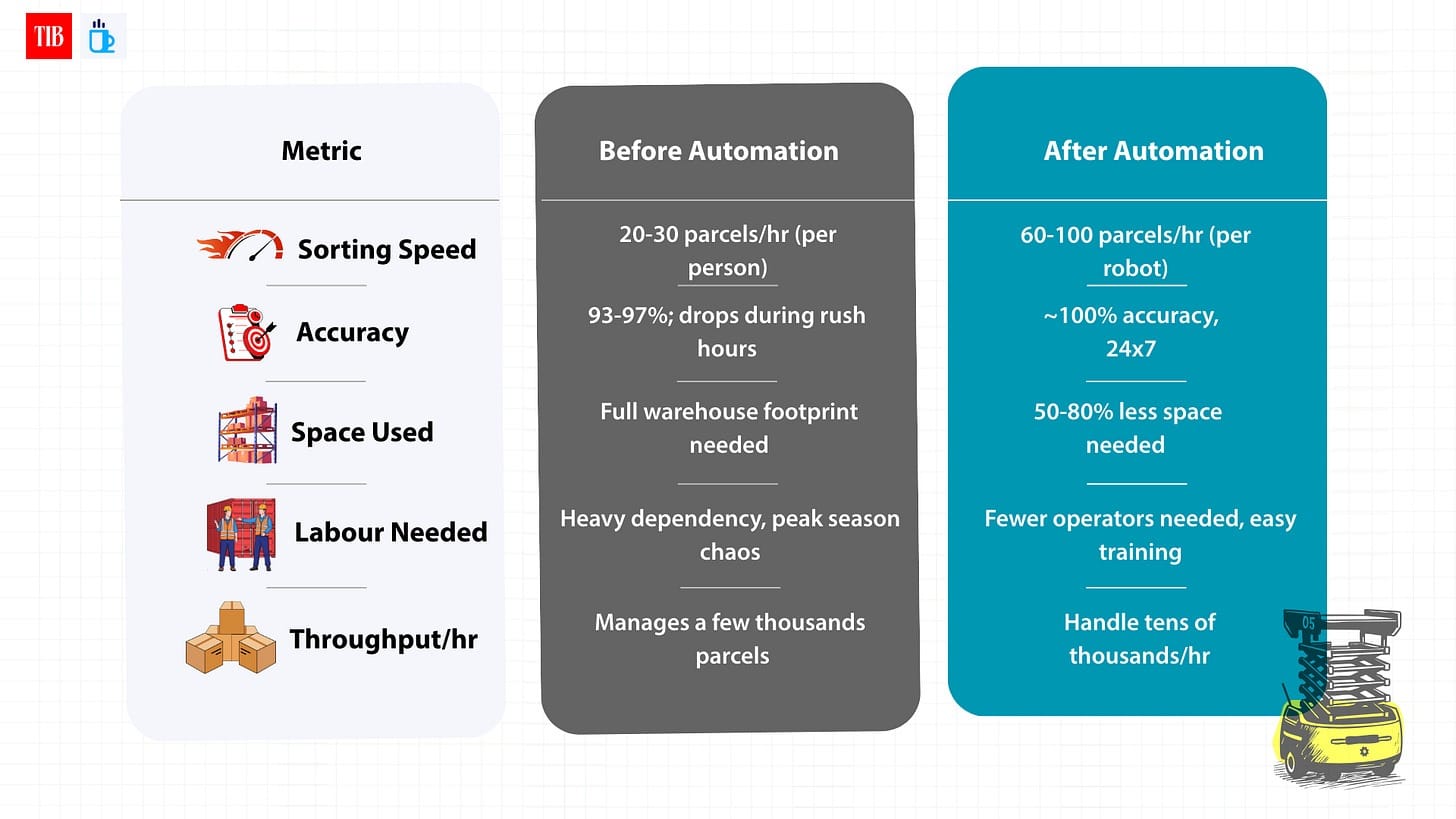
Content Source: FC Research
India is hitting a point where the old logistics playbook simply cannot carry the weight anymore. Our e-commerce market is adding millions of new shoppers every quarter. Tier 2 and Tier 3 cities are behaving like the new growth engines.
Quick commerce has trained people to expect speed without ever thinking about the machinery behind it. And every year, the gap between how fast we want things and how fast warehouses can physically operate keeps widening.
And India needs warehouses that can compound their output without increasing their costs. That’s what makes this moment different from the West. In Europe or the US, automation grew because labour was expensive. In India, automation is growing because volume is exploding. The next generation of brands won’t survive without tighter logistics. And the companies scaling into global markets won’t accept error rates that were normal ten years ago.
What stood out to us in Pune was not just the engineering. It was the timing. India is entering a decade where logistics decides who wins.
If you can move products faster, cheaper and more accurately, you win share. If you cannot, someone else will. And that reality is going to shape the entire conversation around automation in India.
Scale and fragmentation will shape the future. India is racing toward a billion annual e-commerce shipments, quick commerce is spreading beyond metros, and categories like fashion and beauty are exploding online.
India does not grow in straight lines. One warehouse might process high value electronics. Another might handle pantry staples. A third might specialise in returns, which is chaos by design.
Every product, every city, every customer behaviour pattern creates its own micro problem. You cannot solve that complexity just by building bigger boxes or hiring more people. You need systems flexible enough to adapt in real time.
That is why automation is slowly shifting from being a cost saving tool to becoming a growth engine. When robots take over repetitive tasks, humans can focus on judgement calls, exceptions and work that actually needs thinking. It does not remove people from the warehouse. It changes what they spend their time on.
And the interesting part is… India might actually leapfrog older markets.
Countries that automated early are now stuck with legacy systems that take years and a lot of money to upgrade. India is still open. Companies can adopt newer, modular tech without dragging old baggage along.
We have seen this play out before in telecom and payments. We skipped landlines. We skipped cards. We jumped straight to mobile first and UPI. Warehouse automation might follow a similar curve once the economics align and the first few large players prove that the model works.
You can already see the early signals. Global retailers are expanding their India fulfilment footprint. D2C brands are moving from rented godowns to smart warehouses. Logistics companies are quietly increasing automation budgets because their clients are demanding faster SLAs. And Indian robotics companies are starting to export, which is something almost no one predicted a decade ago.
So the question isn’t whether India will automate. It’s how fast. Because everything else in the country is already moving at full speed. The commerce. The consumption. The expectations. Warehouses are simply the last piece waiting to catch up.