

 Newsletter
Hi folks,
A phone today is not just hardware. It is your wallet, your office, your photo album, your health tracker, and sometimes your entire identity. Buying the mobile is easy. The real experience starts the day it stops working.
Behind that moment sits an ecosystem most users never see. One that decides whether your issue is solved in hours or dragged out for weeks. Whether your data stays safe or quietly leaks.
We wanted to understand how that invisible layer actually works.
That curiosity led us to Servify, a company building the plumbing for the global after-sales economy, from protection plans and repairs to replacements.
On our latest Episode of This is Business, we sat down with Sreevathsa Prabhakar, Founder and CEO of Servify, to unpack how after-sales became infrastructure, why trust is now a regulated asset, and what it takes to manage millions of devices once the sale is done.
Full story here 👇
TLDR:
- Smartphones are getting more expensive, people are holding on to them longer, and breakdowns now feel like real disruptions, not minor annoyances.
- After-sales support has quietly become core infrastructure, not a support function, deciding trust, loyalty, and repeat purchases.
- The device lifecycle has turned circular, with repairs, replacements, resales, refurbishment, and recycling all generating value and data.
- Laws like the Digital Personal Data Protection Act and stricter e-waste rules are pushing organised, tech-led players ahead of informal repair shops.
- Companies like Servify are winning by running the invisible backend that manages devices at scale, with automation, compliance, and recurring revenue.
The Bite:
For decades, the consumer electronics industry was built around a very simple idea. Make the product. Sell the product. Move on to the next one. Everything that happened after the sale was treated as a necessary inconvenience.
Repairs dragged on, service centres overflowed, and the moment something went wrong, responsibility became someone else’s problem. If you stepped outside the manufacturer’s approved failure scenarios, the system would politely inform you that your issue was “not eligible.”
By 2025, the global consumer electronics market is brushing up against the one trillion dollar mark, valued at roughly $977 billion and projected to cross $1.25 trillion by 2034. Smartphones alone account for over a billion units sold every year worldwide.
India, once treated as a dumping ground for older models, is now the world’s second-largest smartphone market, with annual shipments of over 150 million units. But the real shift is not in how many devices are sold. It is in how long they stay in people’s hands, how expensive they have become, and how emotionally attached users are to them.
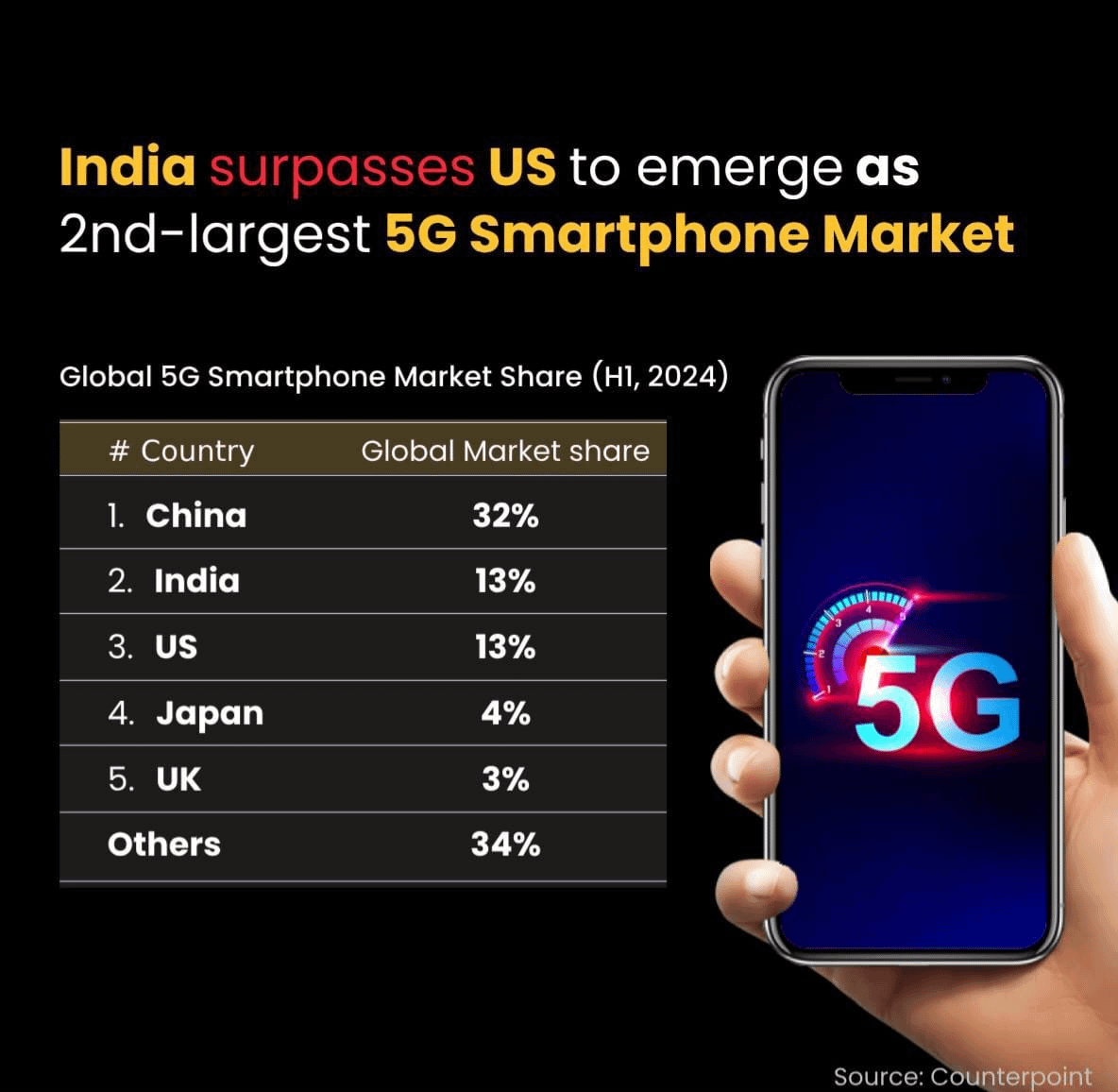
India’s smartphone average selling price crossed a record $294 in late 2025, up nearly 14% year-on-year. The super-premium segment above $800 grew more than 50% in a single year, driven largely by Apple, which controls two-thirds of that bracket.
Replacement cycles have stretched from 24 months to almost 36 months. People are holding on longer, paying more upfront, and expecting far more in return. When a device costs ₹1,20,000 and carries your banking apps, work emails, health data, and family photos, failure is no longer an inconvenience. It is a crisis.
That is where the after-sales economy enters, not as a support function, but as infrastructure. What used to be a cost centre has quietly turned into a profit engine, a retention moat, and a trust layer.
Extended warranties, accidental damage protection, doorstep repairs, instant replacements, certified buybacks, data erasure, refurbishment, recycling. None of this was sexy ten years ago. Today, it decides whether a customer stays or leaves.
Globally, the mobile phone insurance and protection ecosystem is growing at a CAGR of nearly 14%. In India alone, the mobile phone insurance market is worth about $2.6 billion in 2025 and is expected to more than double by 2031. This growth is not driven by fear. It is driven by arithmetic.
The higher the device value, the higher the perceived downside risk. Nobody insures a ₹10,000 phone. Almost everyone insures a ₹1 lakh one. Protection has shifted from optional to structural.
But insurance is only one piece of a much larger puzzle now being called Device Lifecycle Management. The modern device does not follow a straight line from factory to landfill. It moves in loops. Buy. Protect. Repair. Replace. Resell. Refurbish. Recycle. Each loop creates data. Each data point creates decisions. Each decision creates revenue or loss. Managing that complexity at scale is not something a call centre or a spreadsheet can handle anymore.
India is a fascinating test case for this transformation. The country combines extreme volume with extreme fragmentation. One city has fifty service centres within a few kilometres. Another has none. One consumer expects doorstep pickup. Another wants to walk in and argue face-to-face.
Add monsoons, inconsistent logistics, delayed payments from power utilities, regulatory overhauls, and a deeply entrenched informal repair economy, and you get an ecosystem that breaks easily unless it is architected properly.
This is why a new class of companies has emerged, not selling repairs or insurance directly, but orchestrating everything behind the scenes.
Servify is the cleanest example of this shift.
Founded in Mumbai in 2015, it did not try to become a consumer brand. It became the invisible layer that consumer brands rely on. When you buy AppleCare+, Samsung Care+, or a device protection plan from a telecom operator, there is a strong chance Servify is running the backend. Claims. Approvals. Logistics. Service centre coordination. Replacement decisions. Data erasure workflows. All of it.
Today, Servify operates in over 40 countries, manages more than 50 million devices across 100-plus product categories, and supports over 75 global OEMs including Apple, Samsung, HP, Xiaomi, OnePlus, Vivo, and AT&T.
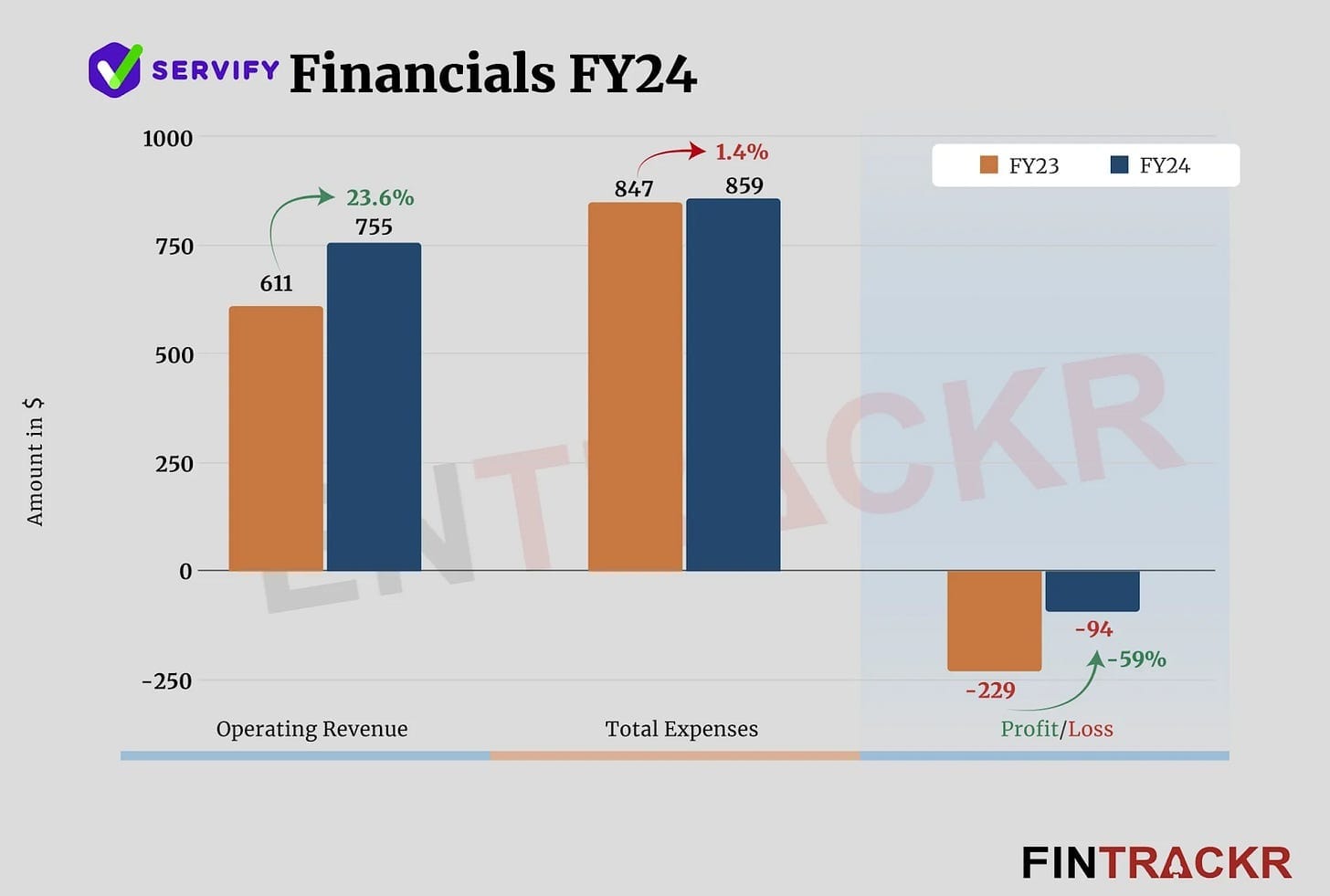
Its revenue crossed ₹750 crore in FY24, growing over 24% year-on-year. More importantly, over 85% of that revenue is recurring. That predictability is rare in a sector known for volatility.
What really stands out is the profitability trajectory. Servify cut its net losses by nearly 60% in a single year, from over ₹229 crore to under ₹94 crore.
The engine behind this scale is technology. Servify’s platform automates decision-making that once required dozens of human interventions. AI-driven claim adjudication now resolves most cases within minutes, not days.
This matters more than it sounds, because the after-sales industry is built on trust, and trust is in short supply. India’s repair ecosystem has long suffered from data theft, component swapping, service scams, and information leaks.
Reddit and consumer forums are filled with stories of service technicians demanding phone passcodes and leaking personal data. The government’s Digital Personal Data Protection Act has changed the stakes dramatically. Repair companies are now classified as data fiduciaries. A single breach can attract penalties of up to ₹250 crore. Data erasure is no longer a best practice. It is mandatory.
The Digital Personal Data Protection Act, 2023 is India’s rulebook for how companies collect, use, store, and protect your personal data. It gives users more control over their data and makes companies legally responsible if they misuse or leak it. Basically, it’s about consent, accountability, and data privacy finally getting teeth.
This regulatory pressure has pushed organised players even further ahead. Certified data erasure tools, audit trails, and compliance documentation are expensive. Informal repair shops cannot absorb these costs. Platforms like Servify, Cashify, and Onsitego can. Trust is becoming a competitive advantage, not a brand tagline.
Together, these companies reflect a deeper shift. Ownership is changing. Devices are becoming services. Protection is becoming invisible. Repair is becoming automated. Sustainability is becoming monetised.
The government has added fuel to this transition. India’s updated e-waste rules now enforce stricter extended producer responsibility targets. Refurbishers can issue deferred recycling credits. Cross-border dumping has been restricted. Circularity is no longer optional. It is regulated.
At the same time, the Right to Repair framework is nudging manufacturers to open up manuals and parts, though India has stopped short of the EU’s legally binding mandates. That may change. Competition regulators have already ruled against anti-competitive spare part restrictions in other sectors. Electronics will not stay exempt forever.
Under Right to Repair framework, it would be mandatory for manufacturers to share their product details with customers so that they can either repair them by self or by third parties, rather than only depending on original manufacturers.
All of this feeds into a future where the after-sales experience defines brand loyalty more than the initial product. A cracked screen fixed in four hours beats a better camera sensor. A replacement shipped before the old device is returned beats a faster processor. Effortless service is the product.
By 2030, protection will be bundled into financing. AI agents will adjudicate claims end-to-end. Consumers will track device value like a wallet, not a possession. Refurbishment credits will trade like commodities. The companies that win will not be the loudest. They will be the most reliable.
The after-sales economy was never meant to be glamorous. But it is now unavoidable. And in a world where trust is scarce, the companies quietly fixing what breaks may end up being the ones that matter most.


