
 Newsletter
UPI has become so deeply woven into our daily lives that most of us don't even think before scanning a QR code. Whether it's buying vegetables from a street vendor, paying for groceries or splitting a restaurant bill, the money moves instantly and, most importantly, for free.
But that "free" model is now under discussion.
A recent Moneycontrol report suggested that if the government brings back the Merchant Discount Rate (MDR) on UPI transactions, it could generate ₹13,500 crore annually for the payments industry at the lower end of the proposed rates. That immediately sparked one big question.
Will people have to start paying for UPI transactions?
The short answer is probably not.
According to a report by global brokerage Bernstein, UPI users are unlikely to pay any charges even if the government allows MDR in the future. Instead, any charges would most likely be paid by merchants on eligible business transactions, not by customers making everyday payments.
So why is the government even considering this? And who stands to benefit if MDR returns?
Let's break it down.
First, what exactly is MDR?
Think of it as a small processing fee that businesses pay whenever they accept digital payments.
Imagine you buy a shirt worth ₹1,000 using your debit or credit card.
The shopkeeper doesn't receive the entire ₹1,000. A small percentage, usually around 1-2%, is deducted as a processing fee and distributed among the banks and payment companies that help complete the transaction.
The merchant receives the remaining amount.
With UPI, things work differently.
Since January 2020, the government has mandated zero MDR on UPI and RuPay debit card transactions to encourage digital payments. That means merchants currently receive the full payment amount without paying any processing fee.
The proposal now being discussed could change that.
According to source-based reports, the proposed MDR could be around 0.25% to 0.30% of the transaction value.
Even if implemented, the fee is expected to apply only to certain merchant transactions, with the government yet to decide the turnover limits and transaction thresholds.
Why is the government talking about MDR again?
The answer lies in the sheer scale of UPI today.
According to data released by the National Payments Corporation of India (NPCI):
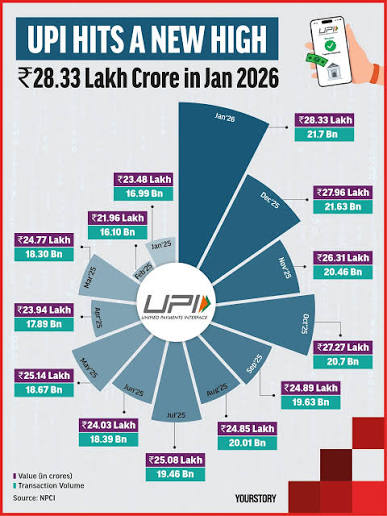
- UPI processed 23.66 billion transactions in July 2026, a new monthly record.
- The total value of these transactions reached ₹29.88 lakh crore, growing 19% year-on-year.
- UPI had earlier touched a similar record value in May 2026, showing just how consistently the platform continues to grow.
The Parliamentary Standing Committee on Finance estimates that around 88% of all digital payments in India now happen through UPI.
Every month, banks and payment companies process transactions worth nearly ₹30 lakh crore.
That level of scale comes with enormous infrastructure costs.
Banks, payment service providers, technology companies and NPCI have to continuously invest in servers, cybersecurity, fraud prevention, settlement systems and merchant infrastructure.
The committee warned that the current zero-MDR model is becoming financially unsustainable in the long run.
The report expects UPI to eventually add another 600 million users while processing 100-150 billion transactions every month.
Supporting that kind of growth will require continuous investment, something that government incentives alone may not be able to sustain forever.
That is why the Finance Ministry is exploring alternative funding models.
What has the Finance Ministry proposed?
On August 4, the Union Ministry of Finance proposed amendments to the Payment and Settlement Systems Act, 2007.
One of the biggest proposed changes is removing Section 10A, which currently prevents banks and payment service providers from charging MDR on UPI transactions.
If Parliament approves these amendments, the government will then decide:
- Which UPI transactions attract MDR
- The applicable rates
- Which businesses will have to pay
- Which transactions remain exempt
Importantly, the amendment does not automatically introduce MDR. It only gives the government the legal power to notify it later.
Also, if merchants eventually have to bear MDR, some may try to recover the cost by encouraging cash payments or setting minimum order values for UPI. In the long run, part of the cost could indirectly find its way to customers.
Who stands to benefit the most?
It could be the companies that built India's UPI ecosystem.
According to Moneycontrol's estimates:
- PhonePe could earn roughly ₹700 crore annually
- Paytm could also generate around ₹700 crore
- Google Pay may earn around ₹500 crore
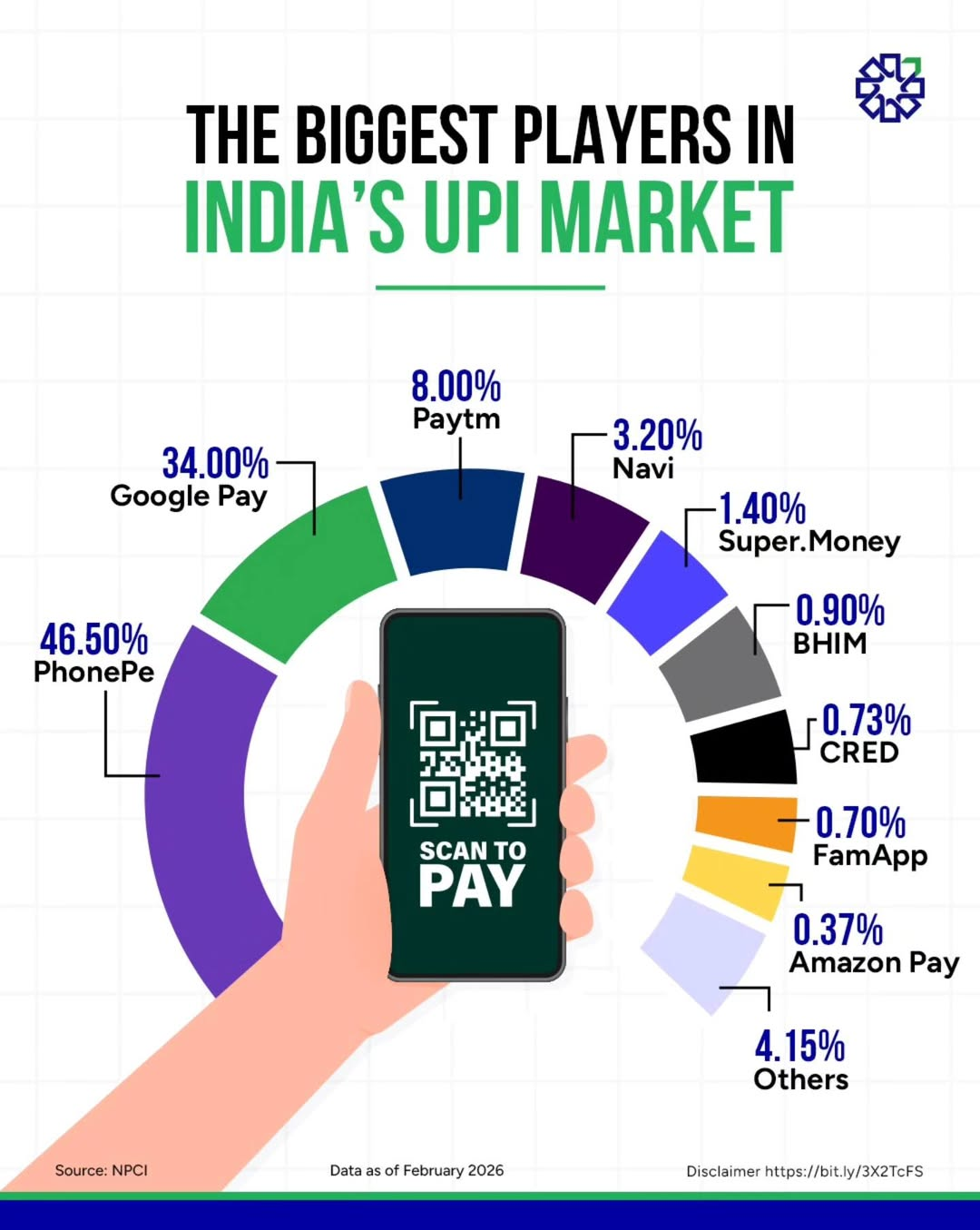
Much of this could directly improve profitability because these companies have already invested heavily in merchant acquisition over the past several years.
Paytm founder Vijay Shekhar Sharma has previously told investors that once MDR returns, a significant portion of the revenue would flow straight to the bottom line since the infrastructure has already been built.
Why are PhonePe and Paytm expected to benefit more?
The answer lies in merchant acquisition. Companies like PhonePe and Paytm spent years building payment infrastructure across India.
They supplied millions of:
- QR codes
- Soundbox devices
- Point-of-sale machines
Both companies now have nearly 2.5 crore monthly paying merchants using their payment acceptance devices.
Which banks could benefit?
Banks are expected to be among the largest beneficiaries.
Industry estimates suggest:
- State Bank of India could earn up to ₹3,000 crore annually
- HDFC Bank could generate around ₹800 crore
- Bank of Baroda could earn nearly ₹800 crore
- Union Bank
- Canara Bank
- Punjab National Bank
could each generate roughly ₹700 crore annually, depending on the final MDR structure.
For now, though, the biggest takeaway is that the proposal is aimed at funding the ecosystem, not charging customers.